 Bellingham Roofing
 Fairhaven Decks Face a Different Kind of Wear
Fairhaven sits close enough to Bellingham Bay that decks here deal with a combination most inland neighborhoods don't: salt-laden air off the water, long stretches of driving rain, and a moss season that can run from fall through spring. None of these alone is unusual for Whatcom County. Together, on a structure that's mostly horizontal and exposed to the sky, they wear a deck down faster than most homeowners expect.
Salt air accelerates corrosion on fasteners and metal connectors. Driving rain doesn't just fall straight down — wind off the bay pushes it sideways, into gaps around ledger boards, stair stringers, and post bases that a purely vertical rain never reaches. And moss doesn't just look bad; it holds moisture against wood and decking surfaces for weeks at a time, which is exactly the condition that leads to rot underneath a surface that still looks fine on top.
We repair decks throughout Bellingham and Whatcom County, but Fairhaven jobs tend to have a consistent signature: corroded fasteners before the wood itself fails, moss buildup in shaded or north-facing sections, and moisture damage concentrated at connection points rather than spread evenly across the whole deck.
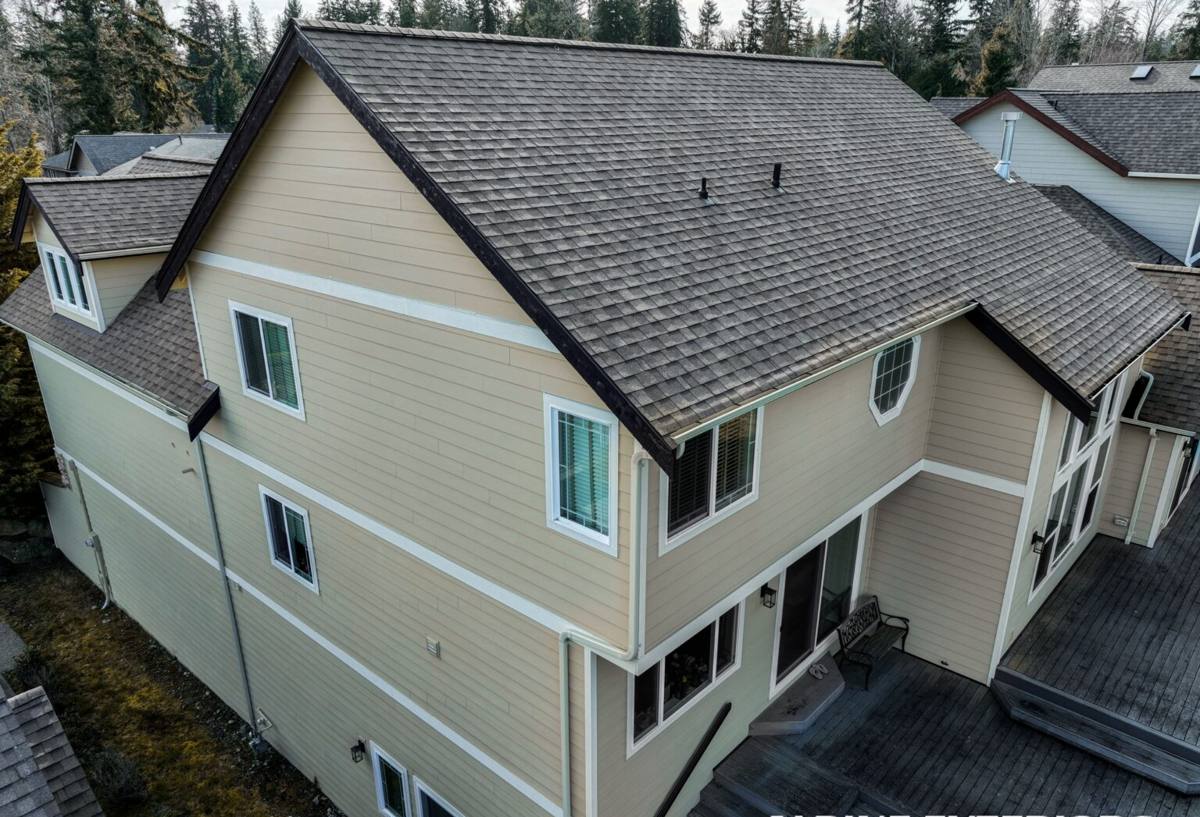
The Repairs We See Most Often in This Neighborhood
Ledger Board and Rim Joist Rot
The ledger board — where the deck attaches to the house — is the single most important structural connection on most decks, and it's also the part most exposed to trapped moisture. If flashing was installed poorly or has failed over time, water gets behind the ledger and sits there. By the time it's visible from outside, the wood behind it is often already soft.
Corroded Fasteners and Hardware
Salt air speeds up corrosion on nails, screws, and joist hangers, especially on decks that weren't built with fully coated or stainless hardware to begin with. Corroded fasteners lose their holding strength gradually, which means a deck can feel solid right up until it doesn't.
Moss and Algae on Decking Surfaces
Shaded areas, spots under overhangs, and north-facing sections hold moisture longer and grow moss faster. Beyond being slippery, moss buried in the grain of decking boards keeps that wood wet far longer than an open, sun-exposed section — which is why the same deck can have solid boards on one side and soft, spongy ones on the other.
Post Base and Footing Deterioration
Posts that sit in or near standing water, or that were installed without a proper standoff base, take on moisture from the ground up. This kind of damage is often the least visible and the most structurally important to catch early.
Stair and Railing Failures
Stairs and railings get more direct water exposure than the deck field itself and see constant flex from foot traffic, which is a bad combination for connections that have already started to corrode or loosen.
What an Honest Deck Inspection Covers
A repair estimate that only looks at the surface boards isn't a real inspection. Before we recommend anything, we check:
- Ledger board attachment and the condition of flashing behind it
- Joist and beam condition, probing for soft spots rather than just looking
- Fastener and hardware condition, including hidden joist hangers
- Post bases and footing contact with soil or standing water
- Stair stringer connections and railing post attachment
- Decking board condition, with attention to shaded and moss-prone areas
- Drainage around the deck perimeter and under low-clearance sections
This is the difference between a repair that lasts and one that's addressing a symptom while the actual problem — usually moisture getting somewhere it shouldn't — keeps working underneath.
Repair or Replace: How We Make That Call
Not every deck problem needs a full rebuild, but not every deck is worth patching either. The honest answer depends on where the damage is and how much of the structure it touches.
| Condition | Repair Usually Makes Sense | Replacement Usually Makes Sense |
|---|---|---|
| Decking boards | Isolated soft or cracked boards, moss staining without rot | Widespread soft spots across most of the deck surface |
| Ledger board | Localized rot caught early, flashing failure with sound wood behind it | Extensive rot along the ledger length, or repeated past flashing failures |
| Framing (joists/beams) | One or two compromised members with the rest structurally sound | Rot or corrosion spread across multiple framing members |
| Posts and footings | Surface deterioration with solid core wood | Soft or crumbling posts, footings undermined by water |
| Age and history | Deck is under 15-20 years old with isolated issues | Deck is original to an older home with no upgraded flashing or hardware |
We'll tell you plainly which category your deck falls into, and why — including when a repair is the more sensible choice even if a rebuild would be more profitable for us. A repair that's done right, on the right kind of damage, can add many more years of safe use.
How We Approach a Fairhaven Deck Repair
1. Full Structural Assessment
We start below the surface, not on top of it. That means checking framing, connections, and moisture sources before ever discussing decking boards or cosmetics.
2. Address the Moisture Source First
Replacing rotted wood without fixing the flashing, drainage, or ventilation issue that caused the rot just resets the clock on the same failure. Every repair we do addresses the cause, not just the damaged material.
3. Match Materials to the Actual Exposure
A deck's south side and north side can need different treatment. We account for sun exposure, shade, and wind direction off the bay when deciding where extra protection or drainage detail is worth adding.
4. Use Fasteners and Hardware Built for the Coastal Air Here
Given the corrosion Fairhaven's salt air causes over time, we use fasteners and connectors rated for coastal or high-moisture exposure rather than standard interior-grade hardware. It costs a little more upfront and saves homeowners from another round of hidden fastener failure a few years down the line.
5. Clean Finish, Verified Structurally
Once the structural work is done, we finish decking, stairs, and railings so the repair blends with the rest of the deck — but we don't consider a job finished until the structure underneath has been checked, not just the surface.
Materials: Why We Make the Choices We Do
There's no single "best" decking or framing material for every situation — there are trade-offs, and we'll walk you through them honestly rather than pushing whatever's easiest for us to install.
Pressure-Treated Framing
Pressure-treated lumber remains the standard for deck framing because it resists rot well when properly flashed and ventilated. Its performance depends heavily on installation detail — flashing, gaps for drainage, and fastener choice matter more than the wood grade itself.
Composite vs. Wood Decking
Composite decking resists moss and moisture absorption better than untreated wood surfaces, which matters in shaded, moss-prone sections of a deck. The trade-off is upfront cost and, on some products, sensitivity to how the substructure ventilates underneath it. Wood decking costs less initially but needs more regular maintenance — cleaning, sealing, and moss removal — to hold up in this climate.
Fasteners and Connectors
We avoid standard uncoated or minimally coated fasteners in this environment. The maintenance burden of dealing with corroded, hard-to-replace hardware years later outweighs the small upfront savings, so we install hardware rated for the moisture and salt exposure Fairhaven actually sees.
Maintenance That Actually Extends a Deck's Life Here
A repair lasts longer when it's followed by realistic upkeep. In this climate, that means:
- Clearing moss and debris from shaded or north-facing sections at least once or twice a year
- Keeping gutters and downspouts clear so runoff isn't draining directly onto or under the deck
- Checking for soft spots near the ledger board and post bases annually, especially after a wet winter
- Re-sealing or re-staining wood decking on the schedule the product actually requires, not just when it looks faded
- Making sure deck boards have gaps for drainage and airflow rather than sitting flush and trapping water
None of this replaces a professional inspection every few years, but it meaningfully slows the rate at which moisture damage develops between visits.
Why Local Experience in Fairhaven Actually Matters
Deck damage in a coastal Bellingham neighborhood doesn't look like deck damage in a dry inland town, and it doesn't look like storm damage from a different climate either. A crew that already works in Fairhaven knows where moss builds up fastest based on which way a deck faces, how far driving rain off the bay tends to travel under an overhang, and which fastener types hold up here versus which ones don't. That's the difference between a repair that addresses what's actually happening to a deck in this environment and a generic fix that doesn't account for it.
We're a Bellingham-based crew working throughout Whatcom County, and Fairhaven's coastal exposure is a condition we plan for from the first inspection, not something we discover partway through a job.
Get a Straight Answer on Your Deck
If you're seeing soft boards, heavy moss, rusted hardware, or just want a second opinion before winter rain sets in again, we'll come take a look and give you an honest read on what's actually needed — repair, partial rebuild, or just maintenance. The estimate is free, there's no pressure, and you'll get a clear explanation of what we found. Use the form below to get started.