 Bellingham Roofing
 Fairhaven's Waterfront Location Puts Extra Stress on Decks
Fairhaven sits close to Bellingham Bay, and that proximity to saltwater changes what a deck goes through year to year compared to a deck a few miles inland. Salt-laden air corrodes fasteners, hardware, and unprotected metal connectors faster than it would in a dry climate. Combine that with the driving, wind-blown rain that comes off the water during Whatcom County's wet season, and you get moisture finding its way into places a deck built for a milder climate was never designed to handle — ledger connections, end grain, and any spot where two boards meet.
Add in the tree cover that shades a lot of Fairhaven's older lots, and you've got the third factor: a long moss and algae season that can stretch from fall through spring. Moss holds moisture against wood and decking surfaces, and it turns boards slick and slippery long before it becomes a cosmetic eyesore. A deck built without that combination in mind — salt air, driving rain, and shade-driven moss — tends to show its age years before it should.
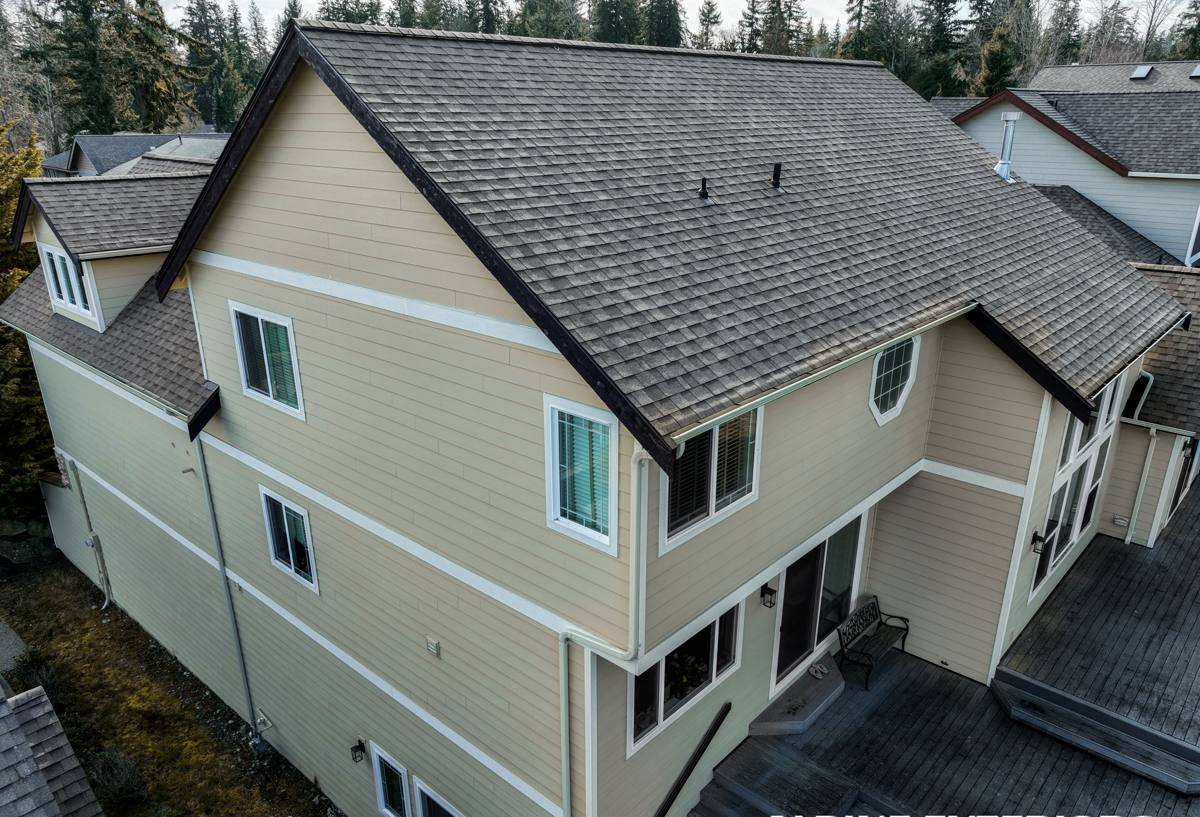
Signs a Fairhaven Deck Needs Replacement, Not Just Repair
Not every deck problem means starting over. A cracked board or a loose railing baluster is a repair. But there's a point where patching individual boards is just delaying a bigger, more expensive failure — and in a climate like Bellingham's, that point often arrives earlier than homeowners expect.
- Soft, spongy, or springy decking boards, especially near the house
- Rot or dark staining where the deck attaches to the house (the ledger board)
- Rusted, streaking, or failing fasteners and metal connectors
- Visible sag in the frame or noticeable movement when you walk across it
- Footings that have shifted, settled, or show cracking at the base
- Railings that flex or feel loose under hand pressure
- Persistent moss or algae growth that returns within weeks of cleaning
If you're only seeing one or two of these on a deck that's otherwise structurally sound, a repair may still make sense. But when rot has reached the framing or the ledger connection, or when several of these signs show up together, replacement is usually the safer and more cost-effective path — repairing around failing structure just means paying for the same labor twice.
What a Correct Deck Replacement Actually Involves
Tear-Off and Structural Inspection
A proper replacement starts with removing the old deck down to the ledger and posts, not just pulling up the visible decking boards. This is the point where we can actually see what's underneath — the condition of the framing, the footings, and the house connection — before deciding what needs to change in the rebuild.
Ledger Board and Flashing
In a climate that gets as much wind-driven rain as Bellingham does, the ledger connection is the single most important detail on the whole deck. It's where the structure attaches to your house, and it's the most common place for hidden rot to start when flashing was installed incorrectly or skipped entirely. Correct flashing directs water away from the house framing instead of letting it collect behind the ledger board where it can't be seen until real damage has already been done.
Framing and Footings
Framing lumber, joist spacing, and footing depth all need to match the size and use of the deck, along with local soil and frost conditions in Whatcom County. Undersized framing or shallow footings are a common shortcut on older decks, and they're one of the main reasons a deck starts to feel bouncy or uneven well before the decking surface itself shows wear.
Decking Material and Fasteners
Once the structure is sound, the decking surface goes down using fasteners and hardware rated for exterior, corrosion-prone environments — this matters more here than in a drier inland climate, since salt air accelerates corrosion on standard hardware.
Railings and Guardrails
Railings are rebuilt to current code height and baluster spacing, which matters both for safety and for passing final inspection.
Choosing a Decking Material for Salt Air, Rain, and Moss
There's no single "best" decking material for every home — it depends on budget, how much upkeep you want to do, and how exposed the deck is to weather. Here's how the common options generally compare in a Fairhaven-type environment:
| Material | Moisture & Salt Air Resistance | Maintenance | Typical Lifespan |
|---|---|---|---|
| Pressure-Treated Lumber | Good with sealing, needs reapplication | Annual cleaning and resealing | 10-15 years |
| Cedar | Naturally rot-resistant, but surface still weathers | Periodic staining/sealing | 15-20 years |
| Composite Decking | Strong resistance to moisture and rot | Occasional washing, no sealing | 25-30+ years |
| PVC/Capped Polymer | Excellent, fully sealed surface | Low — occasional washing | 25-30+ years |
Composite and PVC decking tend to hold up especially well against the moss and algae that come with Fairhaven's shaded, damp winters, since the surface doesn't absorb moisture the way wood fibers do. Wood species like cedar have real advantages too — a natural look and lower upfront cost — but they ask more of the homeowner in terms of ongoing sealing and cleaning to keep salt air and rain from getting the upper hand. We'll walk through the honest trade-offs of each option for your specific lot and sun exposure rather than pushing one product across the board.
Permits and Code Considerations
Most deck replacements that involve structural changes — new footings, a rebuilt ledger connection, or a deck attached above a certain height — require a building permit and inspection. Guardrails typically need to meet minimum height requirements with baluster spacing narrow enough to prevent a small child from passing through, and ledger attachments need to be engineered to resist both the vertical load of the deck and lateral forces. We handle the permit application and coordinate inspections as part of the job, so you're not the one tracking down paperwork or scheduling city inspectors.
Our Deck Replacement Process
- On-site inspection and estimate — we look at the existing deck, ledger connection, framing, and footings to determine what's actually driving the failure.
- Material and design selection — we walk through decking, railing, and hardware options based on your budget and how much maintenance you want going forward.
- Permit application — we prepare and submit what's needed for the scope of work.
- Tear-off and disposal — the old deck comes down and off the property.
- Rebuild — footings, framing, ledger flashing, decking, and railings go in to code, in that order.
- Final inspection and walkthrough — we confirm everything passes inspection and walk the finished deck with you before calling the job done.
Protecting Your New Deck Through Moss Season
A well-built deck still needs some basic upkeep, especially in a climate where moss and standing moisture are a recurring issue rather than a one-time problem. A little regular maintenance goes a long way toward getting the full lifespan out of the materials you paid for.
- Sweep debris and fallen leaves off the surface regularly, especially in fall
- Rinse or lightly scrub visible moss and algae before it has time to establish
- Keep gutters and downspouts near the deck clear so runoff isn't draining onto it
- Check and tighten railing hardware once a year
- For wood decking, reseal or restain on the schedule recommended for the product
- Trim back overhanging branches to reduce shade and speed up drying after rain
Why Hiring a Crew That Already Works in Fairhaven Matters
A deck built to a generic spec sheet can still fail early if it wasn't built with the specific conditions of the site in mind. Working regularly in Fairhaven and around Bellingham means we've seen how salt air treats hardware over time, how shaded lots near the water hold onto moisture longer than sites just a mile inland, and what it actually takes for a ledger connection to hold up through a full Whatcom County wet season. That local pattern recognition shapes real decisions on your job — material selection, flashing detail, and fastener choice — rather than defaulting to whatever spec works in a drier part of the country.
It also means a smoother permit and inspection process, since we're already familiar with what local building officials expect to see on a deck replacement.
If your deck is showing its age — soft boards, rust streaks, a ledger connection you're not sure about, or moss that keeps coming back — we're happy to take a look and give you a straightforward, no-pressure estimate. Use the form below to get started.