 Bellingham Roofing
 Why Fairhaven Decks Wear Out Faster Than You'd Expect
Fairhaven sits close enough to Bellingham Bay that salt-laden air is a daily fact of life for anything built outdoors. Add in Whatcom County's long wet season, heavy morning dew off the water, and the shade from mature trees on many Fairhaven lots, and you have a near-perfect recipe for a deck that looks tired within a few years instead of lasting decades. Wood decking in this neighborhood typically shows the strain first: graying, splintering, soft spots near fasteners, and a moss carpet that starts in the shaded corners and spreads.
Composite decking was developed largely to solve this exact combination of problems — moisture exposure, biological growth, and UV cycling — and it holds up well when it's specified and installed correctly for the site. The keyword there is "correctly." A composite deck installed with wood-frame assumptions, poor drainage, or the wrong fastening system will still fail early, just in different ways than a wood deck does. That's the gap we focus on closing for homeowners in this part of Bellingham.
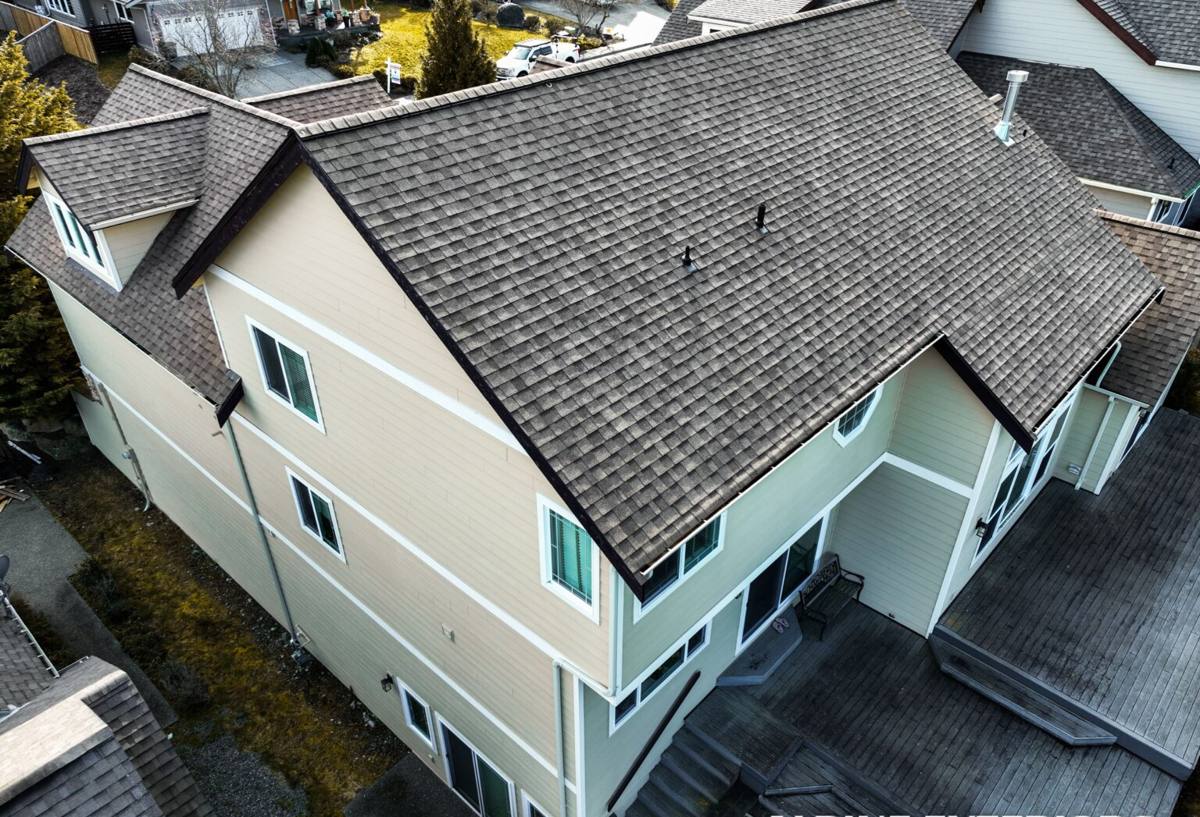
What Fairhaven's Climate Actually Does to a Deck
Salt Air and Metal Fasteners
Proximity to the bay means airborne salt settles on every exterior surface, including deck hardware. Standard fasteners and brackets corrode faster here than they would further inland. Over time, corroding fasteners weaken connections and can stain composite boards around the screw heads. Choosing marine-grade or coated fasteners rated for coastal exposure isn't an upsell — it's a requirement for the location.
Driving Rain and Water Management
Bellingham's rain doesn't just fall straight down; wind off the water pushes it sideways into ledger boards, stair stringers, and any gap where water can collect. A deck built without proper flashing at the house connection, without slight slope for drainage, and without ventilated framing underneath will trap moisture regardless of what decking material sits on top. This is where a lot of decking problems actually start — not in the boards, but in the structure underneath them.
Moss and Shade
Whatcom County's moss season runs long, and Fairhaven's tree cover and marine humidity make it worse than in drier parts of the county. Moss holds moisture against a surface and, on wood, accelerates rot. On composite boards, moss is mostly a surface and slip-hazard issue rather than a structural one, but board selection and grooved-versus-grooveless profiles change how much moss takes hold and how easily it comes off.
What "Correct" Composite Decking Looks Like Here
- Framing rated for ground contact or elevated exposure, sized correctly for joist spans under composite's added weight versus wood
- Ledger board flashing that sheds water away from the house rim joist, not toward it
- Consistent drainage slope away from the structure, even on decks that look level to the eye
- Ventilation gaps under low or ground-level decks so trapped moisture can escape
- Corrosion-resistant, coastal-rated fasteners and hidden fastening systems compatible with the board manufacturer's warranty terms
- Board spacing set for our climate's humidity swings, since composite still expands and contracts seasonally
- Picture-frame or fascia trim installed so cut ends are sealed or capped, not left exposed to wick moisture
Skipping any one of these doesn't necessarily show up on install day. It shows up two or three winters later, which is exactly why hiring based on lowest bid alone is risky on a coastal Bellingham property.
Choosing a Composite Board for a Fairhaven Property
Composite decking varies a lot by manufacturer and product line, and the right choice depends on your budget, sun exposure, and how much upkeep you want to do. We walk homeowners through these trade-offs rather than pushing one product line for every job.
| Factor | What to Consider in Fairhaven's Climate |
|---|---|
| Capped vs. uncapped composite | Fully capped boards resist moisture absorption and staining far better in our wet, mossy conditions; uncapped or partially capped products need more homeowner maintenance |
| Color | Darker boards run hotter in summer sun but tend to show less pollen, moss shadowing, and water spotting than very light colors |
| Board texture | Deeper wood-grain or brushed textures hide surface grime and light moss film better than smooth, low-texture boards |
| Grooved vs. grooveless edges | Grooved boards (for hidden fasteners) can trap moisture and debris at the groove line in shaded areas; grooveless profiles are easier to keep clean on heavily shaded lots |
| Warranty structure | Read the fine print on staining, fading, and moisture warranties — some are voided by improper fastening or framing, which is another reason installation quality matters |
Composite vs. Wood: An Honest Comparison for This Neighborhood
We install both wood and composite decking, and each has a legitimate place. For Fairhaven specifically, given the salt exposure and moss pressure, most homeowners end up favoring composite once they see the full maintenance picture side by side.
| Wood Decking | Composite Decking | |
|---|---|---|
| Annual maintenance | Cleaning, moss treatment, and periodic sealing or staining | Occasional washing; no sealing or staining required on capped products |
| Moisture and rot risk | Higher, especially in shaded or ground-level sections | Lower on capped boards, but structure underneath still needs proper drainage |
| Upfront cost | Generally lower material cost | Higher material cost, often offset by lower lifetime maintenance cost |
| Appearance over time | Requires upkeep to avoid graying and moss staining | Holds color and finish longer with proper board selection |
| Repairs | Individual boards are simple and cheap to replace | Board replacement is straightforward but matching older, sun-faded boards can be harder |
Our Process for a Fairhaven Composite Deck
1. On-Site Assessment
We look at sun exposure, tree shade, slope toward or away from the house, existing framing condition if this is a rebuild, and any drainage issues already visible on the property. This tells us what framing and ventilation approach the site actually needs, not just what a generic spec sheet says.
2. Material Selection
Based on the assessment, we go through board options, colors, and price tiers with you, being upfront about which choices reduce long-term maintenance versus which ones just look good in a showroom.
3. Structural Build
Framing, flashing, and drainage go in first, built to handle the load and moisture patterns specific to a coastal Whatcom County site — this stage matters more to the deck's lifespan than the decking material itself.
4. Decking Installation
Boards go down with manufacturer-specified fastening, correct spacing for our humidity range, and sealed or capped end cuts at every trim line.
5. Final Walkthrough
We review the finished deck with you, including basic care guidance specific to the board you chose and what to expect from it through a full Bellingham winter.
Why Local Experience Matters for This Job
Composite decking installation isn't complicated in the abstract, but installing it correctly for a specific microclimate is where experience shows up. A crew that mostly works drier, inland regions may not think twice about fastener grade, groove drainage, or ledger flashing detail — because in their usual conditions, those shortcuts don't get punished as quickly. In Fairhaven, they do. A contractor who already works Bellingham Bay-adjacent properties has already seen which details cause callbacks in this exact environment and builds around them from the start, rather than learning the hard way on your deck.
There's also a practical side: permitting and inspection expectations can vary by jurisdiction within Whatcom County, and a crew that regularly works Bellingham projects already knows the local requirements rather than treating them as a surprise mid-project.
Signs Your Current Deck Needs Attention
- Persistent moss or green film that returns quickly after cleaning
- Soft, spongy, or springy spots when you walk across the deck
- Rust streaks around fastener heads
- Gaps opening up between boards or boards cupping at the edges
- Standing water that doesn't drain within a few hours after rain
- Visible daylight gaps or rot at the ledger board where the deck meets the house
Any of these can indicate it's time for repair, or in some cases a full rebuild rather than a patch job, especially if the underlying framing has already taken on water damage.
Get a Straight Answer for Your Fairhaven Deck
If you're planning a new composite deck, replacing tired wood decking, or just want an honest read on whether your current deck can be repaired or needs to be rebuilt, we're happy to take a look. We'll give you a clear, no-pressure estimate and walk you through material options that make sense for your specific lot, sun exposure, and budget. Use the form below to request a free estimate.