 Bellingham Roofing
 Building a Deck That Actually Holds Up in Ferndale
Ferndale sits close enough to the water and low enough in the valley that a deck here takes a different kind of beating than one built forty miles inland. You've got salt-laden air moving in off Bellingham Bay and the Strait, long stretches of driving rain that don't let up for days, and a moss season that can run from October well into April. A deck that isn't built with that specific combination in mind will show it within a couple of seasons — soft spots at the ledger, rust bleeding through fasteners, boards cupping, and moss creeping into every shaded corner. This page is about what it actually takes to build or restore a deck that's meant to live outside in Whatcom County, not a generic overview of decking.
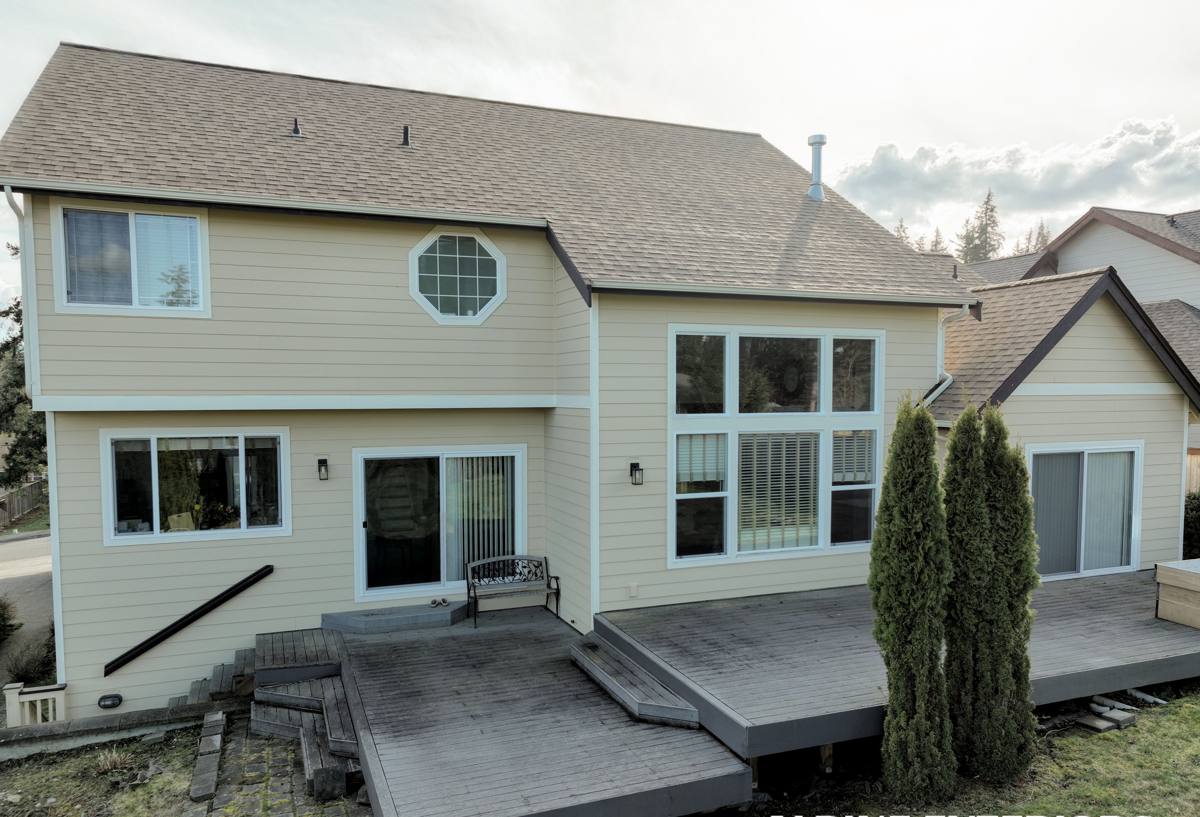
What Ferndale's Climate Actually Does to a Deck
Every part of a deck's failure story around here traces back to moisture and salt, working slowly and mostly out of sight.
Salt Air and Corrosion
Fasteners, joist hangers, and post bases that aren't rated for coastal exposure corrode faster here than the packaging suggests. Once a hidden fastener starts rusting, it loses holding strength long before there's any visible sign on the surface — which is part of why so many "surprise" structural problems show up on decks that looked fine.
Driving Rain and Standing Water
Rain in this area doesn't just fall straight down — wind-driven rain gets under flashing, into end grain, and behind ledger boards if those details weren't sealed correctly the first time. Wood that stays damp for extended periods is exactly what invites rot, and a deck built without a real drainage plan will trap water in the framing even if the surface looks dry.
Moss, Algae, and Shade
Ferndale's tree cover and long overcast stretches keep a lot of deck surfaces damp and shaded for much of the year. That's ideal growing conditions for moss and algae, both of which hold moisture against the decking surface and make boards slick and slower to dry between rains.
What a Correctly Built Deck Involves
A deck that's going to hold up here isn't just "build it stronger." It's a set of specific decisions made at each stage of construction.
Framing and Fasteners
We build with fasteners, joist hangers, and structural connectors rated for coastal and treated-lumber exposure — not the standard-grade hardware that's fine in a drier climate but corrodes early here. Every hanger, screw, and bolt in ground contact or coastal exposure gets specified for that environment, not just whatever's cheapest at the yard.
Ledger Attachment and Flashing
The ledger board — where the deck attaches to the house — is the single most common source of hidden rot on decks in this region. It has to be flashed correctly, with proper spacing and waterproofing between the ledger and the house wall, so water is directed away from the structure instead of collecting behind it. This is also one of the most commonly rushed or skipped steps on lower-bid deck jobs, and it's usually the reason a deck fails from the inside out.
Footings and Drainage
Whatcom County soil holds water, and a deck built on shallow or poorly placed footings can shift over a wet winter. Footings need to be set to proper depth and the area beneath and around the deck graded so water moves away from posts and framing instead of pooling against them.
Decking Material Selection
The decking surface itself needs to match how the space is actually used and how much upkeep the homeowner wants to commit to — covered under Material Options below.
Decking Material Options for This Climate
There's no single "correct" decking material — it's a trade-off between upfront cost, maintenance, and how well each option handles sustained damp and shade.
| Material | Upfront Cost | Maintenance | Moisture/Moss Behavior |
|---|---|---|---|
| Pressure-treated wood | Lowest | Annual cleaning, periodic staining/sealing | Needs regular sealing or moisture works into end grain and joints |
| Cedar | Moderate | Regular sealing to hold color and resist moisture | Naturally more rot-resistant than treated pine, but still needs upkeep in shade |
| Composite | Higher | Periodic washing, no staining/sealing | Doesn't absorb water like wood; still needs cleaning where moss/algae can grip the surface texture |
| PVC/capped polymer | Highest | Occasional washing | Most resistant to moisture absorption; smoothest surfaces shed moss more easily |
Wood costs less to install but asks more of the homeowner every year. Composite and PVC cost more upfront but trade that for lower long-term maintenance — a real consideration in a climate where "low maintenance" actually gets tested. We'll walk through the honest trade-offs for your specific site — sun exposure, tree cover, budget — rather than push one product line as a default.
Our Process, Start to Finish
- On-site assessment. We look at your existing deck or the build site, sun/shade exposure, drainage, and how the deck connects to the house.
- Design and material walk-through. We talk through layout, decking material, railing style, and any structural concerns, with a straightforward estimate — no pressure toward the most expensive option.
- Permitting. We handle the permit application where one's required (see below) so you're not navigating that alone.
- Demo or framing. For rebuilds, we remove and inspect old framing for hidden rot before building new structure. For new builds, footings and framing go in to spec, with coastal-rated hardware throughout.
- Ledger flashing and waterproofing. This step gets done correctly and inspected before decking goes down — it's not something to fix later.
- Decking, railing, and finish work. Surface material, railings, and any stairs are installed and finished.
- Walk-through. We go over maintenance expectations specific to your material choice and site conditions before we consider the job done.
Repair vs. Rebuild: Knowing Which Your Deck Needs
Not every aging deck needs to be torn out. The deciding factor is almost always what's happening at the framing level, not how the surface boards look.
- Soft or spongy spots when you walk the deck, especially near the ledger — check the framing underneath, don't just resurface
- Rust streaking from fasteners or hardware — a sign the hardware itself may be failing, not just cosmetic
- Gaps or separation where the ledger meets the house — a flashing or waterproofing failure, and a priority to address
- Persistent moss or dark staining in shaded sections — usually a drainage or airflow issue, not just a cleaning problem
- Railings that flex or posts that wiggle at the base — a structural connection issue, not a cosmetic one
- Surface boards that are faded or worn but the frame underneath is solid — often a candidate for resurfacing instead of full rebuild
If the framing and footings are sound, resurfacing with new decking can extend a deck's life significantly for a fraction of a full rebuild's cost. If the ledger or framing has rot, patching the surface just hides the problem for another season or two.
Maintenance for Salt Air and Moss Season
Whatever material you choose, a little seasonal attention goes a long way in this climate.
- Sweep debris and leaves off the deck regularly through fall — trapped organic matter holds moisture and feeds moss growth
- Rinse or wash the surface periodically, especially in shaded areas, to keep moss and algae from establishing
- Check and re-seal wood decking on a regular schedule — don't wait until it's visibly gray and dry
- Inspect fasteners and hardware yearly for early rust staining, particularly on decks facing prevailing weather
- Keep gutters and downspouts near the deck clear so runoff isn't discharging directly onto or under the structure
- Trim back overhanging branches where practical to improve sun exposure and airflow across the deck surface
Permits and Local Requirements
Deck projects in and around Ferndale may fall under City of Ferndale permitting or Whatcom County jurisdiction depending on the exact location, and requirements vary by deck height, size, and attachment to the house. Rather than guess at what applies to your property, we handle the permit determination and application as part of the process, so the project is built to code from the footings up.
Why Work With a Crew That Already Builds in Ferndale
A deck built to a generic national spec sheet isn't the same as one built by a crew that already knows what Whatcom County weather does to fasteners, ledgers, and wood over a few winters. We're not guessing at what "coastal exposure" means for hardware selection, or treating flashing as optional paperwork — it's what keeps a deck standing and dry ten years out instead of five. Local experience with the moss, the rain patterns, and the soil here shows up in the details that don't get noticed until they fail.
If you're planning a new deck or dealing with one that's showing its age, we're happy to take a look and put together a straightforward, no-pressure estimate — just fill out the form below and we'll go from there.