 Bellingham Roofing
 Why Ferndale's Climate Is Hard on Siding
Ferndale sits close enough to Bellingham Bay and the Salish Sea that salt-laden air is a daily fact of life for exterior building materials, not an occasional nuisance. Add Whatcom County's long, wet fall-through-spring stretch of driving rain, plus the shaded, damp conditions that let moss and algae take hold on north-facing walls, and you have a combination that punishes siding that isn't built for it. Paint fades and chalks faster near the water. Wood-based products absorb moisture at seams and cut edges. Vinyl can warp or discolor under repeated wet-dry cycling. None of this is unusual for our area — it's just what siding here has to stand up to, year after year, for decades.
A siding product and installation that would perform fine in a drier inland climate can fail early in Ferndale. That's the lens we use for every job in this area: not "will this look good on install day" but "will this still be doing its job in fifteen or twenty years of Whatcom County weather."
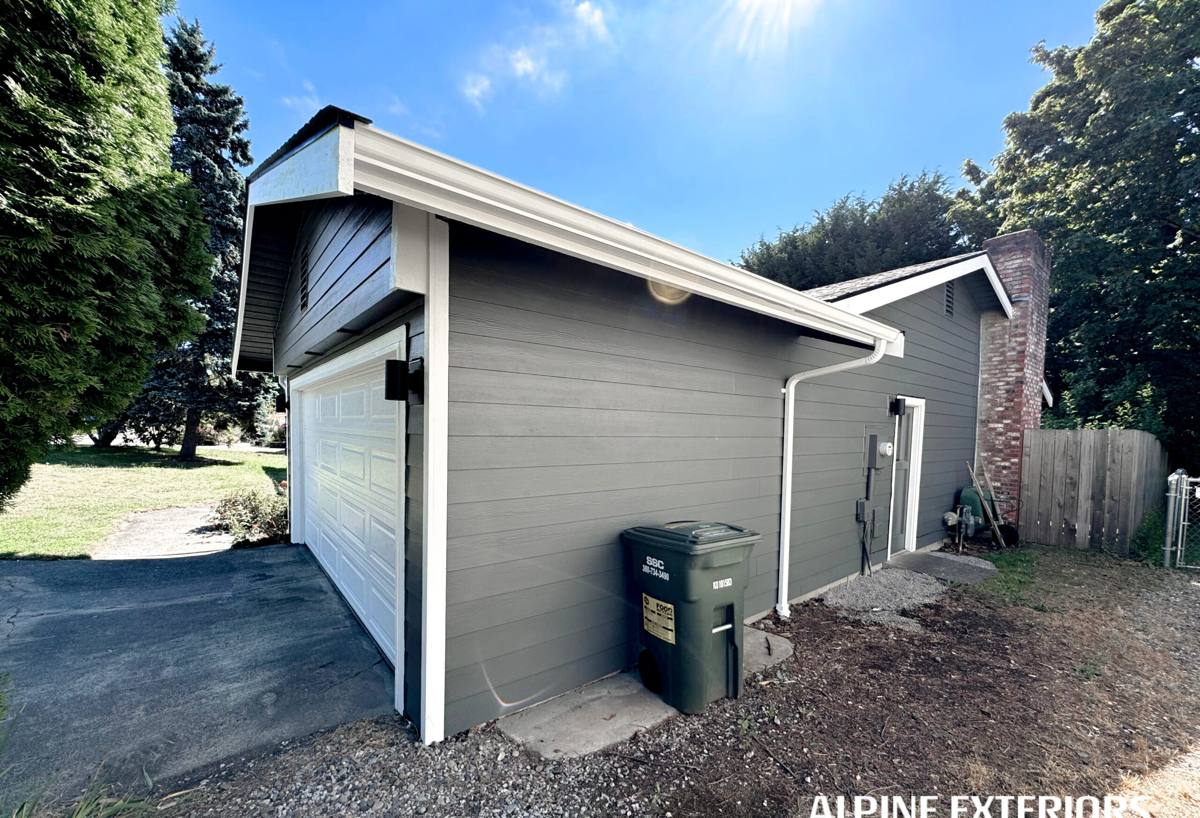
What Ferndale Homes Specifically Need From Their Siding
Salt Air and Coastal Exposure
Airborne salt accelerates corrosion of fasteners and trim, and it degrades lower-quality paint finishes faster than inland exposure would. Siding near the coast needs a finish that's baked on and chemically bonded rather than sprayed on site, along with corrosion-resistant fastening hardware, to hold color and integrity over time.
Driving Rain and Wind-Driven Moisture
Storms off the water tend to push rain sideways into walls rather than straight down, which puts extra stress on every horizontal joint, window flashing detail, and butt seam in a siding system. A product that manages water well on paper can still let moisture in if the installation doesn't account for wind-driven rain specifically — this is as much about technique as material.
Moss, Algae, and Shade
Mature tree cover and the region's damp, mild winters are ideal for moss and algae growth on shaded or north-facing elevations. Siding that stays consistently damp in these spots needs to resist moisture absorption at its core, not just shed water at the surface, or you end up with soft spots, staining, and premature failure hidden behind the color.
Why We Install Only James Hardie Fiber Cement
We made a deliberate decision as a company to install James Hardie fiber cement siding exclusively — not vinyl, not LP SmartSide, not Cemplank or Allura, not primed spruce or cedar. That's not a marketing position, it's a standard we hold ourselves to because of what we've seen these materials do (and not do) in exactly the kind of climate Ferndale has. Fiber cement is non-combustible, dimensionally stable, and doesn't feed moss or rot the way wood-based products can. James Hardie's ColorPlus finish is baked on in a controlled factory process, which gives it far better fade and chip resistance near salt air than field-applied paint. And Hardie's HZ5 product line is specifically engineered for the wetter climate zones the Pacific Northwest falls into, with formulations built around resisting moisture damage in exactly the freeze-thaw and driving-rain conditions Whatcom County sees.
| Factor | James Hardie Fiber Cement | Vinyl / Wood-Based Alternatives |
|---|---|---|
| Moisture behavior near coast | Engineered HZ5 formulation resists moisture damage; won't rot | Wood absorbs moisture at seams and cut edges; can warp or rot |
| Finish durability in salt air | Factory-baked ColorPlus finish, chip and fade resistant | Field-applied paint or molded color fades/chalks faster |
| Fire resistance | Non-combustible core material | Combustible (wood); vinyl can melt/deform under heat |
| Moss and algae resistance | Dense, stable core resists moisture retention | Wood substrates are more vulnerable to sustained dampness |
| Warranty structure | Long-term, transferable manufacturer warranty | Varies widely; often shorter or non-transferable |
We're not claiming other products can't be installed correctly by someone — only explaining why, after weighing moisture behavior, maintenance burden, and long-term performance in our specific climate, we standardized on one system and stopped installing the alternatives.
What a Correct James Hardie Installation Actually Involves
Manufacturer Specifications Matter More Than the Product Itself
Fiber cement siding is only as good as the installation behind it. James Hardie publishes detailed installation specifications covering fastener type and placement, minimum clearances from grade and roofing, house wrap and flashing integration, and joint treatment — and deviating from those specs is one of the most common ways a Hardie installation underperforms or voids warranty coverage. In a climate that pushes rain sideways into walls, getting flashing details right at windows, doors, and horizontal joints isn't optional finish work — it's the difference between a wall system that sheds water and one that traps it.
- Weather-resistive barrier installed and lapped correctly behind the siding
- Proper flashing at all windows, doors, and horizontal siding joints
- Correct fastener type, spacing, and penetration depth per Hardie specs
- Minimum clearance maintained between siding and grade, decks, and roofing
- Butt joints sealed or flashed per manufacturer detail, not just caulked over
- Proper gapping and sealant at trim and penetrations to allow for material movement
- Field-cut edges primed or sealed before installation
Every one of these details is inspectable, and any of them done wrong can lead to moisture intrusion that fiber cement's material advantages can't overcome. This is why we treat installation quality as equal in importance to the product decision itself.
Our Process for Ferndale Siding Projects
We start with an on-site assessment of the existing walls, looking specifically for signs of past moisture intrusion, soft sheathing, or failed flashing that need to be addressed before new siding goes up — covering a moisture problem instead of fixing it just guarantees it resurfaces. From there we walk through product line and color selection, confirm scope and a realistic timeline around our wet-season weather windows, and remove the old siding down to the sheathing rather than installing over it, so we can verify the wall assembly underneath is sound. Installation follows manufacturer specification for fastening, flashing, and clearances, with particular attention to wind-driven rain details at every horizontal joint and opening. We finish with a walk-through, cleanup, and warranty registration, so the transferable coverage is properly on record from day one.
Choosing the Right Hardie Product Line for This Climate
James Hardie's HZ5 line is formulated for climate zones like ours, where prolonged wet weather and freeze-thaw cycling are the main threats to a wall system, rather than extreme heat. Within that engineered base, homeowners choose from lap siding, shingle-style panels, and trim profiles in ColorPlus factory finishes, which matters in Ferndale specifically because a factory-cured finish holds up to salt air and UV exposure noticeably better than field-painted alternatives over a fifteen-to-twenty-year horizon. We'll walk through profile and color options as part of the estimate, matched to your home's exposure and the specific elevations that take the most weather.
Why Hiring a Crew That Already Works in Ferndale Matters
A crew that regularly works Ferndale and the surrounding Whatcom County communities already knows which elevations on a given lot typically take the worst wind-driven rain, where moss problems tend to start, and how local permitting and inspection processes run. That local pattern recognition shows up in the details — where extra flashing attention gets paid, which joints get watched most closely, how installation gets sequenced around our wet-season weather. It's the difference between a crew executing a generic installation and one that's adapting standard best practice to conditions they've seen play out on homes down the street.
Cost Factors for a Ferndale James Hardie Project
Every home is different, so we don't quote broad numbers without seeing the job, but the main factors that drive cost on a typical Ferndale siding project are consistent:
| Cost Factor | Why It Matters |
|---|---|
| Home size and wall complexity | More elevations, corners, and cutouts increase labor and material |
| Existing wall condition | Sheathing repair or moisture damage found during tear-off adds scope |
| Product line and profile | Lap, shingle-style, and trim selections vary in material cost |
| Color and finish choice | Standard ColorPlus colors vs. premium selections |
| Access and site conditions | Slope, landscaping, and staging access affect labor time |
We'll give you a specific, itemized number after seeing the home in person — not a generic per-square-foot estimate that ignores your home's actual condition and exposure.
If you're weighing a siding replacement in Ferndale and want a straight answer about what your home actually needs given its exposure and condition, we're happy to take a look and put together a free, no-pressure estimate — use the form below to get started.