 Bellingham Roofing
 Metal Roofing Built for Happy Valley's Conditions
Happy Valley sits close enough to Bellingham Bay and the surrounding waterways that homes here deal with a mix most inland neighborhoods don't: salt-laden air moving in off the water, long stretches of driving rain through fall and winter, and a moss season that can run eight months or more depending on tree cover and sun exposure. A roof in this neighborhood isn't just shedding water — it's fighting corrosion, holding fasteners tight through repeated wet-dry cycling, and resisting organic growth that wants to take hold in every seam and valley. Metal roofing, installed correctly, handles all three better than most other roofing materials available today. Installed incorrectly, it can trap moisture, corrode at the fasteners, or fail at the seams within a handful of years — which is why the installation details matter as much as the material choice itself.
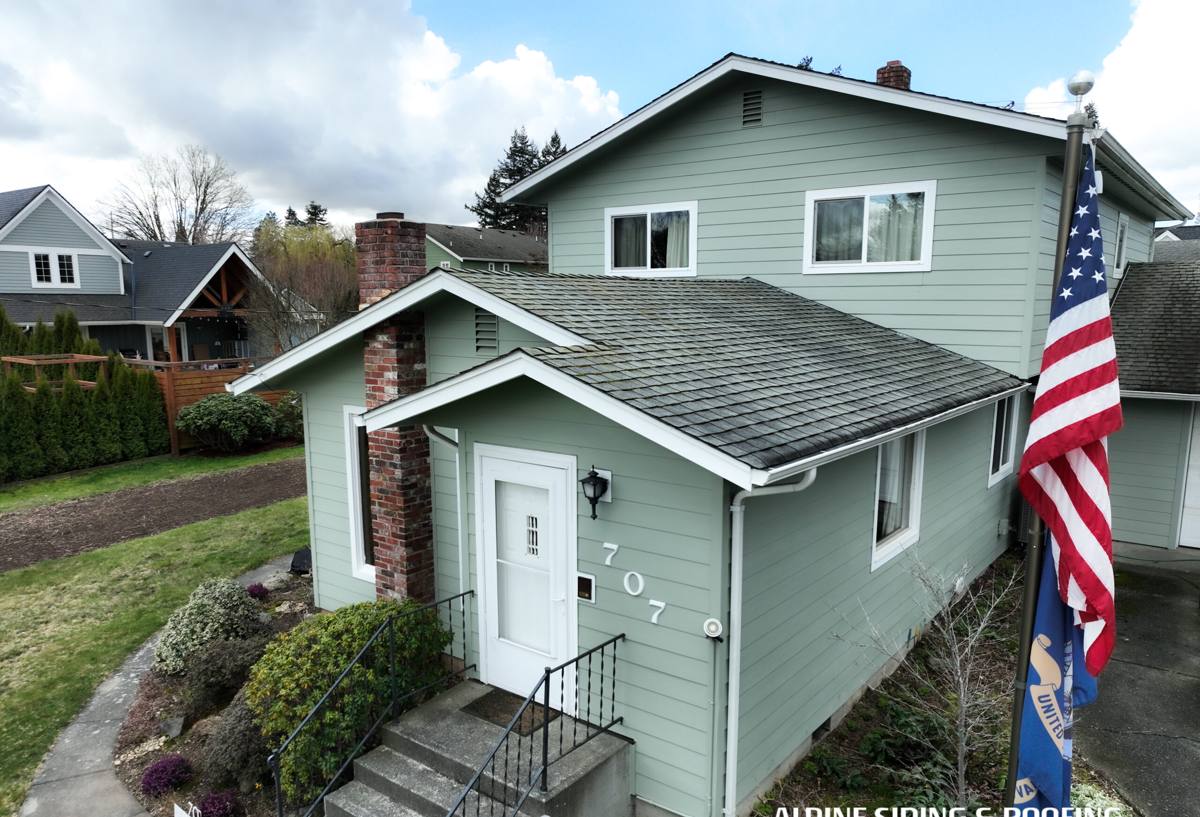
Why the Local Climate Changes the Job
A metal roof in Spokane and a metal roof in Happy Valley are not the same project, even if the panels look identical on a spec sheet. Three things drive the difference here:
- Salt air accelerates corrosion at cut edges, fastener heads, and any point where the protective coating is compromised — proximity to the water matters more than most homeowners expect.
- Driving rain, often pushed sideways by wind off the bay, tests flashing and seam design far harder than a straight-down rain would. Wind-driven water finds gaps that gravity alone never would.
- Moss and organic debris collect fastest in shaded valleys, north-facing slopes, and anywhere fir or cedar needles accumulate — and moss holds moisture against the roof surface for weeks at a time, which is exactly what accelerates coating breakdown and rust at exposed metal.
None of these are reasons to avoid metal roofing — metal is one of the better-performing materials against all three when it's specified and installed with them in mind. They're reasons the installer's local experience matters more than the brand name on the panel.
What a Correct Metal Roof Installation Actually Involves
A metal roof is only as good as what's underneath it and how the edges are finished. The panels themselves rarely fail — the underlayment, flashing, fastening pattern, and ventilation are where problems start.
Underlayment and Moisture Barrier
In a climate this wet, a high-quality synthetic underlayment (or self-adhered membrane at eaves, valleys, and penetrations) isn't optional. It's the backup layer that protects the roof deck if wind-driven rain or ice ever gets past the panel seams, and it's cheap insurance against the slow leaks that show up as stains long before anyone notices a roof problem from the ground.
Fastening and Panel Type
Exposed-fastener panels are less expensive but rely on rubber-gasketed screws that compress over time and need periodic checking. Standing seam panels use concealed clips instead of through-panel fasteners, which removes the most common long-term leak point entirely. In a salt-air, high-rain environment, we generally steer homeowners toward standing seam where budget allows — not because exposed-fastener systems are bad, but because fewer penetrations means fewer places for corrosion or seal failure to start.
Flashing and Detail Work
Valleys, chimneys, skylights, and wall-to-roof transitions are where the vast majority of metal roof leaks actually originate — not in the open field of panels. Correct flashing profiles, proper overlap, and sealant used only where it belongs (not as a substitute for proper metal-to-metal detailing) are what separate a roof that lasts decades from one that needs attention in year three.
Ventilation
Metal roofs perform best with a ventilated assembly underneath. Trapped moisture and heat in an unventilated attic shortens the life of the deck, the insulation, and eventually the roofing itself, regardless of what's on top.
Comparing Metal Options for a Coastal Neighborhood
Homeowners often ask which metal to choose. There's no single right answer — it depends on budget, roof complexity, and how much long-term maintenance the homeowner wants to take on.
| Option | Corrosion Resistance in Salt Air | Maintenance | Typical Lifespan |
|---|---|---|---|
| Steel (Galvalume/painted) | Very good with intact coating; cut edges need proper sealing | Low; inspect coating and fasteners periodically | 40-60+ years |
| Aluminum | Excellent — naturally resists salt corrosion | Low | 40-60+ years |
| Exposed-fastener steel panels | Good, but gasketed screws are the weak point | Moderate; check/replace gaskets over time | 25-40 years |
| Standing seam (steel or aluminum) | Very good to excellent | Low; concealed fasteners reduce failure points | 40-60+ years |
Aluminum carries a real advantage this close to salt water since it doesn't rely on a coating to resist corrosion the way steel does. Steel is a fine, more affordable choice as long as cut edges and fastener penetrations are sealed correctly during installation — that detail work is exactly where a crew's experience shows.
Our Process for a Happy Valley Metal Roof
We keep the process straightforward and communicate at each stage, since a roof replacement is disruptive enough without surprises.
- On-site assessment. We look at the existing roof, deck condition, ventilation, and any problem areas — valleys, chimneys, low-slope sections — before recommending a system.
- Written proposal. Panel type, underlayment, flashing plan, and a clear cost breakdown, so there's no guessing about what's included.
- Tear-off and deck inspection. Old roofing comes off and we check the deck for rot or soft spots, especially in areas that have held moss or standing debris for years — those get repaired before anything new goes down.
- Underlayment and flashing installation. This is the layer that does the real waterproofing work; it goes in before a single panel is placed.
- Panel installation. Fastened or seamed per the system spec, with attention to manufacturer-required clearances and fastening patterns rather than shortcuts.
- Final walkthrough and cleanup. We check seams, flashing, and fastener lines, and clear the site of debris and old material.
Moss, Debris, and Long-Term Maintenance
A well-installed metal roof sheds moss far more effectively than composition shingle, since there's no rough granule surface for spores to grip. But Whatcom County's moss season is long enough that even metal roofs benefit from occasional attention — especially in shaded sections under fir or cedar canopy, which is common in and around Happy Valley.
- Keep gutters and valleys clear of needles and leaf debris, which trap moisture against the panel surface.
- Trim back overhanging branches where practical to reduce shade and debris buildup.
- Have seams, flashing, and fastener lines checked periodically rather than waiting for a visible leak.
- Avoid pressure washing metal panels — it can damage coatings and force water under seams; a soft brush and low-pressure rinse is safer.
None of this is heavy maintenance compared to other roofing materials — it's the reason many homeowners choose metal in the first place. But "low-maintenance" isn't "no-maintenance," particularly in a climate that keeps roofs wet for months at a stretch.
What Drives Cost on a Metal Roof
| Factor | Why It Matters |
|---|---|
| Panel type | Standing seam costs more up front than exposed-fastener panels but reduces long-term leak risk |
| Roof complexity | Valleys, dormers, and multiple roof planes add labor and flashing detail |
| Deck condition | Rot or soft decking found during tear-off adds repair cost but prevents bigger problems later |
| Metal type | Aluminum generally costs more than steel but offers superior corrosion resistance near the water |
| Access and pitch | Steep or hard-to-access roofs take longer and require additional safety measures |
We give homeowners a real range during the on-site assessment rather than a number over the phone, since roof complexity varies so much from one property to the next — even within the same neighborhood.
Why Local Experience in Happy Valley Matters
A crew that regularly works this part of Bellingham already knows which roof orientations hold moss longest, which flashing details fail first when wind-driven rain comes off the bay, and how tree cover in a given block affects debris buildup. That knowledge shows up in small decisions during installation — extra attention to a north-facing valley, a fastener pattern chosen with salt exposure in mind — that a crew unfamiliar with Whatcom County's specific conditions might not think to prioritize. It's the difference between a roof that's technically installed to code and one that's actually built for where it sits.
Signs Your Current Roof May Need Attention
- Rust streaking or bubbling paint on an existing metal roof, especially near fasteners or cut edges
- Moss buildup that returns quickly after cleaning, particularly in shaded valleys
- Visible sagging or soft spots when viewed from the attic or from a ladder
- Water stains on interior ceilings, especially after wind-driven storms
- A roof original to the home that's approaching or past its expected service life
Any of these is worth a look before it turns into a bigger repair — catching a flashing or fastener issue early is far less disruptive than dealing with deck rot later.
If you're weighing metal roofing for a home in Happy Valley, we're glad to walk the roof with you and give a straightforward, no-pressure estimate — just fill out the form below and we'll get in touch.