 Bellingham Roofing
 Storm Damage Roof Repair Built for Happy Valley's Conditions
Happy Valley is one of Bellingham's older, well-established neighborhoods, with mature tree cover, a mix of home ages, and close proximity to Bellingham Bay. That combination is exactly what makes storm damage here a little different from what you'd see on a newer subdivision roof out on flatter, more exposed ground. Between the salt-laden air rolling in off the water, driving rain that comes in sideways during winter storms, and a moss season that stretches for much of the year under all that shade, roofs in this part of Whatcom County take a specific kind of beating.
We repair storm-damaged roofs in Happy Valley regularly, and most of the calls we get aren't from one dramatic event. They're the result of smaller storms stacking up over a season, each one loosening a shingle, working a flashing seam a little looser, or letting a bit more moisture into a spot that was already weakened by moss or age. By the time a homeowner notices a stain on the ceiling, the damage has usually been building for a while.
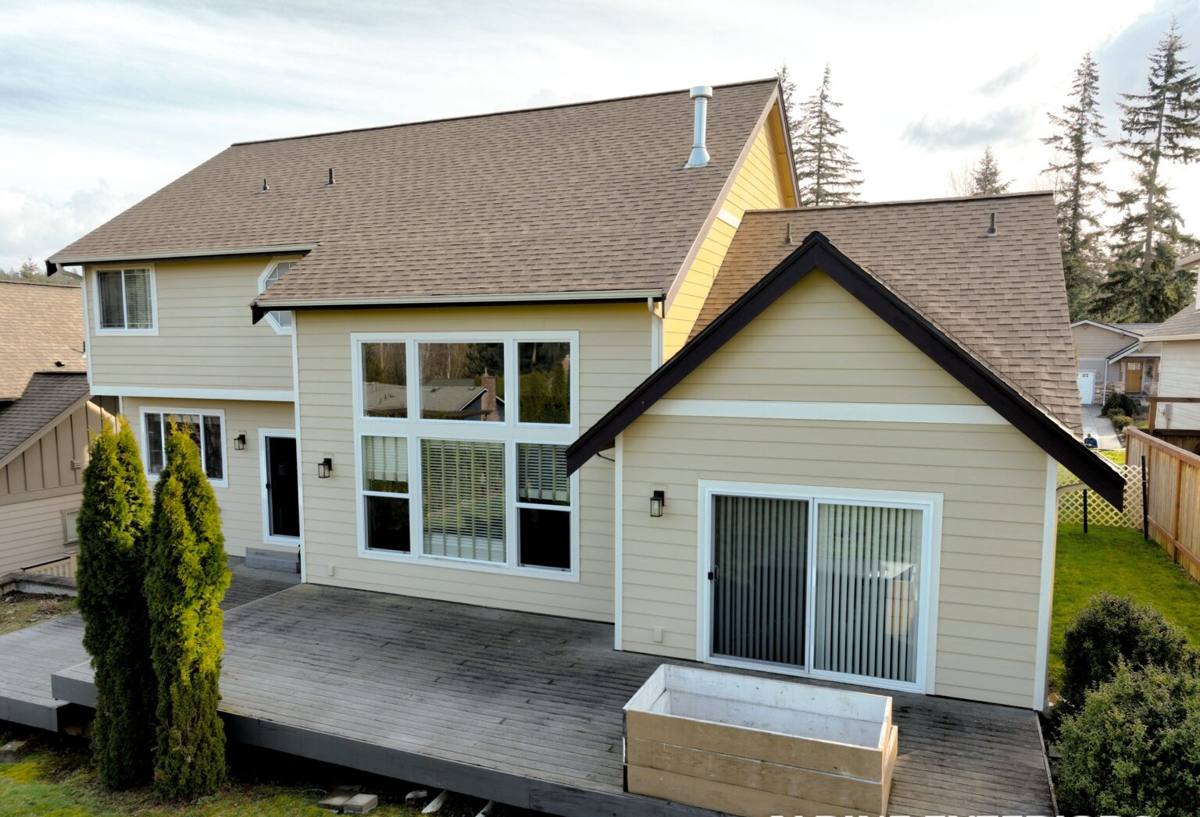
Why Storm Damage Behaves Differently on a Happy Valley Roof
Salt Air and Corrosion
Bellingham's proximity to the bay means roofing metal — flashing, vent caps, fasteners, gutter hardware — is exposed to salt air more than it would be further inland. Salt exposure speeds up corrosion, and corroded flashing is one of the most common places we find active leaks after a storm. It's not dramatic damage, just a slow breakdown that a wind-driven rain event will exploit the moment there's a gap.
Driving, Wind-Driven Rain
Storms coming off the water often bring rain that isn't falling straight down — it's being pushed sideways under shingle edges, around chimney flashing, and into any spot where the roof's water-shedding layers aren't fully sealed. A roof that would stay dry in a calm, straight-down rain can still leak in a wind-driven event if the underlayment or flashing details aren't right.
Moss and Tree Cover
Happy Valley's tree canopy is part of what makes it a pleasant place to live, but it also means shade, damp roof surfaces, and a long moss season. Moss holds moisture against shingles, lifts their edges over time, and creates channels where wind-driven rain can get underneath. It also adds weight and can trap debris that clogs valleys and gutters right when a storm needs them to be flowing freely.
Branch and Debris Impact
Mature trees mean occasional limb drop during high winds. Even a small branch strike can crack a shingle, dent a vent cap, or knock flashing out of alignment — damage that's easy to miss from the ground but that opens the door to a leak during the next storm.
Common Storm Damage We Find on Homes in This Area
- Lifted or torn shingles along ridge lines and roof edges, where wind pressure is highest
- Flashing pulled loose or corroded around chimneys, skylights, and roof-to-wall junctions
- Moss-related shingle lifting that turns into active leaks once a storm adds wind-driven rain
- Cracked or punctured shingles and vent boots from branch or debris impact
- Clogged valleys and gutters causing water to back up under roofing material
- Soft or discolored decking found once shingles are pulled back, from slow moisture intrusion over multiple storms
What a Correct Storm Damage Repair Actually Involves
A storm damage repair is only as good as the inspection behind it. Patching the visible symptom without finding the underlying cause is how the same leak comes back after the next storm. A proper repair on a Happy Valley roof typically includes:
1. A Full-Roof Inspection, Not Just the Damaged Spot
Wind and rain damage rarely stays confined to one area. We check the whole roof — not just where the homeowner noticed a stain — because storm forces that lifted one section of shingles often stressed neighboring areas too.
2. Moisture and Decking Assessment
Where there's been a leak, we check whether water reached the roof decking underneath. Damp or soft decking needs to be dried out or replaced before new roofing material goes down — covering wet decking with new shingles just traps the problem.
3. Flashing and Underlayment Repair, Not Just Shingles
Most storm leaks trace back to flashing or underlayment failure, not the shingles themselves. A repair that only replaces surface shingles without addressing the flashing or underlayment underneath is treating the symptom, not the cause.
4. Matched, Compatible Materials
We match repair materials to what's already on the roof as closely as possible, both for appearance and so the repair performs consistently with the surrounding roofing rather than creating a new weak seam.
Emergency Tarp vs. Permanent Repair
If a storm has caused an active leak, the first priority is stopping water intrusion — sometimes with a temporary tarp or dry-in — followed by a permanent repair once conditions allow a proper inspection and the right materials are on hand. We're upfront about which stage we're in and what the timeline looks like.
Our Process for Happy Valley Homeowners
- Contact and initial assessment. We ask what you're seeing — a stain, a missing shingle, water during a specific storm — so we know what to look for first.
- On-site inspection. We walk the roof and check the interior (attic, ceilings) where accessible, looking for both the obvious damage and the underlying cause.
- Clear explanation and options. We tell you what we found, what caused it, and what repair options exist — including honest trade-offs if there's more than one reasonable path.
- Documentation. If you're planning to file an insurance claim, we document the damage with photos and a written scope that supports your claim.
- Repair. We complete the work with materials matched to your existing roof, and we clean up debris and old material when finished.
- Follow-up. We check that the repair is holding, particularly after the next significant rain event.
Insurance and Storm Claims: What to Know
Many storm damage repairs are at least partially covered by homeowner's insurance, especially when there's a clear event — a windstorm, a falling limb — tied to the damage. We're not insurance adjusters and don't promise coverage outcomes, but we can provide the kind of documentation and written scope that helps support a claim: photos, a description of the damage, and an itemized repair estimate. If your damage built up gradually from moss or age rather than a single storm event, coverage is less certain, and we'll tell you that honestly rather than framing every repair as a claims opportunity.
What Affects the Cost of a Storm Damage Repair
| Factor | Why It Matters |
|---|---|
| Extent of the damage | A few shingles and a flashing seal cost far less than decking replacement or a multi-area repair |
| Roof access and pitch | Steeper roofs and limited access add labor time and safety equipment needs |
| Decking condition | Water-damaged decking found under shingles adds material and labor beyond the original visible repair |
| Material match | Older or discontinued shingle lines can be harder to match, sometimes requiring a wider repair area |
| Moss and debris removal | Roofs with heavy moss buildup need cleaning before the repair area can be properly assessed and sealed |
| Timing and urgency | Emergency tarping or dry-in work ahead of an incoming storm is priced separately from the permanent repair |
Because of that range, we avoid quoting a number before we've actually seen the roof. A rough estimate given without an inspection is usually wrong in one direction or the other.
Reducing Repeat Storm Damage on a Happy Valley Roof
Given the moss season and tree cover common to this neighborhood, a few maintenance habits go a long way toward keeping storm damage from becoming a recurring problem:
- Keep gutters and valleys clear of needles and leaf debris, especially heading into fall storm season
- Address moss buildup before it lifts shingle edges — the earlier it's treated, the less damage it causes
- Trim back tree limbs that overhang the roof to reduce impact risk and shade-driven moisture
- Have flashing around chimneys, vents, and skylights checked periodically, since these are the most common failure points in wind-driven rain
- Get a roof looked at after any storm with sustained high winds, even if nothing looks obviously wrong from the ground
Why It Matters to Hire a Crew That Already Works in Happy Valley
Roofing that performs well on a coastal, forested lot in Whatcom County isn't quite the same challenge as roofing on an exposed, treeless lot inland. A crew that regularly works Happy Valley and similar Bellingham neighborhoods already understands how salt air affects flashing and fasteners, how moss builds under this much tree cover, and how wind-driven rain off the bay tends to find its way into roofs that would otherwise be fine in a calmer climate. That local familiarity means fewer surprises during inspection and repairs that are built for the conditions your roof actually faces, not generic assumptions.
It also means faster response when a storm has caused active damage. Knowing the neighborhood, common roof types, and typical access challenges lets us move quickly from that first call to a stopped leak.
Get a Free, No-Pressure Estimate
If a recent storm has left you with a leak, missing shingles, or just some peace of mind you'd like to check on, we're happy to take a look. The estimate is free, there's no obligation, and we'll give you a straight answer about what we find — whether that's a small repair or something more involved. Fill out the form below to get started.