 Bellingham Roofing
 Siding Replacement Built for Lynden's Weather, Not Just Its Looks
Lynden sits close enough to the water and open farmland that homes here take a steady beating most inland towns never see: salt-laden air drifting in off the Sound, driving rain that hits siding sideways during winter storms, and a moss season that stretches from fall through spring. Siding replacement out here isn't just a cosmetic upgrade — it's a chance to put a wall assembly on the house that's actually built for Whatcom County conditions instead of fighting them for the next twenty years.
We've done enough of this work in and around Lynden to know which failure patterns show up first, which products hold up, and which corners get cut on a rushed install. This page walks through what a correct siding replacement looks like here, and why the crew you hire matters as much as the material.
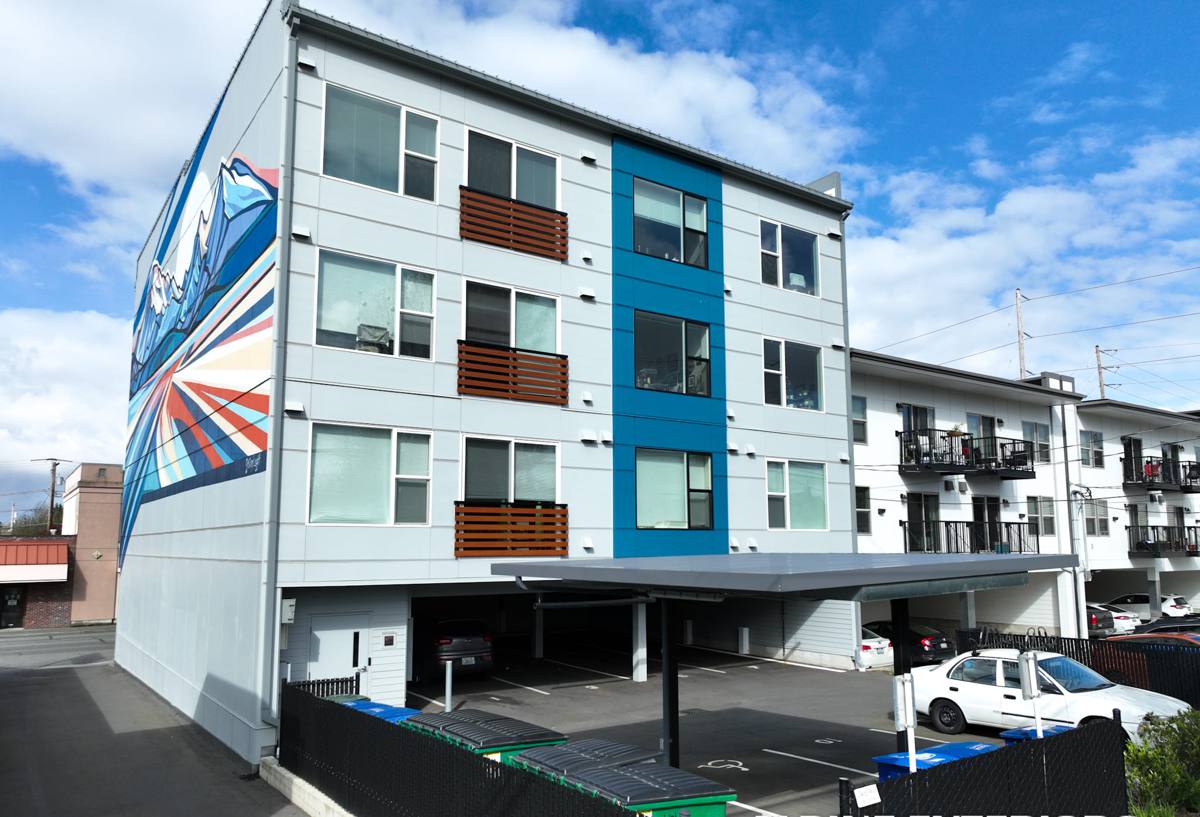
Why Lynden's Climate Wears Out Siding Faster
Three things work against exterior siding in this part of Whatcom County, often at the same time:
- Salt air: proximity to Puget Sound and Bellingham Bay puts a fine salt content in the air that accelerates corrosion on fasteners, trim flashing, and any metal component that isn't properly rated or protected.
- Driving rain: Pacific storms don't just fall straight down here — wind-driven rain gets pushed sideways into wall assemblies, which means the water management behind the siding matters as much as the siding itself.
- Extended moss and mildew season: the same damp, shaded, mild-temperature conditions that make this a great place to live also keep siding surfaces wet longer than in drier climates, which feeds moss, algae, and mildew growth on north-facing and shaded walls.
Any one of these is manageable. Combined, over years, they punish siding materials that weren't engineered for coastal Pacific Northwest exposure — and they punish sloppy installation even faster than they punish the material itself.
Signs Your Siding Has Reached the End of Its Useful Life
Not every siding problem means a full replacement. But there's a point where patching stops making sense and a full re-side becomes the honest recommendation. Walk your home's exterior and look for:
- Soft, spongy, or crumbling siding when you press on it, especially near the bottom courses and around windows
- Paint that keeps failing within a year or two of repainting, no matter how good the paint job was
- Visible cracking, warping, or delamination across multiple sections rather than one isolated spot
- Persistent moss or dark staining that returns within months of cleaning, particularly on shaded or north-facing walls
- Gaps opening up at seams, corners, or trim where caulking keeps failing
- Rising energy bills that point to a wall assembly no longer doing its job as a weather barrier
If you're seeing two or three of these at once, it's usually a sign the underlying moisture barrier has been compromised for a while, not just the visible siding.
Why We Only Install James Hardie Fiber Cement
We standardized on James Hardie fiber cement siding for every re-side we do, including in Lynden, and we don't install vinyl, LP SmartSide, Cemplank, Allura, or bare cedar or primed spruce. That's not a marketing position — it's a decision built around what actually holds up to salt air, driving rain, and a long wet season without turning into a maintenance project for the homeowner.
Non-combustible, dimensionally stable
Fiber cement is engineered from cement, sand, and cellulose fibers, which makes it non-combustible and dramatically more resistant to swelling, warping, and moisture-driven movement than wood-based or wood-composite products. In a climate where siding stays damp for long stretches, that dimensional stability is what keeps seams tight and paint lines straight year after year.
Climate-engineered product lines
James Hardie makes region-specific formulations (their HZ product lines) engineered for different climate zones, including wetter, milder regions like ours. That matters here specifically — a product engineered for a hot, dry climate doesn't behave the same way in a place that sees rain nine months a year.
ColorPlus factory finish
Instead of field-painted siding that's only as good as the weather conditions on install day, ColorPlus is a factory-applied, baked-on finish with UV-cured coating layers. It resists fading, chipping, and the early paint failure that's common on field-finished siding in damp climates, and it comes backed by its own finish warranty separate from the substrate warranty.
Warranty that transfers
James Hardie backs its siding with a strong, transferable limited warranty — a real factor if you plan to sell the home down the road, since it gives the next owner confidence in the exterior rather than a question mark.
We're upfront that other products get some things right — vinyl is cheap and low-maintenance in the short term, LP SmartSide is workable and affordable, cedar looks beautiful when new. But when we weigh moisture behavior, long-term maintenance burden, and how each product performs specifically in a wet coastal climate over fifteen or twenty years, fiber cement is what we're willing to put our name behind and stand on for a warranty.
What a Correct Siding Replacement Actually Involves
The siding itself is maybe half the job. The other half — the part homeowners rarely see once it's covered up — is what determines whether the new siding lasts 30 years or starts failing in five.
Full tear-off, not overlay
We remove the old siding down to the sheathing rather than installing over it. Siding over siding traps moisture and hides existing damage — and in a climate that already fights excess moisture, that's a bad trade to make for a faster install.
Sheathing inspection and repair
Once the old siding is off, we inspect the sheathing underneath for rot, soft spots, or water damage, particularly around windows, doors, and any area where the old flashing may have failed. Any compromised sheathing gets replaced before anything new goes up — installing new siding over damaged sheathing just hides the problem for another owner to find later.
Weather-resistive barrier and flashing
A correctly installed weather-resistive barrier (house wrap) and properly integrated flashing at windows, doors, and roof-to-wall transitions is what actually keeps driving rain out of the wall assembly. The siding is the visible layer; this is the layer doing the real water management work, and it's the step that gets rushed on cut-rate installs.
Fastening to manufacturer spec
James Hardie siding has specific fastening patterns, nail types, and clearance requirements — including gaps at the ground, roofline, and other siding-to-trim transitions — that are part of what keeps the warranty valid and the product performing as engineered. Skipping these details is one of the most common ways installers void a warranty without the homeowner ever knowing.
Comparing Siding Options for a Lynden Home
| Factor | James Hardie Fiber Cement | Vinyl | LP SmartSide / Engineered Wood |
|---|---|---|---|
| Moisture resistance in wet climates | Excellent — non-combustible, dimensionally stable | Good, but can warp or buckle with heat/cold cycling | Fair — engineered wood is moisture-sensitive if installation details are off |
| Finish durability | Factory ColorPlus finish, long fade resistance | Color molded in, but fades and chalks over time | Field or factory painted, repaints needed sooner |
| Fire resistance | Non-combustible | Combustible | Combustible |
| Typical lifespan when correctly installed | 30+ years | 20-30 years | 15-25 years |
| Warranty structure | Strong, transferable limited warranty | Varies widely by manufacturer | Moderate, install-sensitive |
| Upfront cost | Higher | Lowest | Mid-range |
Upfront cost is real, and we won't pretend fiber cement is the cheapest option on the shelf. But for a home that has to shed driving rain and resist salt air for decades, the long-term cost picture — repainting, repairs, premature replacement — tends to favor the product engineered for this exact climate.
Our Process, Start to Finish
- Free on-site assessment — we walk the exterior, check the sheathing where accessible, and talk through what we're seeing before recommending a full replacement over a repair.
- Written estimate — a clear scope covering tear-off, sheathing repair allowances, weather barrier, flashing, and the specific Hardie products and colors, with no vague allowances buried in the fine print.
- Tear-off and inspection — old siding comes off, sheathing gets inspected, and any surprises get flagged and discussed with you before we move forward.
- Weather barrier and flashing installation — the moisture management layer goes in to spec before a single piece of new siding is hung.
- James Hardie installation — fastened and detailed to manufacturer specification so the product warranty stays intact.
- Final walkthrough — we go over the finished job with you, point out anything worth knowing for maintenance, and make sure you're satisfied before we call it done.
Why Hiring a Crew That Already Works in Lynden Matters
Siding installation quality isn't uniform — it varies a lot depending on whether the crew doing it understands local conditions. A crew that regularly works Whatcom County homes already knows how far to run the weather barrier past window and door openings for this rainfall pattern, which wall orientations need extra attention for moss and moisture buildup, and how salt exposure affects fastener choice near the water. That's knowledge you only get from doing the work here repeatedly, not from a general contractor passing through on a one-off job.
It also means a shorter response time if you ever need a warranty question answered or a follow-up look at something after the job is done — you're not trying to track down a crew that did one job in the area and moved on.
Maintenance After Your New Siding Goes Up
James Hardie siding is genuinely low-maintenance compared to wood, but "low-maintenance" isn't "zero-maintenance," especially in a climate that grows moss on everything. A few habits keep it performing the way it's designed to:
- Rinse the exterior annually, focusing on shaded and north-facing walls where moss and mildew take hold first
- Keep gutters clear so overflow doesn't run down the siding face and stay wet longer than it should
- Trim back shrubs and trees that keep any section of wall in constant shade or trap moisture against the siding
- Recaulk trim joints and penetrations if you notice gaps opening up, rather than waiting for water intrusion to show up as damage
- Watch for any impact damage after storms and get it addressed promptly rather than leaving an exposed edge
None of this is heavy upkeep — it's the difference between a siding job that coasts to its full lifespan and one that quietly loses years to neglect.
Get a Straight Answer on Your Siding
If your Lynden home's siding is showing its age — soft spots, failing paint, moss that won't quit, or just enough years on it that you're wondering what's next — we're happy to take a look and give you a straight, no-pressure assessment of what it actually needs. Request a free estimate using the form below and we'll walk the exterior with you before recommending anything.