 Bellingham Roofing
 Why Sehome Roofs Wear Differently in Bellingham's Climate
Sehome sits close enough to Bellingham Bay that salt-laden air is a constant factor, not an occasional one. That air works on exposed metal fasteners, flashing, and vents year-round, and it doesn't take a storm to do it — just time. Add in the driving rain that comes off the water during fall and winter systems, and you have wind-driven moisture that finds its way under poorly sealed shingles, loose flashing, and worn boots around vent pipes.
Then there's moss. Whatcom County's damp, mild climate gives moss a long growing season on north-facing slopes and anywhere tree cover keeps a roof shaded and slow to dry. On an older or improperly ventilated roof, moss doesn't just sit on the surface — it lifts shingle edges, holds water against the roof deck, and accelerates granule loss. A roof built or replaced without this climate in mind will show its age faster here than the same roof would in a drier part of the state.
None of this is unusual for Bellingham — it's just the baseline any roofing job in this part of Whatcom County has to be designed around. A new roof installation done right accounts for salt exposure, wind-driven rain, and moss pressure from the first shingle to the last flashing detail.
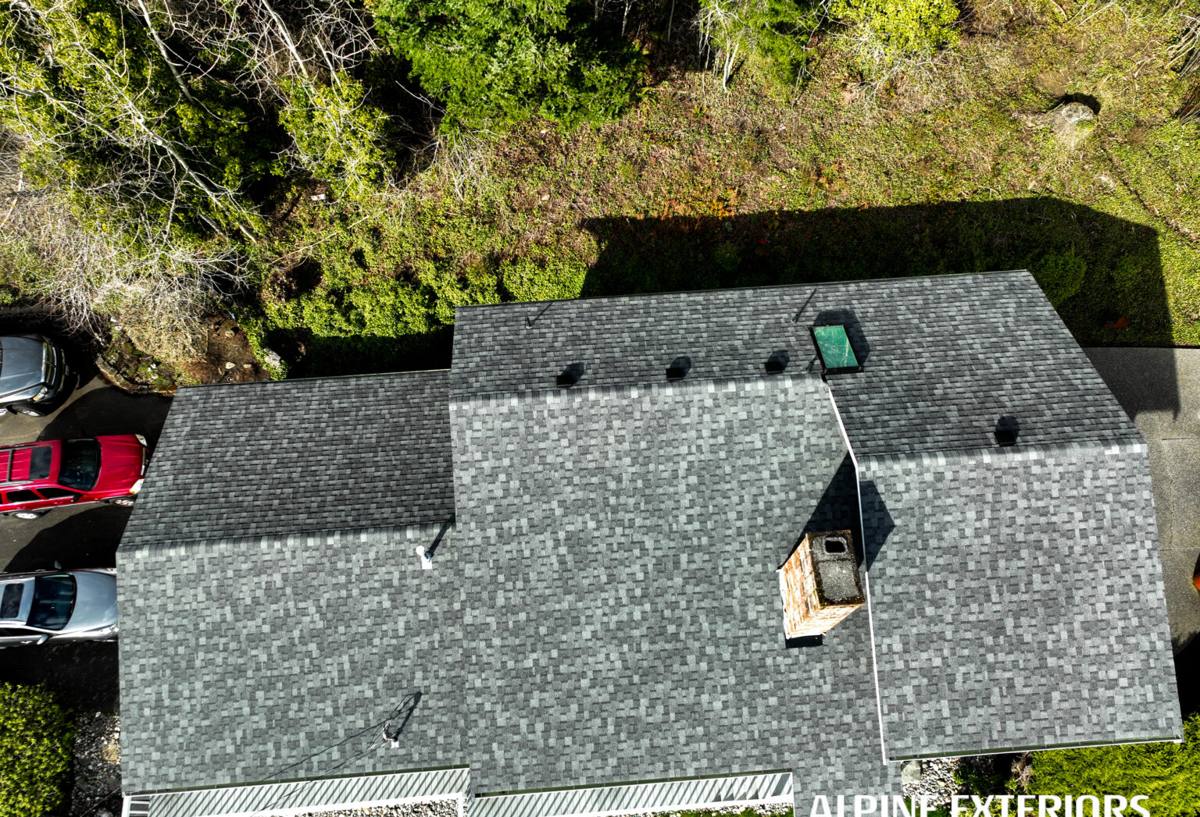
Signs a Sehome Home Is Actually Due for Full Replacement
What You Can See From the Ground
Curling or cupping shingles, bald patches where granules have washed off, and heavy moss or algae streaking are the most visible signs. Sagging rooflines, especially along valleys or over porches, usually mean the deck underneath has taken on moisture damage and isn't a simple repair anymore.
What You'll Find in the Attic
Daylight coming through the roof boards, damp or discolored insulation, and rusted nail points poking through the sheathing all point to a roof that's failing from the inside. If you're seeing any of this, patch repairs are usually just delaying a bigger, more expensive fix.
The honest answer isn't always "replace it." Plenty of roofs with 5-10 years of life left just need targeted repair, better ventilation, or a moss treatment plan. A straight assessment — not a sales pitch — is the starting point either way.
What a Correct New Roof Installation Actually Involves
A new roof is more than swapping old shingles for new ones. The parts that don't show are usually what determine whether the roof lasts 15 years or 30.
- Full tear-off — removing old material down to the deck rather than layering over it, so we can actually see what's underneath.
- Deck inspection and repair — replacing any sheathing that's soft, delaminated, or water-stained before anything new goes on.
- Ice-and-water shield at eaves, valleys, and around penetrations — the areas most exposed to wind-driven rain.
- Synthetic underlayment across the field for a consistent secondary moisture barrier.
- New flashing at chimneys, walls, skylights, and valleys — reused flashing is one of the most common causes of early leaks.
- Balanced ventilation so intake and exhaust actually work together, not just vents added for appearance.
- Proper fastening and exposure for the chosen material, matched to local wind and moisture conditions.
Skipping any one of these steps is how a roof that looks fine from the street ends up with rot, mold, or a failed warranty claim five years in.
Choosing a Roofing System That Holds Up Near the Water
Material choice matters more in Sehome's environment than it would somewhere drier and more sheltered. Each option below has real trade-offs — we'll walk through which fits your home, your budget, and how much maintenance you want to take on.
| Material | Typical Lifespan Here | Moss/Moisture Behavior | Maintenance | Relative Upfront Cost |
|---|---|---|---|---|
| Architectural asphalt shingle | 20-30 years | Good with proper ventilation; algae-resistant granules help on shaded slopes | Low to moderate | Lowest to mid |
| Standing seam metal | 40-50+ years | Sheds moisture fast; minimal moss growth on smooth panels | Low | Highest |
| Cedar shake | 20-30 years with upkeep | Attractive but absorbs moisture; needs regular cleaning and treatment in a wet climate | High | High |
| Synthetic/composite shingle | 30-50 years | Resists moisture absorption well; low organic material for moss to grip | Low | Mid to high |
Architectural asphalt remains the most common choice for Sehome homes because it balances cost, appearance, and performance well when installed with the right underlayment and ventilation. Metal and synthetic systems earn their higher upfront cost through decades of reduced maintenance — worth discussing if you plan to stay in the home long-term. Cedar can be the right call for the right homeowner, but we're upfront that it demands more attention in a climate this damp; we'll tell you that honestly rather than talk you out of it or into it.
Our New Roof Installation Process, Start to Finish
- On-site inspection and written estimate — we get on the roof, check the deck where accessible, and give you a straight assessment, not just a number.
- Material selection — we walk through the options above based on your budget, home style, and how much upkeep you want going forward.
- Permitting — we handle the City of Bellingham permit application for the job.
- Scheduling around weather — we build the job for a dry window where possible, since tear-off day needs to close in before rain moves through.
- Tear-off and deck inspection — old material comes off, the deck gets inspected, and any needed sheathing repairs happen before anything new goes down.
- Dry-in — ice-and-water shield and underlayment go on the same day the deck is exposed, so your home isn't left open to weather overnight.
- Flashing, ventilation, and field installation — the details that determine long-term performance, done in sequence, not rushed.
- Final walkthrough and cleanup — including a magnetic sweep for stray nails around the yard and driveway.
- Warranty paperwork — manufacturer and workmanship warranty documentation handed over so you have it on file.
Ventilation and Moss Prevention Built Into the Job
A roof that can't breathe traps moisture underneath it, which speeds up deck rot and gives moss and algae a head start from the inside out. We size and balance intake vents (usually at the eaves) against exhaust vents (ridge or high-point) so air actually moves through the attic space instead of just sitting there.
On the surface, algae-resistant shingle granules and, where appropriate, zinc or copper strips near the ridge can help slow moss growth on shaded or north-facing slopes — useful tools, not a guarantee against it. Trees that keep a roof section shaded and damp for most of the day will always need more attention than a slope that gets regular sun, regardless of material. We'll flag those areas during the estimate so you know what to expect.
Permits, Timeline, and What to Expect During the Job
Most straightforward residential re-roofs in Bellingham take one to three days on-site once the permit is in hand, weather permitting. Rain doesn't have to stop a job outright, but we won't leave a deck exposed overnight if a system is moving through — that's part of why scheduling around Whatcom County's weather patterns matters as much as the install itself.
During the job, expect a dumpster or material staging in the driveway, some noise, and debris coming off the roof in a controlled area. We do a full cleanup and nail sweep at the end of each day and again at project completion, especially important if you have kids, pets, or park close to the house.
Why a Crew That Already Works in Sehome Matters
Neighborhood familiarity isn't just convenience — it shapes real decisions on the job. Knowing which streets have tight access for material delivery, which lots run heavier tree cover and need extra moss consideration, and how the local permit process typically moves all shortens the path from estimate to a finished, weathertight roof.
It also means we're not guessing about how a given product performs a few blocks away — we've seen what holds up under Bellingham Bay's salt air and what struggles, and we'll tell you plainly which is which for your home.
Questions to Ask Before You Hire a Roofer in Sehome
- Are you licensed and insured to work in Washington State, and can you provide proof?
- Does the estimate include full tear-off, deck inspection, and new flashing — or is it a surface-level quote?
- What underlayment and ice-and-water shield products are included, and where will they be installed?
- How is attic ventilation being assessed and balanced as part of this job?
- What's covered under the workmanship warranty, separate from the manufacturer's material warranty?
- Who's actually doing the physical work — your own crew or subcontractors?
If you're weighing repair versus full replacement, or just want a straight read on what your roof needs, we're happy to take a look and give you a free, no-pressure estimate. Use the form below to get started.