 Bellingham Roofing
 Metal Roofing Built for Puget's Weather, Not Just Its View
Puget sits close enough to the water that homes here take a different kind of weather beating than roofs a few miles inland. Salt-laden air moves through on the wind, driving rain comes in sideways during winter storms, and the shoulder seasons bring long stretches of shade and damp that keep roofs wet for days at a time. A metal roof handles all of that well when it's specified and installed correctly for this exact environment. It handles it poorly when it's treated like a generic upgrade dropped onto a house without thinking through what Puget actually throws at it.
We're a Bellingham-based crew, and Puget is part of our regular working area, not a stretch assignment. That matters more with metal roofing than with almost any other exterior product, because so much of whether a metal roof performs for twenty-plus years comes down to details that don't show up in a sales brochure: fastener spacing, underlayment choice, how panels are cut and flashed around penetrations, and how the whole assembly is designed to shed water fast instead of holding it.
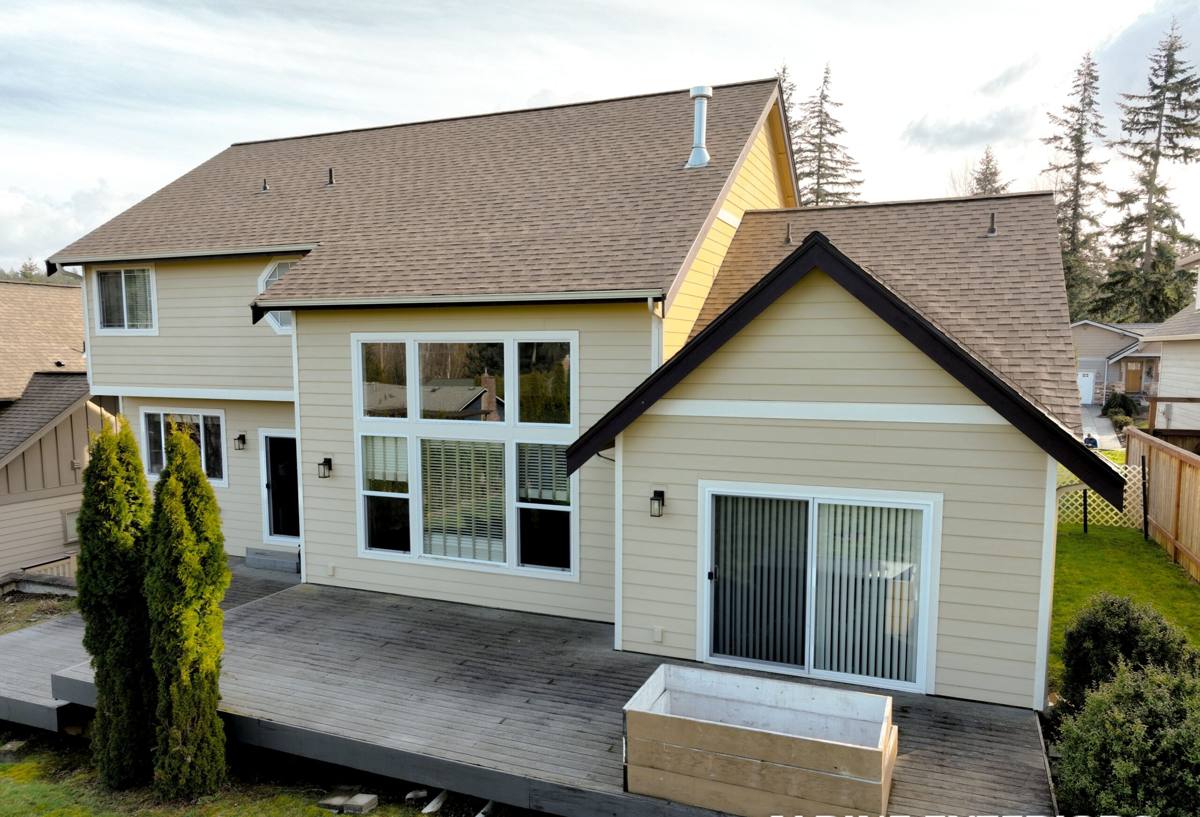
What Puget's Climate Actually Does to a Roof
Salt Air and Corrosion
Coastal and near-coastal air in Whatcom County carries salt that accelerates corrosion on unprotected or poorly coated metal. This isn't unique to any one street in Puget — it's a function of proximity to Bellingham Bay and the broader Puget Sound airshed. The practical effect is that fastener quality, panel coating, and flashing metal compatibility matter more here than they would on a roof fifty miles inland.
Driving Rain
Storms coming off the water in Bellingham don't always fall straight down. Wind-driven rain pushes water sideways and upward under laps, ridge caps, and around penetrations that a calmer rain would never reach. A metal roof designed for driving rain needs correctly lapped panels, properly sealed seams, and underlayment that acts as a real second line of defense — not just a formality.
Moss and Prolonged Dampness
Whatcom County's moss season is long, and shaded or north-facing roof sections in Puget can stay damp for extended stretches even when it isn't actively raining. Moss holds moisture against roofing material and, on organic roofing products, contributes to premature wear. Metal roofing doesn't feed moss growth the way some other materials do, but moss can still collect on it in shaded valleys and around obstructions, and if ignored, that trapped moisture affects fasteners, sealant, and trim over time.
Why Metal Roofing Fits Puget Homes
For homes in this part of Bellingham, metal roofing offers a few specific advantages that line up directly with the local climate rather than being generic selling points:
- Sheds driving rain efficiently when panels and laps are installed with the correct overlap and fastening pattern
- Doesn't absorb moisture the way organic shingle materials do, which matters through a long wet season
- Handles moss better than absorbent roofing surfaces, though it still needs periodic cleaning in shaded areas
- Long service life when the coating system and fasteners are matched to a coastal-influenced environment
- Sheds snow and ice cleanly in the rare cold snaps Whatcom County gets, reducing load concerns
None of that happens automatically just because the material is metal. It happens because the assembly underneath and around the panels is built to work with the climate, not against it.
What a Correct Metal Roof Installation Involves
Deck and Substrate Condition
Before any panel goes down, the roof deck needs to be sound, dry, and free of rot. In older Bellingham-area homes, especially where a roof has been carrying moss or trapped moisture for years, deck repair is sometimes needed before metal roofing makes sense. Skipping this step to save time is one of the most common causes of early failure, regardless of how good the metal itself is.
Underlayment Selection
Given how much wind-driven rain this area sees, underlayment isn't a place to cut corners. A high-quality synthetic or self-adhered underlayment at eaves, valleys, and penetrations gives the roof a real backup layer if wind ever pushes water past the panel seams — which it eventually will, on any roof, during a strong enough storm.
Fastener and Flashing Compatibility
Mixing incompatible metals — for example, certain fasteners or flashing with the wrong coating against the panel material — sets up galvanic corrosion that shows up as staining and eventually failure at the point of contact. In a salt-air environment like Puget's, this detail matters more than it would in a drier inland climate. Every fastener and flashing piece needs to be chosen to match the panel system, not just whatever is on hand.
Panel Layout and Seaming
How panels are laid out — lap direction relative to prevailing wind and rain, seam type, and panel length — affects how well the roof resists wind-driven rain intrusion. This is planned before installation starts, based on the specific roof geometry and orientation, not decided panel by panel as the crew goes.
Penetration and Valley Detailing
Vents, chimneys, skylights, and valleys are where most roof leaks originate, metal or otherwise. Correct flashing at these points, sized and shaped to shed water rather than just cover a gap, is what separates a roof that performs for decades from one that develops slow leaks within a few years.
Our Process for Puget Metal Roofing Projects
- On-site assessment. We walk the roof, check deck condition, look at existing moss or moisture patterns, and note orientation relative to prevailing wind and rain.
- Honest scope and estimate. We tell you what the roof actually needs — deck repair, ventilation changes, or straightforward panel installation — before we talk price.
- Material and detail planning. Panel type, fastener and flashing compatibility, and underlayment are chosen for this specific home and its exposure, not from a one-size-fits-all package.
- Installation. Deck prep, underlayment, panels, flashing, and trim are installed in sequence with attention to the lap and seam details that matter most in driving rain.
- Final walkthrough. We review the finished roof with you, including what routine maintenance — like clearing debris from valleys — will help it perform over the years ahead.
Metal Roofing System Options: A Comparison
| System Type | Best For | Maintenance Considerations |
|---|---|---|
| Standing seam panels | Homes wanting clean lines and maximum weather-tightness at seams | Low; occasional debris clearing in valleys |
| Exposed-fastener panels | Budget-conscious projects, outbuildings, secondary structures | Fastener washers should be checked periodically over the roof's life |
| Metal shingle/shake profiles | Homes wanting a traditional look with metal's durability | More seams and laps than standing seam; detailing at edges matters |
We'll talk through which system fits your home's roof pitch, budget, and appearance goals when we're on site — there isn't one universally correct choice.
Cost Factors for Metal Roofing in the Puget Area
| Factor | Why It Affects Cost |
|---|---|
| Roof pitch and complexity | Steep or cut-up roofs with multiple valleys and penetrations take more labor and flashing detail |
| Existing deck condition | Rot or moisture damage from a prior roof adds repair cost before installation can begin |
| Panel and coating system chosen | Higher-grade coatings suited to salt-air exposure cost more upfront but reduce long-term corrosion risk |
| Underlayment upgrade | Self-adhered or premium synthetic underlayment at eaves and valleys adds material cost but improves storm performance |
| Access and site conditions | Steep lots, tree cover, or tight access around the home affect staging and labor time |
We won't quote a number without seeing the roof — anyone who does is guessing, and guesses on metal roofing tend to be wrong in ways that cost homeowners later.
Maintenance Checklist for Puget Metal Roofs
- Clear leaves, needles, and debris from valleys and around penetrations, especially heading into fall
- Check shaded or north-facing sections for moss buildup and remove it gently without harsh pressure washing
- Look for staining at fastener heads or flashing joints, which can signal a compatibility or coating issue
- Confirm gutters are clear so water isn't backing up against roof edges during heavy storms
- Have the roof visually inspected after any major windstorm, particularly one with strong gusts off the water
Why a Bellingham Crew That Knows Puget Matters
Metal roofing is forgiving of good work and unforgiving of shortcuts, and the shortcuts that cause problems in this region are specific to this region's weather. A crew that works Puget regularly already knows how driving rain behaves on the roof pitches common here, understands how far moss creeps into valleys during a typical Whatcom County winter, and doesn't need to relearn coastal corrosion basics on your project. That local familiarity shows up in the details — flashing choices, fastener compatibility, underlayment placement — that determine whether a metal roof lasts the decades it's supposed to.
If you're weighing a metal roof for your Puget home, we're happy to take a look and give you a straight answer about what your roof needs and what it would cost to do right. There's a free, no-pressure estimate form below — reach out whenever you're ready.