 Bellingham Roofing
 Roof Repair Built for Puget's Coastal Climate
Homes in the Puget area of Bellingham sit close enough to the water and the weather patterns that come with it that roofs here age differently than roofs twenty miles inland. Salt-laden air moves in off the water and settles on shingles, flashing, and fasteners. Driving rain, pushed sideways by wind off the Sound, finds its way into laps and seams that would stay dry in a calmer climate. And the long, damp stretch of the year keeps roof surfaces shaded and wet long enough for moss and moisture-loving growth to take hold and spread. None of that means a roof in Puget is doomed to fail early — it means a roof here needs to be repaired with those specific stressors in mind, not treated the same way a roof repair would be handled in a dry inland market.
That's the focus of this page: roof repair, specifically for homes in and around Puget, done by a crew that understands what this climate does to a roof over time and what it actually takes to fix it correctly rather than just patch it for a season.
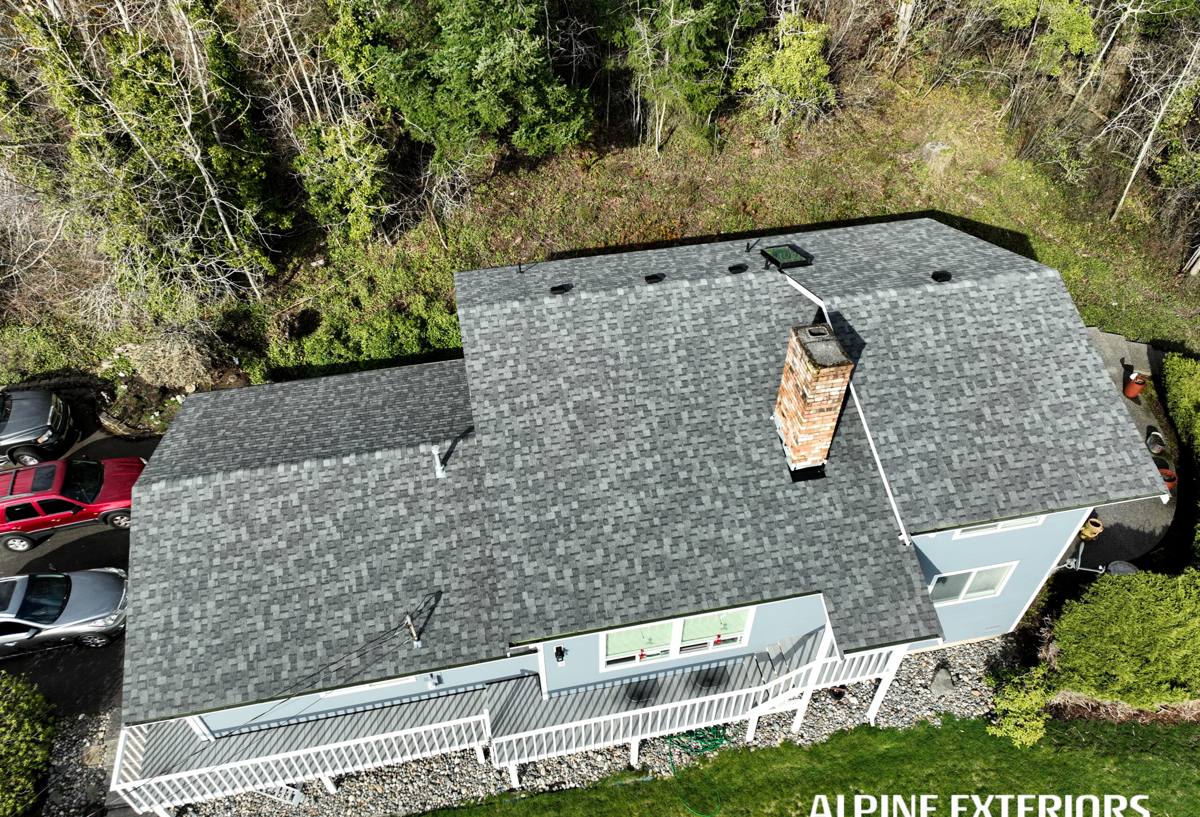
What Makes Roof Repair Different Here
Salt Air and Metal Fatigue
Salt air accelerates corrosion on anything metal on a roof — flashing, drip edge, nail heads, vent caps, and any exposed fasteners. A repair that doesn't account for this can look fine going in and fail again within a year or two because the underlying metal was already compromised. When we're repairing a roof in this area, we pay close attention to the condition of flashing and fasteners, not just the shingles or roofing material around them, because in a lot of cases the metal component is the actual point of failure.
Driving Rain and Wind-Driven Moisture
Rain that falls straight down is fairly forgiving of small gaps and minor wear. Rain that's being pushed sideways by wind is not — it finds horizontal laps, nail penetrations, and step flashing that a straight-down rain would never reach. This is a big part of why roof leaks in this area often show up at valleys, chimney flashing, and wall-to-roof transitions rather than in the open field of the roof. A correct repair addresses the water path, not just the visible gap.
Extended Moss Season
Moss needs shade, moisture, and time, and this region supplies all three for a large part of the year. Moss on a roof isn't just cosmetic — as it grows, it lifts shingle edges, holds water against the roofing surface far longer than the material was designed to tolerate, and can work its way under laps. Left long enough, moss growth turns what would have been a simple repair into a much larger one because the underlying decking or membrane has been sitting wet for months.
Signs a Puget Home Needs Roof Repair
Most roof problems give some warning before they turn into an active leak. Homeowners in this area should watch for:
- Visible moss or dark streaking concentrated on north-facing or shaded slopes
- Granules collecting in gutters or at the base of downspouts
- Curling, cupping, or lifted shingle edges, especially along the roof's edges and ridges
- Rust staining or visibly deteriorated flashing around chimneys, vents, and skylights
- Soft or discolored ceiling spots after a heavy rain, even if they dry out afterward
- Daylight visible through the roof deck from inside an attic space
- Sagging or uneven roof lines, which can indicate deck or structural moisture damage
Any one of these on its own doesn't necessarily mean a major problem, but ignoring them through another wet season usually turns a small repair into a bigger one.
What a Correct Roof Repair Involves
A repair that actually holds up in this climate goes beyond sealing the spot where water is currently visible. It typically involves:
1. Finding the Real Source
Water often travels along the underside of roofing material before it drips through the ceiling, so the visible stain inside the house is rarely directly below the actual failure point. A proper repair starts with tracing the leak back to where water is actually entering, which usually means inspecting the roof surface itself rather than just patching from inside.
2. Assessing What's Underneath
Once the entry point is found, the next question is how far the damage has spread underneath — whether the decking has softened, whether underlayment has failed in a wider area than the visible symptom suggests, and whether the repair needs to extend beyond the immediate spot to be reliable.
3. Matching Materials and Method to the Existing Roof
Repairs need to match the existing roofing system in both material and installation method. A patch that uses the wrong fastener pattern, the wrong flashing profile, or an incompatible sealant can create a new failure point even if it stops the immediate leak.
4. Addressing the Moisture Source, Not Just the Symptom
If moss, debris buildup, or poor drainage contributed to the original failure, a repair that doesn't also address that cause is likely to fail again on the same schedule. This is especially relevant in Puget, where shaded or debris-prone areas of a roof tend to be repeat offenders.
Our Repair Process
When we come out for a roof repair in the Puget area, the process generally follows these steps:
- Inspection: We walk the roof (weather permitting) and check the attic or interior access points to trace the actual leak path, not just the reported symptom.
- Assessment and explanation: We tell you what we found, what's causing it, and what it will take to fix — including whether it's a straightforward repair or something that points to a bigger issue.
- Scope and estimate: You get a clear picture of the work and the cost before anything is repaired, with no pressure to upsell into a full replacement if a repair is the honest answer.
- The repair itself: Damaged material is removed, the deck and underlayment underneath are checked and addressed if needed, and new material is installed matched to your existing roof.
- Cleanup and follow-up: Debris is cleared from the roof and gutters, and we let you know what to watch for or maintain going forward to avoid the same issue recurring.
Roofing Materials Common in Puget Homes and Repair Considerations
Different roofing materials fail differently and need different repair approaches. Here's a general comparison of what we typically see and work with:
| Material | Common Failure Points in This Climate | Repair Considerations |
|---|---|---|
| Asphalt Composition Shingle | Granule loss, moss lifting edges, nail pop, cracked seals | Widely repairable; matching shingle age/color can be a challenge on older roofs |
| Metal Roofing | Fastener corrosion, seam separation, panel scratches exposing bare metal | Requires matching fastener type and coating to avoid galvanic corrosion |
| Wood Shake/Shingle | Moisture retention, moss and moss-driven rot, split shakes | Higher maintenance burden in this climate; repairs need to address ventilation and moisture drainage, not just replace individual shakes |
| Flat/Low-Slope Membrane | Ponding water, seam failure, UV and moisture breakdown at edges | Seam repairs must be done in dry conditions; timing around weather windows matters |
We're straightforward about the maintenance trade-offs of each material rather than steering every homeowner toward one product — the right repair approach depends on what's already on your roof and how it's held up so far.
Repair or Replace? Honest Decision Factors
Not every roof problem calls for a full replacement, but not every problem should be patched indefinitely either. These are the factors that typically drive that decision:
| Factor | Favors Repair | Favors Replacement |
|---|---|---|
| Roof age relative to expected material lifespan | Roof is in the earlier half of its expected life | Roof is at or past its typical service life |
| Extent of damage | Localized to one section or penetration | Widespread across multiple slopes or repeated leak history |
| Deck condition | Decking is sound underneath | Decking is soft, delaminated, or rotted in multiple areas |
| Moss/moisture history | First occurrence, addressed early | Long-term untreated moss with underlayment damage |
We'll always tell you honestly which side of that line your roof falls on rather than defaulting to the bigger job.
Preventing Repeat Repairs: Moss and Debris Management
Because of how long moss season runs here, ongoing maintenance matters as much as the repair itself in keeping a roof from needing the same fix again. Practical steps worth keeping up with between service visits:
- Keep gutters and valleys clear of needles, leaves, and debris that trap moisture against the roof
- Trim back overhanging branches that keep sections of the roof shaded and slow to dry
- Address visible moss early rather than letting it establish and spread across a full slope
- Check attic ventilation periodically — poor airflow keeps roof decking damp from underneath
- Have flashing points (chimneys, skylights, vent boots) inspected during routine maintenance, since these fail before the field of the roof usually does
Why a Crew That Already Works in Puget Matters
Roof repair isn't a one-size-fits-all trade. A crew that regularly works roofs in this specific area already has a working sense of which failure points show up repeatedly on homes exposed to salt air and driving rain off the water, and which ones are more common further inland where moss pressure and wind exposure are different. That familiarity shows up in small but meaningful ways — knowing to check certain flashing details first, understanding how a given roof age typically holds up against this area's moss season, and being realistic about maintenance expectations rather than making promises that don't hold up against the local climate.
It also matters for timing. Roof repair work in Bellingham and the broader Whatcom County area has to work around a wet season that runs long, and a crew that works locally year-round has a better sense of which repairs can wait for a dry window and which need to be addressed immediately to prevent further water intrusion.
Get a Straightforward Roof Repair Estimate
If you're dealing with a leak, visible moss damage, or general wear on a roof in the Puget area, we're happy to take a look and give you a clear, no-pressure assessment of what's going on and what it will take to fix it properly. Reach out using the form below for a free estimate.