 Bellingham Roofing
 Why Barkley Roofs Take a Different Kind of Beating
Barkley is one of Bellingham's more established, tree-shaded neighborhoods, and that mix of mature landscaping, proximity to the water, and Whatcom County's wet weather pattern puts a specific kind of stress on a roof. It isn't one big event that causes most of the damage we get called out for — it's the slow accumulation of moisture, shade, and salt-tinged air working on a roof month after month, year after year.
Bellingham sees a long stretch of overcast, drizzly weather from fall through spring, and Barkley's tree cover means many roofs stay damp longer than roofs out in open, sunnier parts of the county. Add in wind-driven rain that gets pushed sideways off Bellingham Bay during winter storms, and you've got water finding its way into laps, flashing, and fastener penetrations that would stay bone-dry in a calmer climate. Salt air off the water accelerates corrosion on exposed metal fasteners, flashing, and vents faster than most homeowners expect.
None of this means a roof in Barkley is doomed to fail early. It means repairs here have to account for moisture and organic growth as the primary enemy, not just wind or hail. A repair that only addresses the visible symptom — a stain on the ceiling, a lifted shingle — without accounting for the underlying moss, trapped moisture, or corroded flashing usually needs to be redone within a season or two.
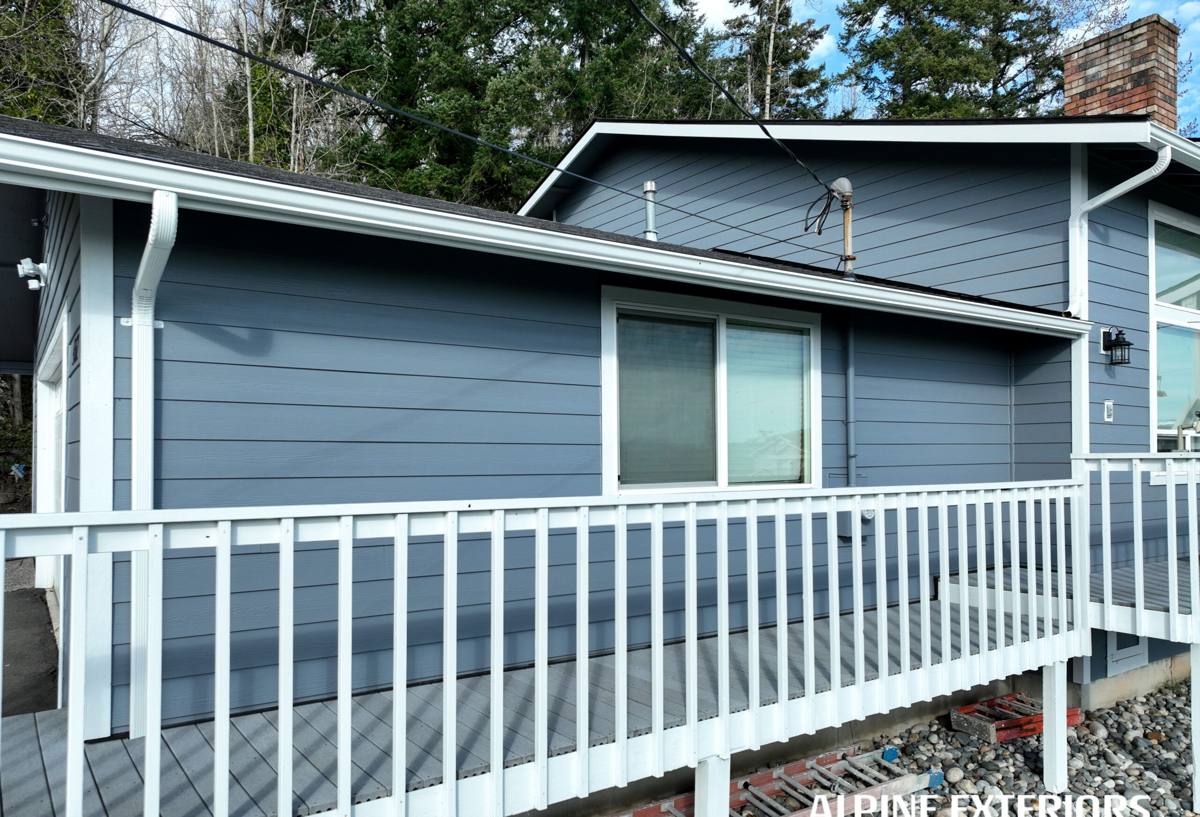
Signs Your Barkley Home Needs Roof Repair
What You'll Notice Inside
Roof leaks rarely announce themselves clearly. Most homeowners notice a problem well after water has already been getting in.
- A brown or yellow stain on a ceiling or upper wall, especially one that grows after a hard rain
- Peeling paint or bubbling drywall near an exterior wall or ceiling line
- A musty smell in an attic or upstairs closet that wasn't there before
- Visible daylight through the roof deck when you look up into the attic
- Insulation that feels damp or looks matted down in one section of the attic
What You'll Notice From the Ground or Ladder
- Green or black streaks and thick moss growth, particularly on north-facing slopes that stay shaded most of the day
- Shingles that look cupped, curled at the edges, or are missing granules in patches
- Flashing around a chimney, skylight, or vent pipe that looks lifted, cracked, or rusted
- Sagging in the roofline or along a valley, which usually points to decking that's been wet for a long time
- Gutters that fill with granules or moss debris faster than they used to
If you're seeing more than one or two of these at once, it's worth having someone look before the next round of Whatcom County winter rain.
What a Correct Roof Repair Actually Involves
A roof repair done right starts with figuring out why the roof failed in the first place, not just covering the symptom. That distinction matters more in a climate like ours, where moisture problems tend to have a root cause that keeps reproducing the same damage if it's not addressed.
Flashing, Valleys, and Penetrations
Most leaks we trace back to flashing rather than the shingle field itself — the metal or rubber transitions around chimneys, skylights, vent pipes, and roof valleys. These are the spots where two roof planes or materials meet, and they're the first place wind-driven rain exploits a small gap. A proper repair means re-securing or replacing failed flashing and sealing it correctly, not just running a bead of caulk over the visible crack.
Moss and Organic Growth
Moss does more than look bad. It holds moisture directly against the shingle surface, works its way under shingle tabs as it grows, and can lift edges enough to let wind and rain underneath. Any repair on a moss-affected roof should include careful moss removal — by hand or low-pressure methods, never a pressure washer, which strips granules and shortens shingle life — along with checking the shingles underneath for damage the moss was hiding.
Underlayment and Decking
If water has been getting past the shingle layer for a while, the underlayment beneath it and the wood decking beneath that may already be compromised. A repair that only replaces shingles over soft or water-stained decking is a repair that fails again. Part of doing this correctly is opening up the area enough to check what's underneath, not just working from the surface down.
Repair Approaches by Roof Type in Barkley
Barkley has a mix of home ages and roofing materials, and the right repair approach depends on what's up there. Here's how we generally approach the most common types we see.
| Roof Type | Common Issue in This Climate | Repair Approach |
|---|---|---|
| Composition (asphalt) shingle | Moss under tabs, granule loss, lifted or curled edges from repeated wet-dry cycles | Moss removal, spot shingle replacement matched to existing material, flashing recheck |
| Cedar shake or shingle | Moisture retention, splitting, and moss growth in shaded sections | Selective plank replacement, improved ventilation where possible, targeted moss treatment |
| Metal roofing or metal flashing details | Fastener corrosion and seam wear from salt-influenced air | Fastener replacement, seam resealing, corrosion spot-treatment |
| Low-slope or flat sections (additions, garages, porches) | Ponding water and membrane seam failure | Seam and membrane repair, drainage correction where the slope allows it |
Older Barkley homes sometimes have more than one of these on the same roof — a shake or shingle main roof with a low-slope addition tacked on later, for example. Each section needs to be evaluated on its own terms rather than treated as a single uniform repair.
Our Roof Repair Process
- Inspection. We walk the roof (or use a ladder and binoculars where a walk-on inspection isn't safe) and check the attic from the inside where accessible, looking for the actual source of the problem, not just the visible symptom.
- Diagnosis and explanation. We tell you plainly what we found, what's causing it, and what your realistic options are — repair, a larger repair, or replacement if the roof has reached that point.
- Written estimate. You get a clear scope of work and price before anything happens, with no pressure to decide on the spot.
- The repair itself. We match materials as closely as possible to what's already on your roof, address the root cause (flashing, decking, moss, ventilation) rather than just the surface damage, and protect your landscaping and gutters while we work.
- Cleanup and check. We clear debris, old materials, and stray fasteners from the roof, gutters, and ground before we consider the job done.
- Follow-up. If a hard rain hits soon after the repair, we want to know if anything looks off — a quick check now is easier than a bigger problem later.
Repair or Replace? Cost Factors to Weigh
Not every roof problem in Barkley needs a full replacement, and we won't tell you it does when a solid repair will hold. That said, there's a point where repeated patching costs more over time than addressing the roof as a whole. These are the factors that usually tip the decision one way or the other.
| Factor | Leans Toward Repair | Leans Toward Replacement |
|---|---|---|
| Roof age | Roof is well within its expected lifespan | Roof is at or past the age where materials naturally wear out |
| Extent of damage | Damage is limited to one or two localized areas | Multiple sections show wear, moss, or moisture damage at once |
| Decking condition | Decking underneath is sound and dry | Decking is soft, stained, or has been wet for an extended period |
| Repair history | This is a first or infrequent repair | The same area has needed repair more than once |
| Material availability | Matching material is readily available | Original material is discontinued or hard to match visibly |
When a roof is genuinely borderline, we'll say so and lay out both paths honestly, including the trade-offs, rather than steering you toward the bigger job by default.
Why a Crew That Already Works in Barkley Matters
Roofing crews that regularly work this neighborhood get familiar with the patterns specific to it — which streets sit in heavier tree shade and see moss come back faster, which home vintages in the area tend to have a particular flashing detail or decking type, and how the local wind and rain exposure changes from one side of the neighborhood to another. That familiarity shortens the diagnostic part of a repair and reduces surprises once the work starts.
There's also a practical side to it. A crew already working in and around Bellingham can respond faster when a leak shows up during a storm, and understands Whatcom County permitting and inspection expectations for anything beyond a straightforward repair. That local grounding is worth something when you're trying to get a problem solved correctly the first time, not just quickly.
Keeping Your Roof in Good Shape Between Repairs
A repair buys you time and stops active damage, but a few habits help stretch that time further given how long our moss season runs.
- Keep gutters and downspouts clear, especially going into fall when leaf and needle drop peaks
- Trim back tree limbs that overhang the roof to cut down on shade, debris, and moss-friendly conditions
- Have moss treated before it gets thick, rather than after it's visibly lifting shingles
- Walk the attic with a flashlight after major storms and look for new staining, even if nothing shows up inside the house yet
- Don't ignore a small, slow drip — in this climate it rarely stays small
If your Barkley home has a roof issue you've been putting off, or you just want an honest read on whether it's a repair or something bigger, we're happy to take a look. Fill out the form below for a free, no-pressure estimate.