 Bellingham Roofing
 Roof Replacement in Birchwood: Built for Whatcom County Weather
Birchwood homes take a steady beating from the weather that defines this corner of Washington. Salt-laden air drifting off the bay, driving rain that comes in sideways more often than straight down, and a moss season that seems to run nine or ten months out of twelve — all of it works against a roof that isn't detailed correctly. A roof replacement here isn't just about swapping old shingles for new ones. It's about building an assembly that can shed constant moisture, resist the salt corrosion that eats through cheap metal fasteners and flashing, and stay clear enough of moss and organic growth that the roof deck underneath stays dry for the long haul.
This page covers what a roof replacement for a Birchwood home should actually involve, the material and design choices that matter most in this climate, and how our process works from first inspection to final walkthrough.
Signs a Birchwood Roof Is Due for Replacement
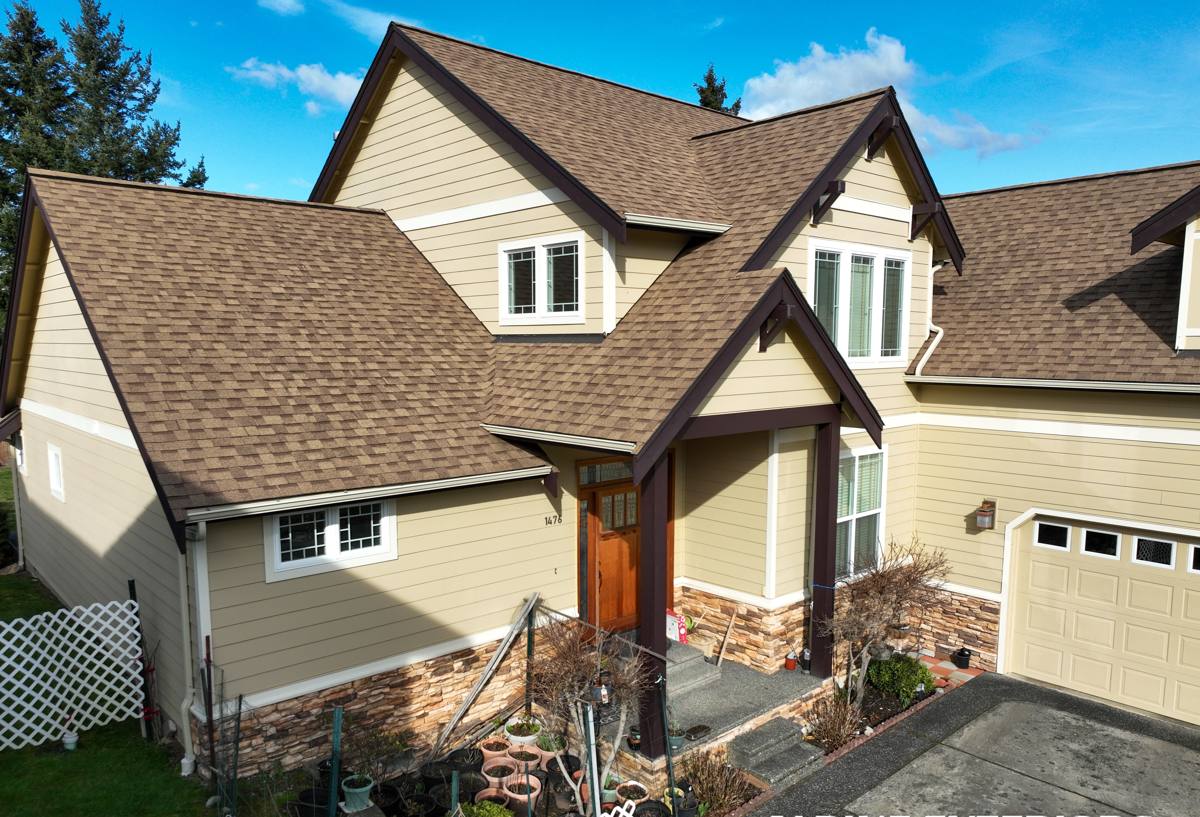
Most roofs give warning signs well before a leak shows up on the ceiling. In a climate this wet, those signs often show up as moisture and biological growth problems rather than obvious storm damage. Before you commit to a full tear-off, it's worth knowing what to look for:
- Granule loss showing up in gutters or at downspout outlets, especially after a hard rain
- Shingles that are cupping, curling at the edges, or visibly brittle
- Dark streaking or thick moss growth concentrated on the north-facing or shaded slopes
- Soft spots or sagging when you look down the roofline from the ground
- Daylight or water staining visible in the attic around vents, chimneys, or valleys
- Flashing that's rusted, lifted, or separating from the roof surface
- A roof approaching or past the manufacturer's expected service life for its material and exposure
Any one of these on its own might be a repair. Several together, especially on a roof that's already 18-25 years old, usually means replacement is the more honest recommendation.
What a Correct Roof Replacement Involves
Tear-Off and Deck Inspection
A proper replacement starts with a full tear-off down to the roof deck, not an overlay. Overlaying a new roof on top of old, moisture-compromised material traps problems instead of solving them — and in a climate that stays damp as long as ours does, trapped moisture is exactly what causes rot. Once the old roofing is off, the deck gets inspected board by board. Any plywood or sheathing that's soft, delaminated, or stained from long-term moisture exposure gets replaced before anything new goes down. Skipping this step is one of the most common shortcuts in the trade, and it's the one that causes the most expensive problems five or ten years later.
Underlayment and Ice-and-Water Protection
Given how much rain Whatcom County sees in a typical year, underlayment choice matters more here than in drier climates. Self-adhering ice-and-water barrier belongs at eaves, valleys, and around every roof penetration — the places where wind-driven rain is most likely to find a way underneath the roofing material. Synthetic underlayment across the rest of the deck holds up better against the freeze-thaw and repeated wetting cycles typical of a Bellingham winter than older felt products.
Flashing Details
Flashing failure is the single most common cause of roof leaks that aren't due to age. Salt air accelerates corrosion on lower-grade metal, so flashing material and fastener choice need to account for that from the start. Step flashing at wall intersections, proper counter-flashing at chimneys, and correctly lapped valley metal all matter more in a marine climate than they would somewhere dry and inland.
Ventilation
A roof that can't breathe traps moisture in the attic, which shortens the life of the deck and the roofing material from underneath. Balanced intake and exhaust ventilation — sized correctly for the attic volume — helps the roof assembly dry out between the region's frequent rain events instead of staying damp indefinitely.
Choosing the Right Roofing Material for Birchwood
There's no single "best" roofing material — the right choice depends on your home's style, roof pitch, budget, and how much long-term maintenance you're willing to take on. Here's how the common options compare for a home in this climate:
| Material | Moss & Moisture Resistance | Typical Lifespan | Maintenance Needs |
|---|---|---|---|
| Architectural asphalt shingle | Good, especially with algae-resistant granules | 25-30 years | Periodic moss treatment and gutter cleaning |
| Standing seam metal | Excellent; sheds moisture and resists moss growth | 40-50+ years | Low; occasional fastener and sealant checks |
| Cedar shake | Fair; requires active upkeep to resist rot and moss | 20-30 years with maintenance | High; regular treatment, cleaning, and inspection |
| Synthetic composite shingle | Good to excellent depending on product | 30-50 years | Low to moderate |
In a neighborhood like Birchwood, where tree cover and shaded north slopes are common, we generally steer homeowners toward materials with strong algae and moss resistance built in, or toward metal where the roofline and budget make sense. Cedar shake can still be the right call for the look of certain homes, but we're upfront that it demands more consistent upkeep in this climate than asphalt or metal — that's a maintenance trade-off, not a defect in the product itself, and it's one homeowners should walk in understanding.
Our Roof Replacement Process
- Inspection and estimate. We walk the roof, check the attic where accessible, and note deck condition, ventilation, and flashing issues before quoting anything.
- Material selection. We go over the options above in the context of your home, your budget, and how much maintenance you want to take on long-term.
- Scheduling around the weather. We plan tear-off days around dry weather windows so the deck isn't left exposed longer than necessary.
- Tear-off and deck repair. Old roofing comes off completely, and any compromised sheathing gets replaced.
- Underlayment, flashing, and ventilation work. This is where most of the long-term performance of the roof actually gets decided.
- New roofing installation. Installed to manufacturer spec, with attention to fastening patterns and exposure that hold up to wind off the water.
- Final walkthrough and cleanup. We check the finished roof with you and make sure the property is cleared of debris and nails.
Moss, Moisture, and Long-Term Roof Health
Why Moss Is More Than a Cosmetic Problem
Moss doesn't just look bad — it holds moisture against the roofing surface almost continuously, which accelerates granule loss on asphalt and can lift shake edges over time. On a shaded or north-facing slope, moss can establish within a couple of years of a roof going on if there's no preventive treatment or zinc/copper strip protection in place.
Gutters and Drainage
A new roof is only as good as the drainage system moving water off of it. Clogged or undersized gutters send water back up under the shingle edge or over the fascia, which causes rot regardless of how good the roofing material is. Part of a correct replacement includes checking that gutters, downspouts, and drip edge are sized and installed to actually keep up with Whatcom County rainfall.
Why Hiring a Crew That Already Works Birchwood Matters
Roofing details that work fine in a dry inland climate can fail within a few years here. A crew that regularly works Birchwood and the surrounding Bellingham area already knows which slopes hold moss the longest, how much ice-and-water protection a given roof pitch really needs, and which flashing details tend to fail first when they're cut short. That local pattern recognition is hard to replace with a generic install — it comes from having repaired the mistakes as much as having done the installs correctly the first time.
Local presence also matters after the job is done. Warranty service, a follow-up question about a noise during a windstorm, or a gutter that needs a second look — those are easier to handle with a crew that's already familiar with your roof and doesn't have to drive in from out of the area.
Permits, Timing, and Weather Windows
Roof replacement in the City of Bellingham and unincorporated Whatcom County generally requires a building permit, and we handle that process as part of the job rather than leaving it to the homeowner. Timing a tear-off around dry stretches is also part of doing this correctly — a deck that sits exposed to rain for days between tear-off and dry-in is a self-inflicted moisture problem, and it's avoidable with the right scheduling and crew size for the job.
Cost Factors Worth Understanding
Every roof replacement is priced around a handful of real variables rather than a flat number: roof size and pitch, the number of layers being torn off, deck repair needs discovered once the old roofing is removed, material choice, and the complexity of valleys, penetrations, and flashing details. Steeper roofs, multiple layers of old roofing, and extensive deck repair all add labor time. The only way to get an accurate number for your specific home is a walk-through estimate — we don't quote sight unseen, because doing so usually means either lowballing the bid or padding it to cover unknowns.
If your Birchwood roof is showing its age or you just want an honest read on where it stands, we're happy to take a look. Use the form below to request a free, no-pressure estimate.