 Bellingham Roofing
 Building Decks for Sehome's Particular Climate
Sehome sits close enough to Bellingham Bay and the surrounding hills that its decks take a beating most inland neighborhoods never see. Salt-laden air off the water works into fasteners and metal connectors over time. Driving rain off Puget Sound storms finds its way into every seam, joint, and screw hole that wasn't detailed correctly. And Whatcom County's long, damp moss season means anything horizontal — deck boards, stair treads, railing caps — spends months of the year staying wet longer than it should. A deck built without those three things in mind will look fine for a year or two and then start showing problems: soft spots, black streaking, corroded hardware, and boards that cup or crown.
We build decks in Sehome the way the site actually demands, not the way a generic spec sheet from a big-box store assumes. That means paying attention to drainage, fastener choice, and airflow underneath the structure just as much as the visible surface material.
What Sehome Homes Need From a Deck
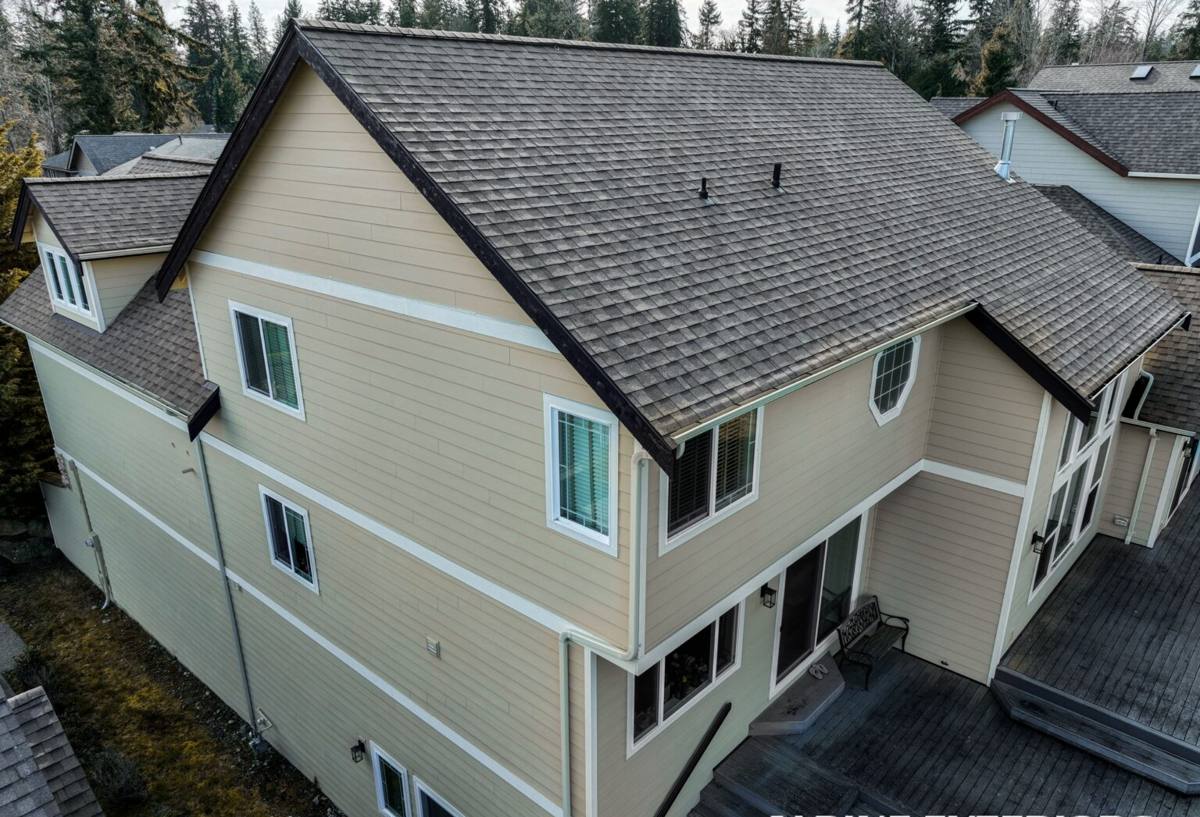
Sehome is a mix of older homes on sloped lots and newer infill, many with decks that step down toward a yard or connect to a lower patio level. That terrain creates a few recurring challenges:
- Ledger boards attached to older siding or sheathing that may already have hidden moisture issues behind it
- Limited under-deck clearance on sloped lots, which restricts airflow and lets moss and algae build up faster
- Mature trees nearby dropping needles and leaf litter into gaps between boards, holding moisture against the wood
- Exposure to prevailing wet weather patterns that push rain sideways into railings and fascia
A correct deck build addresses each of these directly rather than hoping standard construction happens to work out.
Ledger Attachment and Hidden Moisture
The ledger board — where the deck bolts to the house — is the single most common failure point on decks in this region, and it's almost always invisible until something goes wrong. We flash it properly with a code-compliant ledger flashing detail, use structural screws or through-bolts rated for exterior wet-service use, and check the condition of the sheathing behind it before we ever attach anything. If we find soft or compromised material at the ledger location, we tell you before we build, not after.
Airflow Underneath the Deck
On sloped Sehome lots, it's tempting to build low to the ground for a cleaner look, but low clearance traps moisture and speeds up rot in framing members and the undersides of boards. We plan joist height and skirting with enough clearance and, where the site allows it, gaps or vents that let air move through instead of stagnant, damp pockets forming.
Framing: The Part Nobody Sees but Everyone Relies On
The decking surface gets all the attention, but the framing underneath is what determines whether a deck lasts 10 years or 30. In a climate that stays wet for months at a time, we frame with pressure-treated lumber rated for ground contact where it's near soil, and we use hot-dip galvanized or stainless structural hardware — joist hangers, post bases, hurricane ties — matched to the treatment chemical in the lumber. Mismatched metal and treated wood is a slow-motion corrosion problem, and it's one of the more common shortcuts we see on older or DIY-built decks in this area.
Every joist gets protected with a self-adhering flashing tape on top before boards go down. It's a small material cost that keeps standing water from soaking directly into end grain and top faces of the framing, which is where rot typically starts.
Choosing a Decking Material for Sehome's Weather
There's no single "best" decking material — there's a best material for your budget, your maintenance appetite, and how much direct weather exposure the deck actually gets. Here's how the common options hold up under Bellingham's salt air, rain, and moss pressure:
| Material | How It Handles Local Climate | Maintenance | Typical Lifespan |
|---|---|---|---|
| Pressure-treated wood | Good if sealed and cleaned regularly; moss and mildew show quickly if neglected | Annual cleaning, re-stain/seal every 2-3 years | 15-20 years with upkeep |
| Cedar | Naturally rot-resistant, ages gracefully, but grays and needs sealing to hold color | Cleaning plus periodic sealing | 15-25 years with upkeep |
| Composite decking | Resists moisture absorption well; capped composites resist moss staining better than wood | Occasional washing, no sealing or staining | 25-30+ years, warranty-backed |
| PVC decking | Fully synthetic, sheds water completely, very resistant to mildew and moss growth | Low — occasional washing | 25-30+ years, warranty-backed |
For Sehome specifically, where moss season runs long and shaded lots near trees don't dry out quickly, we lean toward recommending capped composite or PVC for anyone who wants to minimize yearly upkeep. Real wood is still a good, honest choice for homeowners who don't mind the maintenance rhythm and like the look and feel — we build plenty of wood decks and stand behind them when the framing and finishing details are done right.
Railings, Stairs, and Fasteners: Where Corrosion Shows First
Salt air doesn't just affect what's exposed to direct rain — it travels on the wind and settles on everything, including railing hardware and stair connectors tucked under overhangs. Standard zinc-plated screws and brackets will show rust streaks within a couple of seasons in a coastal-influenced area like Sehome. We use stainless steel or coated fasteners rated for coastal exterior use throughout the visible structure, and marine-grade or heavy hot-dip galvanized hardware anywhere it's structural but hidden. It costs a bit more up front. It's a lot cheaper than replacing rusted-out hardware or dealing with staining on light-colored decking five years in.
Stair and Guard Details
Stairs see more direct foot traffic and more direct rain exposure than the deck field itself, since they're rarely covered. We pay close attention to stair stringer treatment, non-slip tread surfaces (moss and algae make stairs genuinely dangerous if the surface isn't managed), and guard post attachment, which needs to be solid enough to meet code and actually hold up under real use.
Moss and Algae: Managing It, Not Just Fighting It
Whatcom County's moss season isn't a minor annoyance — on a shaded or partially shaded deck, it can turn boards slick and start staining within a single wet season if the deck was built without thinking about it. We manage this at the design and material stage rather than leaving it entirely to homeowner maintenance:
- Board spacing sized to shed water and debris instead of trapping it
- Decking oriented and sloped slightly away from the house for proper drainage
- Material choice that resists moss adhesion where budget allows
- Minimizing flat, low-airflow zones where moisture sits longest
No deck in this region will be entirely moss-free without some homeowner maintenance, but a well-built one needs a lot less scrubbing and a lot less worry about slip hazards.
Our Process for a Sehome Deck Build
- On-site assessment — we look at your lot's slope, drainage, existing structure condition, and sun/shade exposure before recommending anything.
- Design and material discussion — honest talk about wood versus composite versus PVC based on your budget and how much upkeep you actually want to do.
- Permitting — deck permits in Bellingham depend on size, height, and attachment, and we handle that paperwork so it's not on you.
- Demolition and site prep — removing any old structure and checking what's behind it, including the ledger attachment point.
- Framing — treated lumber, matched corrosion-resistant hardware, joist flashing tape, and proper airflow clearance.
- Decking, railings, and stairs — installed to the manufacturer's fastening spec, with attention to drainage and slip safety.
- Final walkthrough — we go over the finished deck with you, including what maintenance (if any) the material needs going forward.
Why Local Experience in Sehome Matters
A crew that's worked in Sehome and elsewhere around Bellingham knows the pattern of problems this specific climate causes before they show up — which ledger conditions to expect on older homes, how much clearance a sloped lot needs to keep moisture from pooling under a deck, and which fastener grade actually holds up against salt air instead of failing early. That's the difference between a deck that looks good for one photo and a deck that's still solid and safe a decade later. We're a Whatcom County-based crew, and this region's rain, salt exposure, and moss season are simply what we build around every day.
What a Correct Deck Build Should Include — A Quick Checklist
- Properly flashed ledger board with sheathing checked for hidden moisture
- Corrosion-resistant, matched hardware throughout — not mixed metals
- Joist top-flashing tape to protect framing from standing water
- Adequate under-deck clearance and airflow for the site's slope and shade
- Decking material chosen for your actual maintenance tolerance, not just upfront cost
- Non-slip stair treads and solid guard post attachment
- Slight drainage slope away from the house
- A permit pulled and inspected, not skipped
Cost Factors to Expect
Every deck is different, but the main cost drivers on a Sehome project are usually the same: total square footage, how much the lot's slope complicates framing and footings, whether stairs and multiple levels are involved, railing style and material, and which decking product you choose from the table above. Composite and PVC cost more upfront than pressure-treated wood but remove most of the recurring maintenance cost and labor over the deck's life — worth weighing against your timeline for staying in the home.
If you're planning a new deck or need an honest look at whether an existing one is still sound, we're happy to walk the site with you and give you a straightforward, no-pressure estimate using the form below.