 Bellingham Roofing
 Windows Built for Sehome's Weather, Not a Showroom
Sehome sits close enough to Bellingham Bay that salt-laden air, driving rain off the water, and a moss season that runs most of the year all work against a home's exterior. Windows take more of that abuse than most homeowners realize. A window isn't just glass in a frame — it's a seal system, and in Whatcom County that seal is tested constantly by wind-driven rain, condensation swings between a cold night and a heated interior, and the slow creep of moss and algae into any gap that holds moisture. When that seal starts to fail, you feel it as a draft, see it as fog between the panes, or notice it on the heating bill before you notice it anywhere else.
We work Sehome regularly, along with the rest of Bellingham and Whatcom County, and we've replaced enough failed windows in this neighborhood's mix of older bungalows, mid-century houses, and newer infill construction to know what actually holds up here versus what looks fine on a spec sheet in a drier climate.
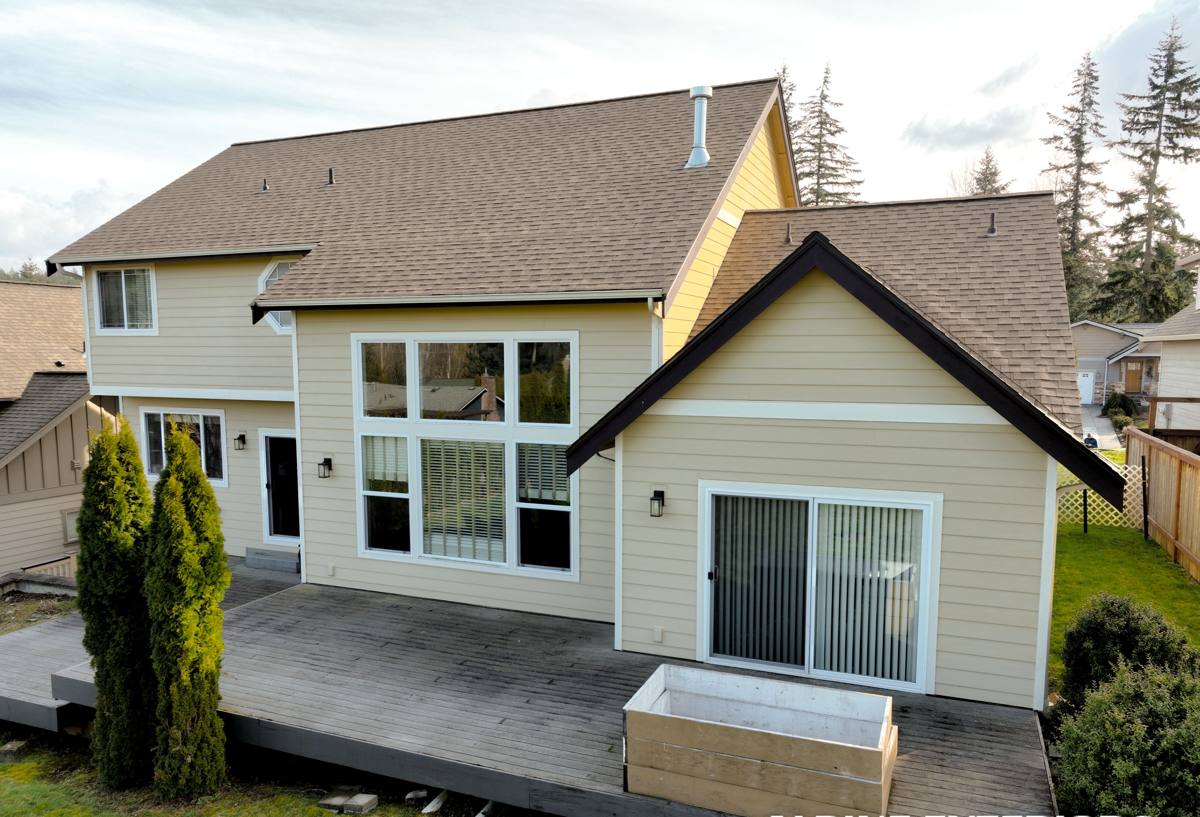
Why Old Windows Cost More Than They Look Like They Cost
Single-pane and early double-pane windows from decades past weren't built with today's insulated glass or weatherstripping standards. In a marine climate like ours, that shows up in a few predictable ways:
- Fogging between panes — the seal on the insulated glass unit has failed and moist air is trapped inside, and it will not clear on its own.
- Cold drafts at the sash or frame — weatherstripping has compressed or the frame has shifted slightly, letting outside air bypass the glass entirely.
- Sticking or swollen wood sashes — years of moisture cycling have swelled the wood, and the window no longer seats or locks correctly.
- Visible condensation on the interior glass — a sign the glass is losing heat fast enough that room humidity is hitting dew point right on the surface.
- Rising heating bills with no other explanation — often the first thing homeowners notice before they connect it to the windows.
None of these are cosmetic issues. Every one of them is heat and money leaving the house, and in a heating-dominant climate like Bellingham's, that adds up over a full winter.
What "Energy-Efficient" Actually Means in This Climate
The label gets used loosely, so it's worth being specific. In Western Washington, the numbers that matter most are:
- U-factor — how well the window resists heat loss. Lower is better; this is the number that matters most for our mild-but-persistently-cool winters.
- Solar Heat Gain Coefficient (SHGC) — how much solar heat passes through. Less critical here than in sunnier climates, but still relevant on south- and west-facing walls.
- Air leakage rating — how much air moves through the assembly when it's not supposed to. This is where wind-driven rain finds its way in if the rating is poor.
A window can be marketed as "energy-efficient" nationally and still be a mediocre fit for a house that takes rain sideways off the bay eight months a year. We spec for our own conditions, not a national average.
What a Correct Installation Involves
The window unit itself is maybe half the job. The other half — the part that determines whether it performs for 20+ years or fails in five — is the installation detail work most homeowners never see:
Removal and Opening Inspection
We pull the old unit and inspect the rough opening before anything new goes in. This is where hidden problems from past water intrusion show up — soft framing, old flashing that was never done right, or trim that's been holding moisture against the wall for years. Fixing that now, before a new window goes over it, is the difference between a repair that lasts and one that hides a problem for a few more years.
Flashing and Water Management
This is the step that matters most in a climate that gets driving rain. Proper flashing directs any water that gets past the exterior trim back out and away from the wall assembly, rather than letting it pool behind the window and work into the framing. Skipping or shortcutting this step is the single most common cause of window-related rot we see in older Bellingham-area homes — not the window itself, but what was (or wasn't) done around it.
Air Sealing and Insulation
The gap between the window frame and the rough opening needs to be sealed and insulated correctly — not stuffed with excess spray foam, which can bow the frame, and not left with gaps, which defeats the point of upgrading in the first place.
Interior and Exterior Finish
Trim gets reset or replaced, caulk lines get done cleanly, and the window is checked for square, level, and proper operation before we call it finished.
Our Process, Sehome to Finish
- On-site assessment — we look at every window being discussed, check the framing and current condition, and talk through what's actually needed versus what's optional.
- Honest scope and estimate — a clear breakdown of what we're replacing, what product line fits the house, and a real cost range, not a lowball number that grows once work starts.
- Product selection — we walk through frame material, glass package, and finish options suited to a marine climate, and explain the trade-offs in plain terms.
- Scheduling around weather — window replacement means an open wall for a period of time, so we plan installation days around the forecast rather than the calendar.
- Installation with proper flashing and sealing — the detail work described above, done the same way whether it's one window or a full-house replacement.
- Final walkthrough — every window is opened, closed, and checked before we consider the job done.
Frame Material: What Holds Up Near the Bay
| Frame Type | Performance in Our Climate | Maintenance Reality |
|---|---|---|
| Vinyl | Good insulation value, handles moisture well, doesn't corrode from salt air | Low — occasional cleaning, no painting or sealing needed |
| Fiberglass | Excellent dimensional stability, holds up well to temperature and moisture swings | Low — durable finish, minimal upkeep |
| Wood (clad exterior) | Good insulation, attractive interior finish, but exterior wood is vulnerable if the clad or paint layer is ever breached | Moderate to high — exterior finish needs monitoring, especially in a wet climate |
| Aluminum | Poor insulation value on its own; thermally broken versions perform better but still conduct more cold than other options | Low, but the trade-off is comfort near the window in winter |
We don't push one material as universally right — a wood-clad window can be the correct call on a home where the interior look matters and the exterior detailing is sound. But we're upfront when a material is a poor match for a wall that takes direct weather, because a callback five years later isn't good for anyone.
Moss, Algae, and Window Systems
Moss doesn't grow on glass, but it grows readily on sills, trim, and any horizontal or textured surface nearby that stays damp — and Whatcom County's moss season runs long. Where it becomes a window problem is when growth on adjacent trim or siding holds moisture against the window frame itself, especially at the bottom corners where water naturally collects. Part of a correct installation is making sure water sheds away from the frame instead of sitting against it, and part of ongoing upkeep is keeping trim and sills clear so moss doesn't get the chance to establish there in the first place.
Signs It's Time to Replace, Not Repair
- Fogging or moisture trapped between the panes of a double-pane window — this is a sealed-unit failure and can't be fixed, only replaced.
- Soft or spongy wood at the sill or frame corners, which usually means water has already gotten into the framing behind the window.
- A window that won't stay open, won't latch, or has visibly warped — often a sign the frame has been absorbing moisture for a while.
- Noticeable draft you can feel with a hand near the frame on a windy day.
- Single-pane glass anywhere in the house — in this climate, the efficiency gap versus modern double- or triple-pane is significant enough to matter on the heating bill.
If a window is structurally sound and just has worn weatherstripping or a stuck sash, a repair can be the right call and the cheaper one. We'll tell you when that's the case rather than defaulting to a full replacement recommendation.
Cost Factors Worth Understanding Before You Ask for a Number
| Factor | Why It Moves the Price |
|---|---|
| Number of windows and sizes | Larger openings and custom sizes cost more per unit than standard sizes |
| Frame material | Vinyl is generally the most budget-friendly; fiberglass and wood-clad run higher |
| Condition of the rough opening | Hidden rot or framing damage found during removal adds repair scope before the new window can go in |
| Access and second-story work | Upper-floor windows take more time and equipment than ground-floor replacements |
| Full-frame vs. insert replacement | Insert replacement (new window into the existing frame) is faster and cheaper; full-frame replacement addresses the flashing and framing directly and is the better call when there's any sign of water intrusion |
Why a Crew That Already Works Sehome Matters
A contractor who works this neighborhood regularly has already seen how the housing stock here holds up — the common trouble spots on older homes, how different eras of construction handled flashing and framing, and what actually fails first when a house faces the weather patterns coming off the bay. That's not something you get from a national installer working off a generic spec, and it's not something we'd claim about a neighborhood we hadn't actually worked in. We're a Bellingham-based crew serving Whatcom County, and Sehome is part of our regular service area.
What to Ask Before Hiring Anyone for Window Work
- Will you inspect the rough opening for hidden damage before installing, or just swap the unit?
- What's your flashing method, and how does it handle wind-driven rain specifically?
- Is the estimate full-frame or insert replacement, and why is that the right call for this house?
- What's covered under warranty — the product, the labor, or both — and for how long?
- Can you walk me through the U-factor and air leakage rating of the specific product you're quoting, not just a brand name?
A contractor who answers these clearly, without dodging into brand marketing language, is worth trusting with the job.
If your Sehome home has windows that fog, draft, stick, or just aren't pulling their weight against Bellingham's wet winters anymore, we're happy to take a look. Fill out the form below for a free, no-pressure estimate — we'll assess what's actually going on and give you a straight answer on repair versus replacement.