 Bellingham Roofing
 Storm Damage Roof Repair for Silver Beach Homes
Silver Beach sits in a part of Bellingham where mature tree cover, close proximity to water, and exposure to Whatcom County's wet, windy weather all combine to put extra stress on a roof. When a storm comes through — whether it's a straight-line wind event off the water, a heavy winter downpour, or a branch coming down from one of the tall firs and cedars common in this neighborhood — the damage isn't always obvious from the ground. We repair storm-damaged roofs for homeowners in Silver Beach, and this page walks through what that actually involves, what local conditions mean for your roof specifically, and how to know when it's time to call someone out.
This is not a generic storm damage page. Silver Beach has its own mix of housing stock, tree exposure, and microclimate quirks, and a roof repair here should be approached with that context, not a one-size-fits-all checklist.
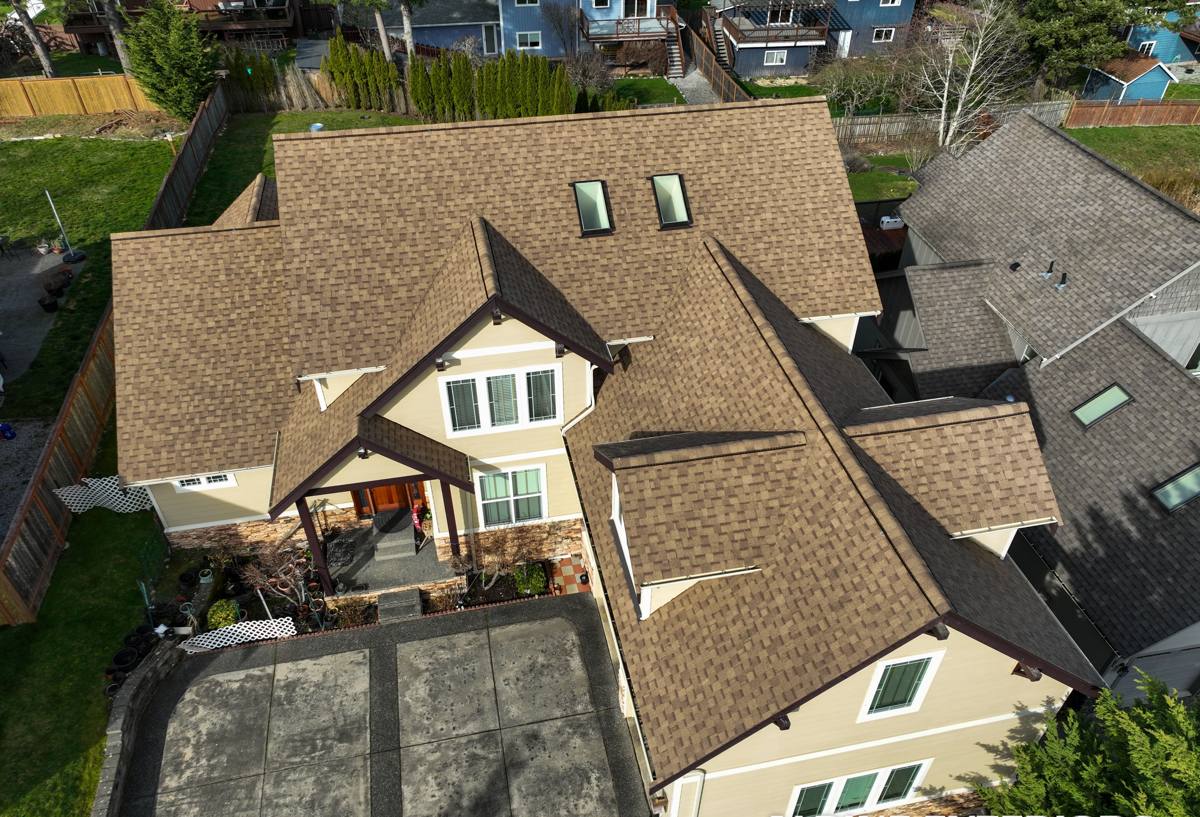
Why Silver Beach Roofs Take a Different Kind of Beating
Salt Air and Marine Moisture
Bellingham sits right on the water, and homes throughout the city — Silver Beach included — deal with a steady dose of salt-laden air. Salt air accelerates corrosion on exposed metal: flashing, fasteners, gutters, and vent caps all age faster here than they would further inland. After a storm, we pay close attention to metal components specifically, because a fastener that's already weakened by years of salt exposure is far more likely to fail under wind load than one in a drier climate.
Driving Rain and Wind-Driven Water
Storms in this part of Whatcom County rarely come straight down. Wind pushes rain sideways, and that changes where water actually ends up on a roof. Driving rain finds its way under shingles, around chimneys, and behind step flashing in ways that vertical rain never would. A repair that only addresses the spot where a leak is showing up inside the house, without accounting for how wind-driven water actually moves across the roof deck, tends to fail again in the next storm.
A Long Moss Season
Bellingham's mild, damp climate keeps roofs wet for long stretches of the year, and that means moss has a long growing season here — often nearly year-round on north-facing slopes and shaded sections. Moss isn't just cosmetic. It holds moisture against the roofing material, lifts shingle edges as it grows, and creates channels that redirect water in unpredictable ways. After a storm, moss-covered areas are often where we find the most hidden damage, because the moss itself has already been compromising the surface underneath before the wind and rain ever hit.
Tree Cover
Many Silver Beach properties have significant tree cover, which is part of what makes the neighborhood attractive, but it also means more debris impact, more shade (which feeds moss growth), and more organic buildup in gutters and valleys. Storms that bring wind are often the same storms that bring down branches and heavy limbs, so we always check for impact damage in addition to wind and water damage on any storm call in this area.
What Storm Damage Actually Looks Like
Homeowners often expect storm damage to be dramatic — a missing section of shingles or a visible hole. Sometimes it is. More often, it's subtler, and it's the subtler damage that causes the most long-term problems because it goes unaddressed.
- Shingles that are cracked, curled, or lifted at the edge but still mostly in place
- Granule loss showing up in gutters or at downspout outlets after a storm
- Flashing around chimneys, skylights, or roof-to-wall junctions that's been bent, loosened, or pulled away
- Soft spots or discoloration on interior ceilings that appear a day or two after a storm, not during it
- Gutters pulled loose or overflowing due to debris blown in during high wind
- Nail pops or exposed fastener heads where wind has worked shingles loose
- New or worsened moss growth in areas where wind stripped away protective granules
Some of these are easy to spot with a careful look from the ground or a ladder at the eaves. Others require getting on the roof itself, which is why we recommend a professional inspection after any storm with sustained wind, rather than waiting to see if a leak shows up.
Our Storm Damage Repair Process
1. Inspection First, Not a Guess
We start by getting eyes on the actual roof surface, not just the area near a visible leak. Storm damage is often spread across multiple areas, and a leak showing up in one room doesn't mean that's the only place water is getting in. We check the full roof plane, flashing details, penetrations, and gutter system.
2. Documentation
We document what we find with clear notes and photos of the actual damage, which matters both for your understanding of the scope of work and for insurance purposes if you're filing a claim.
3. Honest Scope
Not every storm-damaged roof needs full replacement. Plenty of storm damage is legitimately repairable — a section of shingles, a flashing detail, a damaged vent. We'll tell you plainly when a repair is the right call and when the damage is extensive enough, or the roof old enough, that repair would just be a short-term patch on a roof that needs replacing soon anyway.
4. The Repair Itself
Repairs are matched to the existing roofing material as closely as possible, with attention to the details that matter most in this climate: proper flashing integration, correct fastener placement and material (to resist salt-air corrosion), and sealing methods that hold up under wind-driven rain rather than just standing water.
5. A Look at What Contributed to the Damage
If moss, poor drainage, or overhanging branches played a role in the damage, we'll point that out. Fixing the immediate damage without addressing a contributing cause just sets up the same problem for the next storm.
Repair vs. Replacement: How We Think About It
| Factor | Leans Toward Repair | Leans Toward Replacement |
|---|---|---|
| Roof age | Under two-thirds of expected lifespan | Near or past expected lifespan |
| Extent of damage | Localized to one or two areas | Spread across multiple roof planes |
| Underlying material condition | Shingles elsewhere still flexible, granules intact | Widespread brittleness, granule loss, or curling |
| Moss/moisture history | Minimal prior moss or trapped moisture | Long-term moss coverage with likely deck moisture |
| Insurance scope | Adjuster scope matches a repair | Adjuster scope or damage extent supports replacement |
These are general guidelines, not hard rules — the right call always depends on what we actually find on your specific roof.
Insurance and Storm Claims
Many storm repairs in this area go through homeowners insurance. We can provide the documentation and photos you need to support a claim, and we're happy to walk an adjuster through what we found. What we won't do is inflate a scope of damage to make a claim bigger than it is — our documentation reflects what's actually there, which is what holds up if questions come up later.
Why It Matters to Hire a Crew That Already Works Silver Beach
A crew that regularly works this neighborhood already understands the practical realities: the tree cover and debris patterns, the moss growth rates on shaded northern exposures near the water, and how salt air affects fastener and flashing choices over time. That local familiarity shows up in small but important decisions — which fastener grade to use, how aggressive the moss treatment needs to be, where wind-driven rain is most likely to find a weak point on a given roof style. It also means faster response after a storm, since we're not routing a crew across the county to reach you.
A Quick Post-Storm Checklist for Homeowners
- Check ceilings and attic spaces for new stains, damp spots, or musty odors after any significant storm
- Look at gutters and downspouts for accumulated granules, which indicate accelerated shingle wear
- Note any branches or debris that came down on or near the roof, even if no damage is visible
- Photograph anything visible from the ground before cleanup, for your own records
- Avoid getting on the roof yourself after a storm — wet, moss-covered surfaces are genuinely dangerous
- Call for an inspection sooner rather than later; small storm damage left exposed to the next rain event tends to get worse fast
Get a Straight Answer About Your Roof
If a recent storm has you wondering whether your roof took damage, or you've already spotted signs of a problem, we're glad to come take an honest look. We'll tell you what we find, what it means, and what your real options are — no pressure, no inflated scope. Use the form below to request a free estimate.