 Bellingham Roofing
 Asphalt Shingle Roofing Built for South Hill's Conditions
South Hill sits up in elevation relative to much of Bellingham, with mature tree canopy on many lots, older homes mixed in with newer construction, and enough exposure to wind and driving rain off Bellingham Bay to put real stress on a roof system. Asphalt shingles are still the right call for most South Hill homes — they're cost-effective, proven, and easy to repair section by section when something goes wrong. But "asphalt shingles" isn't a one-size answer here. The install details that matter in a drier climate matter twice as much in Whatcom County, where a roof can see months of steady moisture and low sun angles that never quite dry things out.
This page covers what a correct asphalt shingle job looks like specifically for South Hill properties — not a generic overview, but the parts of the job that our crews actually pay attention to on this side of town.
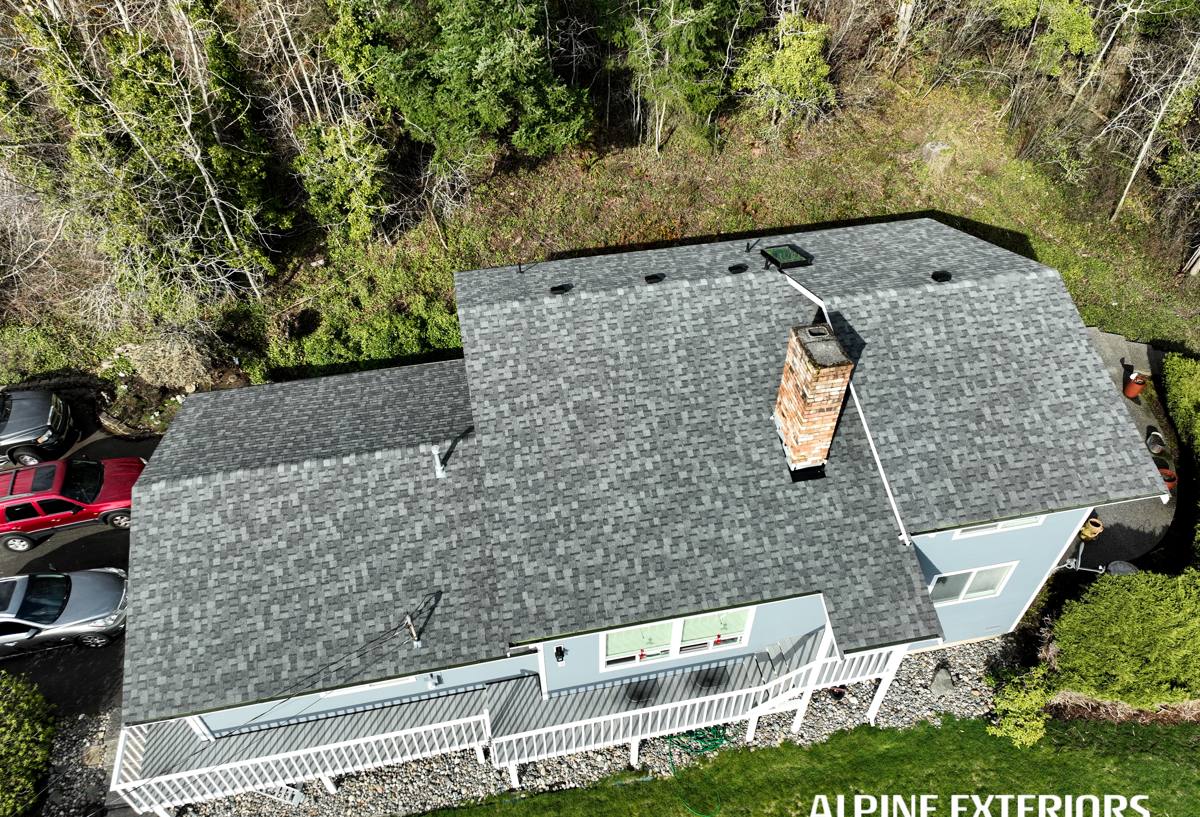
Why South Hill's Climate Is Tougher on Shingles Than It Looks
Bellingham's marine climate brings a few specific challenges that show up on South Hill roofs over and over:
Salt Air and Moisture
Proximity to Bellingham Bay means a steady dose of salt-laden air moving through the area. Over years, that moisture load accelerates the breakdown of fasteners, flashing, and any exposed metal on a roof that wasn't installed with corrosion-resistant materials in mind.
Driving Rain
Whatcom County storms don't just fall straight down — wind-driven rain pushes water sideways under shingle tabs, into nail lines, and up against flashing laps. A roof that would hold up fine in a calmer climate can leak here if the underlayment and flashing details weren't built to handle wind-driven water specifically.
Moss Season
South Hill's tree cover is part of what makes the neighborhood attractive, but shaded, north-facing roof slopes under mature trees stay damp for long stretches of the year. That's exactly the environment moss needs to take hold. Once moss establishes on a shingle roof, it holds moisture against the granule surface and lifts shingle edges, which shortens the roof's life well before it's actually due for replacement.
What a Correct Asphalt Shingle Install Actually Involves
A lot of roofing problems in this climate trace back to shortcuts taken during install, not to the shingles themselves. Here's what we consider non-negotiable on a South Hill roof:
- Ice-and-water shield at vulnerable zones — valleys, eaves, and around every penetration, not just where code technically requires it
- Synthetic underlayment as a full water-resistant layer under the shingles, sized to actually shed wind-driven rain rather than just meet minimum coverage
- Proper nailing pattern — correct nail count and placement per shingle, since under-nailing is one of the most common causes of blow-off in wind-exposed spots
- Metal flashing, not just cement at chimneys, walls, and roof-to-wall transitions, with corrosion-resistant metal given the salt air exposure
- Balanced attic ventilation so moisture from inside the house isn't adding to what the roof deck already has to deal with from outside
- Starter strip and drip edge installed correctly at eaves and rakes — a detail that's easy to skip and hard to notice until the first bad storm
None of this is exotic. It's standard, correct roofing practice — but it's exactly the kind of detail that gets rushed on a job priced too low or crewed too thin, and it's the difference between a shingle roof that hits its full service life and one that starts leaking at year eight.
Shingle Types: What Fits South Hill Homes
Most South Hill homes do well with a mid-grade to high-grade architectural (laminate) asphalt shingle. Basic 3-tab shingles are cheaper up front but have a thinner profile and shorter realistic lifespan in a climate this wet — they're a harder value proposition here than in drier regions. The table below is a general guide, not a quote; actual pricing depends on roof size, pitch, tear-off scope, and access.
| Shingle Type | Typical Lifespan (this climate) | Best Fit |
|---|---|---|
| 3-tab asphalt | 15–20 years | Budget-driven projects, rentals, outbuildings |
| Architectural / laminate | 25–30 years | Most South Hill homes — better wind and moisture resistance |
| Premium/designer architectural | 30+ years | Character homes where roofline and appearance matter |
Color and profile matter too on South Hill's older, character-driven housing stock — a shingle that reads as too modern or too flat can stick out on a craftsman or Tudor-style home. We'll walk through options that fit the house rather than just the budget.
Repair vs. Replacement: How We Make the Call
Not every shingle problem means a new roof. A lot of what we get called out for on South Hill is repairable — but there's a point where patching stops making financial sense.
Usually a Repair
Isolated wind damage, a cracked pipe boot, a section of moss-lifted shingles on an otherwise sound roof, or flashing that's failed at one chimney or wall — these are typically fixable without touching the rest of the roof, assuming the shingles themselves still have life left in them.
Usually a Replacement
Widespread granule loss, shingles that are brittle or curling across multiple slopes, a roof deck with soft spots from long-term moisture intrusion, or a roof that's already near the end of its rated lifespan and showing multiple simultaneous issues — at that point, repeated repairs just delay the same outcome at a higher total cost.
We'll always tell you honestly which category your roof falls into. If a repair is the right call, that's what we'll recommend — a full replacement isn't the answer just because it's the bigger job.
Moss and Debris: An Ongoing Job, Not a One-Time Fix
Given South Hill's tree canopy, moss and needle buildup deserve their own conversation separate from installation. A shingle roof in this neighborhood benefits from:
- Periodic soft-wash or manual moss removal — pressure washing is too aggressive for shingle granules and can shorten roof life
- Zinc or copper control strips at the ridge on shaded slopes, which help suppress regrowth between cleanings
- Gutter and valley clearing before the wet season, since trapped debris holds moisture against the shingle field longer than an open, clear roof would
- A visual check after major windstorms, since South Hill's elevation and tree exposure both increase the odds of storm debris impact
Treat moss control as maintenance, not emergency response. Roofs that get this attention on a regular schedule consistently outlast roofs that only get looked at once something is visibly wrong.
Our Process for South Hill Roofing Projects
Whether it's a repair or a full replacement, the process looks the same:
- On-site inspection — we walk the roof (or use appropriate access equipment) and check the attic side too, not just the surface
- Honest scope and estimate — what actually needs to happen, in plain terms, with the reasoning behind it
- Material selection — matched to the home's style, budget, and the specific exposure of that roof (tree cover, wind direction, slope)
- Scheduled work — planned around Whatcom County's weather windows so the roof isn't left exposed mid-job
- Clean tear-off and correct install — following the details outlined above, every time, not just on the jobs someone happens to be watching
- Final walkthrough — so you know exactly what was done and what maintenance, if any, to expect going forward
Why Local Experience on South Hill Specifically Matters
A roofing crew that already works South Hill regularly knows the neighborhood's patterns — which streets sit in heavier shade, which slopes take the worst of the wind coming off the bay, and which older homes tend to have roof decking or venting quirks from past renovations. That knowledge shortens the inspection process and helps us catch problems that a crew unfamiliar with the area might miss on a first pass.
It also means a faster response. When a windstorm knocks a section of shingles loose or a moss-covered valley finally gives way, having a contractor already familiar with your part of Bellingham — rather than one dispatching from across the county — makes a real difference in how quickly the roof gets protected.
Signs Your South Hill Roof Needs Attention
A quick self-check list for homeowners — if you're seeing more than one of these, it's worth having someone take a closer look:
- Granules collecting in gutters or at downspout outlets
- Shingle edges curling or lifting, especially on shaded, moss-prone slopes
- Dark streaking or visible moss growth across the roof field
- Daylight visible through the attic roof deck, or damp insulation below it
- Missing or damaged shingles after a windstorm
- Sagging along the ridge line or between rafters
Catching these early is almost always cheaper than waiting until there's interior water damage to deal with as well.
If you're seeing any of the signs above, or just want an honest read on where your South Hill roof stands, we're glad to come take a look. The estimate is free, there's no pressure, and you'll get a straight answer either way — use the form below to get started.