 Bellingham Roofing
 Windows on South Hill Take a Different Kind of Beating
South Hill sits up and out — elevated above much of Bellingham, with open exposure to weather rolling in off Bellingham Bay. That position gives a lot of homes here real views, but it also means windows take more wind-driven rain, more salt-laden air, and more of the long gray moss season than homes tucked into more sheltered parts of Whatcom County. Older single-pane and early dual-pane windows that were fine when they were installed decades ago are often the first thing on a house to start failing once that exposure catches up with them.
We're not describing a problem unique to South Hill — it's a Bellingham problem, a Whatcom County problem. But the elevation and wind exposure common to this neighborhood tend to speed up the timeline. Seals fail sooner. Wood sashes hold moisture longer. Frames that aren't flashed correctly let water in behind the trim instead of shedding it, and on a hillside lot that water has to go somewhere.
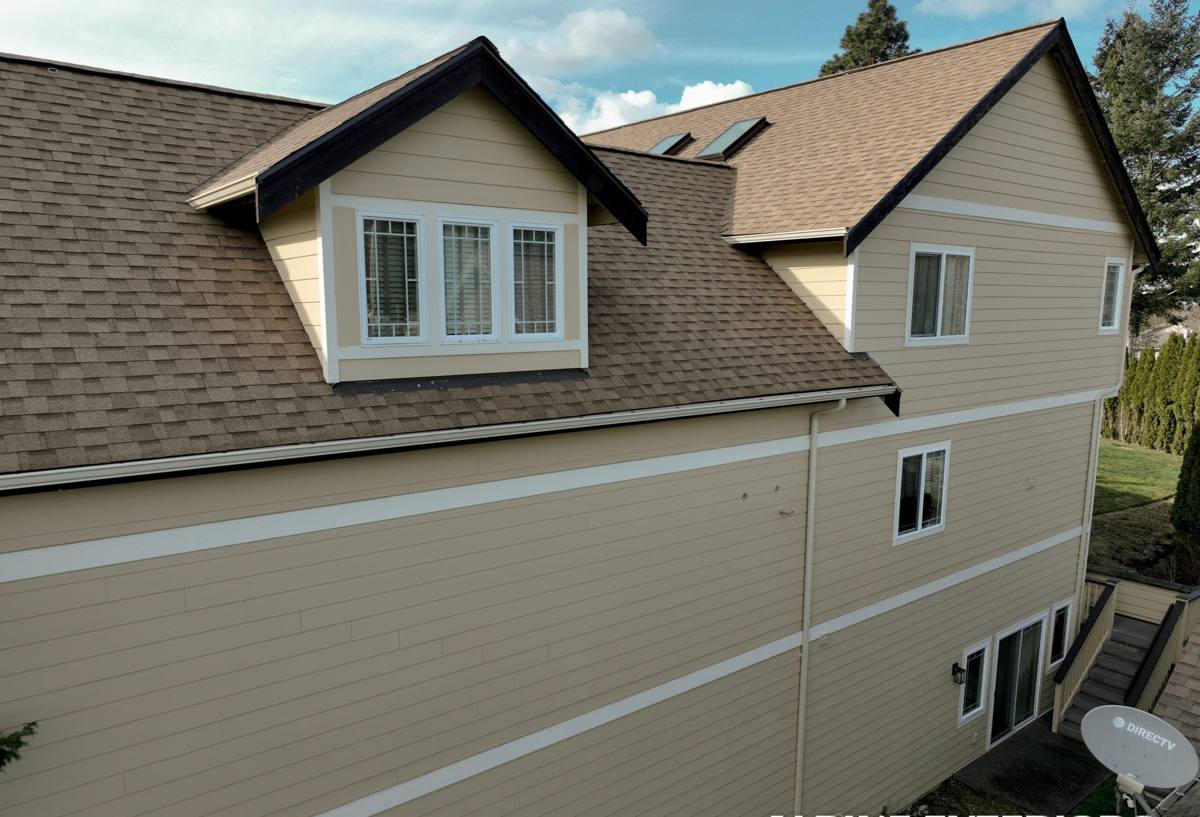
Signs Your South Hill Home's Windows Need Attention
Most homeowners don't replace windows on a schedule — they replace them when something starts to go wrong. Here's what we look for, and what you can check yourself before calling anyone:
- Fog or moisture trapped between the panes of a dual-pane window (a failed seal — this doesn't fix itself)
- Drafts you can feel with your hand near the frame on a windy day
- Wood trim or sills that feel soft, or paint that's bubbling and peeling near the window
- Windows that are hard to open, close, or lock — often a sign the frame has shifted or swollen
- Visible condensation or moisture on interior sills during cold, wet stretches
- A noticeable jump in heating costs with no other explanation
- Green or black growth building up in window tracks or on exterior sills faster than you can keep up with it
Any one of these on its own might not mean full replacement — sometimes it's a resealing or a hardware fix. But when several show up on the same window, or on multiple windows on the same exposed wall, that's usually the window telling you it's done protecting the house the way it should.
What a Correct Window Replacement Actually Involves
It's Not Just the Window
Swapping in a new window unit is the easy part. The part that determines whether that window lasts 20+ years or starts leaking again in three is everything around it — the flashing, the sealant, and how the new unit ties into the existing wall assembly. On a house exposed to driving rain, that detail work matters more than the brand name on the glass.
What We Actually Check and Do
- Remove the old unit and inspect the framing underneath for rot, soft wood, or existing water damage before anything new goes in
- Replace or repair any damaged framing — installing a new window into a compromised opening just hides the problem
- Install proper flashing so water sheds down and away from the opening, not behind the siding
- Use the right sealants and backer rod at the frame perimeter, sized for the gap, not just caulked over
- Confirm the new unit is level, plumb, and square before final fastening — an out-of-square install stresses the frame and shortens the seal life
- Match trim and exterior detailing so the finished look is consistent with the rest of the house
Skipping the framing inspection is the most common shortcut in this trade, and it's the one that causes the most callbacks a few years down the road. We'd rather spend an extra hour confirming what's behind the old window than guess.
Choosing Windows That Hold Up in This Climate
There's no single "best" window for every South Hill home — it depends on your budget, your home's age and style, and how exposed a given wall is. Here's how the common options compare for a marine climate with heavy rain and a long damp season:
| Frame Material | Moisture Resistance | Maintenance | Typical Fit |
|---|---|---|---|
| Vinyl | Very good — won't rot or corrode | Low — occasional cleaning | Most homes; best value |
| Fiberglass | Excellent — very stable in wet/dry cycles | Low | Higher-exposure walls, longer-term investment |
| Wood (unclad) | Poor without diligent upkeep | High — repainting/sealing on a schedule | Historic character homes where look matters most |
| Wood-clad (vinyl or aluminum exterior) | Good — exterior shell protects the wood | Moderate | Homes wanting a wood interior look with less outdoor upkeep |
| Aluminum | Fair — can conduct cold and condensate more | Low | Less common in this climate for that reason |
For most South Hill homes, we steer people toward vinyl or fiberglass on exposed walls simply because bare wood exteriors are a lot of ongoing maintenance in a climate that gives paint and sealant very little time to dry out between rain events. That's a maintenance-burden judgment call, not a knock on wood windows generally — if a homeowner wants the look and is willing to stay on top of upkeep, we'll install and detail wood units correctly too.
Glass and Efficiency
Double-pane, low-E glass is the standard baseline for this region now, and it's worth it — it cuts down on both heat loss and condensation on cold, wet days. Triple-pane adds cost and weight for a modest efficiency gain; it's worth discussing for a north-facing or particularly exposed wall, but it's not automatically the right call for every window in the house.
Our Process, From First Look to Final Walkthrough
- Free on-site estimate. We look at the actual windows and openings in question, not a photo — condition varies a lot window to window even on the same house.
- Honest scope and pricing. If a window just needs resealing or hardware, we'll say so. We're not trying to sell full replacement where it isn't needed.
- Scheduling around the weather. Window openings are exposed to the elements during the swap, so we plan installs around dry stretches where possible and take precautions when they aren't.
- Removal and inspection. Old units come out, framing gets checked, and any needed repairs happen before the new window goes in.
- Installation and sealing. New unit set, flashed, sealed, and finished to match.
- Walkthrough. We check operation, look, and finish with you before calling the job done.
What Affects the Cost of a South Hill Window Replacement
Broad, honest ranges — every home is different, and the estimate is where we get specific:
| Factor | Why It Matters |
|---|---|
| Number and size of windows | Bigger jobs get better per-unit pricing, but total cost scales with count and size |
| Frame material chosen | Vinyl is typically the most affordable; fiberglass and wood-clad cost more upfront |
| Condition of the existing framing | Rot or water damage found during removal adds repair time before the new window can go in |
| Wall accessibility | Upper-floor or hard-to-reach windows on a hillside lot can take more setup time |
| Trim and exterior detail work | Matching existing trim profiles on older homes takes more labor than a straightforward swap |
We'll never give you a number without seeing the windows first — anyone quoting a whole-house price sight unseen is guessing, and that guess usually turns into change orders later.
Why It Matters That We Already Work South Hill
A crew that works this neighborhood regularly already knows the kind of exposure a given wall orientation gets, has a feel for the age and construction of homes common up here, and isn't learning on your house how wind-driven rain behaves on a hillside lot. That familiarity shows up in small decisions — how much flashing overlap to use, which walls tend to need extra attention, how to detail trim on an older house so the repair doesn't look like a patch.
It also means straightforward logistics: we're not driving in from across the county, scheduling is easier to coordinate, and if a question comes up after the install, we're not far away.
Keeping New Windows Performing Long-Term
A correct installation does most of the work, but a little upkeep keeps it that way through Bellingham's wet season after wet season:
- Rinse exterior sills and tracks periodically to keep moss and organic buildup from holding moisture against the frame
- Check exterior caulking annually, especially after a hard winter, and have any cracked sealant addressed before it becomes a leak path
- Keep gutters and downspouts clear so overflow isn't running down the wall past window openings
- Operate each window a few times a season, even ones you don't use often, so hardware doesn't seize up
If your windows on South Hill are drafty, fogged, or just past their working life, we're happy to take a look and give you a straight answer — whether that's full replacement, a repair, or nothing at all. The estimate is free, there's no pressure, and the form below is the easiest way to get started.