 Bellingham Roofing
 Storm Damage in Cordata: What Bellingham's Weather Actually Does to a Roof
Homes in the Cordata area of north Bellingham deal with a specific combination of weather stress that a lot of roofing material simply isn't rated for over the long haul. You've got salt-laden air coming off the Salish Sea, driving rain that hits roofs sideways during winter storms, and a moss season that can run eight or nine months out of the year. None of these on their own is unusual for Whatcom County. Together, over years, they wear down flashing, loosen shingles, and open up small gaps that turn into real leaks the next time a storm rolls through.
Storm damage repair isn't just patching whatever is obviously broken after a windstorm. It's figuring out what the storm exposed versus what the storm actually caused — because in this climate, those are often two different things. A roof that looked fine the week before a storm may have already had moss undermining its shingles or flashing that was one heavy rain away from failing. The storm is usually the trigger, not the whole story.
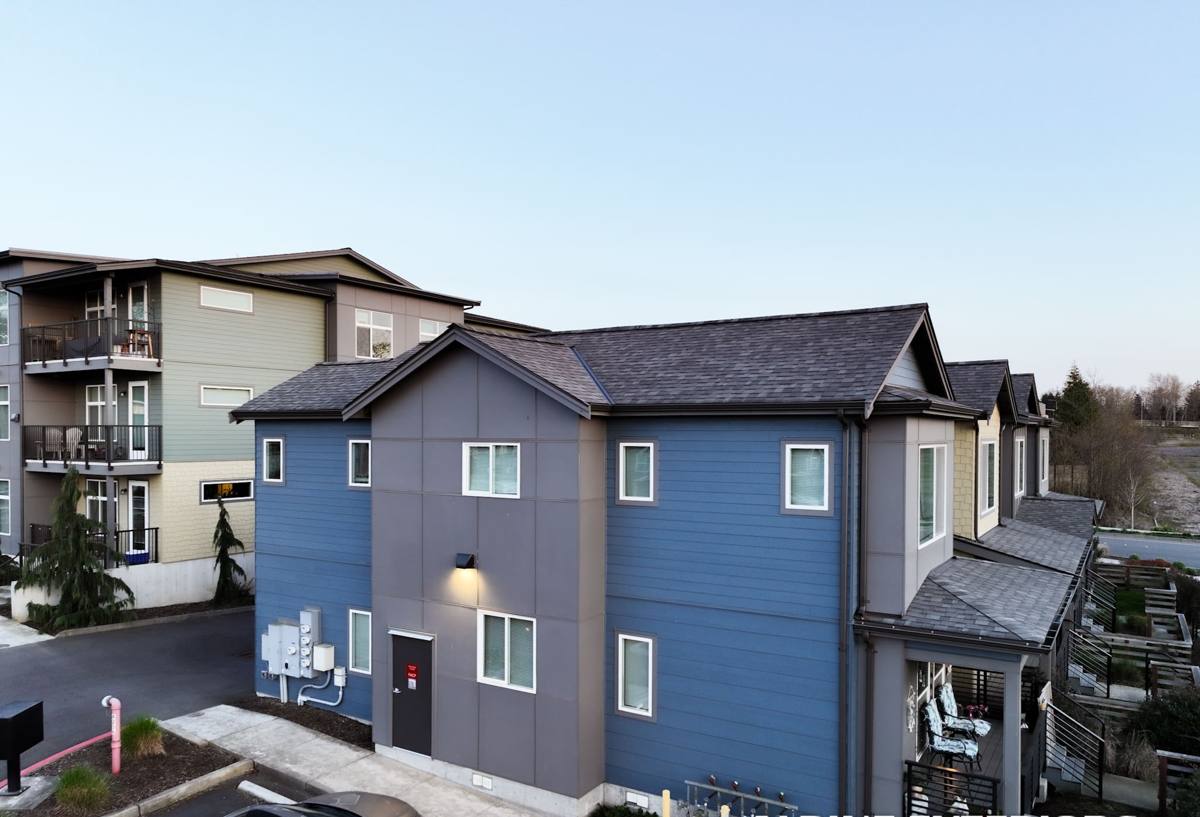
Common Types of Storm Damage We Find in Cordata
Wind Damage
Wind off the strait and through the Nooksack valley can gust hard enough to lift shingle edges, especially on roofs that already have some age on them or where the original nailing pattern was off. Once a shingle tab lifts even slightly, it rarely seals itself back down — it just keeps flapping and loosening with every wind event after that, and water starts working its way underneath.
Wind-Driven Rain and Flashing Failures
Bellingham storms rarely deliver rain straight down. It comes in sideways, which means water gets pushed up under laps and around penetrations — chimneys, vent stacks, skylights, and the valleys where two roof planes meet. Flashing is the first line of defense in all of those spots, and it's also the most common point of failure we find after a storm. A flashing leak can travel a surprising distance from the actual opening before it shows up as a stain on a ceiling, which is why storm damage often looks worse — or gets found later — than homeowners expect.
Moss, Debris, and Organic Buildup
Storms don't just bring wind and rain — they knock branches and needles onto the roof, and that debris collects in valleys and behind moss mats that were already growing there. Wet moss holds moisture against the shingle surface and roof deck far longer than the shingle was designed to tolerate, which softens the mat underneath. A storm that wouldn't have damaged a clean, moss-free roof can be enough to finish off a section that moss had already been quietly rotting for a season or two.
What a Correct Storm Damage Repair Actually Involves
A repair that only addresses the visible symptom — a missing shingle, a stain on the ceiling — tends to fail again within a year or two. A correct repair traces the problem back to its source and confirms nothing else nearby is compromised. That means:
- A full inspection of the affected slope, not just the spot that's leaking, since wind and water damage rarely stay contained to one shingle
- Checking the roof deck itself for soft spots, delamination, or rot where water has been sitting
- Inspecting and, where needed, replacing flashing around chimneys, vents, skylights, and valleys — not just re-sealing it with caulk
- Confirming underlayment condition in the repaired area, since a torn or displaced underlayment defeats the point of new shingles on top of it
- Matching replacement shingles as closely as possible in color and profile so the repair doesn't stand out or age differently than the surrounding roof
- Checking attic ventilation and insulation near the repair, since trapped moisture from a leak can cause problems that outlast the visible damage
Skipping any of these steps is how a "repaired" roof ends up leaking again in the next storm, sometimes in a slightly different spot than before.
Our Storm Damage Repair Process
- Initial inspection. We look at the whole roof, not just the reported problem area, and check the attic from inside if access allows. This is where we separate storm-caused damage from pre-existing wear the storm exposed.
- Documentation. We photograph and note the damage in detail. If you're planning to file an insurance claim, this record supports that process — see below.
- Temporary protection if needed. If there's an active leak or exposed decking, we'll get it covered to stop further water intrusion before the full repair is scheduled, especially if more weather is on the way.
- The repair itself. Flashing, decking, underlayment, and shingles get addressed in that order — working from the roof structure outward, not just swapping surface materials.
- Cleanup and final check. We clear debris, confirm the repair area sheds water correctly, and walk you through what we found and what we did.
Repair or Replace? How We Make That Call
Not every storm-damaged roof needs a full replacement, and not every roof is worth repairing again. The honest answer depends on the roof's age, how much of it is affected, and what condition the rest of it is in. Here's roughly how we think through it:
| Factor | Leans Toward Repair | Leans Toward Replacement |
|---|---|---|
| Roof age | Under roughly 12-15 years | Nearing or past expected shingle lifespan |
| Extent of damage | Isolated to one section or slope | Spread across multiple areas or slopes |
| Deck condition | Solid, no rot found | Soft spots or rot found in more than one area |
| Moss/organic history | Minimal, well-maintained roof | Long-term moss damage found under the storm damage |
| Shingle availability | Matching shingles still obtainable | Discontinued product, poor match likely |
We'll always tell you honestly which side of that table your roof falls on. A repair that's likely to need another repair in two years isn't a good use of your money, and we'll say so rather than just doing the smaller job.
Insurance Claims and Storm Repairs
Many storm damage repairs in Whatcom County get filed as insurance claims, particularly after a named windstorm event. We're happy to document damage in a way that's useful for a claim — clear photos, a written description of what we found and why it's storm-related — but we're not your insurance adjuster and can't promise what will or won't be covered. That's a conversation between you and your insurer. What we can do is make sure the physical repair is done correctly regardless of how the claim shakes out, and give you a written scope of work that your adjuster can reference.
Cost Factors in Storm Damage Repair
Storm repair costs vary a lot based on what's actually wrong, which is why we don't quote a number over the phone before seeing the roof. In general, these are the variables that move the price:
| Cost Factor | Why It Matters |
|---|---|
| Deck damage vs. surface-only | Rotten decking has to be cut out and replaced before anything goes back on top — this is usually the single biggest cost driver |
| Flashing scope | Full flashing replacement at chimneys or valleys takes more time and material than a shingle-only repair |
| Roof pitch and access | Steeper roofs and limited access points affect labor time and staging |
| Shingle matching | Older or discontinued shingle lines may require sourcing from a wider area or blending materials |
| Size of affected area | A single flashing repair is a different job than reworking an entire slope |
We give a written estimate after we've actually looked at the roof, so you know what you're paying for and why, rather than a vague ballpark that changes once work starts.
Why a Crew That Already Works in Cordata Makes a Difference
Roofing crews that regularly work north Bellingham neighborhoods like Cordata have a working sense of how local homes tend to age — which roof styles from certain build eras are prone to specific flashing details, how moss behaves on the tree-shaded lots common in this part of the county, and what kind of wind exposure a given block typically sees. That context speeds up diagnosis. Instead of starting from scratch on every inspection, we already know what to check first.
There's also a practical timing benefit. After a significant windstorm, demand for roof inspections and tarping spikes across Whatcom County, and crews that already have routes and relationships in an area can often respond faster than someone driving in from further out. When you're dealing with an active leak, that response time matters more than almost anything else.
Protecting Your Roof Between Storms
The best storm damage repair is the one you never need, and most of that comes down to maintenance most homeowners don't think about until something fails. A few things worth staying on top of:
- Keep gutters and valleys clear of needles and debris so water has a clean path off the roof during heavy rain
- Address moss growth before it forms a thick mat — a light roof, treated early, is far cheaper to maintain than one with years of buildup
- Trim back branches that overhang the roof, since they're both a debris source and a physical impact risk during wind
- Have flashing checked periodically, especially around chimneys and skylights, since these fail quietly long before they leak visibly
- After any significant storm, a quick visual check — even from the ground — can catch a lifted shingle before it becomes a bigger problem
None of this eliminates storm risk entirely — nothing does, given how this region's weather works — but it narrows the gap between what a storm exposes and what it actually damages.
Get a Straight Answer About Your Roof
If a recent storm has left you with a leak, missing shingles, or just some uncertainty about whether your roof came through okay, we're glad to take a look. We'll give you a clear, honest read on what we find — including telling you if it's a minor fix rather than talking it up into something bigger. Reach out for a free, no-pressure estimate using the form below.