 Bellingham Roofing
 Composite Decking Built for Sudden Valley's Lake and Tree-Cover Climate
Sudden Valley sits back from the water on wooded, sloped lots around Lake Whatcom, and that setting shapes what a deck goes through year to year. Heavy tree cover means shade that never fully dries out after a storm. Proximity to the lake means the air stays damp longer into the morning than it does out in the open. And like the rest of Whatcom County, the marine layer off Bellingham Bay pushes salt-tinged, moisture-laden air inland on a regular basis, adding to the corrosion and mildew load on anything installed outdoors. None of that is unusual for this part of the county — it's just the baseline a deck has to be built to handle, not an afterthought bolted on later.
Composite decking is a good match for that baseline when it's specified and installed correctly. It doesn't need annual staining, it won't splinter or cup the way wood does under repeated wet-dry cycles, and modern capped boards resist the algae and moss staining that shaded lots are prone to. But "composite" isn't one product, and a deck that looks fine in the showroom can still fail early if the substructure, drainage, and fastening underneath it aren't built for this specific site. That's the part most homeowners never see until something goes wrong.
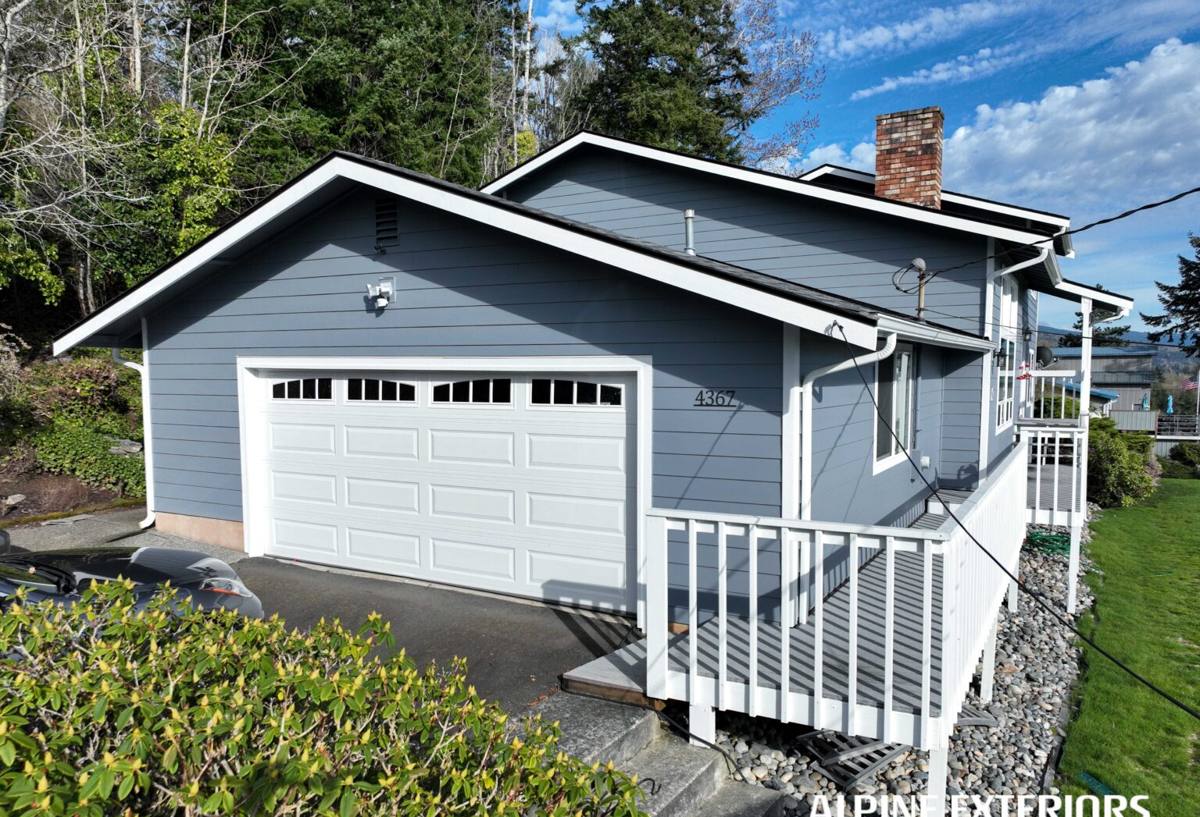
Why Sudden Valley Decks Face Different Wear Than Decks Downtown
Shade, Moss, and Standing Moisture
A deck on an open, south-facing lot in town can dry out within an hour or two of a rain shower. A deck tucked under fir and cedar canopy in Sudden Valley might stay damp until mid-afternoon, especially through the fall and winter when Bellingham's long moss season really sets in. That extended damp window is exactly what moss, algae, and mildew need to establish — first as a cosmetic issue on the board surface, then as a slip hazard, and eventually as a source of trapped moisture at fastener points and board edges if it's never addressed.
Elevation, Slopes, and Drainage
Many Sudden Valley lots have real grade change, which affects how a deck's substructure is framed and how water is meant to move once it hits the deck surface. A deck built level on a sloped site without enough attention to drainage paths underneath will pond water against footings and ledger boards, which is a wood-framing problem even when the decking itself is composite. Getting the pitch and the under-deck drainage right at framing time matters more here than it does on a flat, open lot.
What a Correct Composite Deck Installation Involves
Substructure and Ledger Attachment
Composite boards are only as good as what's underneath them. We check joist spacing against the manufacturer's span tables for the specific board profile being installed — composite typically needs tighter joist spacing than wood decking, especially on diagonal patterns or stair treads. Where the deck ties into the house, the ledger board attachment and flashing get the same scrutiny a structural inspector would give it, because that's the single most common point of hidden rot on any deck, composite surface or not.
Spacing, Fastening, and Hidden Fasteners
Composite boards expand and contract with temperature more than wood does, so gap spacing at butt joints and picture-frame borders has to account for that movement or you get buckling and popped fasteners within a couple of seasons. We use the hidden fastener systems each board manufacturer specifies rather than face-screwing wherever it's convenient — it keeps water off the fastener and keeps the deck looking clean without visible screw heads collecting grime.
Flashing and Moisture Management
Every point where the deck meets the house, a post, or a stair stringer is a place water can get behind the composite skin and into the framing. Proper flashing tape at the ledger, joist tape on top of every joist, and post bases that don't trap water are not optional upgrades — they're the difference between a deck that looks good for a season and one that's still solid in fifteen years.
Choosing the Right Composite Board for This Site
Not every composite product is built the same way, and the right choice depends on how much shade the deck sits in, how it will be used, and budget. Here's how the common tiers compare for a shaded, damp-prone lot like the ones typical in Sudden Valley:
| Board Type | Moisture & Moss Resistance | Maintenance | Typical Lifespan |
|---|---|---|---|
| Uncapped composite | Absorbs moisture at the surface; more prone to mold/moss in shade | Occasional cleaning, more attention in shaded areas | 15-20 years |
| Capped composite (cap-stock) | Polymer cap sheds water and resists staining well | Periodic rinse/wash, low overall | 25-30 years |
| Solid PVC / cellular PVC | Essentially non-porous; strong performance in constant shade | Lowest; occasional cleaning | 25-30+ years |
For lots with heavy, near-constant shade, we usually steer homeowners toward a fully capped board or PVC rather than an uncapped composite, since the moisture-resistance difference shows up fastest in exactly those conditions. It's not that uncapped composite is a bad product — it's a fine choice on open, sunny lots — it's just not the best trade-off for a deck that spends most of the day under tree cover.
Our Process From Estimate to Finished Deck
- Site walk: We look at sun exposure, grade, drainage, and how the deck ties into the house before recommending a board or a framing plan.
- Written estimate: Materials, framing scope, and timeline spelled out in plain language, no vague allowances.
- Permitting: Deck work in Whatcom County often requires a permit depending on size and height; we handle that paperwork rather than leaving it to you.
- Demo and framing: Old decking and any compromised framing removed and replaced before a single new board goes down.
- Composite installation: Boards, fasteners, and flashing installed per manufacturer spec to keep the product warranty intact.
- Final walkthrough: We go over care and cleaning specific to the board installed and the shade level of your particular lot.
Maintenance Checklist for Composite Decks in Sudden Valley
Composite decking is low-maintenance, not no-maintenance — especially on a shaded, lake-proximity lot. A few habits go a long way toward keeping moss and mildew from ever getting a foothold:
- Sweep off fallen needles and leaves regularly through fall — trapped debris holds moisture against the board surface.
- Rinse or lightly scrub with a soft-bristle brush and mild soap 1-2 times a year, more often in heavily shaded sections.
- Avoid pressure washing directly into board seams or fastener points; it can drive water where you don't want it.
- Keep gutters and downspouts near the deck clear so runoff isn't dumping extra water onto the deck surface.
- Check railing posts and stair connections annually for movement — framing issues show up there before they show up in the decking itself.
- Trim back overhanging branches where practical to cut down on shade and debris load over time.
Why Hire a Crew That Already Works in Sudden Valley
A deck contractor who's only worked flat, open-sun lots in town will frame and specify differently than one who understands what a shaded, sloped Lake Whatcom-area lot actually does to a structure over time. We've built and repaired decks on this kind of terrain enough to know where the moss forms first, which board profiles hold up under tree cover, and how to frame drainage on a grade instead of fighting it after the fact. That local pattern-recognition is worth more than a generic install — it's the difference between a deck that needs attention again in five years and one that doesn't.
We're also familiar with the access and logistics of working in a private community like this — coordinating delivery timing, keeping the work site contained, and being straightforward with neighbors about noise and equipment during the build. It's a small thing, but it matters when you live where you work.
Cost Factors to Expect
Composite decking costs more upfront than pressure-treated wood, and the total for any given project depends on square footage, framing condition, board tier, railing style, and site access. Broadly, homeowners should expect a noticeably higher material cost than wood, offset over time by lower maintenance spending and a longer service life — especially relevant on a shaded lot where an unprotected wood deck would need more frequent staining and repair. We'll walk through the real numbers for your specific deck during the estimate rather than quoting a number that doesn't reflect your site.
If you're planning a new deck or replacing tired decking in Sudden Valley, we're happy to come take a look and put together a straightforward, no-pressure estimate — just fill out the form below.