 Bellingham Roofing
 Why Sudden Valley Decks Take More Punishment Than a Typical Bellingham Yard
Sudden Valley sits close to Lake Whatcom, tucked into wooded, often steeply sloped lots that stay shaded for large stretches of the day. That combination — proximity to open water, tree cover, and limited direct sun — creates a microclimate that's noticeably damper than a flat, open lot elsewhere in Whatcom County. Decks here dry out slower after rain, hold moisture in shaded corners longer, and grow moss and algae faster than a comparable deck sitting in full sun a few miles away.
None of that means a deck can't last decades in this neighborhood. It means the deck has to be built for these specific conditions from the framing up, not just finished with a nice surface board and called done. A lot of the deck failures we get called out to inspect in this area aren't dramatic structural collapses — they're slow, boring problems: soft ledger boards, rusted fasteners, rot hiding under a board that looked fine from the top, or a substructure that never had a chance to dry because nobody thought about airflow underneath.
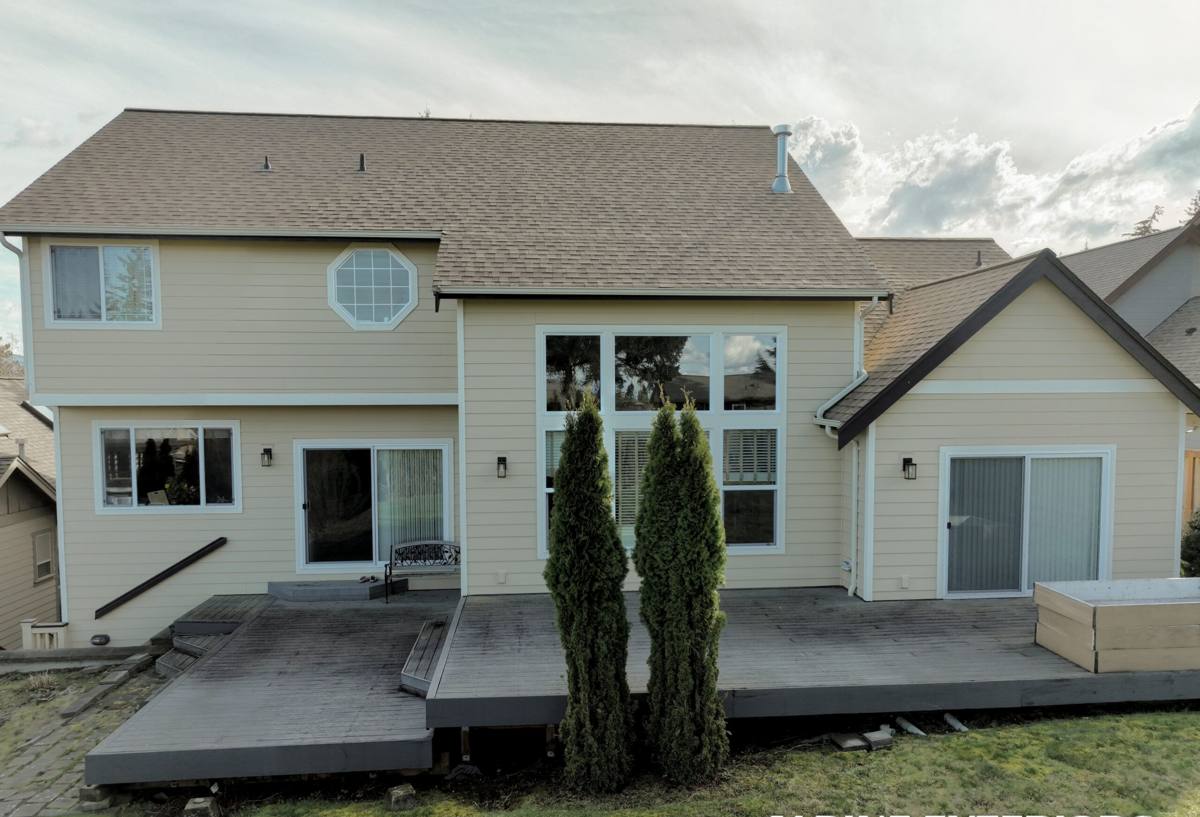
What Correct Deck Building Actually Involves
The Parts You Don't See
The framing, flashing, and fasteners are what determine whether a deck is still solid in fifteen years or needs to be torn apart in five. On a shaded, moisture-prone lot like most of Sudden Valley, we pay particular attention to:
- Ledger board flashing where the deck attaches to the house — this is the single most common point of hidden rot on older decks, because water gets behind the ledger and has nowhere to go.
- Fasteners and hardware rated for ground contact and coastal/marine-grade exposure, since salt air off Puget Sound and Bellingham Bay reaches even inland lots and accelerates corrosion in standard hardware.
- Footings sized and set below frost depth, with proper drainage around them so they're not sitting in standing water through the wet months.
- Joist spacing and blocking that account for the actual board and railing system going on top, not just a generic layout.
- Airflow underneath the deck — enough clearance and ventilation that the substructure can actually dry out between rain events instead of staying damp for weeks at a time.
The Parts You Do See
Decking, railing, and stairs get judged on looks, but they also have to perform in shade and driving rain year after year. Board spacing, fastener placement (face-screwed vs. hidden clip systems), and stair tread design all affect how well a deck sheds water and resists the slick, mossy film that builds up on north-facing or heavily shaded surfaces.
Choosing Materials for a Shaded, Damp Lot
There's no single "best" decking material — there's the right material for a given lot, budget, and maintenance appetite. On Sudden Valley's shadier, wetter sites, the trade-offs shift compared to an open, sunny lot.
| Material | How It Handles Shade & Moisture | Maintenance | Typical Lifespan |
|---|---|---|---|
| Pressure-treated wood | Prone to moss/algae in shaded spots; needs airflow and periodic cleaning to avoid staying damp | Annual cleaning, re-staining or sealing every 1-3 years | 10-15 years with upkeep |
| Cedar | Naturally more rot-resistant than PT lumber, but still needs to dry out between rain events | Regular cleaning and periodic oiling/sealing to hold its color and resist mildew | 15-20 years with upkeep |
| Composite decking | Resists rot outright, but low-quality boards can still hold surface moisture and grow algae film in deep shade | Occasional washing; no staining or sealing required | 25-30+ years, manufacturer-dependent |
| PVC/capped composite | Best moisture resistance of the group; fully sealed surface sheds water and resists staining even in constant shade | Lowest maintenance — soap and water cleaning | 25-30+ years, manufacturer-dependent |
We don't push one product line over another as a default. What we will tell you honestly is that on a heavily shaded, low-airflow lot, a budget composite board without a proper cap layer can actually trap moisture worse than a well-maintained wood deck, because it doesn't dry the way wood does. If we're recommending composite or PVC for a shaded Sudden Valley lot, it's because the specific product has a track record of handling constant damp shade, not just because it's low-maintenance on paper.
Moss, Algae, and Drainage: Design Decisions That Actually Matter
A long moss season is one of the defining realities of building anything outdoors in Whatcom County, and decks in Sudden Valley's tree cover feel it more than most. A few design decisions make a real difference in how much moss and algae a deck develops over time:
Board Orientation and Spacing
Running boards to shed water toward a low point, with consistent gap spacing, keeps standing water from pooling on the surface where moss gets its start. Too-tight spacing on a shaded deck is one of the most common reasons we see heavy moss buildup within a couple of seasons.
Substructure Ventilation
A deck built low to the ground with poor underside airflow stays damp far longer after a rain than one with proper clearance. On sloped Sudden Valley lots this sometimes means adjusting footing heights or adding skirting with vent gaps rather than solid skirting that traps moisture underneath.
Railing and Post Placement
Solid railing panels look clean but block airflow across the deck surface. On shaded lots, we're more careful about how much open versus solid railing area a design uses, since airflow across the surface is part of what keeps moss from taking hold.
Our Deck Building Process
The process is straightforward, but each step is where a shaded, damp lot either gets accounted for or doesn't:
- On-site walkthrough. We look at sun exposure, slope, drainage patterns, and how close the build site sits to trees or standing water, since all of that affects material and framing decisions.
- Design and material selection. We talk through decking material, railing style, and layout with the specific lot conditions in mind, not a one-size-fits-all package.
- Permitting. Deck projects in unincorporated Whatcom County typically require a building permit, and depending on the property, an architectural or community review as well. We handle the paperwork and make sure the design meets setback and structural requirements before work starts.
- Demolition and site prep (if replacing an existing deck). We inspect the ledger and framing area for hidden rot once the old decking is off — this is often where we find out whether the substructure needs more than a resurfacing.
- Framing and flashing. This is the stage that determines the deck's real lifespan, covered above.
- Decking, railing, and stairs. Installed to the manufacturer's spacing and fastening specs, adjusted for the site's drainage and airflow needs.
- Final walkthrough. We go over the finished deck with you, including what maintenance it will need and on what schedule, before we consider the job done.
Permits and Sudden Valley-Specific Considerations
Because Sudden Valley is an unincorporated community, deck permitting goes through Whatcom County rather than the City of Bellingham, and many homes here also fall under community architectural review in addition to standard building permits. We factor both into project timelines up front so there are no surprises partway through — nobody wants a deck framed and then paused because a review step got missed.
Sloped lots are also common in this area, which affects footing depth, stair design, and sometimes whether a deck needs additional structural support to tie into the grade safely. We treat slope as a design input from the first site visit, not something to work around later.
Maintenance: What to Actually Do After the Build
Even a well-built deck needs some ongoing attention on a shaded, damp lot. Here's a realistic checklist for Sudden Valley homeowners:
- Sweep leaves and debris off the deck surface regularly, especially in fall — trapped organic matter holds moisture and feeds moss growth.
- Clean the deck surface at least once a year with a deck-safe cleaner to remove early moss and algae film before it gets established.
- Check railing posts and stair connections annually for looseness, which can signal moisture getting into a connection point.
- Keep gutters and downspouts near the deck clear so runoff isn't draining directly onto or under the deck.
- For wood decks, re-seal or re-stain on the schedule your product calls for — skipping a cycle in a shaded spot shows up faster than it would in full sun.
- Trim back overhanging branches where practical to get a little more sun and airflow onto the deck surface.
Why It Matters That We Already Work in Sudden Valley
A crew that's built and repaired decks in Sudden Valley specifically knows what the moss season does to a shaded lot here, knows the county permitting path for this community, and has already seen what happens when a deck is built without accounting for the local drainage and shade patterns. That's not something you get from a general contractor working from a generic spec sheet — it comes from having stood on enough lots in this exact neighborhood to know where water actually goes and where moss actually takes hold.
It also means fewer surprises during the project. We know roughly what to expect from permitting timelines in this area, we know what slope and access challenges tend to come up, and we bring materials and hardware to the first day of framing that are already suited to the conditions, rather than figuring it out as problems appear.
Get a Straightforward Estimate
If you're planning a new deck or replacing one that's showing its age in Sudden Valley, we're happy to walk the site, look at your sun exposure and drainage, and give you an honest estimate with no pressure attached. Fill out the form below and we'll get in touch to schedule a time that works.