 Bellingham Roofing
 Siding That's Built for Where Sudden Valley Actually Sits
Sudden Valley homes deal with a specific mix of weather that a lot of siding products simply aren't built to handle over the long haul. Moist marine air moves in off the water and settles into the trees and hillsides around the community, driving rain comes in sideways during fall and winter storms, and the heavy tree canopy that makes the area beautiful also means shaded, damp siding for long stretches of the year. That combination is exactly what drives moss growth, trapped moisture, and slow rot in siding that isn't engineered for it.
We work in Whatcom County neighborhoods like this one regularly, and the pattern is consistent: siding failures here rarely happen because a product is "bad." They happen because a product wasn't matched to the climate, or it was installed without the water management details that this kind of weather demands. Bellingham-area homes need siding and an installation approach that assumes months of damp, shaded exposure every year — not a best-case scenario.
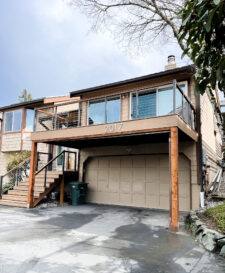
What Sudden Valley's Climate Actually Does to Siding
Moisture That Doesn't Dry Out Quickly
Tree-covered lots and lake proximity mean siding in Sudden Valley often stays wet longer than siding on an open, sun-exposed lot elsewhere in the county. Wood-based products — cedar, primed spruce, and even engineered wood siding — depend on regular drying cycles to stay stable. When drying cycles are short or interrupted for weeks at a time, moisture works its way into seams, cut edges, and fastener holes.
Driving Rain and Wind-Driven Water
Storms off the water don't just fall straight down — they push water sideways into laps, joints, and trim intersections. Siding that relies on face-sealed caulking rather than proper water-shedding geometry and a drainage plane behind it is far more likely to let water past the surface over time.
Moss and Organic Growth
Shaded, damp surfaces are ideal growing conditions for moss and algae. Beyond the cosmetic issue, moss holds moisture directly against the siding surface for extended periods, which accelerates whatever underlying vulnerability the material has — softening cut wood fibers, degrading paint film, or feeding into seams.
Salt-Influenced Air
Even set back from open water, homes in this part of Whatcom County get periodic exposure to salt-laden air moving in with coastal weather systems. Over years, that accelerates corrosion on unprotected fasteners and wears down finishes that aren't built to resist it.
What a Correct Siding Installation Involves
The siding material matters, but installation quality is what actually determines whether a home stays dry for the next 30 years or starts showing problems in five. A correct job includes several details that are easy to skip and expensive to fix later.
Water-Resistive Barrier and Drainage Plane
Behind the siding, a continuous water-resistive barrier has to be installed and lapped correctly — upper layers over lower layers, sealed at seams and penetrations — so any moisture that gets past the siding face has a path to drain out instead of soaking into the sheathing.
Flashing at Every Penetration
Windows, doors, hose bibs, light fixtures, and vents all break the plane of the wall, and every one of those breaks needs proper flashing integrated with the water-resistive barrier — not just a bead of caulk over the top. Caulk is a maintenance item, not a water management strategy.
Correct Fastening and Clearances
Fiber cement siding has specific fastener spacing, penetration depth, and clearance requirements from grade, roofing, and decks. Panels fastened too tight or too loose, or installed with insufficient ground clearance, are one of the most common causes of premature siding failure regardless of the material.
Field-Cut Edge Sealing
Any time a fiber cement panel is cut on site, that cut edge needs to be sealed per manufacturer specification before installation. Skipping this step is invisible at completion and shows up as edge deterioration years down the road.
Caulking and Joint Treatment
Joints and trim intersections need the right sealant, applied at the right thickness, in the right locations — enough to manage water without trapping moisture behind panels that need to breathe and drain.
Why This Company Installs Only James Hardie Fiber Cement
We made a deliberate decision to install one siding system — James Hardie fiber cement — rather than offer a menu of products. That's not a marketing position; it's because the alternatives each carry trade-offs that show up specifically in climates like Whatcom County's.
- Vinyl siding is affordable and low-maintenance in dry climates, but it can warp or distort under sustained heat and doesn't hold up structurally the way fiber cement does; it also isn't fire-resistant.
- Cedar siding looks excellent when new and well-maintained, but it requires ongoing refinishing, is vulnerable to moss and rot in shaded, damp conditions, and demands a maintenance commitment many homeowners don't want to keep up with year after year.
- Primed spruce and engineered wood products depend heavily on an intact factory coating; once that coating is compromised at a cut edge or impact point, moisture intrusion and swelling can follow.
- LP SmartSide and similar engineered wood systems perform well when installation details are followed exactly, but they're wood-based products and share wood's sensitivity to sustained moisture exposure — a real factor in a shaded, high-rainfall community.
James Hardie fiber cement is non-combustible, dimensionally stable, and doesn't rot or swell from moisture the way wood-based products can. Hardie's HZ5 product line in particular is engineered for regions with more severe moisture exposure, and the factory-applied ColorPlus finish resists fading and holds up to the kind of damp, shaded conditions common around Sudden Valley far better than field-applied paint on wood siding.
Siding Options Compared for This Climate
| Factor | James Hardie Fiber Cement | Cedar | Vinyl | Engineered Wood (LP-type) |
|---|---|---|---|---|
| Moisture/rot resistance | High — cement-based, doesn't rot | Low without diligent maintenance | High, but not structural | Moderate — depends on coating integrity |
| Moss/algae resistance | Good, especially with factory finish | Poor in shaded, damp areas | Fair, can trap moisture behind panels | Fair |
| Fire resistance | Non-combustible | Combustible | Combustible, can distort with heat | Combustible |
| Maintenance | Low — occasional wash, no refinishing | High — regular staining/sealing | Low | Moderate — monitor edges/coating |
| Typical service life when installed correctly | 30+ years | 15-25 years with upkeep | 20-30 years | 20-30 years |
How Our Installation Process Works
- On-site assessment: We evaluate the home's existing siding, sheathing condition, moisture history, sun/shade exposure, and any problem areas specific to the lot — tree cover, drainage patterns, and prevailing wind direction all factor in around Sudden Valley.
- Removal and sheathing inspection: Once old siding comes off, we check the sheathing underneath for hidden rot or water damage before anything new goes on. This is often where past problems get caught early.
- Water-resistive barrier installation: A continuous, properly lapped barrier goes on the wall before any siding, establishing the drainage plane that protects the structure long-term.
- Flashing integration: Windows, doors, and all penetrations are flashed and tied into the water-resistive barrier following manufacturer and code requirements.
- Hardie panel installation: Panels are installed to Hardie's fastening, spacing, and clearance specifications, with all field-cut edges sealed.
- Trim, caulking, and finish detailing: Trim boards, joint treatment, and touch-up on any factory finish disruptions are completed to spec.
- Final walkthrough: We review the completed work with the homeowner and confirm clearances, drainage, and finish quality before calling the job done.
What to Check Before Hiring a Siding Crew in This Area
Not every contractor who "does siding" understands the water management demands of a shaded, high-moisture Whatcom County lot. Before hiring, it's worth confirming a few things.
- Do they have documented experience installing fiber cement siding specifically, not just siding in general?
- Will they inspect and address sheathing condition before installing new siding, not just cover what's there?
- Do they follow manufacturer-specified fastening, clearance, and edge-sealing requirements — and can they explain what those are?
- Is flashing integrated with the water-resistive barrier at every window, door, and penetration, or is caulk being used as a substitute?
- Do they carry proper licensing and insurance for exterior work in Washington State?
- Will the manufacturer's warranty transfer to you in writing, and do they understand what voids it?
Cost Factors for a Sudden Valley Siding Project
Every home is different, but the same variables tend to drive cost up or down on projects in this area. Rather than quote a number that won't reflect your actual home, here's what typically moves the estimate.
| Factor | Why It Matters |
|---|---|
| Sheathing condition | Rot or moisture damage found during removal adds repair scope before new siding goes on |
| Home size and wall complexity | More corners, gables, and trim detail means more labor and material cuts |
| Siding profile and finish selection | Lap width, texture, and ColorPlus color affect material cost |
| Access and site conditions | Tree cover, slope, and staging space around the home affect crew efficiency |
| Existing siding removal | Tear-off and disposal of old material adds time versus new construction |
Living With Hardie Siding After Installation
One of the practical advantages of switching to fiber cement in a climate like this is how little ongoing work it demands compared to wood siding. It doesn't need to be restained or resealed. A periodic rinse to knock off dust, pollen, or early moss growth is typically all that's needed to keep the ColorPlus finish looking clean. Keeping gutters clear and vegetation trimmed back from the siding face also goes a long way toward limiting the shaded, damp conditions that encourage moss in the first place — a small habit that pays off in a community with as much tree cover as Sudden Valley.
Ready to Talk About Your Home
If you're weighing a siding replacement or new installation in Sudden Valley, we're happy to walk your property, take a look at what your home's exposure and existing siding are telling us, and give you a straight answer on what it would take to do the job right. Reach out below for a free, no-pressure estimate.