 Bellingham Roofing
 Why Sunnyland Roofs Wear Differently
Sunnyland sits close enough to Bellingham Bay and the surrounding waterways that homes here deal with a specific combination of stresses: salt-laden air moving in off the water, driving rain that comes in sideways during winter storms, and a moss season that runs longer than most homeowners realize. None of these factors is dramatic on its own, but stacked together year after year, they shorten the life of a roof that wasn't installed with them in mind. A roof that would hold up fine in a drier inland climate can start failing early here if the details weren't done right the first time.
This page covers what a new roof installation should actually involve for a Sunnyland home, why the local climate changes some of the decisions, and what to expect from a crew that works this neighborhood regularly rather than passing through once.
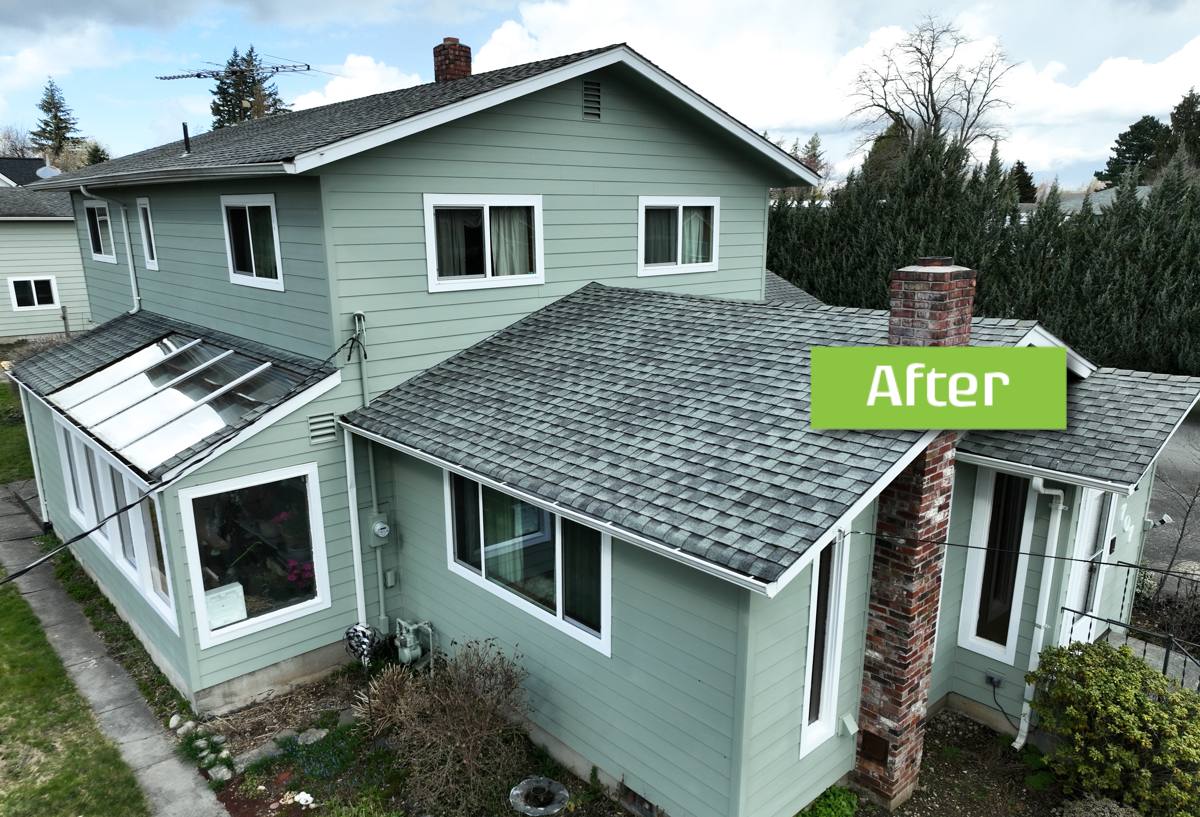
What Whatcom County's Climate Does to a Roof Over Time
Moss and Organic Growth
Bellingham's mild, wet winters and shaded lots are ideal growing conditions for moss, and Sunnyland's mature tree cover only adds to it. Moss isn't just cosmetic. It holds moisture directly against the roofing material, works its way under shingle tabs, and lifts edges over time. On older roofs, you'll often find the heaviest moss buildup on north-facing slopes and anywhere shaded by trees, exactly where the roof stays damp the longest between rain events.
Wind-Driven Rain and Flashing
Storms coming off the water don't just drop rain straight down — they push it sideways, up under shingle edges, and into any gap in the flashing. Roofs here take more sideways water pressure at valleys, chimneys, skylights, and wall intersections than a roof in a calmer inland climate ever will. This is why flashing detail work matters more here than the shingle brand does.
Salt Air and Metal Components
Being close to the bay means airborne salt reaches roofs on Sunnyland's western and southern-facing streets more than homeowners expect. Salt air accelerates corrosion on exposed metal — nails, flashing, vents, and gutter hardware — which is why material selection and fastener choice matter as much as the shingle itself.
Signs a Sunnyland Home Needs a New Roof, Not Another Repair
Not every roof problem calls for full replacement, but there's a point where patching stops making financial sense. Common signs we look for on local homes include:
- Granule loss heavy enough that you can see bare, shiny patches on the shingles
- Moss or algae staining that keeps returning within a season or two of cleaning
- Soft spots or sagging when walked on, which usually means the decking underneath has taken on moisture
- Daylight visible through the attic roof boards, or damp insulation after a storm
- Curling, cracked, or missing shingles concentrated on one slope (often the one that takes the most wind-driven rain)
- A roof that's already had two or more repair visits in the last few years for different leaks
If a roof is past the point of a targeted repair, replacement is the more honest recommendation — patching a roof that's structurally tired just delays a bigger repair bill later.
What a Correct New Roof Installation Actually Involves
A new roof is only as good as the parts nobody sees once it's finished. Here's what we consider non-negotiable on every installation, and why each step matters more in this climate.
Tear-Off and Deck Inspection
We remove the old roofing down to the deck rather than installing over it. This lets us actually see the plywood or plank sheathing underneath, which is where moss and slow leaks tend to do their real damage. Any soft, rotted, or delaminated decking gets replaced before anything new goes down — covering over a compromised deck just hides the problem for the next owner to find.
Underlayment and Ice-and-Water Protection
Given how much wind-driven rain this area gets, we pay close attention to underlayment coverage, especially at eaves, valleys, and low-slope transitions where water pressure is highest during a storm. Self-adhered membrane in the vulnerable areas backstops the primary roofing material if wind ever pushes water past it.
Flashing at Every Penetration
Chimneys, skylights, plumbing vents, and wall step-flashing are where most Bellingham roof leaks actually originate — not in the open field of shingles. We flash these properly with corrosion-resistant metal rather than relying on sealant alone, since caulk breaks down over time and salt air accelerates that process.
Ventilation
A roof needs to breathe. Proper intake and exhaust ventilation keeps the attic temperature and moisture level balanced, which slows down condensation buildup in our damp winters and reduces the moisture that feeds moss growth from underneath.
Material Installation to Spec
Every roofing product has a manufacturer-specified nailing pattern, exposure, and fastener type. We follow it exactly, because it's what keeps the warranty valid and what the material was engineered to withstand for wind and water resistance.
Choosing a Roofing Material for Sunnyland's Conditions
There's no single "best" roofing material — the right choice depends on your home's exposure, budget, and how much long-term maintenance you want to take on. Here's an honest comparison of what we commonly install in this area:
| Material | How It Handles Moss/Moisture | Salt Air Durability | Typical Lifespan Here |
|---|---|---|---|
| Architectural asphalt shingle | Good with proper ventilation; algae-resistant granule options reduce staining | Good when fasteners and flashing are corrosion-resistant | 25–30 years |
| Standing seam metal | Excellent — sheds moisture fast, minimal surface for moss to grip | Requires coated/marine-grade metal near the bay to avoid corrosion | 40–50+ years |
| Cedar shake | Higher moss and rot risk in shaded, damp lots without diligent upkeep | Moderate; needs regular treatment | 20–30 years with maintenance |
| Synthetic composite shake/slate | Very good — engineered to resist moisture absorption | Good; check manufacturer's coastal warranty terms | 40–50 years |
For many Sunnyland homes, an algae-resistant architectural shingle strikes the right balance of upfront cost and long-term performance. Homes with heavy tree shade or a strong preference for lower long-term maintenance often lean toward metal or a synthetic composite instead. We'll walk through the trade-offs for your specific roof rather than push one product across the board.
Our Process, Start to Finish
- On-site inspection. We walk the roof and attic, check the decking condition, ventilation, and flashing points, and take photos to document what we find.
- Written estimate. You get a clear scope of work and price — no vague allowances, no pressure to decide on the spot.
- Material selection. We go over the options in the table above based on your roof's exposure and your priorities.
- Scheduling around Bellingham weather. We watch the forecast and plan tear-off days to minimize the window your home is exposed, with dry-in materials on hand in case weather shifts mid-project.
- Installation. Tear-off, deck repair as needed, underlayment, flashing, ventilation, and material installation to manufacturer spec.
- Cleanup and magnetic sweep. Full site cleanup, including a nail sweep of the yard and driveway.
- Final walkthrough. We review the finished roof with you before calling the job done.
Why a Crew That Already Works Sunnyland Matters
A roof installed by a crew unfamiliar with this specific stretch of Whatcom County can still turn out fine — but a crew that already works Sunnyland regularly isn't guessing about how a particular street sits relative to prevailing wind and rain, which slopes on similar homes tend to hold moss longest, or how quickly salt air affects exposed fasteners in this area. That familiarity shows up in the small decisions during installation: where extra underlayment is worth adding, which flashing details need reinforcing, and what ventilation setup actually keeps a shaded roof drier through the winter. It's the difference between a roof that's technically installed to code and one that's installed for the conditions it will actually face here.
Checklist: What to Ask Before You Sign a Roofing Contract
- Is the tear-off down to the deck included, or is this a layover installation?
- What happens if rotted decking is found — is replacement priced per sheet up front?
- What underlayment is being used at eaves and valleys, and is ice-and-water membrane included there?
- Are corrosion-resistant fasteners and flashing specified given the proximity to salt air?
- What ventilation changes, if any, are included with the new roof?
- What does the workmanship warranty cover, separate from the manufacturer's material warranty?
- Is the crew licensed and insured in Washington, and can they provide proof?
- Who handles cleanup, including a magnetic nail sweep of the property?
Caring for Your New Roof After Installation
A correctly installed roof still benefits from basic upkeep in this climate. Keeping gutters clear of debris prevents water from backing up under the roof edge during heavy rain. Trimming back overhanging branches reduces both moss growth and the risk of debris damage during winter windstorms. A soft wash treatment every couple of years, rather than aggressive pressure washing, keeps moss and algae from re-establishing without damaging the granule surface. None of this is intensive, but it's the difference between a roof that reaches its full expected lifespan and one that starts showing problems early.
If your Sunnyland home's roof is showing its age or you're planning ahead rather than waiting for a leak, we're happy to take a look and give you a straightforward, no-pressure estimate. Use the form below to get started.