 Bellingham Roofing
 Roofing in Sunnyland Faces a Specific Set of Problems
Sunnyland is one of Bellingham's older, established neighborhoods, with a mix of character homes from earlier decades sitting alongside newer infill construction. That mix matters for roofing, because a house built decades ago was very likely roofed with materials and details that don't match what a newer home has — different decking, different ventilation, sometimes multiple roofing layers stacked over the years. A repair crew that doesn't slow down and actually look at what's under the surface layer ends up patching the wrong problem.
What every Sunnyland roof shares, regardless of age, is exposure to the same regional climate: salt-tinged air coming off Bellingham Bay, long stretches of driving rain through fall and winter, and a moss season that can run most of the year in shaded, north-facing sections of a roof. None of these factors are dramatic on their own, but stacked together over years they're what turns a small, cheap repair into a bigger one if it's ignored.
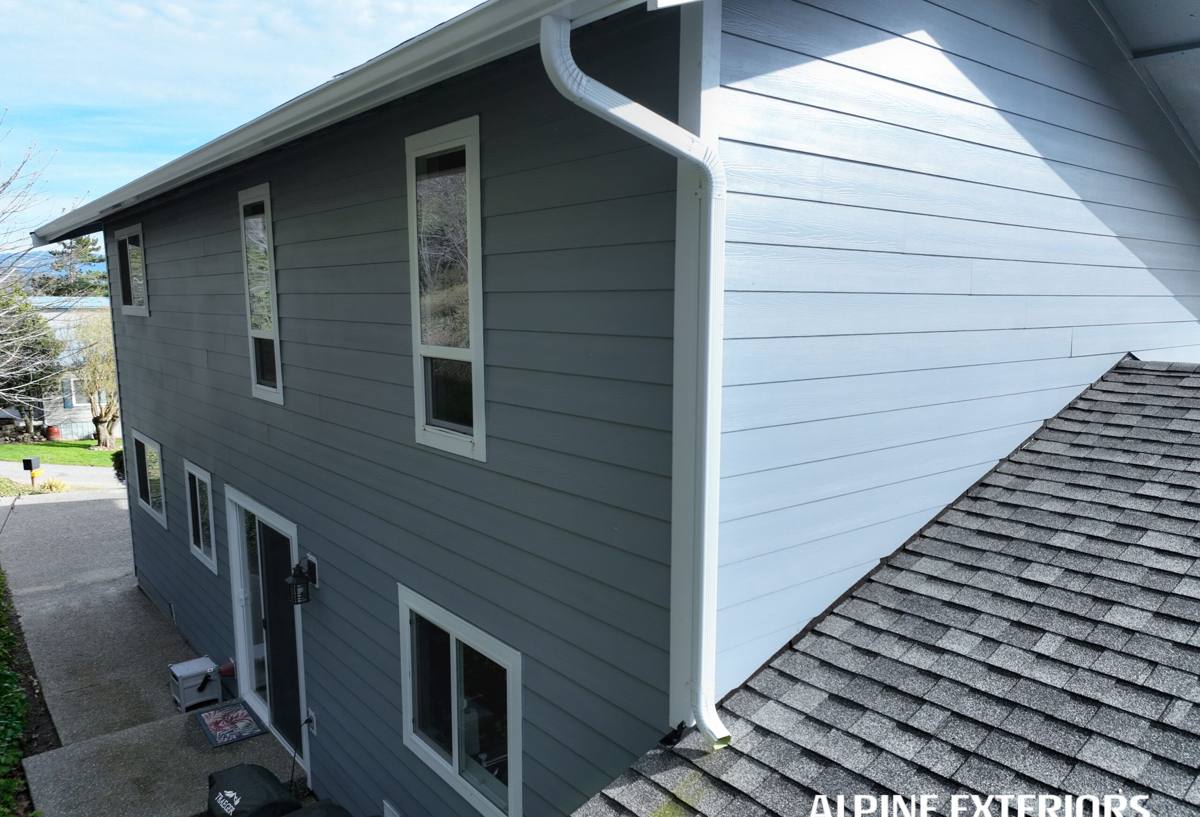
How Bellingham's Climate Wears Down a Roof
Salt Air
Sunnyland's proximity to the water means metal components on a roof — flashing, nails, gutter hardware, vent caps — are exposed to airborne salt that accelerates corrosion compared to inland areas. Galvanized fasteners and flashing that would last decades further from the coast can start showing rust and pitting years earlier here. Once flashing corrodes, it stops shedding water reliably, and that's usually where a leak starts, not in the shingles themselves.
Driving Rain
Whatcom County doesn't get the heaviest rainfall totals in Western Washington, but it does get wind-driven rain off the Sound, which behaves differently than a straight-down downpour. Wind-driven rain finds its way sideways and upward under loose or lifted shingle edges, around poorly lapped flashing, and through nail holes that a vertical rain would never reach. Repairs that only address the visible gap and ignore how water moves under wind pressure tend to fail again within a season or two.
Moss and Algae
Shaded roof sections — north slopes, areas under overhanging trees, valleys that stay damp longer — grow moss readily in this climate. Moss isn't just cosmetic. Its root structure lifts shingle edges and granules, holds moisture against the roofing material long after the rest of the roof has dried, and channels water in directions the roof wasn't designed to handle. A roof with visible moss usually has more moisture damage underneath than what's visible from the ground.
Signs a Sunnyland Home Needs Roof Repair
- Water stains on ceilings or upper walls, especially near exterior walls or chimneys
- Granules collecting in gutters or at the base of downspouts
- Shingles that are curling, cracked, or missing after a windstorm
- Visible moss or dark streaking concentrated on shaded slopes
- Rusted, lifted, or separated flashing around chimneys, skylights, or roof-to-wall transitions
- Sagging or soft spots when walked on (a sign of decking damage, not just surface wear)
- Daylight visible through the attic roof deck
Any one of these on its own might be a minor fix. Several together usually mean water has been getting in longer than the homeowner realized.
What a Correct Roof Repair Actually Involves
Diagnosing the Real Problem, Not Just the Symptom
A stain on a ceiling doesn't always mean the leak is directly above it — water can travel along rafters or decking before it shows up inside. A proper repair starts with tracing the water back to its actual entry point, usually by inspecting the roof itself rather than guessing from the interior damage alone. This is where a lot of cheap repairs go wrong: sealing over a visible gap without finding where the water is actually getting in.
Matching Materials and Technique
Repairs need to use materials compatible with what's already on the roof — mismatched shingle types, incompatible flashing metals, or the wrong underlayment can create new problems, including galvanic corrosion between dissimilar metals in a salt-air environment. On older Sunnyland homes, this sometimes means sourcing a shingle profile or color that reasonably matches an existing roof rather than leaving an obvious patch.
Flashing and Transition Points
Most roof leaks in this region trace back to flashing — around chimneys, skylights, vent pipes, and where a roof meets a wall or a lower roofline. These transition points take the brunt of wind-driven rain and are the first place salt air corrodes metal. A repair that replaces shingles but reuses failing flashing underneath is a repair that will need to be redone.
Ventilation Check
A repair is a good moment to check attic ventilation, since poor airflow traps moisture against the underside of the roof deck and accelerates rot from the inside — a problem that shows up as soft decking long before it's visible from outside.
Repair Considerations by Roofing Material
| Material | Common Issue in Sunnyland's Climate | Repair Consideration |
|---|---|---|
| Composition (asphalt) shingle | Granule loss, curling edges from wind-driven rain, moss lifting shingle tabs | Matching existing shingle color/profile; checking underlayment condition beneath damaged area |
| Cedar shake/shingle | Moss and moisture retention, splitting, accelerated aging in shaded sections | Requires careful sourcing and installation technique; moisture behavior differs significantly from composition roofing |
| Metal roofing | Fastener corrosion from salt air, seam and flashing failure at penetrations | Corrosion-resistant fasteners and flashing are worth the added cost near the coast |
| Flat or low-slope roofing | Ponding water, membrane seam failure, moss in low-flow areas | Drainage correction often matters as much as membrane repair itself |
Our Repair Process
- Inspection. We walk the roof (weather permitting) and check the attic from inside, tracing suspected leaks to their actual source rather than assuming based on interior stains.
- Honest assessment. We tell you plainly whether this is a targeted repair, a larger section replacement, or something that's approaching full roof replacement territory — and explain why.
- Written scope. Before work starts, you know what's being replaced, what materials are being used, and what the repair does and doesn't address.
- The repair itself. Removal of damaged material, correction of the underlying cause (not just the visible symptom), and installation matched to the existing roof where possible.
- Cleanup and check. Debris and old materials cleared, and a final look to confirm the fix addresses what was found in the inspection.
Moss, Debris, and Ongoing Maintenance
A repair fixes the current damage, but Sunnyland's tree cover and shaded lots mean moss and debris buildup will return without some ongoing attention. Periodic moss treatment and gutter clearing go a long way toward preventing the same repair from being needed again in a few years. We're glad to point out which parts of a roof are most likely to need this attention based on shading and slope, even if it's just advice and not a job we're doing that day.
Repair vs. Replacement: What Actually Drives the Decision
| Factor | Favors Repair | Favors Replacement |
|---|---|---|
| Age of roofing material | Well within expected lifespan | Nearing or past typical service life for the material |
| Extent of damage | Isolated to one area or penetration | Spread across multiple slopes or recurring in different spots |
| Decking condition | Solid, no soft spots | Soft, rotted, or damaged decking found during inspection |
| Number of past repairs | First repair on this roof | Several prior repairs in different areas over recent years |
| Material availability | Matching material still obtainable | Original material discontinued or mismatch would be very visible |
Cost ranges vary widely depending on the size and complexity of the repair, roof pitch and accessibility, and the material involved — we'll give you real numbers after we've actually seen the roof, not a phone estimate.
Why Hiring a Crew That Already Works in Sunnyland Matters
Roofing crews who regularly work Bellingham neighborhoods like Sunnyland already understand how this specific climate treats a roof — where moss tends to build up first, how salt air affects flashing lifespan, and which roof-to-wall details on older homes tend to need extra attention. That's different from general roofing knowledge; it's familiarity with how Whatcom County weather actually behaves on a roof over years, not just what a manufacturer's spec sheet says. It also means faster response when you need someone to actually look at the problem rather than schedule an estimate weeks out.
What to Ask Before Hiring a Roof Repair Contractor
- Will you inspect the attic from inside, not just the roof from outside or the ground?
- What's actually included in the written scope of work?
- Are you using materials compatible with what's currently on my roof?
- Do you carry liability insurance and can you provide proof?
- Will the flashing be replaced or just resealed?
- What's your plan if you find decking damage once the old material is removed?
Get a Straight Answer About Your Roof
If you're seeing signs of a leak, moss buildup, or storm damage on a Sunnyland roof, it's worth having someone take an honest look before a small problem becomes a bigger one. We offer free, no-pressure estimates — fill out the form below and we'll take a look and tell you plainly what we find and what it would take to fix it right.