 Bellingham Roofing
 Roofing in Lynden: Same County, Same Weather, Different Neighborhood
Lynden sits inland from Bellingham Bay, but it isn't insulated from the weather pattern that defines roofing work across Whatcom County. The same marine air mass that carries salt off the bay also pushes driving rain and wind well past the shoreline, and it brings the region's long, damp moss season with it. A roof in Lynden may not take direct salt spray the way a house right on the water does, but it deals with the same soaked winters, the same slow-drying shade under mature trees, and the same freeze-thaw swings in January and February. We work asphalt shingle roofs all over this area, and the details that matter in Lynden are close cousins to the ones that matter in Bellingham proper — just tuned to a slightly different mix of wind exposure and tree cover.
This page is about one job, done right, for this specific area: asphalt shingle roofing for Lynden homes. Not a general overview of shingle types, not a sales pitch — what your roof actually needs given where it sits, and what a contractor should be doing about it.
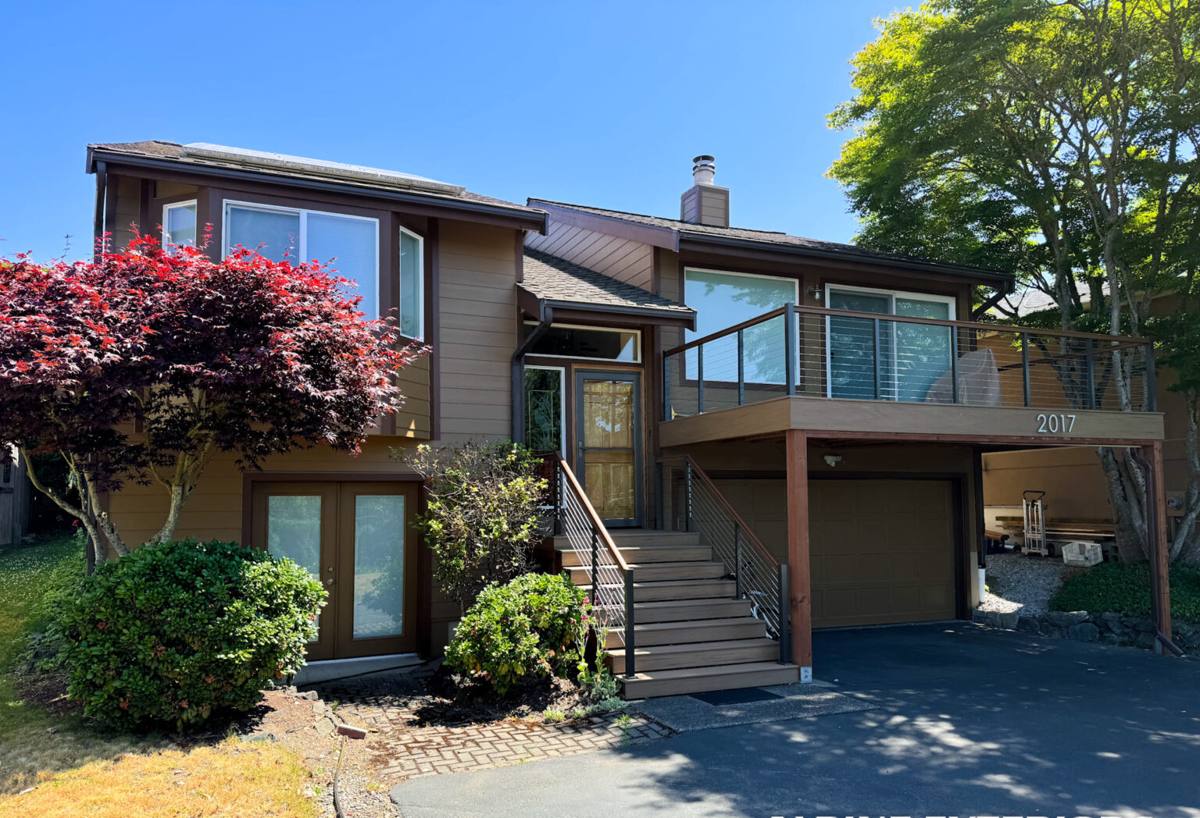
What This Climate Actually Does to a Shingle Roof
Moss and Algae Take Hold Fast
Whatcom County's moss season isn't really a season — it's most of the year. Anywhere a roof stays shaded or holds moisture longer than it should (north-facing slopes, valleys, areas under overhanging trees), moss gets a foothold. Once established, moss roots lift shingle edges, holds water against the mat, and accelerates granule loss. Left alone for a few seasons, it turns a 25-year shingle into a 15-year shingle.
Wind-Driven Rain Finds Weak Seals
Lynden gets its share of wind, especially with fall and winter storm systems moving through. Wind-driven rain doesn't just fall on a roof, it gets pushed sideways and up under shingle tabs, through poorly sealed nail heads, and into any flashing detail that was installed a little loose. A shingle roof that's fine in a light rain can still leak in a sideways storm if the underlayment and flashing weren't built for that condition from the start.
Freeze-Thaw and Prolonged Dampness
This area doesn't get brutal winters, but it does get repeated cycles of cold snaps followed by rain and thaw. Shingles and underlayment that stay damp for days at a time age differently than roofs in drier climates — sealant strips take longer to bond in cold, wet conditions, and any trapped moisture in the decking has more time to do damage before it dries out.
What a Correct Asphalt Shingle Installation Involves Here
A shingle roof is a system, not a single product. In this climate, every layer under the shingle matters as much as the shingle itself.
- Ice and water shield at vulnerable points — valleys, eaves, and around penetrations, where wind-driven rain and standing moisture are most likely
- Synthetic underlayment across the full roof — more consistent water resistance than old felt paper, and it holds up better through a long install season with damp weather
- Balanced attic ventilation — intake at the eaves, exhaust at the ridge, sized to the attic; poor ventilation traps moisture that promotes rot and shortens shingle life from underneath
- Properly lapped, sealed flashing — at chimneys, skylights, sidewalls, and any roof-to-wall transition, since these are the first places a wind-driven leak shows up
- Starter strip and hip/ridge detailing done to spec — skipping or shortcutting these is a common source of early wind damage at the edges and ridge line
- Nailing pattern and placement matched to manufacturer spec — high-nailing or under-nailing is one of the most common causes of premature shingle blow-off in windy conditions
None of this is exotic. It's disciplined, correct installation of a well-understood system — done with this area's rain and wind in mind rather than a generic "it doesn't rain much where the manufacturer is based" assumption.
Choosing a Shingle for Lynden's Conditions
Not every asphalt shingle is built the same way, and the differences matter more here than in a dry climate. We generally steer homeowners toward algae-resistant, higher wind-rated shingle lines for this area — not because cheaper shingles are defective, but because the maintenance burden and shorter effective lifespan of a lower-spec shingle shows up faster under this much moisture and wind exposure.
| Shingle Type | Typical Wind Rating | Algae Resistance | Best Fit For |
|---|---|---|---|
| Standard 3-tab | Lower | Minimal unless treated | Budget-driven projects, less wind/tree exposure |
| Architectural (laminate) | Higher | Usually includes algae-resistant granules | Most Lynden homes — good balance of durability and cost |
| Impact-resistant architectural | Highest | Algae-resistant | Open, wind-exposed lots or roofs with a history of storm damage |
Algae-resistant granules (usually copper-infused) matter here specifically because of how much shade and moisture this area holds through the year — without them, dark streaking and moss growth show up noticeably faster.
Common Problems We Find on Lynden Roofs
- Moss buildup concentrated on north-facing or tree-shaded slopes
- Granule loss and dark streaking from algae, usually mistaken for dirt
- Lifted or missing tabs along ridge lines and roof edges after wind events
- Soft or discolored decking found during tear-off, from long-term moisture intrusion that wasn't visible from the ground
- Valley wear from repeated water flow that wasn't given enough protection during the original install
Most of these are preventable with correct installation up front and a bit of routine attention afterward — they're rarely a sign the homeowner did anything wrong, just that the roof wasn't built or maintained for what this climate actually delivers.
Our Process, Start to Finish
1. Inspection and Honest Assessment
We start by getting on the roof (or using a close visual and photo inspection where access is limited), checking decking condition, flashing, ventilation, and the extent of moss or algae growth. We'll tell you plainly if a repair makes sense versus a full replacement — a roof with isolated damage and sound decking doesn't need to be torn off.
2. Scope and Straight Answers on Material
We walk through shingle options suited to your roof's exposure — sun, shade, wind — and explain the trade-offs in plain terms, not a sales script.
3. Tear-Off and Deck Check
Full tear-off jobs include an inspection of the decking itself. Any soft, delaminated, or water-damaged sheathing gets replaced before anything new goes down — installing new shingles over compromised decking just hides the problem.
4. Installation to Spec
Underlayment, ice and water shield, flashing, ventilation, and shingle installation all done to manufacturer specification, not shortcut for speed.
5. Cleanup and Walkthrough
Magnetic sweep for nails, full debris cleanup, and a walkthrough so you know what was done and what to watch for going forward.
Keeping Moss From Cutting Your Roof's Life Short
A correctly installed roof still needs a small amount of ongoing attention in this climate. None of it is complicated, but skipping it is how a 25-year roof turns into a 15-year roof.
- Have gutters cleared at least twice a year — clogged gutters back water up under the lower courses of shingles
- Remove moss buildup before it thickens, using methods that don't scrape or damage the granule surface
- Trim back overhanging branches to cut down on shade, debris, and the constant dampness that feeds moss
- Have the roof looked at after any major windstorm, even if nothing looks obviously wrong from the ground
- Check attic ventilation periodically — blocked soffit vents are easy to miss and quietly shorten shingle life from underneath
Why It Matters That We Already Work in This Area
A crew that works Bellingham and the surrounding Whatcom County communities regularly already knows which slopes in this area hold moss longest, which shingle lines actually perform in sustained wet weather, and what a wind-driven rain event does to a poorly flashed valley. That's not something you get from a contractor passing through once. It also means warranty work and follow-up questions get handled by people who are already local, not a company that has to schedule a special trip back to the area.
What Affects the Cost of a Lynden Shingle Roof
| Factor | Why It Matters |
|---|---|
| Roof size and pitch | More surface area and steeper slopes mean more material, labor, and safety setup |
| Decking condition | Rot or soft sheathing found during tear-off adds material and labor to replace |
| Shingle grade chosen | Architectural and impact-resistant lines cost more upfront but hold up longer under this area's wind and moisture |
| Number of penetrations and valleys | Chimneys, skylights, and valleys all need extra flashing work and labor time |
| Existing ventilation setup | Adding or correcting attic ventilation during the job affects both cost and long-term roof performance |
| Access and tear-off scope | Layers of old roofing, steep access, or landscaping constraints all affect labor time |
We give straightforward, itemized numbers based on what we actually find on your roof — not a generic per-square rate that ignores your specific conditions.
If your Lynden roof is showing moss, streaking, or you just want a straight opinion on whether it needs repair or replacement, we're happy to take a look. Estimates are free and there's no pressure attached — use the form below to get started.