 Bellingham Roofing
 Building Decks for Sunnyland Homes
Sunnyland is one of Bellingham's older, tree-shaded neighborhoods, and that mix of mature landscaping and proximity to Bellingham Bay creates a specific set of conditions for any outdoor structure. A deck built here has to deal with salt-tinged air rolling in off the water, long stretches of driving rain through fall and winter, and a moss season that can run most of the year in shaded yards. None of that means a deck can't last decades in this neighborhood — it just means the materials, fasteners, and framing details matter more here than they would in a drier climate.
This page covers what actually goes into building a deck that holds up in Sunnyland's conditions, what a correctly built deck looks like underneath the decking boards, and how our process works from first visit to final walkthrough.
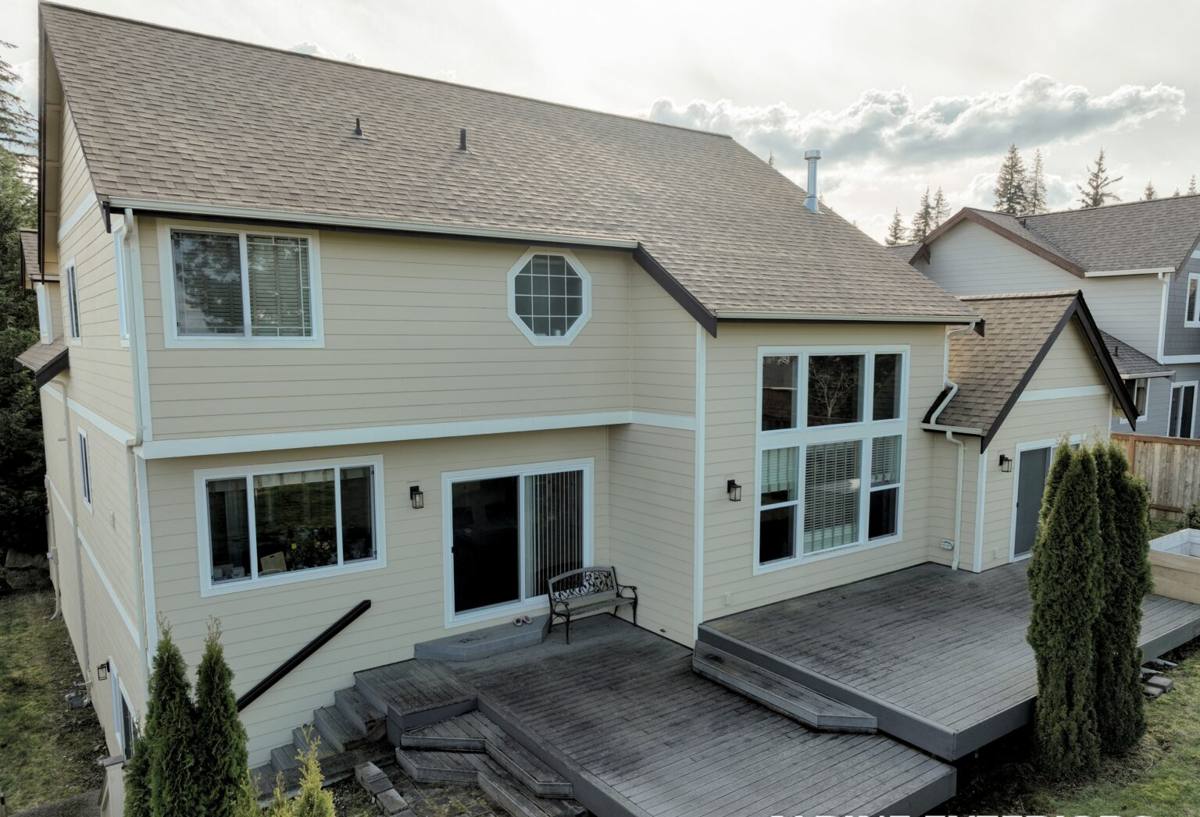
What Bellingham's Climate Does to a Deck
Salt Air and Metal Fasteners
Homes closer to Bellingham Bay get a steady, low-level dose of salt-laden air. It's not the same as a beachfront property getting direct spray, but it's enough over years to accelerate corrosion on the wrong grade of hardware. Standard electro-galvanized screws and joist hangers can start showing rust streaks and pitting well before the wood around them has worn out, which weakens connections at exactly the points that carry the most load.
Driving Rain and Water Intrusion
Whatcom County's wet season isn't just steady drizzle — it includes wind-driven rain that gets pushed sideways into ledger boards, stair stringers, and any spot where two building materials meet. Any gap in flashing or a caulk-only seal at the house connection becomes a slow leak path, and slow leaks are how rot gets started in framing that's otherwise sound.
Moss, Shade, and Standing Moisture
Sunnyland's tree cover is part of what makes the neighborhood pleasant to live in, but it also means many decks sit in partial shade for large parts of the day. Shade plus regular rain is exactly what moss and algae need to take hold on decking surfaces, and once established, moss holds moisture against the boards long after the rain has stopped — which is a major factor in premature wood decay and slick, unsafe walking surfaces.
Choosing Decking Material for This Neighborhood
There's no single "best" decking material — the right choice depends on budget, how much upkeep you want to do, and how much shade your particular yard gets. Here's how the common options actually perform under Bellingham's conditions:
| Material | Moss/Moisture Resistance | Maintenance | Typical Lifespan Here |
|---|---|---|---|
| Pressure-treated lumber | Fair — needs sealing to perform well | Annual cleaning, periodic staining/sealing | 15-25 years with upkeep |
| Cedar | Good natural resistance, but surface still hosts moss if shaded | Regular cleaning, occasional oil/sealant | 20-25 years with upkeep |
| Composite decking | Very good — doesn't absorb water like wood, but moss can still grow on the surface film | Periodic washing, no staining or sealing | 25-30+ years, warrantied |
| PVC/capped composite | Excellent — fully sealed, no absorption | Occasional washing | 25-30+ years, warrantied |
We install all of the above depending on what a homeowner wants, but we're upfront about the trade-offs. Wood costs less up front and looks classic, but it demands real maintenance discipline in a climate like ours — skip a year of sealing and you're playing catch-up on rot repair instead of routine care. Composite and PVC cost more initially but shift the long-term maintenance burden way down, which matters most on shaded lots where moss and moisture pressure are highest.
What a Correctly Built Deck Involves
The decking boards are the part everyone sees, but the parts that determine whether a deck lasts are almost entirely hidden once the job is done. In our climate, we pay particular attention to:
- Footings sized and depth-set to code — Whatcom County's frost depth and soil conditions determine footing depth; undersized or shallow footings are a common source of deck movement over time.
- Ledger board flashing — a proper metal flashing detail (not just caulk) at the house connection, since this is the single most common leak point on any deck.
- Corrosion-resistant fasteners and hardware — hot-dip galvanized or stainless-rated hangers, screws, and bolts, especially important for properties nearer the bay.
- Joist spacing matched to the decking product — composite and PVC boards often require tighter joist spacing than lumber to avoid sagging; using lumber spacing under composite decking is a common shortcut that shows up as bounce and premature wear.
- Airflow underneath — adequate ground clearance and, where the deck is low to grade, some form of ventilation so moisture doesn't just sit trapped under the structure.
- Proper board gapping — spacing that allows water to drain through rather than pool, which also slows moss colonization on the surface.
Skipping any one of these doesn't necessarily show up right away. It shows up in year five or seven, as soft spots near the house, a wobbly stair stringer, or hardware bleeding rust through the decking — problems that are far more expensive to fix after the fact than to build correctly the first time.
Our Deck Building Process
- On-site assessment. We walk the yard, look at sun/shade exposure, drainage patterns, and how the deck will tie into the house, then talk through material options based on your budget and how much maintenance you're realistically willing to do.
- Design and permitting. We lay out the footprint, stairs, and railing approach, and handle the permit application with the City of Bellingham or Whatcom County as required for the scope of work.
- Footings and framing. Footings are set to the required depth, framing is built with corrosion-resistant hardware throughout, and the ledger connection is flashed properly before anything is covered up.
- Decking, railing, and stairs. Boards are installed with drainage gaps and joist spacing appropriate to the material, followed by code-compliant railings and stair construction.
- Final walkthrough. We go over care and cleaning specific to whatever material you chose, so moss and moisture don't get a head start in year one.
Keeping Moss Off a New Deck
Whatever material you choose, a little routine care goes a long way in a shaded, wet neighborhood like Sunnyland. A basic seasonal maintenance checklist:
- Sweep leaves and debris off the deck regularly in fall — trapped organic matter is what moss feeds on first.
- Rinse or wash the surface at least once or twice a year, more often in heavily shaded spots.
- Check and clear gaps between boards so water keeps draining instead of pooling.
- For wood decking, reapply sealant or stain on the manufacturer's recommended schedule, not just when it visibly looks worn.
- Trim back overhanging branches where possible to get a few more hours of sun and airflow onto the deck surface each day.
- Inspect hardware and railings once a year for rust streaks or loose connections, especially on homes closer to the bay.
Permits and Local Requirements
Most new decks in Bellingham require a building permit, and the specifics depend on the deck's height above grade, size, and whether it attaches to the house. Whatcom County and the City of Bellingham review plans for structural adequacy — footing depth, ledger attachment, and railing height among them — which is exactly the kind of detail that gets glossed over on unpermitted or handyman-built decks. We handle the permit process as part of the job so you're not left guessing whether the structure will pass inspection or hold up to a future home sale.
Why Hire a Crew That Already Works in Sunnyland
A deck built from a generic set of plans without accounting for local conditions is the kind of project that looks fine for the first couple of years and then starts showing problems all at once — rusted hardware, soft framing near the house, a slick moss-covered surface by the second winter. Crews who regularly work in Bellingham neighborhoods like Sunnyland already know which fastener grade holds up near the bay, how deep footings need to go for local soil and frost conditions, and how much drainage and airflow a deck actually needs under tree cover. That local experience shows up in decisions made before the first board is ever cut, not in repairs made five years later.
If you're planning a new deck or replacing an aging one in Sunnyland, we're happy to come take a look and walk you through honest options for your specific yard and budget. Reach out using the form below for a free, no-pressure estimate.