 Bellingham Roofing
 Windows in York Work Harder Than People Realize
York is one of Bellingham's older, closer-in neighborhoods, which means a lot of the housing stock predates modern window technology by decades. Original wood sash windows, tired aluminum-frame replacements from the 80s and 90s, and the occasional mismatched vinyl unit installed as a quick fix are all common. None of that is a knock on the neighborhood — it's just what happens when a house has been standing for 60, 80, or 100 years in a marine climate that never really lets up.
Whatcom County sits close enough to the water that salt-laden air reaches inland further than most homeowners expect, and Bellingham's weather pattern adds driving, wind-blown rain on top of that. Add a wet season that stretches from fall through spring, and you get near-constant moisture exposure with long stretches where surfaces never fully dry out. That combination is exactly what accelerates window failure — corroded hardware, swollen wood sashes, and moss or algae taking hold on sills and horizontal trim that stay damp for weeks at a time.
A window that would perform fine in a drier inland climate can fail early here if it wasn't built or installed with this specific weather pattern in mind. That's the standard we hold custom window work to in York: not just "does it look good and open smoothly," but "will it still be tight and functional after ten wet winters."
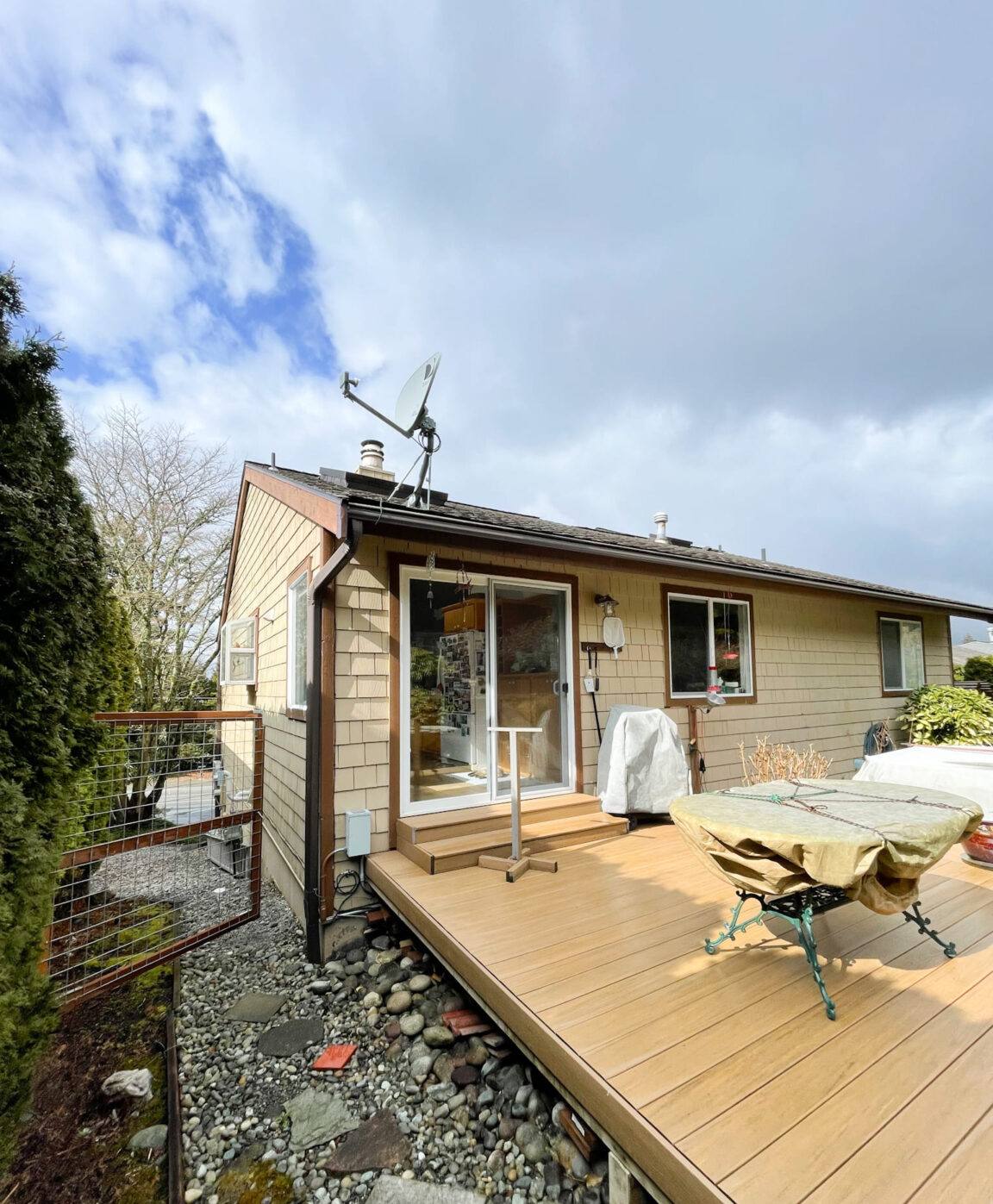
How Salt Air, Rain, and Moss Actually Damage Windows
Salt Air and Hardware
Salt-bearing air corrodes exposed metal faster than plain moisture does. Cheaper window hardware — hinges, cranks, locks, and especially the fasteners holding a frame together — can start pitting and seizing years before the glass or frame itself shows any wear. Once hardware corrodes, windows stop closing tightly, which lets in more moisture and starts the cycle over again.
Driving Rain and Flashing
Wind-driven rain doesn't just fall straight down — it gets pushed sideways and upward into gaps that a calm-weather installation might get away with. If flashing, sill pans, and sealant details aren't done correctly, water finds its way behind the window unit and into the wall assembly, where it can sit unnoticed for a long time before it shows up as a stain, soft spot, or musty smell.
Moss and Algae Growth
Whatcom County's long moss season means anything horizontal or shaded — window sills, sash tracks, and trim — stays damp far longer than it would in a drier climate. Moss and algae hold moisture against wood and painted surfaces, which speeds up rot and finish failure. Once growth establishes itself in a sill or track, it's a maintenance problem that keeps coming back unless the water is managed at the source.
None of these are exotic problems. They're the predictable result of a coastal, high-rainfall climate acting on a building product over many years — which is why the fix isn't a specialty product, it's disciplined material choice and installation technique.
Signs Your Current Windows Are Losing the Battle
- Condensation building up between the panes (a sign the seal on a double- or triple-pane unit has failed)
- Windows that are hard to open, close, or lock — often a sign of frame swelling or corroded hardware
- Visible gaps, cracked caulking, or soft wood around the frame
- Persistent moss, algae, or black staining on sills that comes back shortly after cleaning
- Noticeable drafts or a cold spot near the window even when it's fully closed
- Rising heating bills without any other obvious cause
- Fogged or cloudy glass that doesn't clear with cleaning
Any one of these on its own might just mean a tune-up or resealing. Several of them together, especially on an older window, usually means the unit has reached the point where repair is a short-term patch and replacement is the more honest recommendation.
What a Correct Custom Window Installation Actually Involves
"Custom" doesn't just mean the window is built to a non-standard size — though that matters a lot in older York homes where original openings are rarely a stock dimension. It means the entire installation is treated as a system, not just a box dropped into a hole in the wall.
A correct installation in this climate includes:
- Removing the old unit and inspecting the framing and sill for hidden rot or moisture damage before anything new goes in
- Installing a proper sill pan to direct any water that does get past the window back outside instead of into the wall
- Flashing integrated with the home's existing weather-resistive barrier, lapped correctly so water sheds downward and outward
- Sealing and insulating the gap between the window frame and the rough opening — not just caulking the exterior trim
- Setting the window level, plumb, and square so hardware operates smoothly and weatherstripping seals evenly for years, not months
- Exterior trim and caulking details that shed water rather than trap it against the frame
Skipping any one of these steps is how a brand-new, expensive window ends up with a moisture problem in three years. The window product itself gets blamed, when the real issue was almost always in the installation details.
Choosing a Frame Material for a Coastal Climate
There's no single "best" window material for every home — it depends on the house's age, style, and how much upkeep the homeowner wants to take on. Here's how the common options hold up specifically against salt air, rain, and moss exposure:
| Material | Moisture & Salt Air Performance | Maintenance | Best Fit |
|---|---|---|---|
| Vinyl | Won't rot or corrode; performs well against moisture | Low — occasional cleaning | Budget-conscious replacements, rental properties |
| Fiberglass | Excellent — dimensionally stable, resists moisture and salt exposure well | Low | Long-term investment, larger or custom-sized openings |
| Wood-clad | Good if cladding and flashing are done right; exposed wood interior needs protection from interior humidity | Moderate | Historic or traditional-style homes where interior wood look matters |
| Aluminum | Prone to corrosion and thermal transfer in marine air unless it's a quality thermally-broken product | Moderate to high | Specific architectural styles, with tradeoffs understood upfront |
We're upfront about the tradeoffs on each of these rather than pushing one product line. For a lot of York homes, fiberglass or a quality vinyl unit ends up being the practical choice simply because they shrug off the moisture cycle with the least ongoing attention — but a well-detailed wood-clad window can absolutely last if it's installed and finished correctly.
Glass Packages That Make Sense for This Climate
Bellingham's climate is heating-dominated but mild, with a lot of overcast, damp days rather than extreme heat or cold. That changes which glass features actually earn their keep:
- Low-E coatings help retain heat during our long stretch of cool, gray months without making the home feel dark — a real concern given how many overcast days Whatcom County sees.
- Argon or krypton gas fills improve insulation value between panes, which matters more here for comfort and heating cost than for extreme temperature swings.
- Double-pane is the practical standard for most replacement work; triple-pane is worth the added cost on north-facing walls, rooms with persistent drafts, or homes right along wind-exposed corridors, but it's not a necessity everywhere.
- Condensation-resistant glazing details matter more in a humid marine climate than in a dry one — ask specifically how a window is rated for condensation resistance, not just its U-factor.
We size the glass package to the specific exposure of each wall and room rather than defaulting to the most expensive option across the whole house. A guest bedroom on a sheltered wall doesn't need the same spec as a living room facing the prevailing wind and rain.
Our Process, Start to Finish
Every custom window job in York follows the same sequence, whether it's a single problem window or a full-house replacement:
- On-site assessment — we measure every opening individually (older homes rarely have matching dimensions) and check framing condition, not just the window itself.
- Honest recommendation — we walk through material and glass options with the actual tradeoffs, not a one-size pitch.
- Written estimate — clear pricing, timeline, and what's included, before any commitment.
- Custom fabrication — units built to the exact opening size rather than forcing a stock size to fit.
- Installation — full removal, framing inspection, sill pan and flashing integration, and careful air-sealing and insulation.
- Final walkthrough — we test operation on every window, check seals, and make sure the site is left clean before we consider the job done.
We don't rush the flashing and sealing steps to save time on the schedule. In this climate, that's the part of the job that determines whether the window is still performing well a decade from now.
Why a Crew That Already Works in York Matters
Working regularly in a specific part of Bellingham means we already have a feel for the age and construction style of the homes there — the typical wall assemblies, the common rough-opening quirks in older houses, and which details tend to cause problems if they're overlooked. That familiarity shortens the assessment phase and reduces surprises once a wall is opened up.
It also means we're not guessing at how Whatcom County's specific mix of salt air, wind-driven rain, and extended damp seasons behaves on a real building over time — we see the results of past installations, both good and bad, in the same conditions your home faces every winter. That's a different level of confidence than a crew driving in from outside the region for a one-off job.
Protecting Your Investment After Installation
New windows aren't entirely maintenance-free, especially in this climate. A little seasonal attention goes a long way toward keeping them performing at their best:
- Clear moss, algae, or debris from sills and tracks before it builds up, especially heading into the wet months
- Check exterior caulking annually for cracking or gaps and touch up as needed
- Keep weep holes on vinyl and fiberglass frames clear so water can drain properly
- Operate locks and hardware periodically through the year so they don't seize from disuse
- Watch for condensation between panes, which signals a seal failure worth addressing early
- Trim back vegetation that keeps a window shaded and damp longer than necessary
None of this is difficult, but skipping it is how a well-installed window ends up with an avoidable problem five or ten years down the road.
Get a Straight Answer on Your Windows
If your windows in York are fogging, sticking, drafting, or just showing their age, it's worth getting an honest, no-pressure look before deciding what to do next. Use the form below to request a free estimate, and we'll walk the property, answer your questions directly, and give you a clear picture of your options and real costs — no upsell, just straight information.