 Bellingham Roofing
 What Barkley Homes Are Up Against
Barkley sits close enough to Bellingham Bay and the Nooksack lowlands that homes here deal with a specific mix of weather stress: salt-tinged air moving in off the water, long stretches of driving rain through fall and winter, and a moss season that can run from October well into spring. None of that is dramatic on any single day. It's the accumulation over years that wears siding down — moisture finding its way behind panels, algae and moss taking hold on north-facing walls, and paint or coatings breaking down faster than they would in a drier inland climate.
Siding in this neighborhood isn't just a cosmetic layer. It's the primary barrier standing between that weather and the sheathing, framing, and insulation underneath. When it's installed correctly with the right material, it holds up quietly for decades. When it's installed poorly, or the wrong product goes up, problems show up first as cosmetic issues and eventually as real moisture damage.
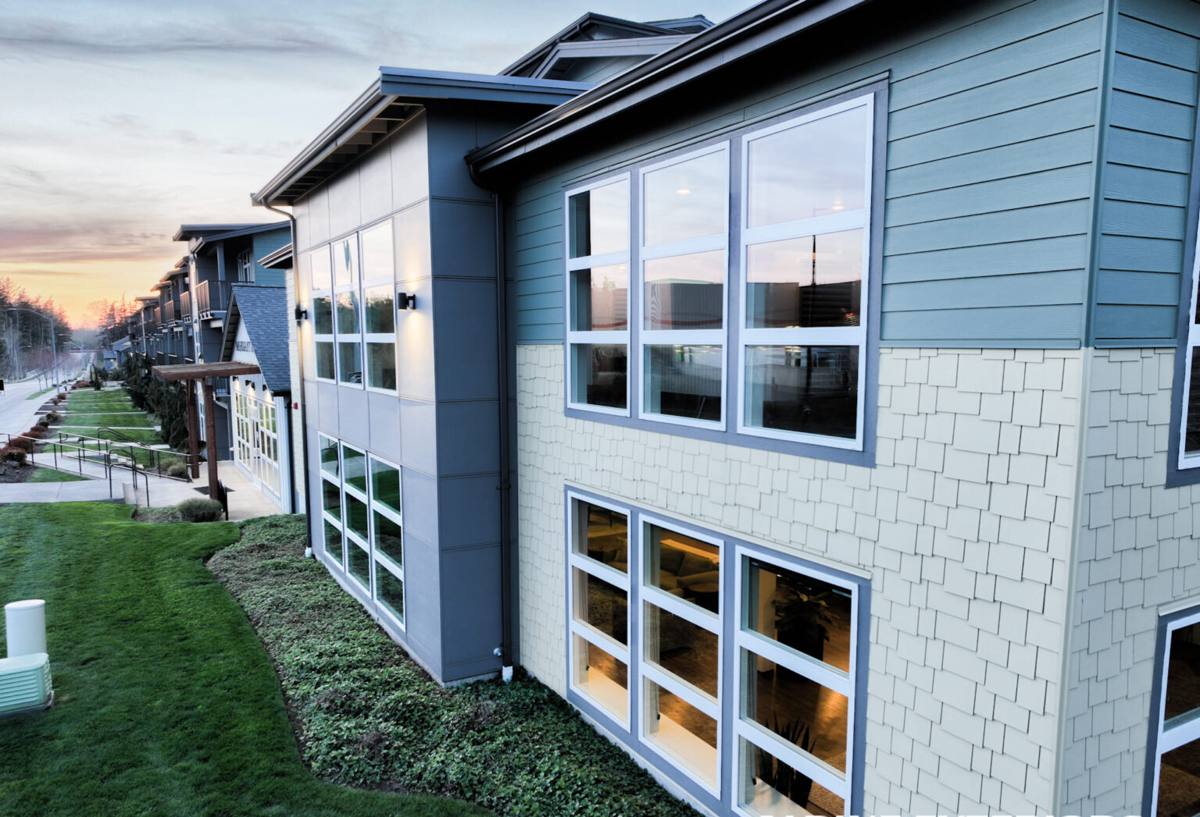
Why Fiber Cement Fits Barkley Specifically
We install James Hardie fiber cement siding exclusively, and Barkley is a good example of why. Fiber cement is dimensionally stable — it doesn't expand and contract with humidity swings the way wood does, and it doesn't absorb water the way some composite products can. That matters in a neighborhood where homes go through repeated wet-dry cycles for months at a time. Wood-based sidings and some engineered products are more sensitive to sustained moisture exposure, especially at butt joints, corners, and anywhere caulking eventually fails.
Salt-bearing air is also harder on some finishes than people expect. Factory-cured finishes that are baked on and cured under controlled conditions hold their color and resist that kind of exposure far better than field-applied paint, which is more prone to fading, chalking, or peeling when it's fighting salt air and UV on top of constant moisture.
Moss and Algae Pressure
Whatcom County's damp, shaded conditions are close to ideal for moss and algae growth on siding, particularly on the north and east sides of a house where sun exposure is limited. Fiber cement doesn't feed organic growth the way wood fiber can, and a factory finish gives you a harder, smoother surface that's easier to keep clean. It won't stop moss from ever landing on a wall, but it removes one of the underlying causes of long-term surface breakdown.
What Correct Installation Actually Involves
Fiber cement performs the way it's supposed to only when it's installed to the manufacturer's specifications. Most of the siding failures we get called out to inspect aren't material failures — they're installation shortcuts. In a wet climate like Bellingham's, those shortcuts show up faster.
- Correct clearance between siding and grade, decks, and roof lines so water has somewhere to go and panels aren't sitting in standing moisture
- Proper flashing at windows, doors, and any wall penetration — this is where the majority of hidden water intrusion actually starts
- A weather-resistive barrier installed and lapped correctly behind the siding, not just present but detailed at seams and openings
- Fastener pattern, type, and depth matching Hardie's specifications — over-driven or under-driven nails are a common cause of premature panel movement
- Correctly sized gaps at butt joints and trim, sealed with a quality sealant rated for exterior movement, not just caulked and painted over
- Factory-cut and factory-primed edges used wherever possible, with field cuts properly sealed to protect the cut edge from moisture
Every one of these details is invisible once the job is finished and the house looks good. That's exactly why they matter — a rushed installer and a careful one can produce a wall that looks identical on move-in day and behaves completely differently five years later.
How James Hardie Compares to Other Siding Choices
Homeowners in Barkley often come to us already comparing options, so it's worth laying out honestly how the common choices stack up for this climate.
| Siding Type | Moisture Behavior in Wet Climates | Finish Durability | Typical Maintenance |
|---|---|---|---|
| James Hardie Fiber Cement | Dimensionally stable, resists water absorption when installed correctly | Factory-cured ColorPlus finish resists fading and chalking | Occasional wash; repaint not required for many years |
| Vinyl Siding | Can warp or gap under temperature swings; seams are vulnerable points | Color is molded in but fades over time and can't be touched up easily | Low, but damage often means full panel replacement |
| Wood or Cedar | Naturally attractive but absorbs moisture and is prone to rot in sustained wet conditions | Finish requires ongoing upkeep | Frequent refinishing, staining, or sealing |
| Primed Wood Composite (e.g., LP SmartSide) | More moisture-resistant than raw wood, but edge and seam sealing is critical and unforgiving of gaps | Field-applied or factory finishes vary; edge swelling is a known failure point | Moderate; inspection of seams and cut edges needed periodically |
This is why we standardized on James Hardie rather than offering multiple fiber cement brands or wood-alternative products. It's not that every other option is unusable — it's that we've settled on the one system whose engineering, finish process, and warranty structure hold up best to the conditions Bellingham and Whatcom County homes actually face.
Our Process, Start to Finish
Assessment and Estimate
We walk the exterior, check existing siding and trim condition, note any moisture-prone areas, and talk through which Hardie product line and profile fits the home's style and exposure. You get a clear, itemized estimate — no pressure, no upsell games.
Prep and Removal
Old siding comes off carefully so we can inspect the sheathing underneath. This is the point where hidden rot or old water damage gets found and addressed — covering that up rather than fixing it is how small problems become expensive ones.
Weather Barrier and Flashing
We install and detail the weather-resistive barrier and flashing before a single piece of siding goes up. This step is the one most likely to be rushed on a lower-quality job, and it's the one most responsible for whether a house stays dry for the next 30 years.
Installation
Panels, trim, and fasteners go in to Hardie's published specifications — correct clearances, correct nailing, correctly sealed joints. We don't deviate from spec to save time.
Final Walkthrough
We walk the finished job with you, point out what was done and why, and make sure you're satisfied before we consider the job complete.
Signs Your Current Siding Is Already Failing
If you're not sure whether your siding is due for replacement, these are the signs worth taking seriously in this climate:
- Soft or spongy spots when you press on the siding, especially near the bottom courses
- Persistent moss or algae staining that comes back quickly after cleaning
- Visible gaps, warping, or buckling at seams and corners
- Paint that's peeling, bubbling, or chalking heavily when you run a hand across it
- Interior signs like peeling paint, musty smells, or discoloration on walls that share an exterior wall
- Siding that was installed more than 20-25 years ago and has never been reassessed
Why a Crew That Already Works in Barkley Matters
Every neighborhood has its own combination of exposure, wind direction, tree cover, and drainage that affects how a house takes on weather. A crew that's worked multiple homes in and around Barkley already knows which sides of a house tend to hold moisture longer, where moss builds up fastest, and what kind of flashing details actually hold up here versus in a drier part of the state. That local pattern recognition doesn't replace following the manufacturer's installation spec — it's what tells us where to pay extra attention within that spec on your specific house.
It also means we're not learning Bellingham's climate on your project. We've already seen how Hardie siding performs here over years, not just on installation day.
Living With Fiber Cement in a Moss-Prone, Salt-Air Climate
One of the advantages of switching to Hardie siding in this area is how little ongoing maintenance it actually needs compared to wood or older composite sidings. A periodic gentle wash to keep moss and algae from taking hold, an eye kept on caulking at trim joints over the years, and prompt attention to any impact damage is about all it takes. There's no repainting cycle to plan around, and the factory finish is doing most of the work of standing up to salt air and UV exposure on its own.
If your Barkley home's siding is showing its age, or you're planning ahead of a needed replacement, we're glad to come take a look and give you an honest, no-pressure estimate — just fill out the form below.