 Bellingham Roofing
 Composite Decking in Lynden's Marine Climate
Lynden sits in a part of Whatcom County that stays damp for most of the year. The marine air moving in off Bellingham Bay and the Salish Sea keeps humidity high, rainfall steady, and the growing season for moss and algae longer than most homeowners expect. A deck built here doesn't just need to look good on a dry August afternoon — it needs to shed water fast, resist moss growth through a gray November, and hold up to freeze-thaw cycles when winter finally shows up. Composite decking, installed correctly, handles all of that better than most wood options. Installed poorly, it fails in the exact same ways wood does — just slower and more expensively.
This page is about composite decking specifically for homes in and around Lynden — what the climate here demands from the material, what a correct installation actually involves, and how we approach the job when we build a deck for a Whatcom County homeowner.
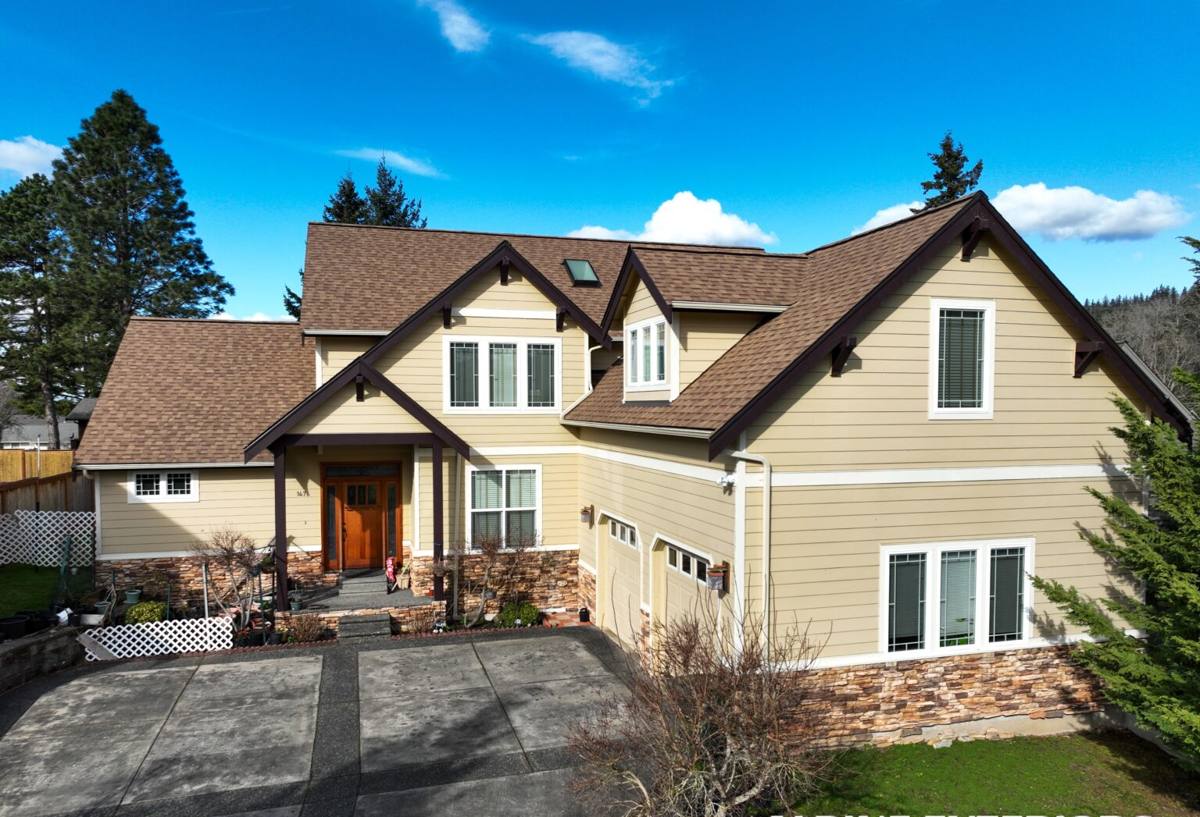
What This Climate Does to a Deck
Before talking about the product, it's worth being honest about what a deck in this area is up against year-round:
- Driving rain that gets pushed sideways under railings, against house walls, and into any gap that isn't properly flashed or sloped.
- Long moss and algae season — shaded decks, north-facing decks, and anything under trees can stay damp for weeks at a stretch, which is exactly what moss needs to take hold.
- Freeze-thaw cycling in the colder months, which is hard on footings, fasteners, and any wood component that's held onto moisture.
- Salt-tinged marine air that speeds up corrosion on cheap fasteners, brackets, and hardware over time.
None of this is unusual for the Pacific Northwest, but it means a deck built for Lynden isn't a generic decking project. It's a project where drainage, ventilation, and hardware choice matter as much as the decking boards themselves.
Why Composite Makes Sense Here
Composite decking — a blend of wood fiber and recycled plastic, capped with a protective outer layer on most modern products — doesn't absorb water the way solid wood does. It won't cup, splinter, or rot from prolonged dampness the way an untreated or poorly maintained wood deck will. That matters directly in a climate where a board can stay wet for days after a storm. It also resists moss and algae better than bare wood, though it isn't immune — more on that below.
Composite vs. Wood: The Honest Trade-offs
We install both, and each has a place. Here's how they actually compare for a Lynden property, not in marketing terms:
| Factor | Composite Decking | Wood Decking (cedar/treated) |
|---|---|---|
| Moisture resistance | High — doesn't absorb water like wood; low risk of rot | Depends heavily on sealing schedule; untreated wood absorbs and holds moisture |
| Moss/algae resistance | Better than bare wood, but shaded or low-airflow areas still need periodic cleaning | Prone to moss in shaded, damp spots without regular treatment |
| Maintenance | Occasional wash-down; no staining or sealing required | Annual or biannual sealing/staining to prevent gray, splinter, and rot |
| Upfront cost | Higher material cost | Lower material cost, higher lifetime maintenance cost |
| Appearance over time | Consistent color and texture for years with capped boards | Natural look, but grays and weathers without upkeep |
| Fastener/hardware sensitivity | Still needs corrosion-resistant hardware and correct spacing | Same requirement, plus wood movement to account for |
Composite isn't automatically the right call for every project or budget, and we'll say so honestly during an estimate. But for a homeowner who's tired of re-staining a deck every year in a climate that barely gives you a dry weekend to do it, composite is usually the better long-term fit.
What a Correct Composite Deck Build Actually Involves
The board itself is only part of the job. Most composite deck problems we get called to fix in this region didn't start with the decking — they started with the framing, flashing, or drainage underneath it. A correct build addresses all of it.
Framing and Substructure
Joist spacing has to match the manufacturer's specification for composite boards, which is often tighter than what's standard for wood decking — composite can flex differently under load, especially at angles or picture-frame borders. We use pressure-treated or naturally durable framing lumber, and every cut end gets sealed, not left exposed to soak up moisture.
Ledger Attachment and Flashing
Where a deck attaches to the house, this is the single most common failure point we see in this climate — water gets behind an improperly flashed ledger board and rots the rim joist or sheathing behind it, sometimes for years before anyone notices. Correct flashing (typically a metal flashing with a waterproof membrane behind it) directs water away from that connection instead of letting it pool and soak in.
Drainage and Airflow Underneath
A deck that traps moisture underneath is a deck that grows moss and mildew, corrodes hardware faster, and shortens the life of the substructure. We grade and ventilate the space beneath the deck so water has somewhere to go and air can actually circulate — especially important on lower decks close to grade, which are common on Lynden lots.
Fasteners and Hardware
Cheap fasteners are a false economy anywhere near the coast. We use corrosion-resistant, hidden fastening systems rated for the specific composite product being installed, along with structural hardware rated for exterior, high-moisture use. Visible screw heads that rust or streak the boards are usually a sign the wrong hardware was used.
Footings and Frost Considerations
Footings are set to the depth required for this area's frost line and soil conditions, not just poured to a standard minimum. Skipping this is how decks develop heave or settling issues after a few hard winters.
Our Process for Lynden Deck Projects
- On-site assessment — we look at sun exposure, drainage slope, existing structure (if replacing a deck), and how the space is actually used.
- Design and material selection — board style, color, and railing choice, matched to budget and how much shade/moss exposure the location gets.
- Permitting — handled as required for the scope of the project and the property's jurisdiction.
- Demo (if applicable) and framing — old decking and any compromised substructure removed and replaced correctly, not just built over.
- Flashing, drainage, and framing inspection points — addressed before a single composite board goes down.
- Composite installation — hidden fastening, correct board spacing for expansion, and clean edge/border detailing.
- Final walkthrough — we go over the finished deck and basic care with the homeowner directly.
Living With a Composite Deck Through Moss Season
Composite is low-maintenance, not no-maintenance. In a climate with as long a wet season as this one, a little seasonal attention keeps a deck looking new for its full warranty life instead of developing green streaks in shaded corners.
- Sweep off leaves, needles, and organic debris regularly — decomposing debris traps moisture right against the board surface, which is what feeds moss and mildew.
- Rinse the deck with a hose and mild soap a couple of times a year, more often in shaded or low-airflow spots.
- Avoid pressure washing at close range or high pressure — it can damage the capped surface layer on most composite boards.
- Keep gutters and downspouts near the deck clear so runoff isn't dumping directly onto boards or railing posts.
- Check that furniture, planters, and rugs aren't sitting in the same spot long enough to trap moisture underneath.
- Trim back overhanging branches where possible to let more light and air reach shaded sections.
Why Hire a Crew That Already Works in Lynden
Decking specs written for a dry climate don't automatically work here. Joist spacing, flashing details, footing depth, and fastener choice all need to account for how wet and how long this region stays wet. A crew that's built and repaired decks throughout Whatcom County has already seen where those details fail when they're skipped — the rotted ledger boards, the moss-covered low decks, the corroded screws streaking a two-year-old deck. That's the difference between a deck that needs real attention in five years and one that's still solid in twenty.
We also know this area's permitting expectations and typical lot conditions, which keeps the project moving instead of stalling on avoidable surprises.
Cost Factors to Expect
Every deck is different, but these are the factors that move the price up or down on a composite deck project in this area:
| Factor | Impact on Cost |
|---|---|
| Deck size and shape (straight run vs. multi-level or angled) | Larger and more complex layouts increase framing and labor time |
| Composite board tier | Entry-level capped composite vs. premium high-end lines varies materially |
| Substructure condition (new build vs. replacing rotted framing) | Rebuilding compromised framing adds cost but is not optional if it's found |
| Railing style | Composite/aluminum/cable railing systems price differently than basic wood rail |
| Height above grade and footing requirements | Taller decks and difficult soil conditions add engineering and labor |
| Site access | Tight or obstructed access can add time for material handling and equipment |
We give straightforward, itemized pricing during the estimate so a homeowner can see exactly where the cost is going, not just a lump-sum number.
Get an Estimate for Your Lynden Deck
If you're planning a new composite deck or replacing one that hasn't held up to a few too many wet Whatcom County winters, we're happy to take a look and give you an honest read on what it needs. The estimate is free, there's no pressure, and you'll get a clear picture of scope and cost before deciding anything. Use the form below to get started.