 Bellingham Roofing
 Why Birch Bay Roofs Wear Differently Than Roofs Inland
Birch Bay sits right on the water, and that changes what a roof deals with year-round. Homes a few miles inland in Whatcom County get plenty of rain too, but they don't get the same combination of salt-laden air, wind-driven rain off the bay, and the deep shade pockets that keep north-facing slopes wet for days after a storm passes. If you've owned a home out here for more than a few years, you've probably already noticed your roof ages differently than a friend's roof in Bellingham proper or up toward Lynden.
None of this means asphalt shingle roofing is a bad choice for Birch Bay. It's still one of the most practical, cost-effective, and proven roofing systems available, and it performs well here when it's installed with the coastal environment in mind. The issue is that a lot of roofing problems we get called out for started as a standard installation that didn't account for what this specific stretch of coastline does to a roof over time.
Salt Air and Metal Components
Salt-laden air accelerates corrosion on any exposed metal — nail heads, flashing, vent caps, and gutter hardware. On a roof installed with the wrong fastener coating or unprotected flashing, you'll see rust streaks and early metal failure well before the shingles themselves are due for replacement. This is one of the most overlooked factors in coastal roofing, because it doesn't show up as a leak right away — it shows up as slow, quiet failure of the small parts holding everything together.
Driving Rain and Wind Exposure
Open water means wind has room to build before it hits your roof. Driving rain doesn't just fall straight down here — it gets pushed sideways and up under shingle edges, ridge caps, and anywhere the seal course hasn't fully bonded. A roof that would hold up fine in a calmer, more sheltered setting can develop wind-driven leaks at Birch Bay if the sealant strips weren't given proper time and temperature to bond, or if the wrong nailing pattern was used.
Moss, Shade, and a Long Wet Season
Whatcom County's wet season runs long, and Birch Bay's tree cover and coastal humidity keep roof surfaces damp longer than drier parts of the region. That's the exact environment moss and algae need to get established. Once moss takes hold on a shingle roof, it holds moisture against the granule surface, lifts shingle edges as it grows, and works its way under the roofing over time. It's a slow process, which is exactly why it gets ignored until it's expensive.
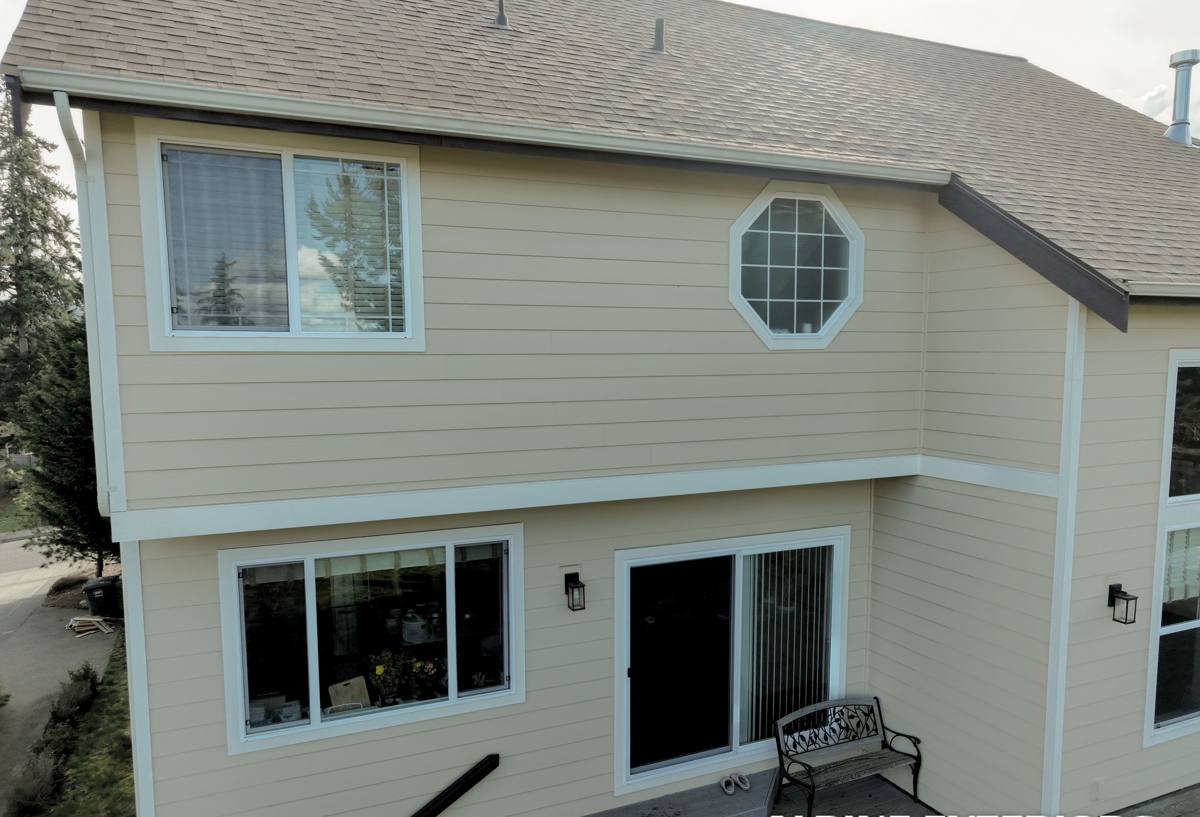
What a Correct Asphalt Shingle Installation Looks Like Out Here
A shingle roof is a system, not just a layer of shingles. In a coastal, moss-prone climate like Birch Bay's, every layer underneath the shingles matters as much as the shingles themselves.
Underlayment and Water Barrier
We use synthetic underlayment rated for the exposure this roof will see, with self-adhering ice-and-water barrier at eaves, valleys, and any low-slope transitions where wind-driven rain is most likely to find a way in. On a coastal property, we treat this layer as the actual leak protection — the shingles are the first line of defense, but this membrane is what keeps a small failure from becoming a ceiling stain.
Ventilation That Actually Balances
Proper intake at the eaves and exhaust at the ridge keeps the attic temperature and moisture level in check. In a humid coastal climate, poor ventilation traps moisture against the underside of the roof deck, which shortens the life of the decking and can encourage mold and rot you won't see until it's advanced. We check both intake and exhaust, not just one or the other — a roof with a ridge vent and no working intake vents is barely ventilating at all.
Flashing and Fastener Choices
Every penetration — chimneys, plumbing vents, skylights — needs flashing that's sealed and fastened correctly, not just caulked over. Given the corrosion factor here, we pay close attention to fastener and flashing material so you're not looking at rust bleed-through in a few years. Corners get cut on flashing more than almost anything else on a roof, because it's slower and less visible than laying shingles — but it's where most leaks actually start.
Choosing a Shingle for a Coastal Whatcom County Home
Not every asphalt shingle product is built the same way, and the right choice depends on your home's exposure, your budget, and how much maintenance you want to deal with down the road.
| Shingle Type | Best For | Coastal Consideration |
|---|---|---|
| 3-tab asphalt | Budget-conscious reroofs, simpler rooflines | Lower wind resistance rating; less ideal for the more exposed, open-water side of Birch Bay |
| Architectural (laminate) asphalt | Most homes; better appearance and durability | Higher wind ratings and thicker profile hold up better to driving rain and gusts |
| Algae-resistant (AR) shingles | Shaded, damp, tree-covered lots | Copper-infused granules slow algae and moss growth — worth it in Birch Bay's shade pockets |
| Impact-rated shingles | Homes wanting extra durability and possible insurance credit | More resistant to debris impact during coastal wind events; ask your insurer about credits |
For most Birch Bay homes, we lean toward architectural shingles with algae-resistant granules as the practical starting point, then adjust based on how exposed your particular lot is and what your roof's slope and shade situation look like. We'll walk through the real trade-offs with you rather than just upselling the most expensive option.
Our Process for a Birch Bay Reroof
The steps themselves aren't unique to us, but where we spend extra time and attention reflects what this coastline actually does to a roof.
- On-site inspection. We look at your current roof's condition, deck integrity, ventilation setup, and how exposed the home is to wind and salt air off the water.
- Tear-off and deck check. Old roofing comes off completely so we can inspect the deck underneath for soft spots, rot, or prior leak damage — problems that get sealed in, not fixed, if you skip this step.
- Deck repair as needed. Any damaged sheathing gets replaced before anything new goes down.
- Underlayment and water barrier installation. Ice-and-water membrane at vulnerable areas, synthetic underlayment across the field.
- Flashing installation or replacement. New flashing at valleys, chimneys, and penetrations, matched to a coastal-appropriate material.
- Shingle installation. Installed to the manufacturer's nailing and exposure specs, which matters more here than in calmer inland areas.
- Ventilation confirmation. We verify intake and exhaust are balanced before we call the job done.
- Final walkthrough. We go over the finished roof with you and answer questions before we leave.
Signs Your Birch Bay Roof Needs a Look
Coastal roofs don't always announce problems with an obvious leak. Watch for these signs:
- Dark streaks or green-black patches on north-facing or shaded slopes — early moss and algae growth
- Rust-colored streaking near nail heads, vents, or flashing
- Shingle edges that look lifted, curled, or cupped, especially after windstorms
- Granules collecting in gutters or at downspout outlets
- Soft or spongy spots when walked on (best assessed by a roofer, not a homeowner on a ladder)
- Daylight visible through the roof deck from inside the attic
- Musty smell or visible moisture in the attic during or after wet weather
Maintenance for a Moss-Prone, Salt-Air Environment
A well-installed asphalt shingle roof still benefits from periodic attention out here, more than it would in a drier inland climate. Keeping gutters clear so water doesn't back up under the eaves, trimming back overhanging branches to reduce shade and debris buildup, and having moss growth removed properly (not pressure-washed, which can strip granules and shorten shingle life) all add real years to a roof's service life. We recommend a periodic visual check after major storms, since wind-driven rain events are when small flashing or seal issues tend to reveal themselves first.
What Affects the Cost of a Birch Bay Reroof
Every roof is different, so we won't quote a number without seeing your home, but these are the main factors that move the price up or down:
| Factor | Why It Matters |
|---|---|
| Roof size and number of layers to remove | More tear-off labor and disposal, especially if there's an old layer already in place |
| Roof pitch and complexity | Steeper, more cut-up rooflines with multiple valleys take longer and need more flashing work |
| Deck condition | Rot or soft sheathing found during tear-off adds repair before new roofing can go down |
| Shingle grade chosen | 3-tab, standard architectural, and algae-resistant or impact-rated products carry different material costs |
| Access and site conditions | Tree cover, tight driveways, or difficult staging can add time to a coastal Birch Bay lot |
Why It Matters That Your Crew Already Works Birch Bay
A roofer who mostly works drier, more sheltered parts of Whatcom County can still install a technically correct roof — but "correct on paper" and "correct for this coastline" aren't always the same thing. A crew that regularly works Birch Bay knows which slopes tend to hold shade and moss the longest, which fastener and flashing choices actually hold up against salt air over the years, and how much extra attention wind-driven rain deserves at eaves and valleys. That's knowledge you build by working the area repeatedly, not by reading a spec sheet once.
We're a Bellingham-based crew that treats Birch Bay as familiar territory, not an occasional job site. That local familiarity shapes decisions on every roof we put on out here — from underlayment choice to how we detail the flashing around a chimney facing the water.
Get a Straight Answer About Your Roof
If you're dealing with moss buildup, rust staining, a roof that's getting close to the end of its expected life, or you just want an honest read on where things stand, we're happy to take a look. Reach out for a free, no-pressure estimate using the form below, and we'll give you a straightforward assessment of your Birch Bay home's roof — no pressure, no scare tactics, just what we actually see.