 Bellingham Roofing
 Birch Bay's Marine Climate Is Rough on Roofing
Birch Bay sits right on the Strait of Georgia in Whatcom County, and that waterfront location is exactly what makes roofing here different from an inland job. Salt-laden air moves off the water and settles on every exposed surface, which speeds up corrosion on fasteners, flashing, and any metal component that isn't rated for a marine environment. Wind-driven rain off the Salish Sea doesn't just fall straight down — it gets pushed sideways under shingle laps and around penetrations that would stay dry on a more sheltered roof. And because much of Whatcom County stays cool, shaded, and damp for a good chunk of the year, moss and algae get a long growing season to work into shingle mat and grout lines.
None of this means a Birch Bay roof is doomed — it means the details of the job matter more here than they would in a drier, more sheltered part of the region. A replacement done to a generic standard, without accounting for salt exposure and moisture load, tends to show its age early: streaking, granule loss, soft spots, and leaks that show up years before they should.
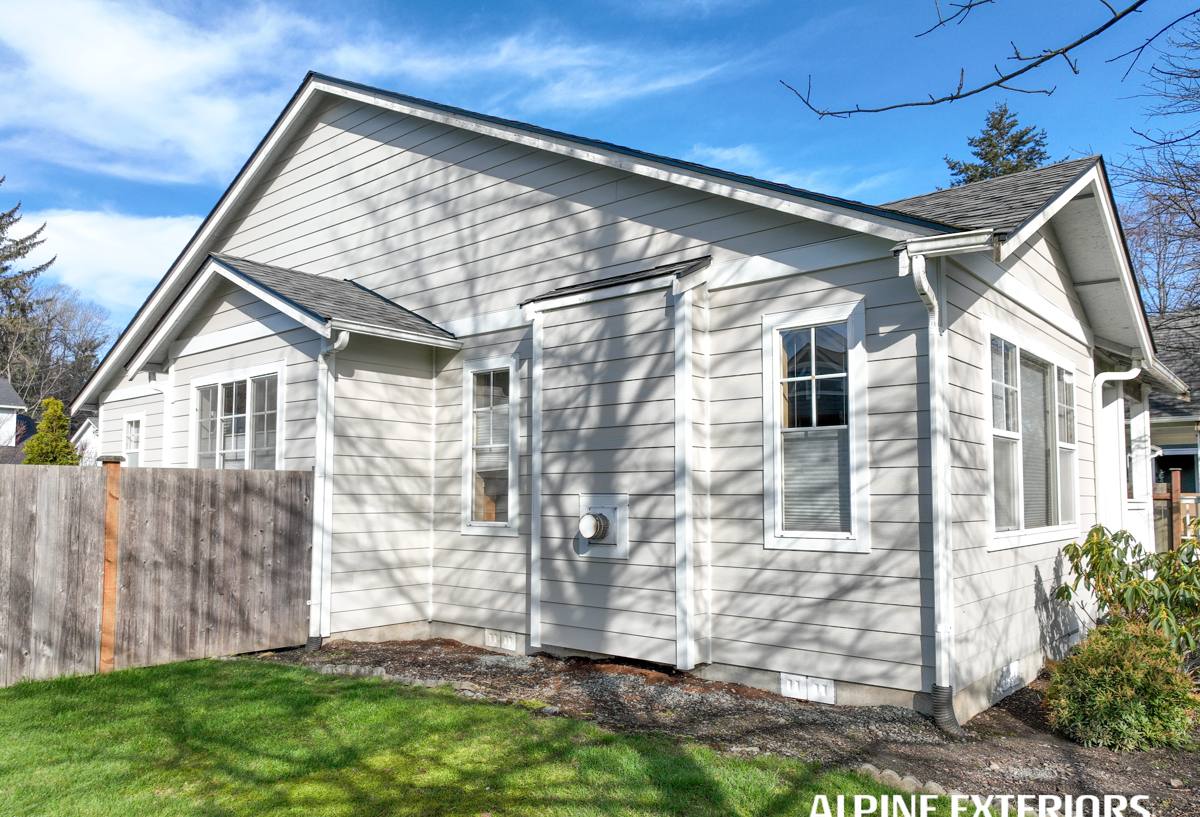
Signs Your Birch Bay Roof Has Reached the End of Its Service Life
Roofs near the water rarely fail all at once. They give warning signs first, and catching them early is the difference between a planned replacement and an emergency one after a winter storm. Some of these signs point to a repair being enough; others mean the roof system as a whole is past the point where patching makes sense.
- Granules collecting in gutters or downspouts, or bald patches visible on the shingle surface
- Shingles that are curling, cupping, or lifting at the edges, especially on wind-exposed slopes
- Thick moss mats or dark algae streaking across large sections of the roof, not just isolated spots
- Soft, spongy decking underfoot, or sagging visible from the ground
- Daylight visible through the attic roof boards, or damp insulation after a rainstorm
- Leaks that show up in new places each time it rains hard, rather than one consistent spot
- Flashing around chimneys, skylights, or wall junctions that's rusted, cracked, or pulling away
- The roof is nearing or past the manufacturer's expected service life for its material and exposure
One or two of these on their own might still be repairable. Several together, especially on a roof that's already 15-20+ years old, usually mean it's time to talk replacement rather than another round of patches.
What a Correct Roof Replacement Involves
A roof replacement is more than stripping old shingles and nailing down new ones. In a climate that throws salt air, wind, and standing moisture at a roof for months at a time, the parts you don't see after the job is done are what determine whether it lasts.
Underlayment and Water Protection
The underlayment is the roof's backup line of defense if wind ever drives water past the shingles. Synthetic underlayments generally hold up better than old-style felt in a wet, humid climate — they resist tearing during installation and don't absorb moisture the way felt can. At eaves, valleys, and other spots where ice or wind-driven rain tends to collect, a self-adhering waterproof membrane adds a second layer of protection where it matters most.
Flashing Details
Most roof leaks don't start in the field of the roof — they start at flashing: chimneys, skylights, sidewalls, and vent pipes. Salt air accelerates corrosion on cheap or improperly sealed flashing, so getting this right means using flashing rated for coastal exposure and installing it so water is always directed out and away, never trapped behind a seam.
Ventilation Balance
An attic that can't breathe traps moisture, and trapped moisture feeds mold, rot, and the underside conditions that let moss take hold faster. A correct replacement checks that intake (soffit) and exhaust (ridge or roof vents) are balanced, not just that vents exist. Undersized or mismatched ventilation is one of the more common reasons a roof underperforms its expected lifespan.
Choosing Materials for a Salt-Air, High-Moisture Climate
There's no single "best" roofing material for every Birch Bay home — the right choice depends on budget, roof pitch, how much shade the property gets, and how long you plan to stay in the house. What matters is picking with the local climate in mind rather than defaulting to whatever's cheapest per square.
| Material | Moisture & Moss Resistance | Salt Air Durability | Maintenance Needs | Typical Lifespan |
|---|---|---|---|---|
| Architectural asphalt shingles | Good, especially with algae-resistant granules | Good with proper flashing and fasteners | Periodic moss/debris cleaning | 25-30 years |
| 3-tab asphalt shingles | Fair — thinner profile, less algae resistance | Fair | More frequent cleaning and inspection | 15-20 years |
| Standing seam metal | Excellent — sheds moisture, nothing for moss to grip | Very good with coated, marine-rated panels and fasteners | Low — occasional fastener/sealant check | 40-50+ years |
| Synthetic/composite shingles | Good to very good depending on product | Good | Low to moderate | 30-50 years |
We generally steer homeowners away from basic 3-tab shingles on Birch Bay's more exposed, shaded, or moisture-heavy lots — not because the product is bad, but because thinner, less algae-resistant shingles simply don't hold up as well against this specific combination of salt, shade, and rain compared to architectural or metal options. It's a durability trade-off worth knowing before you commit, not a knock on any manufacturer.
Our Roof Replacement Process
- On-site inspection and estimate — we walk the roof and attic, check decking condition, ventilation, and flashing, and give you a written estimate with material options.
- Material selection — we talk through the trade-offs above based on your budget, roof exposure, and how long you plan to own the home.
- Tear-off and deck inspection — old roofing comes off down to the deck, and any soft, rotted, or delaminated sheathing is identified and replaced before anything new goes down.
- Underlayment and flashing installation — waterproof membrane at vulnerable areas, synthetic underlayment across the field, new flashing at every penetration and transition.
- Ventilation correction — intake and exhaust venting are checked and balanced as part of the install, not treated as an afterthought.
- Roofing installation — shingles, metal panels, or composite material installed to manufacturer spec and fastening patterns rated for coastal wind exposure.
- Cleanup and final walkthrough — site cleared of debris and nails, and we walk the finished roof with you before calling the job done.
Cost Factors for Roof Replacement in Birch Bay
Every roof is priced on its own specifics, but the factors that move the number up or down are consistent. Rather than quote a figure that won't mean much without seeing your roof, here's what actually drives cost.
| Factor | Why It Matters |
|---|---|
| Roof size and pitch | More square footage and steeper pitches mean more material and labor time |
| Material choice | Standing seam metal and premium composites cost more upfront than asphalt but last longer |
| Number of existing layers | Tear-off of multiple old layers adds labor and disposal cost |
| Deck repair needed | Rotted or soft sheathing found during tear-off has to be replaced before roofing goes on |
| Roof complexity | Valleys, dormers, skylights, and chimneys each add flashing work |
| Site access | Steep driveways, tight lots, or tree-heavy waterfront properties can affect staging and cleanup time |
Broadly, a straightforward asphalt shingle replacement will run less than a full standing seam metal roof of the same size — but the metal roof's longer lifespan and lower maintenance can even out the cost difference over time. We'll walk through your specific numbers during the estimate rather than guess in the abstract.
Protecting Your Investment After Installation
A correctly installed roof still benefits from basic upkeep, especially in a climate that keeps roofs damp and shaded for long stretches of the year. A little attention each year goes a long way toward hitting the full expected lifespan of the material you chose.
- Clear gutters and downspouts at least twice a year so water isn't backing up under the eaves
- Keep overhanging branches trimmed back to cut down on shade and falling debris that feed moss growth
- Have moss and algae buildup treated before it thickens into mats that hold moisture against the shingles
- Check the attic after major storms for signs of moisture, staining, or daylight through the decking
- Have flashing around chimneys, skylights, and vents inspected periodically for corrosion or separation
- Schedule a professional inspection every few years, even with no visible problems
Why Local Birch Bay Experience Matters
Roofing crews that only occasionally work near the water often price and install jobs the same way they would inland — standard fasteners, standard underlayment, no extra attention to ventilation or moss-prone shading. On a Birch Bay roof, that approach tends to show its limits within a few years. A crew that regularly works this stretch of Whatcom County already knows which details to upgrade for salt exposure, how local wind patterns off the water load up certain roof faces more than others, and how much moss pressure a shaded, waterside lot is realistically going to see year to year.
That local familiarity also matters for scheduling around the region's wetter months and for knowing what a Bellingham-area building department typically expects for permitting and inspection on a residential re-roof. It's the difference between a roof that's built to a generic spec and one that's built for the specific conditions it has to survive.
If your Birch Bay roof is showing its age or you just want an honest read on where it stands, we're happy to take a look. Reach out for a free, no-pressure estimate using the form below.