 Bellingham Roofing
 New Roof Installation in Birchwood: Built for This Neighborhood's Weather
A new roof is one of the biggest investments a homeowner makes in a property, and in Birchwood it has to do more work than a roof in a drier, inland climate. Between the salt-laden air coming off the water, long stretches of driving rain, and a moss season that can run most of the year, a roof here is under near-constant pressure. A correct installation accounts for all of that from day one, not as an afterthought once problems show up.
This page covers what a new roof installation actually involves for a Birchwood home, the material and process decisions that matter most in this specific climate, and why working with a crew that already knows the neighborhood makes a real difference in how the finished roof performs over time.
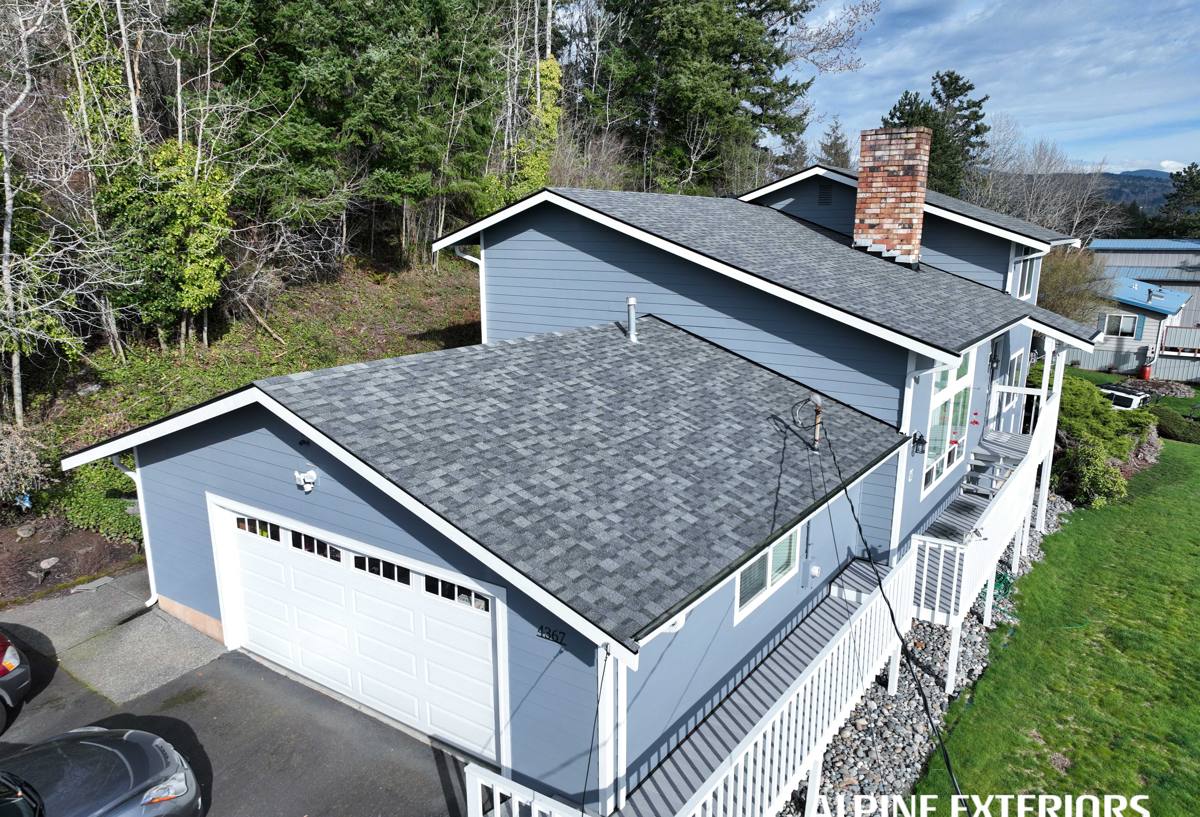
Why Birchwood's Climate Changes How a Roof Should Be Built
Bellingham and the rest of Whatcom County sit in a marine environment, and Birchwood gets the full effect of it. Three conditions in particular shape how we approach a new roof here:
Salt Air
Airborne salt accelerates corrosion on exposed metal — flashing, fasteners, vents, and gutter hardware all take more punishment near the water than they would further inland. Material and fastener choices that hold up fine in a dry climate can corrode noticeably faster here, so we favor components rated for coastal exposure.
Driving Rain
This isn't just rainfall volume — it's wind-driven rain that gets pushed sideways and upward under eaves, around penetrations, and into any gap in the roofing system. A roof that only sheds water straight down isn't enough; every seam, valley, and edge detail needs to handle water moving at an angle.
A Long Moss Season
Shade, moisture, and mild temperatures for most of the year add up to conditions moss loves. Moss holds water against roofing material, works into shingle edges and granule layers, and shortens the life of a roof that isn't detailed and maintained with that in mind.
None of this means a roof in Birchwood needs to be exotic or overbuilt — it means the standard details have to be done right, every time, because there's less room for shortcuts to go unnoticed.
Signs a Birchwood Home Needs a New Roof (Not Just a Repair)
Not every roofing problem calls for full replacement, but a few signs usually mean patching is a short-term fix rather than a real solution:
- Granule loss heavy enough to see bare spots or a buildup of granules in gutters
- Shingles that are cupping, curling, or cracking across large sections of the roof, not just one spot
- Soft or spongy decking felt underfoot during an inspection, indicating moisture has reached the sheathing
- Repeated leaks in different locations rather than one recurring spot
- A roof at or past the manufacturer's expected service life, especially if it has heavy moss history
- Visible sagging along the roofline or in the decking between rafters
If a roof is showing one or two of these in isolation, a targeted repair may still make sense. When several show up together, or when the roof is old enough that a repair would just be a temporary patch on failing material, a full installation is usually the more honest recommendation.
What a Correct New Roof Installation Actually Involves
A new roof is more than swapping old shingles for new ones. The parts of the system most homeowners never see are the parts that determine whether the roof performs well in Birchwood's weather for its full expected life.
Tear-Off and Deck Inspection
A full tear-off exposes the roof deck so it can actually be inspected, not guessed at. Any soft, delaminated, or water-damaged sheathing gets identified and replaced before anything new goes down. Installing new roofing over a compromised deck just hides a problem that will resurface.
Underlayment and Moisture Barriers
Given how much driving rain this area sees, underlayment isn't a minor line item — it's a second line of defense if wind-driven water gets past the primary roofing material. Synthetic underlayment and self-adhered membrane at vulnerable areas (eaves, valleys, penetrations) help keep water out of the deck even when it's being pushed sideways by wind.
Ventilation
Proper intake and exhaust ventilation keeps the attic space at a consistent temperature and moisture level. Without it, condensation can build up on the underside of the deck, especially during the cooler, wetter months — which quietly rots sheathing from the inside long before there's a visible leak.
Flashing and Edge Details
Chimneys, skylights, wall intersections, valleys, and roof edges are where the vast majority of leaks originate — not the open field of shingles. Correctly formed and sequenced flashing, with corrosion-resistant materials suited to salt air, is one of the details that separates a roof that lasts from one that doesn't.
Comparing Roofing Materials for This Climate
There isn't one "correct" material for every home — the right choice depends on budget, roof pitch, architectural style, and how much long-term maintenance a homeowner wants to take on. Here's how the common options stack up for Birchwood's conditions specifically:
| Material | Moss & Moisture Resistance | Salt Air Durability | Typical Lifespan | Maintenance Level |
|---|---|---|---|---|
| Asphalt composition shingle | Good with proper ventilation and periodic cleaning | Good; use corrosion-resistant flashing and fasteners | 25–30 years (varies by product line) | Moderate — benefits from moss treatment and gutter care |
| Standing seam metal | Excellent — sheds moisture quickly, little surface for moss to grip | Requires coastal-rated coatings and fasteners | 40–60 years | Low |
| Wood shake | Poor in this climate without aggressive maintenance | Moderate | 20–30 years with upkeep | High — regular treatment and moss removal needed |
| Synthetic/composite shingle | Very good — engineered to resist moisture absorption | Good | 40–50 years | Low to moderate |
We install a limited set of materials and manufacturers rather than everything on the market. That's a deliberate standard, not a limitation — every product we put on a roof has to hold up to what we see happen to roofs in this specific climate over years, not just what a spec sheet claims in ideal conditions.
Our New Roof Installation Process
The process is straightforward, but each step matters:
- On-site inspection and estimate. We look at the existing roof, deck condition (where visible), ventilation, and any problem areas before quoting anything.
- Material selection. We walk through options suited to the home's roof pitch, style, and the homeowner's budget and maintenance preferences.
- Scheduling around weather. Roofing in this region means planning around rain windows, not ignoring them. We schedule tear-off and dry-in to minimize the time the deck is exposed.
- Tear-off and deck repair. Old material comes off, the deck is inspected, and any damaged sheathing is replaced.
- Underlayment, flashing, and ventilation installation. These get done to spec before the finish roofing material goes down.
- Roofing material installation. Installed per manufacturer specification to keep warranty coverage intact.
- Cleanup and final walkthrough. Site is cleared of debris and nails, and we walk the finished roof with the homeowner.
Why a Crew That Already Works Birchwood Matters
Roofing companies that work all over Whatcom County and beyond aren't automatically wrong for the job, but there's a real advantage to a crew that regularly works in Birchwood specifically. We already know how the tree cover and shade patterns on certain streets affect moss growth, which flashing and fastener choices actually hold up here versus what looks fine on paper, and what local permitting requires for a full re-roof in the city of Bellingham. That familiarity shows up in fewer surprises during the job and a roof that's detailed correctly for the conditions it actually has to survive, not generic conditions.
It also means we're not disappearing after the job is done. A roofing company with an ongoing presence in the neighborhood has a reason to stand behind its work, because we'll be back in the area regardless.
What Affects the Cost of a New Roof
Every roof is different, so exact pricing takes an on-site look — but the main factors that drive cost up or down are consistent:
| Factor | Effect on Cost |
|---|---|
| Roof size and pitch | Larger and steeper roofs require more material and labor time |
| Number of layers being removed | Multiple existing layers mean more tear-off labor and disposal |
| Deck condition | Rotted or damaged sheathing adds repair cost before new roofing goes on |
| Material choice | Asphalt composition costs less upfront than metal or premium synthetic products |
| Roof complexity | Valleys, dormers, chimneys, and skylights each add flashing and labor time |
| Access | Difficult site access can affect equipment and staging costs |
We'd rather walk a homeowner through these factors honestly during an estimate than quote a number that doesn't hold up once the tear-off reveals what's actually going on underneath.
Keeping a New Roof in Good Shape After Installation
A well-installed roof still needs basic upkeep to reach its full lifespan in this climate. A simple annual routine goes a long way:
- Clear debris and needles from valleys and gutters, especially heading into the wetter months
- Check for moss growth early and treat it before it spreads, rather than after it's established
- Keep gutters and downspouts flowing freely so water isn't backing up under the roof edge
- Trim back overhanging branches that keep sections of the roof shaded and damp
- Have flashing around chimneys, vents, and skylights checked periodically, since these are the most common leak points
- Address minor issues — a lifted shingle, a small leak — promptly instead of waiting for them to worsen
None of this is complicated, but skipping it is one of the most common reasons a roof underperforms its expected lifespan in a climate like this one.
If your Birchwood home needs a new roof, or you're not sure whether repair or replacement is the right call, we're happy to take a look and give you a straightforward, no-pressure estimate. Fill out the form below and we'll follow up to schedule a time.