 Bellingham Roofing
 Board & Batten Siding Built for Ferndale's Coastal Climate
Board and batten has a strong following in Ferndale — it shows up on farmhouses, newer builds, and remodels that want clean vertical lines instead of traditional lap siding. It's a great look. But board and batten is also less forgiving than lap siding when the material or the installation is wrong, because every seam between boards and battens is a potential path for moisture. In a Whatcom County climate that combines salt air, driving rain, and a long moss season, that detail matters more here than it does in drier parts of the country.
This page covers what board and batten siding needs to hold up in Ferndale specifically, what a correct installation actually looks like, and why we only install it in James Hardie fiber cement.
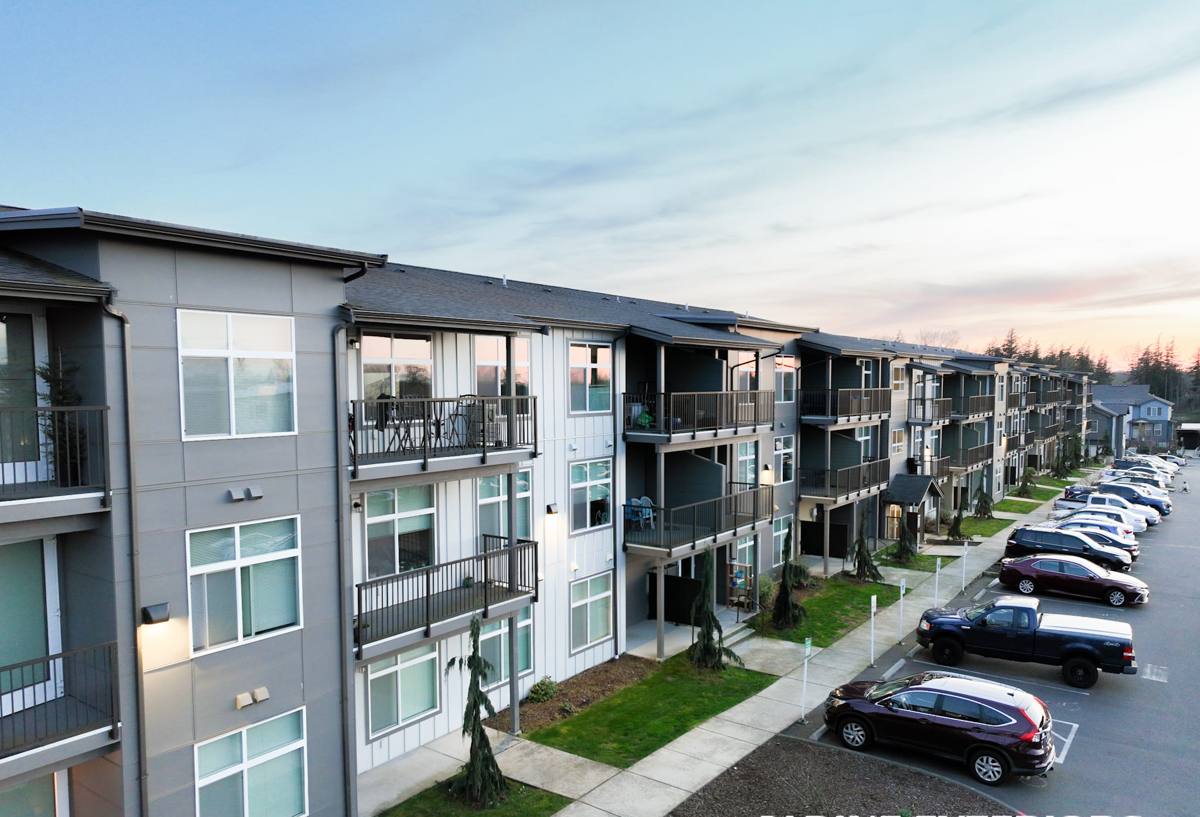
What Ferndale's Climate Does to Vertical Siding
Salt Air and Corrosion
Ferndale sits close enough to Puget Sound and the Strait of Georgia that airborne salt is a real factor on exterior materials. Salt-laden air accelerates corrosion of fasteners and metal flashing, and it degrades some paint and finish systems faster than inland exposure would. Any siding product, and any fastener or flashing detail, has to be chosen with that exposure in mind.
Driving Rain
Wind off the water pushes rain sideways, not straight down. Vertical siding profiles like board and batten have more horizontal seams and joints per square foot than wide lap siding, and each one needs to be detailed to shed wind-driven rain rather than just rely on gravity. This is where a lot of board and batten problems start — not with the material itself, but with a seam or fastening pattern that wasn't built for sideways rain.
A Long Moss Season
Whatcom County's damp, mild winters and shoulder seasons give moss and algae a long window to take hold on north-facing walls, shaded elevations, and anywhere moisture sits against the surface. Moss holds moisture directly against siding and trim, which is a bigger problem for materials that swell, rot, or absorb water than it is for a stable, non-organic substrate.
Why Material Choice Matters More With Board & Batten
Because board and batten has more seams and more exposed vertical grain than horizontal lap siding, the material underneath the finish carries more of the performance burden. Here's how the common options compare for this specific application.
| Material | Moisture Behavior | Maintenance | Typical Lifespan | Fire Rating |
|---|---|---|---|---|
| James Hardie fiber cement | Doesn't rot, swell, or absorb water like wood | Occasional wash; factory finish holds color | Decades, per manufacturer warranty terms | Non-combustible |
| Cedar / primed spruce | Natural wood movement; vulnerable at end grain and seams | Repainting, caulk renewal, rot checks | Shorter in wet climates without upkeep | Combustible |
| LP SmartSide (engineered wood) | Treated wood strand product; still wood-based at the core | Caulk and paint maintenance on a schedule | Shorter than fiber cement in coastal exposure | Combustible |
| Vinyl board & batten | Won't rot, but can warp/fade and doesn't seal seams the same way | Low, but limited repair options if damaged | Variable; UV and impact sensitive | Combustible |
Every one of these products has a place in the industry. But for a coastal Whatcom County climate with salt air, driving rain, and a long moss season, we've made fiber cement our standard for vertical siding — not because the alternatives are junk, but because the trade-offs (repainting cycles, seam maintenance, moisture sensitivity) are ones we don't want to hand a Ferndale homeowner.
What a Correctly Installed Board & Batten System Involves
Board and batten looks simple from the street, but the assembly behind it is where the siding either performs for decades or starts failing in a few years. A correct installation includes:
- A continuous water-resistive barrier installed and lapped correctly behind the siding
- A rainscreen gap or furring strips so water that gets behind the panel can drain and the wall can dry
- Manufacturer-specified fastener type, spacing, and embedment — not "whatever's on the truck"
- Proper batten spacing and reveal so boards can move seasonally without stressing seams
- Correct flashing at windows, doors, and any horizontal trim break
- Factory-finished panels wherever possible, so color and sealant sit on a controlled finish rather than field-applied paint
Skip any one of these and you can end up with a wall that looks right for a season or two, then starts showing streaking, staining, or soft spots at the seams — right where the driving rain hits hardest.
Why We Only Install James Hardie for This Application
We install James Hardie fiber cement exclusively — we don't offer LP SmartSide, vinyl, Cemplank, Allura, primed spruce, or cedar. For board and batten specifically, that means HardiePanel vertical siding paired with Hardie trim boards as battens, finished in James Hardie's ColorPlus factory finish system. A few reasons this is the product we stand behind on Ferndale homes:
- Non-combustible core — fiber cement doesn't feed a fire the way wood or wood-strand products do
- Engineered for this climate — Hardie's HZ product line is formulated for the moisture and temperature swings of the Pacific Northwest, not a one-size-fits-all national spec
- Factory-applied finish — ColorPlus color is baked on and warrantied against fading and peeling separately from the substrate, so seams and cut edges get factory-matched touch-up rather than field paint
- Dimensionally stable — it doesn't swell, cup, or split at the seams the way wood-based products can under repeated wetting and drying
- Strong transferable warranty — backed by the manufacturer, not just our own labor guarantee
None of this means other products don't have a place in the market — cedar has real appeal, LP SmartSide has a following, vinyl is inexpensive. We just don't think any of them are the right long-term answer for vertical siding exposed to salt air, sideways rain, and months of moss pressure, so we don't install them.
Our Process for a Ferndale Board & Batten Project
- On-site inspection — we look at wall orientation, existing moisture damage, and how much wind-driven rain and moss exposure each elevation actually gets
- Moisture and substrate check — any rot or water damage behind the existing siding gets identified and addressed before new siding goes up, not covered over
- Tear-off and prep — old siding removed, sheathing inspected, water-resistive barrier installed or repaired
- Rainscreen installation — furring strips set to create a drainage gap behind the panels
- HardiePanel and batten installation — panels and battens fastened and flashed to manufacturer spec, with attention to every window, door, and trim transition
- Final walkthrough — we go over the finished work with you and register the manufacturer warranty
Cost Factors for Ferndale Board & Batten Siding
Board and batten pricing depends on more than square footage. The factors that move the number most on Ferndale homes:
| Factor | Why It Affects Cost |
|---|---|
| Tear-off and disposal | Removing existing siding (and any hidden damage found underneath) adds labor before the new install even starts |
| Moisture or rot repair | Damaged sheathing or framing found during tear-off has to be repaired before new siding goes on |
| Full-wall vs. accent application | Board and batten used as a full-house siding costs more than an accent gable or entry feature |
| Batten spacing and reveal | Tighter spacing means more material and more fastening/flashing labor per square foot |
| Trim and transition complexity | Homes with more windows, corners, and roofline breaks require more custom flashing and cuts |
| Wall height and access | Two-story walls and limited access add scaffolding or lift time |
We give a firm, written quote after seeing the specific walls involved — we don't estimate sight unseen, because the tear-off condition is the biggest variable.
Maintenance Checklist for Ferndale Homeowners
Fiber cement board and batten is low-maintenance, not no-maintenance. A little seasonal attention keeps it looking right for the long haul:
- Rinse siding annually, especially on north-facing or shaded walls where moss and algae take hold first
- Keep gutters clear so overflow doesn't run down and pool behind battens
- Trim back landscaping and tree cover that keeps walls shaded and damp
- Check caulking at trim, window, and door transitions every year or two and have it renewed if it's cracking
- Have any impact damage (ladders, equipment, storm debris) repaired promptly rather than left exposed
- Walk the exterior after major windstorms and note anything that looks loose, cracked, or discolored
Why a Crew That Already Works Ferndale Matters
Board and batten installed to a generic national spec doesn't always hold up the same way on a wall that's catching salt air and wind-driven rain off the water. A crew that already works this area knows which elevations in Whatcom County tend to take the worst weather, how much rainscreen gap actually matters here versus a drier region, and how permitting and inspection tend to run locally. That local pattern recognition is part of what separates a board and batten job that looks good at handoff from one that still looks good in ten winters.
If you're considering board and batten siding for a home in Ferndale, we're happy to walk the property, look at your specific exposure, and give you a straight answer on what it would take to do it right. Reach out for a free, no-pressure estimate using the form below.