 Bellingham Roofing
 Asphalt Shingle Roofing for Blaine Homes
Blaine sits right up against Semiahmoo Bay and the Strait of Georgia, which means homes here take a different kind of weathering than a roof further inland in Whatcom County. Salt-laden air, wind-driven rain off the water, and a moss season that can stretch from fall through spring all put extra demands on a shingle roof. An asphalt shingle system installed correctly for this environment can still be one of the most reliable and cost-effective roofing choices available — but "correctly" matters more here than in a drier, calmer climate.
This page covers what an asphalt shingle roof needs to hold up in Blaine specifically, what our installation and repair process looks like, and how to tell whether your roof needs attention now or can wait.
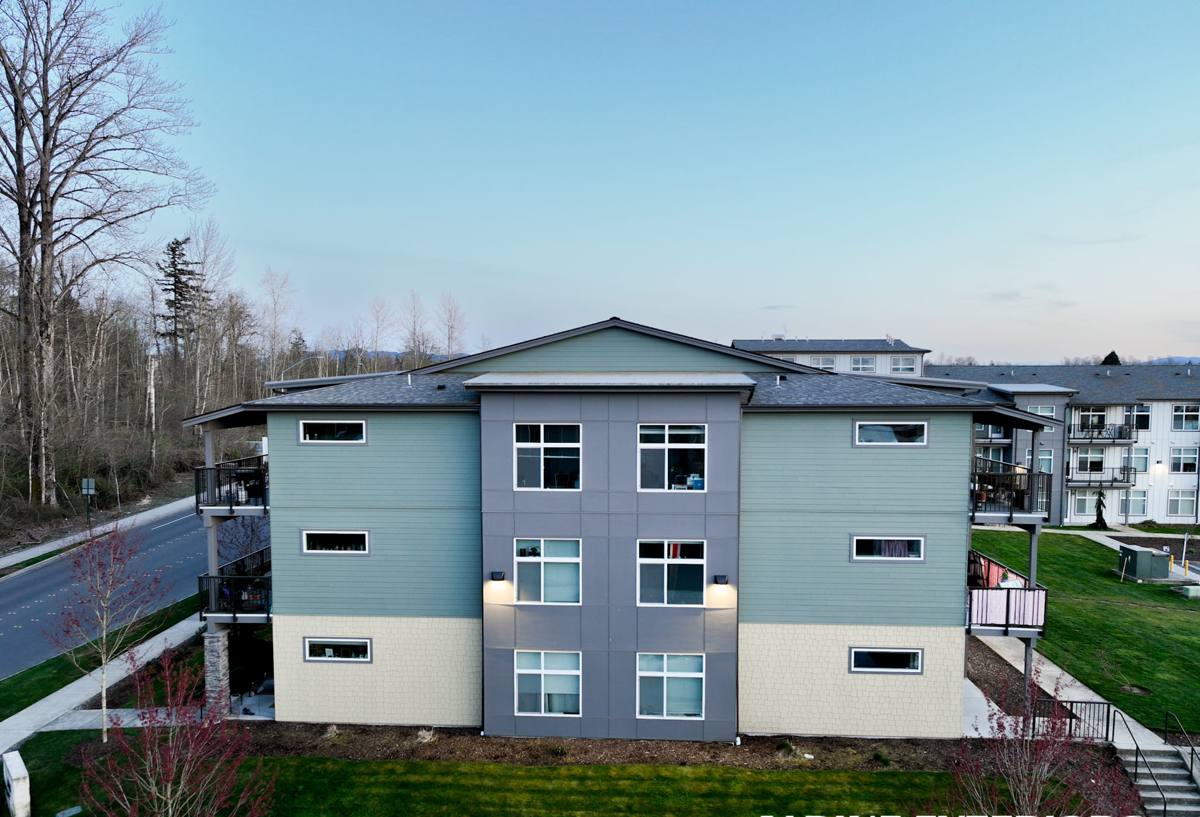
Why Blaine's Climate Is Hard on Shingle Roofs
Salt Air and Corrosion
Proximity to saltwater accelerates corrosion on any exposed metal — nails, flashing, drip edge, vent boots with metal collars, and even some fastener coatings. Once corrosion starts on flashing or fasteners, water finds a path underneath the shingles long before the shingles themselves look worn out. This is one of the most common reasons we see leaks in homes that still have shingles with decent granule life left.
Wind-Driven Rain
Storms coming off the water don't just drop rain straight down — they push it sideways and even upward under roof edges, ridge caps, and shingle tabs. A roof that would perform fine in a calmer inland setting can still leak in Blaine if the underlayment, sealant strips, and fastening pattern weren't chosen with that wind direction in mind.
Moss and Sustained Moisture
Whatcom County's long wet season gives moss and algae plenty of time to establish on north-facing slopes, shaded valleys, and anywhere debris collects. Moss holds moisture against the shingle surface, which shortens shingle life, lifts tabs, and can work its way under the shingle edge over a few seasons if it's never addressed.
What a Correctly Installed Shingle Roof Needs Here
A shingle roof built for Blaine's conditions isn't fundamentally different in material — it's different in the details underneath and around the shingles. The parts that matter most:
- Ice-and-water or storm-grade underlayment at eaves, valleys, and around penetrations, not just a single layer of felt across the whole deck.
- Corrosion-resistant fasteners and flashing — standard galvanized components can start rusting years sooner in salt-influenced air than they would inland.
- Proper nailing pattern and sealant activation so shingle tabs actually bond down against wind uplift, rather than relying on nails alone.
- Balanced attic ventilation so moisture from inside the house doesn't condense against the underside of the deck and soften it from below.
- Wider, better-lapped valley and edge details sized for wind-driven rain rather than straight-down rain.
Skipping any one of these doesn't usually cause a problem on day one. It shows up two, five, or eight years later as a leak that seems to come from nowhere — when really it came from a detail that was never built for this coastline in the first place.
Signs Your Blaine Roof Needs Attention
Because coastal wear often shows up in the details before it shows up across the whole roof, it's worth knowing the early signs rather than waiting for an obvious leak:
- Granules collecting in gutters or at downspout outlets
- Rust staining running down from flashing, vent stacks, or nail heads
- Moss or dark algae streaking on north-facing or shaded slopes
- Shingle tabs that look lifted, curled, or cupped at the edges
- Soft spots or discoloration on interior ceilings near exterior walls
- Daylight visible around chimney flashing or plumbing vents from the attic
Any one of these on its own doesn't necessarily mean a full replacement is needed. But in a coastal climate like Blaine's, we'd rather look at it while it's still a repair-sized problem.
Repair or Full Replacement? How We Help You Decide
Homeowners often assume a leak means a new roof, and just as often assume a new roof is overkill when a targeted repair would do. The honest answer depends on the age of the roof, how widespread the wear is, and whether the underlying deck has taken on moisture damage. Here's how we generally weigh it:
| Situation | Repair Usually Makes Sense | Replacement Usually Makes Sense |
|---|---|---|
| Roof age | Under 12–15 years, isolated issue | Approaching or past the shingle's rated life |
| Leak source | Single flashing point or damaged section | Multiple leak points across different slopes |
| Granule loss | Localized to one slope or valley | Widespread, exposed asphalt mat visible |
| Deck condition | Solid, no soft spots found | Soft or delaminated sheathing found during inspection |
| Moss coverage | Light, recently established | Heavy, long-term, shingle edges affected |
We always inspect before recommending either path, and we'll tell you plainly if a repair is the more sensible option — a roof that doesn't need full replacement yet shouldn't get one.
Our Shingle Roofing Process
Whether it's a repair or a full reroof, the process for a coastal Whatcom County home follows the same core logic: protect the deck, build in the details the salt air and rain demand, and leave the roof better prepared for the next storm season than it was before.
- Inspection and assessment — we check the shingles, flashing, valleys, vents, and (where accessible) the attic for moisture or ventilation issues before recommending a scope of work.
- Tear-off and deck check (for replacements) — old material comes off and the decking underneath gets inspected for soft or damaged sheathing, which gets replaced rather than covered over.
- Underlayment installation — storm-grade underlayment goes down at eaves, valleys, and penetrations, with full coverage across the deck.
- Flashing and edge metal — corrosion-resistant flashing is installed at all transitions: valleys, chimneys, walls, and roof edges.
- Shingle installation — shingles are fastened per manufacturer spec with attention to nailing pattern and tab seal activation, adjusted for the wind exposure of the specific roof plane.
- Ventilation check — intake and exhaust venting is confirmed to be balanced so moisture doesn't collect against the deck from inside the attic.
- Final walk-through — we review the completed work with you and point out anything worth watching over the next few seasons.
Choosing a Shingle Line: Cost Factors
Asphalt shingles come in a range of tiers, and the right choice depends on budget, expected lifespan, and how much wind and algae resistance you want built in. We'll go over actual product options and pricing during an estimate, but here's the general shape of the decision:
| Shingle Tier | Typical Lifespan | Best Fit For |
|---|---|---|
| 3-tab (economy) | Shorter-rated lifespan | Budget-driven projects, secondary structures |
| Architectural / laminate | Mid-to-long rated lifespan | Most primary homes; better wind rating and appearance |
| Algae-resistant (copper-granule) architectural | Mid-to-long rated lifespan | Shaded slopes and homes with a known moss history |
| Premium / designer laminate | Longest rated lifespan | Homeowners prioritizing appearance and maximum wind rating |
For most Blaine homes, we lean toward architectural shingles with algae-resistant granules on north-facing or shaded slopes, simply because that's where moss establishes first in this climate. It's a small cost difference upfront that saves a maintenance headache later.
Why We're Selective About What We Install
We don't install every product on the market, and that's a deliberate call rather than a limitation. Some shingle lines and underlayment types are more sensitive to installation conditions, have warranty structures that are harder to service honestly, or carry known moisture-handling trade-offs in a wet coastal climate. Our standard is to install products we can stand behind for this specific environment — not the cheapest option or the one with the flashiest marketing.
Moss and Algae Prevention Checklist
Given how long Blaine's wet season runs, moss prevention is as much a part of shingle roofing here as the installation itself. A few habits go a long way:
- Keep gutters and valleys clear of needles and leaf debris where moisture collects
- Trim back overhanging branches to let shaded slopes dry out between rain events
- Have moss physically removed rather than pressure-washed, which can strip granules
- Consider zinc or copper control strips near the ridge on slopes with a history of moss
- Schedule a roof check before and after the wettest months, not just when a leak shows up
Why a Crew That Already Works in Blaine Matters
Roofing crews that mostly work drier, inland jobs don't always build in the coastal-specific details this area needs by default — not out of carelessness, but because it's simply not what their usual jobs demand. A crew that regularly works Blaine and the surrounding Whatcom County coastline already accounts for the salt air, the wind direction off the water, and the moss pattern on shaded slopes as a matter of course, not as an upsell. That familiarity shows up in which fasteners get used, how valleys get detailed, and which slopes get flagged for algae-resistant shingles without you having to ask.
It also matters for response time. A roof issue after a coastal storm is rarely convenient, and having a local crew that knows the area means a faster look at the problem instead of a multi-day wait.
Maintenance Schedule for Coastal Shingle Roofs
A well-installed shingle roof in Blaine still benefits from a light maintenance rhythm rather than a "wait until it leaks" approach:
- Twice a year: visual check of shingles, flashing, and gutters, ideally before and after the wettest stretch of the year
- Annually: moss and debris removal from shaded slopes and valleys
- Every few years: closer inspection of flashing and fastener condition given the salt air's effect on metal
- After major storms: a quick check for lifted tabs, displaced ridge caps, or new granule loss
None of this requires a major time investment, but it does catch small problems — a lifted tab, a rusting nail head, a patch of new moss — while they're still small.
Get an Honest Look at Your Roof
If you're dealing with a leak, noticing moss building up, or just want to know where your shingle roof stands after another Blaine winter, we're glad to take a look. The estimate is free, there's no pressure to move forward, and we'll tell you plainly whether you're looking at a repair, a partial reface, or a full replacement. Use the form below to get started.