 Bellingham Roofing
 Siding in Blaine: Built for a Working Waterfront Town
Blaine sits at the northern tip of Whatcom County, right on the water at Semiahmoo Bay and Drayton Harbor, with the Strait of Georgia just beyond. It's about as exposed to marine weather as a Washington town gets — open water on one side, few windbreaks between the house and the shoreline, and a border-town climate that swings between damp fog, driving rain, and salt-laden wind for most of the year. Siding on a Blaine home isn't just a cosmetic layer; it's the wall's first and often only real line of defense against that exposure, which is why we treat siding replacement here differently than we would on a sheltered inland lot.
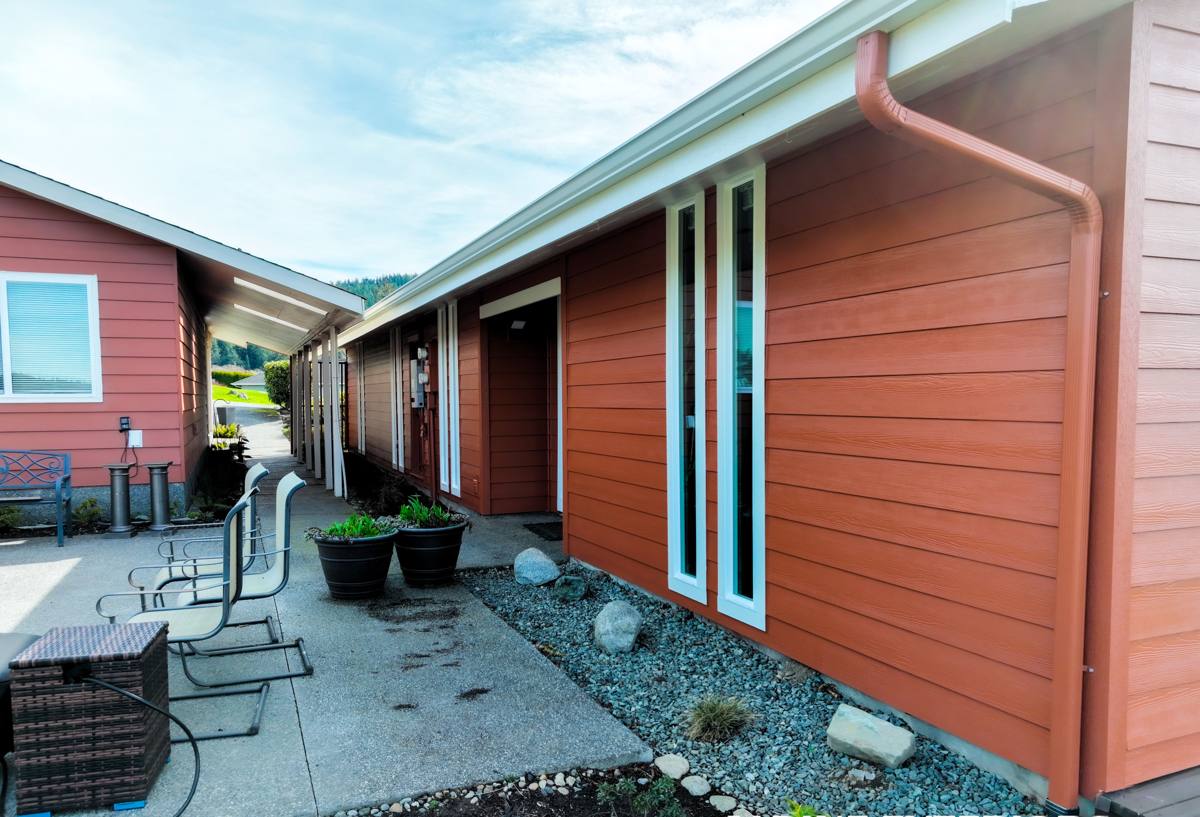
What Blaine's Climate Actually Does to a Home's Exterior
Salt Air Off Semiahmoo Bay and Boundary Bay
Homes close to the water in Blaine sit in air that carries a real salt content, and that doesn't stop at the waterfront — it moves inland with the prevailing wind and settles on siding, trim, and fasteners across town. Salt-laden air speeds up corrosion in exposed metal and accelerates the breakdown of finishes that aren't built to resist it. Over a few seasons, a siding product with a weak factory finish starts to chalk, fade unevenly, or show corrosion bleed at the fastener heads — long before the material itself has actually worn out.
Driving Rain With Nothing to Block It
Blaine doesn't have the tree cover or terrain that breaks up wind and rain the way some inland Whatcom County neighborhoods do. Storms moving off the Strait push rain sideways into west- and north-facing walls with real force, and that wind-driven pattern puts more pressure on laps, seams, and flashing details than a straight-down rain ever would. Siding that isn't installed with the correct overlap, clearance, and flashing will eventually let water track behind it under that kind of exposure, even if the material itself is sound.
A Long Moss and Mildew Season
Between the marine humidity, the region's extended gray-sky season, and shaded or north-facing walls that rarely get direct sun, Blaine surfaces often don't get a long enough dry stretch to fully shed moisture for much of the year. That's the exact condition moss and mildew need to take hold, and it shows up first on shaded siding runs, under eaves, and anywhere water tends to sit rather than shed. Materials that absorb moisture at the surface stay in that damp window longer and give moss and mildew more time to establish before the next dry spell finally arrives.
What a Blaine Home Actually Needs From Its Siding
Given that exposure, siding on a Blaine home has to do more than look good on installation day. It needs to resist water absorption rather than just shed it on the surface, hold its finish against sustained salt and UV exposure, and stay dimensionally stable through repeated wet-dry cycling without swelling, cupping, or opening up seams. It also needs to be installed with drainage and flashing details sized for the wettest wall on the house — usually the one facing the water — rather than an average condition across all four sides. A siding job that only accounts for a typical Pacific Northwest rain pattern, without factoring in Blaine's more direct, open exposure, tends to show problems sooner than the same product would somewhere more sheltered.
Why We Install Only James Hardie Fiber Cement
We install one siding product on Blaine homes: James Hardie fiber cement. We don't install vinyl siding, LP SmartSide, Cemplank, Allura, primed spruce, or cedar. That's a professional standard we hold ourselves to, not a limitation on what we're capable of installing. Each of those alternatives has genuine advantages elsewhere — lower upfront cost, faster installation, a particular look — but in a directly water-exposed setting like Blaine, we've made the call to stand behind one system rather than sell a product we know will need closer attention and more maintenance sooner.
- Non-combustible core: Fiber cement doesn't feed a fire the way wood-based siding can, which matters for both homeowner safety and, in many cases, insurance considerations.
- Factory-applied ColorPlus finish: The color is baked on under controlled conditions rather than applied on-site, and it holds up against salt-laden air and repeated wet-dry cycling far better than field-applied paint or stain.
- Climate-engineered HZ product lines: Hardie's HZ5 formulation is built specifically for regions with heavy moisture exposure and freeze-thaw cycling — a close match for Blaine's marine, wind-driven climate.
- Dimensional stability: Fiber cement doesn't swell, cup, or warp the way engineered wood products can after years of direct water exposure near the coast.
- Strong transferable warranty: Hardie backs correctly installed siding with one of the more substantial warranty structures in the industry, which carries real value if a Blaine property changes hands down the road.
None of this means other siding products are inherently bad. It means that on a home taking direct wind and salt off the water, the trade-offs stack up differently than they would somewhere drier and more sheltered, and we'd rather install the one system we're confident will hold up than offer a cheaper option and let a homeowner discover its limits the hard way.
What a Correct Fiber Cement Installation Actually Involves
Fiber cement only performs the way it's engineered to when it's installed to Hardie's published specifications, and on a Blaine property those details matter more than they would inland. Getting it right isn't complicated, but it does require discipline on every course:
- Correct fastener type, spacing, and depth — corrosion-resistant fasteners are non-negotiable this close to salt air
- Proper clearance from grade, roofline, and any horizontal surface like a deck or patio, so siding isn't sitting in standing moisture
- Weather-resistant barrier and, where the wall assembly calls for it, drainage or rain-screen detailing behind the siding itself
- Correctly lapped and sealed joints, with extra attention on the wall or walls taking the most direct wind and rain
- Flashing integrated properly at every window, door, and roofline transition, not just caulked over as a shortcut
- Factory-cut or properly sealed field cuts, since an unsealed cut edge is one of the more common places moisture gets into fiber cement
A quality material installed loosely still develops moisture problems in this climate — the product isn't what fails first, the installation is. That's true of any siding system, but the margin for error is smaller on a wind- and salt-exposed wall than it is on a sheltered one.
Our Installation Process for Blaine Homes
We start with an on-site walk of the property, looking specifically at how exposure varies wall by wall — the side facing the water is usually dealing with a very different moisture and wind load than a shaded or set-back elevation on the same house. From there we put together a clear, written scope covering tear-off and prep, any sheathing or moisture-barrier repair the walls need once the old siding comes off, the Hardie product line and color, and a realistic timeline that accounts for Blaine's weather rather than assuming ideal conditions every day. Correct flashing, fastening, and clearance detailing are standard on every job we do here, not an upgrade tier. We walk the finished job with the homeowner before we consider it done.
Comparing Siding Materials for a Blaine Property
| Material | Moisture Behavior | Maintenance in Blaine's Marine Climate | Typical Longevity Here |
|---|---|---|---|
| James Hardie fiber cement | Dimensionally stable; resists swelling, cupping, and warping | Low; factory finish resists salt-driven fading and chalking | 30+ years with correct installation |
| Vinyl siding | Loose-hung; depends on the barrier behind it to keep water out | Low upfront, but seams and edges take a beating in direct wind and salt exposure | Variable; often shorter on water-facing walls |
| LP SmartSide / engineered wood | Wood-based core is moisture-sensitive, especially at cut edges | Moderate to high; edge sealing is critical this close to the water | Heavily dependent on installation quality and upkeep |
| Cedar / primed wood | Absorbs and releases moisture readily | High; needs regular refinishing, more often on wind- and rain-exposed walls | Shorter without disciplined, ongoing maintenance |
What Actually Drives the Cost of a Blaine Siding Job
| Factor | Why It Matters |
|---|---|
| Home size and wall complexity | More square footage and more corners, dormers, or trim details mean more material and labor |
| Condition of the existing wall assembly | Sheathing or moisture-barrier repair found during tear-off adds cost, but skipping it defeats the purpose of new siding |
| Water exposure by elevation | Walls facing the bay or open wind may need additional flashing or drainage detailing beyond a standard install |
| Siding profile and color line | Lap width, panel style, and ColorPlus color selection all affect material pricing |
| Access and site conditions | Height, tight lot lines, and staging access affect labor time and equipment needs |
We don't quote a Blaine job off square footage alone. A straightforward, sheltered elevation and a home's water-facing wall can call for genuinely different detailing, and that's reflected in a written estimate rather than a flat per-square-foot number.
Why Hiring a Crew That Already Works in Blaine Matters
Blaine is a small town, but it's not a uniform one — a home set back from Drayton Harbor with some tree cover deals with a different exposure profile than one sitting exposed along open water toward Semiahmoo Bay or Boundary Bay. A crew that regularly works this stretch of coastline already has a feel for that variation: which walls typically need extra flashing attention, how much clearance siding needs above grade given how the ground drains here, and where moss tends to establish first on a shaded elevation. That local pattern recognition shows up in small, on-site judgment calls — fastener choice, where a rain-screen gap is worth the extra step, how tight to run a joint on a wall taking direct salt spray — that a homeowner rarely sees directly but absolutely feels in how the siding performs over the following decades.
A crew unfamiliar with this specific stretch of coast may install correctly by a generic standard and still miss the details that matter most for a home this exposed to open water.
Signs Your Blaine Home's Siding Needs Attention
- Paint or finish that keeps failing no matter how often it's redone, especially on water-facing walls
- Moss or mildew that returns quickly to the same shaded sections after cleaning
- Soft spots, visible warping, or cupped boards, particularly near the base of walls or under windows
- Corrosion staining bleeding from fastener heads or trim
- Cracked, buckled, or separated panels after wind events off the water
- Rising utility bills or drafts that suggest the wall assembly behind the siding is no longer doing its job
Maintenance That Actually Matters in This Climate
Even a well-installed Hardie system benefits from some basic upkeep in a place like Blaine. Rinsing accumulated salt spray off the siding periodically, keeping gutters clear so water isn't sheeting down the wall face, and trimming back vegetation that keeps a wall shaded and damp all help the siding perform closer to its full lifespan. None of this is heavy maintenance — it's a fraction of what a wood-based or vinyl system typically demands in this same setting — but it's worth doing rather than assuming the material needs zero attention indefinitely.
If your Blaine home's siding is showing its age, or you're planning ahead of a problem rather than reacting to one, we're glad to walk the property, look at how each wall is actually holding up, and give you a straightforward, honest read on what it needs. Reach out below for a free, no-pressure estimate.