 Bellingham Roofing
 Decks Built for Fairhaven's Marine Climate
Fairhaven sits close to Bellingham Bay, and that proximity shapes everything about how a deck should be built here. Salt-laden air moves in off the water, driving rain comes at decks sideways more often than straight down, and the shaded, moisture-heavy stretches of the year create ideal conditions for moss and algae to take hold on any horizontal surface. A deck built to a generic spec sheet, without accounting for these conditions, will show its age fast — cupping boards, rusting fasteners, slick green film on the walking surface, and soft spots where water has been sitting against wood it shouldn't be touching.
Building correctly for Fairhaven isn't about upgrading everything to the most expensive option available. It's about knowing which parts of a deck actually take the abuse from Whatcom County's coastal weather and specifying the right material and detailing in those specific spots.
Salt Air and Metal Fasteners
Airborne salt accelerates corrosion on anything ferrous. Standard electro-galvanized screws and joist hardware can start showing rust streaks within a couple of seasons in a coastal-influenced neighborhood like Fairhaven, and rust streaking on a deck isn't just cosmetic — it's a sign the fastener itself is losing holding strength. We spec stainless steel or heavy-duty coated fasteners rated for coastal exposure on any hardware that's exposed to weather, not just the parts that are easy to see.
Moss, Algae, and Shade
Fairhaven's tree cover and hillside lots mean a lot of decks sit in partial shade for much of the day, especially through fall and winter. Combined with regular rain, that shade keeps deck boards damp far longer than a full-sun deck would stay, and damp wood or damp composite is exactly what moss and algae need to establish. Board spacing, airflow underneath the deck, and surface texture all affect how fast a deck grows a slick green coat — and how hard that coat is to keep off.
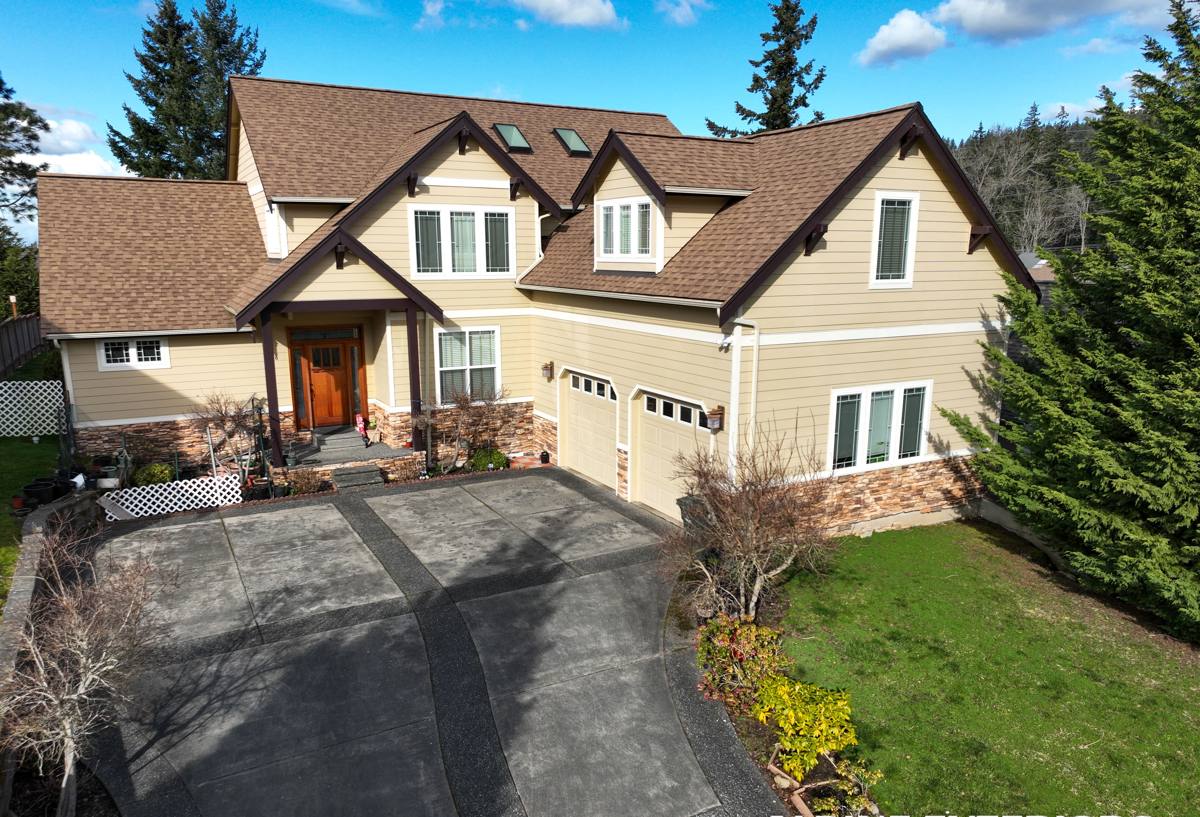
What a Correctly Built Deck Needs Here
A deck that holds up in this climate is built right from the framing up, not just finished with a nice-looking surface. The parts nobody sees when the project is done are usually the parts that determine whether the deck is still solid in fifteen years.
Ledger Attachment and Flashing
Where a deck attaches to the house is the single most common point of long-term failure on any deck in a wet climate, because it's where water gets trapped against the house framing if it isn't flashed correctly. Proper ledger flashing directs water away from the band joist instead of letting it wick in behind the ledger board, which is the kind of hidden rot that doesn't show up until a board is already spongy.
Drainage and Airflow Underneath
Standing water under a deck, whether from poor grading or blocked airflow, keeps the framing damp year-round and gives moss and mildew a place to spread from underneath as well as on top. Joist spacing, proper gaps between boards, and clear ground drainage below the structure all matter more in a climate that gets sustained fall and winter rain than they would somewhere dry.
Footings for Whatcom County Soil
Frost depth and soil conditions in Whatcom County determine how deep footings need to go, and hillside or sloped lots — common around Fairhaven — add extra considerations for footing placement and structural support. Cutting corners on footings is invisible on installation day and expensive to fix later.
Choosing the Right Decking Material
There's no single "correct" decking material for Fairhaven — there's a right choice for a given budget, look, and how much maintenance a homeowner actually wants to do. Here's how the common options compare against the specific pressures of salt air, rain, and shade.
| Material | How It Handles Salt Air & Rain | Moss/Algae Resistance | Maintenance |
|---|---|---|---|
| Pressure-treated wood | Good if fasteners and flashing are done right; wood itself is naturally more moisture-tolerant when treated | Moderate — needs regular cleaning and periodic sealing | Annual cleaning, periodic staining/sealing |
| Cedar | Naturally rot-resistant but still needs sealing in a wet marine climate | Moderate — natural oils help but wear off over time | Sealing every 1-2 years to keep those oils topped up |
| Capped composite | Excellent — doesn't absorb moisture the way wood does | Good — smoother, harder surface sheds moss more easily than wood | Occasional washing, no staining or sealing |
| PVC/capstock boards | Excellent — fully synthetic, unaffected by salt exposure | Good, though texture and color affect how visible algae film is | Occasional washing, no staining or sealing |
We don't push every homeowner toward composite or PVC. Real wood, detailed and sealed correctly, still performs well in Fairhaven and gives a look a lot of people want on an older or historic-character home. The honest trade-off is maintenance: wood needs a homeowner who will actually keep up with sealing on a schedule, while composite and PVC cost more up front in exchange for a lot less upkeep over the life of the deck.
Railings, Hardware, and Coastal-Grade Detailing
Railings and guardrails see more direct weather exposure than the decking surface itself, since they're vertical and catch driving rain from the side. Wood railings need the same sealing discipline as wood decking, and any metal components — brackets, cable railing hardware, post connectors — should be stainless or otherwise rated for coastal exposure. Composite and aluminum railing systems are popular in this area specifically because they sidestep a lot of the corrosion and rot concerns that come with standard-grade wood or steel components.
Design Considerations for Fairhaven Homes
Fairhaven's mix of older homes, hillside lots, and properties with water-facing views brings a few design questions up more often than they would on a flat, inland lot.
Sloped and Hillside Lots
A lot of Fairhaven properties sit on grade changes, which means deck height, support structure, and stair placement need real planning rather than a standard flat-lot layout. Elevated decks on sloped lots also see more wind exposure, which factors into railing and structural design.
Matching Older Home Character
Fairhaven has a good number of older homes with real architectural character, and a deck that looks bolted on rather than designed to match tends to stand out for the wrong reasons. Board direction, railing style, and trim details can be matched to a home's existing lines without adding significant cost.
View Lots and Weather Exposure
Homes with a water-facing orientation often get more direct wind and rain exposure than a deck tucked behind the house. That's worth factoring into material choice and railing design rather than treating every deck on the property the same way.
How Our Deck-Building Process Works
- On-site assessment — we look at grade, drainage, sun/shade exposure, and how the deck will attach to the house before recommending materials.
- Design and material selection — we walk through the honest trade-offs between wood, composite, and PVC based on budget, maintenance tolerance, and the home's style.
- Permitting — we handle the permit application and coordinate any required inspections with the City of Bellingham.
- Framing and structural work — footings, ledger flashing, and framing are built to hold up under Whatcom County's rain load and soil conditions, not just to pass a quick look.
- Decking, railing, and finish work — surface installation, railing systems, and any staining or sealing needed before the deck is ready to use.
- Final walkthrough — we go over maintenance expectations specific to the material installed so there are no surprises down the road.
Keeping a Fairhaven Deck Looking Good Long-Term
Even a well-built deck needs some ongoing attention in this climate. The good news is that most of it is straightforward if it's done on a regular schedule instead of being ignored until moss and rot have already taken hold.
- Sweep leaves and debris off the deck surface regularly, especially in fall — trapped organic matter holds moisture and feeds moss growth
- Rinse or lightly scrub the surface a couple of times a year to knock back algae and moss before it gets established
- Check fastener heads periodically for rust streaking, which signals it may be time to replace hardware before it fails structurally
- Reseal wood decking and railings on the schedule recommended for the specific product used — don't wait until it's visibly gray and dry
- Keep gutters and downspouts near the deck clear so runoff isn't dumping extra water directly onto or under the structure
- Confirm airflow underneath the deck hasn't been blocked by stored items, plants, or added skirting that traps moisture
Permits and Building Code in Bellingham
Most attached and elevated decks in Bellingham require a building permit, and inspectors will typically look at footing depth, guardrail height, stair geometry, and ledger attachment as part of that review. Requirements can vary based on deck height, size, and whether it's attached to the house, so it's worth confirming specifics with the City of Bellingham before work starts rather than assuming a past project's rules still apply. We handle this step as part of our process so homeowners aren't left figuring out permit requirements on their own.
Why Hire a Crew That Already Works in Fairhaven
A deck contractor who mostly works inland doesn't always think about salt-air fastener corrosion, hillside footing considerations, or how much shade a given lot actually gets through the wet season — because those aren't problems they run into every day. Working regularly in Fairhaven and the wider Bellingham area means we've seen how decks in this specific environment age over time, which details hold up and which ones fail first, and how to build around Whatcom County's rain and soil conditions rather than treating this like a generic build. That local pattern recognition is what separates a deck that still looks solid in ten years from one that needs premature repairs.
If you're planning a new deck or replacing one that hasn't held up to Fairhaven's weather, we're happy to take a look and talk through honest options for your property. Use the form below to request a free, no-pressure estimate.