 Bellingham Roofing
 Deck Repair in Birch Bay: Built for Life Right on the Water
Birch Bay sits closer to open water than most of the neighborhoods we work in around Whatcom County, and that changes what a deck goes through year after year. A deck here isn't just outdoor square footage, it's usually the main spot people actually use the water view from, which means it gets more traffic, more direct weather exposure, and less patience for problems than a deck tucked into a sheltered inland yard. When one starts to fail, whether that's soft decking boards, a wobbly rail, or rust streaks running down the fascia, it's almost always the climate doing exactly what marine climates do to untreated wood and undersized hardware over time.
We repair and rebuild decks throughout this stretch of Whatcom County, and Birch Bay decks get their own kind of attention because of how directly exposed they are. A deck that would hold up fine a few miles inland can develop real structural problems here on a shorter timeline if it wasn't built or maintained with that exposure in mind.
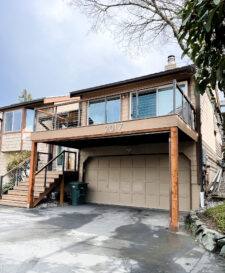
What Birch Bay's Waterfront Climate Does to a Deck
Salt Air and Direct Bay Exposure
Birch Bay opens onto the Salish Sea, and homes close to the water get a steady dose of salt-laden air that inland Whatcom County properties simply don't see at the same intensity. Salt air accelerates corrosion on anything metal, fasteners, joist hangers, post bases, railing hardware, often years before the wood itself shows obvious damage. By the time you notice rust bleeding through a deck board or a hinge that's seized up, the corrosion underneath has usually been progressing quietly for a while.
Driving Rain at the Ledger Board
Rain in this part of the coast doesn't just fall, it comes in sideways off the water, and that matters most at the single point where a deck attaches to the house: the ledger board. Wind-driven rain gets pushed up under poorly flashed ledger connections and behind siding where the deck ties in, and because that spot is hidden behind decking and framing, water can track into the rim joist and wall structure for a long time before anyone sees a sign of it from the outside.
A Long Moss Season Underfoot
Mild temperatures and near-constant dampness give moss and algae a long growing season on horizontal surfaces, and a deck is about as horizontal a surface as a house has. Moss on a deck isn't just cosmetic, it holds moisture against the wood surface and turns a dry-looking board slick within minutes of a light rain. On stairs and near rail posts, that's a real fall hazard, not just a maintenance nuisance.
The Repair Problems We See Most Often on Birch Bay Decks
Ledger Board and Rim Joist Rot
This is the most serious issue we find, and often the least visible until a deck starts to feel spongy or slightly separated from the house. Water tracking behind an improperly flashed ledger connection rots the rim joist and framing it's attached to, and that's a structural connection, not a cosmetic one. A deck with a compromised ledger attachment is a safety issue, not just a repair item on a list.
Corroding Fasteners and Hardware
Nails, screws, and joist hangers that weren't rated for a marine environment corrode faster here than almost anywhere else in the county. Once a fastener loses integrity, the board or connection it's holding is only as strong as whatever's left of the metal, which is sometimes not much by the time it's visibly rusted.
Post Bases, Footings, and Ground-Level Moisture
Posts that sit in standing water or damp soil at the base, or that were set on undersized or deteriorating footings, are a common failure point. Persistent dampness at ground level works on post bases from the bottom up, often well before the visible portion of the post shows any damage.
Failing or Delaminating Decking Boards
Older wood decking that's gone soft, checked, or splintered is common, but we also see failure in lower-grade composite boards that were never rated for this much sustained moisture. Some early-generation composite decking absorbs water at cut ends and fastener points and swells or delaminates from the inside, which can look fine on the surface right up until it doesn't.
Repair vs. Rebuild: How We Tell the Difference
Not every deck problem in Birch Bay means starting over. Localized board replacement, hardware upgrades, or a rail repair can often solve the actual issue without touching the rest of a structurally sound deck. The deciding factor is almost always what's happening at the framing level. If the ledger connection, joists, and posts are solid and the problem is isolated to decking boards or surface hardware, a targeted repair makes sense. If moisture has been working on the structural framing for a while, patching the visible symptoms usually just delays a bigger job and adds cost to it. We inspect the framing before we quote anything, and we'll tell you plainly which situation you're in.
What a Correct Deck Repair Actually Involves
Structural Inspection First
Before any board gets replaced, we check the framing underneath: the ledger connection, joists, beams, and posts. Surface repairs on top of compromised framing don't hold, and they don't address the actual problem, they just cover it up for a season or two.
Flashing and Waterproofing at the House Connection
Where a deck meets the house, the ledger board needs proper flashing that sheds water away from the wall assembly rather than letting it track behind the siding. This is the single detail most responsible for hidden rot on waterfront decks, and it's also one of the easier things to get right if it's done correctly the first time.
Matching Fastener Grade to the Environment
Given how much salt air Birch Bay properties see, we use stainless steel or high-grade coated fasteners and connectors rated for coastal and marine exposure rather than standard hardware that's fine inland but corrodes faster here. It costs more up front and saves you from doing the same repair again in a few years.
Decking Material Options for a Birch Bay Repair
| Material | Performance in This Climate | Trade-Offs |
|---|---|---|
| Pressure-treated lumber | Affordable, widely available, holds up reasonably with regular maintenance | Requires periodic sealing or staining; can check, splinter, or warp if maintenance lapses in this much rain |
| Cedar | Naturally rot-resistant and attractive, common on older Birch Bay decks | Softer wood, needs consistent sealing to keep up with salt air and moss, gray-weathers without upkeep |
| Composite decking | Low maintenance, resists rot and doesn't need staining | Quality varies significantly by product line; lower-grade or older composite can absorb moisture at cut ends and fastener points |
| PVC / capped composite | Best moisture resistance of common decking options, holds up well to salt air and constant dampness | Higher material cost; still needs correct fastening and drainage detailing to perform as designed |
We don't push one material on every job. The right choice depends on how much maintenance you want to keep up with, how close the deck sits to the water, and what the existing structure can support.
Deck Repair Cost Factors in Birch Bay
| Factor | What It Affects | Why It Matters Here |
|---|---|---|
| Extent of framing damage | Whether the job is a surface repair or a structural rebuild | Ledger and joist rot from wind-driven rain is often worse than it looks from the deck surface |
| Fastener and hardware grade | Material cost and long-term durability | Marine-grade stainless hardware costs more but resists the salt air corrosion that fails standard fasteners early |
| Decking material choice | Upfront cost and future maintenance | Composite and PVC cost more initially but reduce the sealing and staining upkeep this climate demands |
| Post and footing condition | Whether substructure work is needed before new decking goes on | Ground-level moisture near the bay accelerates post base and footing deterioration |
| Access and site conditions | Labor time and equipment needs | Waterfront lots and elevated decks common in Birch Bay can add staging complexity |
Real numbers depend on what we find once we're actually under the deck looking at the framing, which is why we inspect before quoting rather than pricing off square footage alone.
Signs Your Birch Bay Deck Needs Attention
- Boards that feel soft, spongy, or bounce noticeably underfoot
- Rust staining running down fascia boards, posts, or below fastener heads
- A ledger board area that looks separated, stained, or swollen where the deck meets the house
- Moss or algae that returns quickly after cleaning, especially on shaded or north-facing sections
- Railings or posts that feel loose or wiggle when pushed
- Visible gaps, cracking, or splintering across multiple decking boards
- A deck that hasn't been inspected in several years, particularly on part-time or vacation properties where problems can go unnoticed between visits
Why a Crew That Already Works Birch Bay Matters
Birch Bay properties see a different level of direct water and wind exposure than homes even a short distance inland, and a crew that works here regularly knows where that exposure actually does the damage: which ledger connections need extra flashing attention, which post locations sit in standing moisture longer than they should, and which fastener grade is worth the added cost versus which corners genuinely can't be cut. That's the kind of judgment that comes from seeing how decks in this specific setting age over real winters, not from a generic repair checklist applied the same way everywhere in the county.
If your Birch Bay deck has a soft spot, a rusting connection, or you just want an honest look at what's holding up underneath it, we're glad to take a look. Reach out using the form below to schedule a free, no-pressure estimate.