 Bellingham Roofing
 Birch Bay Sits Right at the Edge of the Weather This Siding Has to Handle
Birch Bay is about as close to the water as a Whatcom County home can get, and that proximity changes what a siding job actually needs to do. Homes here take salt-laden air straight off the water on a near-daily basis, catch wind with nothing to break it before it hits the wall, and sit in a marine layer that keeps shaded siding damp long after homes a mile inland have dried out. Board and batten's vertical seams are a good match for the beach-house look so many Birch Bay properties already have, but that same seam pattern is also more exposed to wind-driven rain and salt than a flat lap profile. Getting this siding right here isn't about picking a nice board — it's about respecting how much harder this particular stretch of shoreline works on a wall than most of the rest of the county.
We install James Hardie fiber cement board and batten exclusively, and on Birch Bay homes specifically, we build every seam, fastener, and flashing detail around direct, sustained water exposure — not around a generic installation guide written for a drier site.
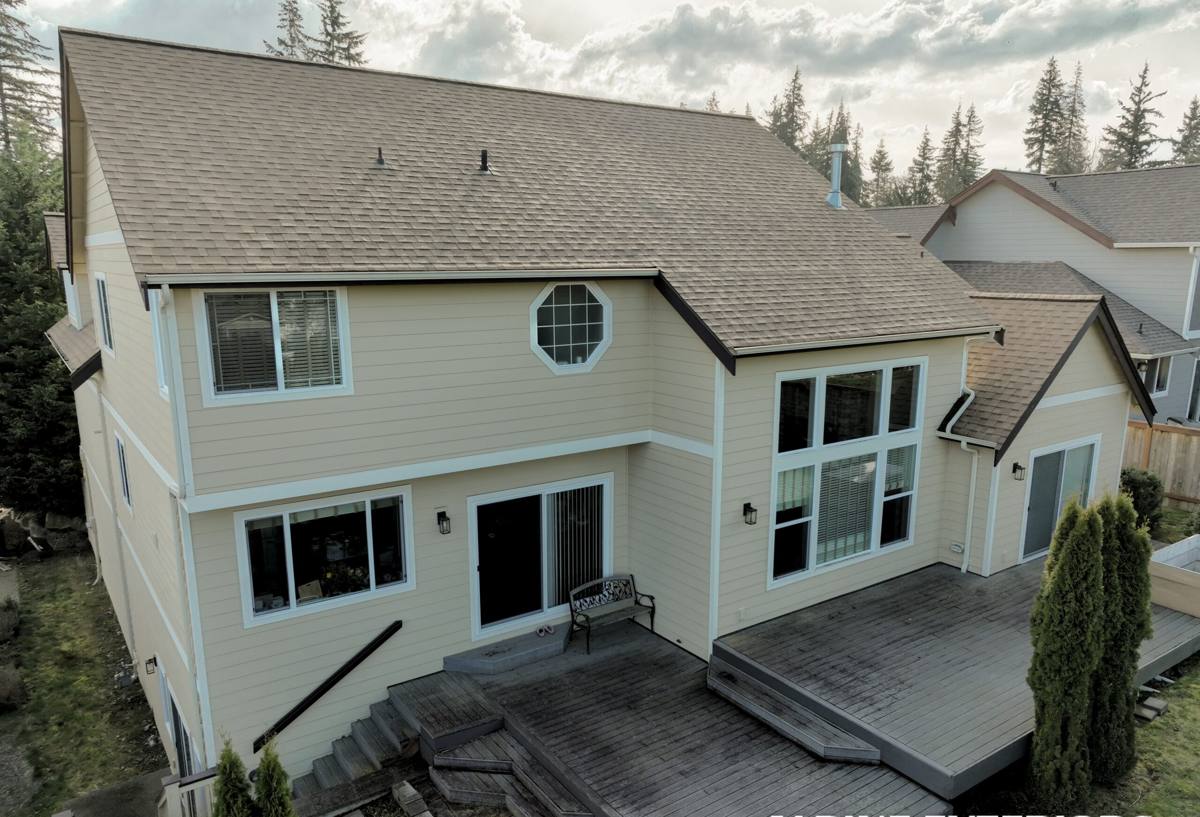
Why So Many Birch Bay Homes Wear Board & Batten — And Why the Details Matter Here
Board and batten has long been the go-to look for beach cabins and cottages, and Birch Bay has plenty of them — a lot of homes here started life as simple seasonal places and have since been upgraded into full-time residences without losing that vertical-board, cabin-style character. That history matters for a re-siding project. An older cabin built for occasional weekend use often has less wall assembly behind the siding than a home built to year-round code, which means the siding itself has to carry more of the weatherproofing load. On a wall that's asked to do that much work, the difference between a batten that's properly clearanced and one that's caulked tight against the board shows up faster here than it would on a newer, better-sealed inland home.
What Correct Board & Batten Installation Requires on a Beachfront Wall
Drainage Behind the Boards, Not Just Paint on the Surface
Every board and batten wall needs a weather-resistive barrier and a drainage gap behind the siding so that any moisture working its way past the surface — and on a bay-front wall, some always will — has somewhere to go besides straight into the sheathing. On homes this close to the water, we treat that drainage plane as non-negotiable, not an upgrade.
Fasteners and Batten Clearance
Board and batten uses more fasteners per square foot than lap siding because both the boards and the battens need securing, and every one of those fasteners is a potential rust point in salt air. We use corrosion-resistant fasteners at the spacing James Hardie specifies, and we set battens with real clearance instead of caulking them flush — a tight, sealed batten traps moisture against the board behind it, and on a wall that's already fighting salt spray and wind-driven rain, that trapped moisture doesn't get a chance to dry out between storms the way it might further inland.
Why We Install James Hardie Fiber Cement — Not Cedar, Vinyl, or Engineered Wood
Board and batten's higher seam count makes it less forgiving of a material's weak points, and Birch Bay's direct salt and wind exposure makes that even more true here than elsewhere in the county. That combination is exactly why we don't offer cedar, vinyl, engineered wood siding like LP SmartSide, primed spruce, Cemplank, or Allura board and batten. Those are legitimate products, and other contractors install them well. We made a standing decision that on this profile, in this kind of exposure, we'd rather stand behind one fiber cement system we trust completely than offer a cheaper option that trades long-term performance for a lower bid.
| Material | Behavior in Direct Bay Exposure | Ongoing Maintenance | Realistic Lifespan Here |
|---|---|---|---|
| James Hardie fiber cement | Dimensionally stable; won't swell, cup, or rot at the seam | Low; factory finish resists salt staining and moss | 30+ years with correct install |
| Cedar | Absorbs moisture readily at every batten seam without regular sealing | High; recurring sealing or repainting cycle | 10-20 years in direct salt exposure |
| Vinyl | Can gap or warp at battens under sun and cold cycling; brittle in wind | Low upfront, but hidden moisture problems are hard to spot | Variable; wind and UV shorten it near the water |
| Engineered wood (LP SmartSide-style) | Sensitive to moisture at cut edges and fastener holes | Moderate; edge sealing needs regular upkeep | Shortened by sustained salt and moisture exposure |
Fiber cement's core doesn't expand and contract with moisture the way wood-based products do, and that stability is worth more on a beachfront wall than almost anywhere else it gets installed. James Hardie's factory-applied ColorPlus finish also means the only paint work we're responsible for on site is priming a cut edge here and there — the wall isn't depending on field-applied paint to hold up against daily salt exposure the way a cedar or engineered wood wall would.
The Hardie Board & Batten System We Use in Birch Bay
James Hardie builds its siding in climate-specific HZ formulations, and for homes with this much direct moisture and salt exposure we specify the HZ5 line, engineered for wetter, harsher climates rather than a generic national spec. The boards arrive with the ColorPlus factory finish baked on, which holds color and resists fading and staining better than a field-painted surface exposed to constant salt air. Reveal width and batten spacing get set based on the specific wall — a wide-open, wind-exposed elevation facing the water is detailed differently than a more sheltered side of the same house, even though both use the same product line.
Re-Siding a Converted Cabin: What's Different About Older Birch Bay Homes
A lot of the board and batten work we do in Birch Bay isn't new construction — it's replacing siding on a home that's been standing for decades, often one that started as a simple seasonal cabin. That history means a few things we check before a single new board goes up: whether the existing wall has a real weather-resistive barrier at all, whether there's rot or soft sheathing hiding behind old siding that's been holding moisture for years, and whether the framing itself needs any repair before it's covered again. Installing new board and batten — even correctly detailed, top-quality board and batten — over a wall with an existing moisture problem just buries that problem under new material for a few more years until it resurfaces. On a re-side, we treat what's underneath the old siding as seriously as what goes on top of it.
Our Process for a Birch Bay Project
We start with a walkthrough of the specific walls involved — which face the water directly, which are more sheltered, and what condition the existing assembly is in. From there we plan batten layout, corner details, and window and door transitions before any material gets cut, because working those details out ahead of time avoids field improvisation on a house where the wrong call at a seam has real consequences. Installation follows James Hardie's published specifications for this climate zone, including fastener type and spacing, batten clearance, and flashing laps at every horizontal transition. When the job's done, we walk the finished siding with you, cover the little maintenance this material actually needs, and make sure you know what a healthy wall looks like going forward.
Why Hiring a Crew That Already Works Birch Bay Regularly Matters
Birch Bay is a small enough community that the difference between a crew that occasionally drives out here for a job and one that works this shoreline regularly shows up in the details. A crew that's sided homes across this specific stretch of bay has already seen which elevations take the worst of the wind, how much clearance a batten actually needs this close to the water versus what a general installation guide assumes, and where an older cabin-turned-year-round-home is likely to have hidden moisture issues behind its existing siding. That judgment doesn't show up on a spec sheet or a bid — it shows up fifteen years later, in whether the wall still looks and performs the way it did on day one.
Living With Board & Batten Siding in Birch Bay
James Hardie board and batten needs very little upkeep once it's installed correctly, but a few habits go a long way on a home this close to the water:
- Rinse salt residue off the siding periodically, especially on walls that face the water directly and don't get regular rain-rinsing from that direction
- Keep gutters clear so water isn't overflowing down the face of the wall near batten seams
- Trim back vegetation and branches that keep any wall in constant shade, since shaded, damp surfaces are where moss and mildew take hold first
- Watch corners, window trim, and the base of the wall for any sign of staining or soft caulking, and have it looked at early rather than waiting
- Avoid pressure-washing directly into seams and battens; a gentle rinse is enough and won't force water where it doesn't belong
None of this is a heavy maintenance schedule — it's the kind of periodic attention any beachfront home benefits from, and it's a lot less than what cedar or engineered wood would ask for in the same location.
If you're considering board and batten for a home in Birch Bay, we're glad to come out, walk the property, and talk through what your specific walls need given their exposure and condition. There's a form below — reach out and we'll set up a time for a straightforward, no-pressure estimate.