 Bellingham Roofing
 Bellingham's Climate Puts Columbia Roofs to the Test
Columbia is one of Bellingham's established, tree-shaded residential neighborhoods, and that setting comes with a roofing reality that newer subdivisions on open lots don't face in the same way. Mature tree canopy means more shade, more debris, and slower drying after every storm. Add in Whatcom County's long wet season, the salt-laden air that rolls in off Bellingham Bay, and months at a time where a roof rarely gets a full day of direct sun, and you have conditions that shorten the useful life of a roof that wasn't built for them.
A new roof installation here isn't just about swapping old material for new. It's about choosing products and installation details that hold up to driving rain that gets pushed sideways under eaves, moss and lichen that colonize any surface that stays damp too long, and the slow corrosion that salt air causes on fasteners and flashing that aren't rated for it. Homes closer to the water deal with this more aggressively than homes inland, but no property in this part of Whatcom County is fully exempt from it.
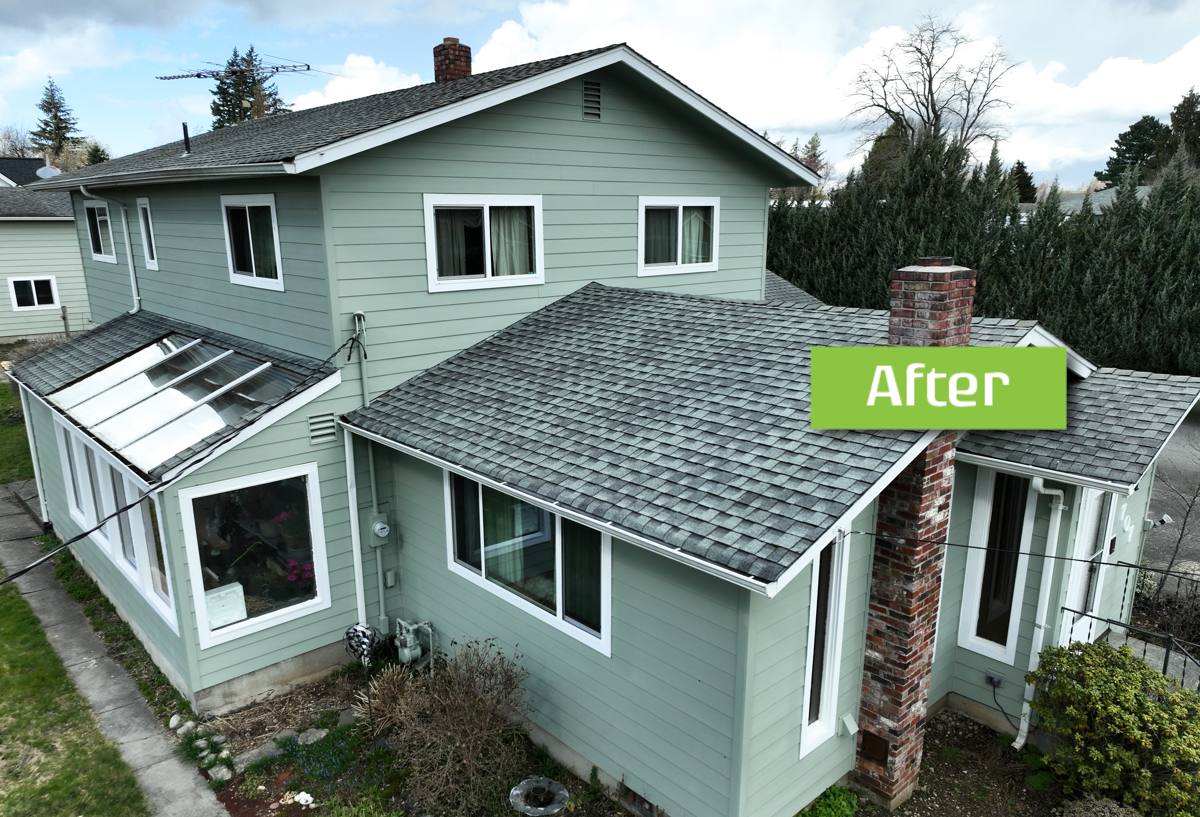
Signs a Columbia Home Needs a New Roof, Not Another Repair
Repairs make sense when the damage is localized and the roofing system underneath is still sound. Replacement becomes the honest recommendation when the underlying materials are worn out across the board, even if only part of the roof is showing visible problems. Common signs we look for on Columbia homes include:
- Granule loss heavy enough that shingles look patchy or the color has gone uneven
- Moss or algae established in mats rather than light surface staining, especially on north-facing slopes shaded by trees
- Curling, cupping, or cracked shingles, particularly on slopes that catch the most weather
- Soft spots or sagging in the roof deck when walked or inspected from the attic
- Rusted, lifted, or missing flashing around chimneys, skylights, and valleys
- Daylight visible through the roof deck from inside the attic, or damp insulation below it
- A roof already past 20-25 years old for asphalt shingle, or showing its age well before that because of shade and moisture exposure
If a roof is showing two or three of these at once, patch repairs tend to become a repeating expense rather than a real fix. That's the point where a full new roof installation is usually the more honest recommendation, not the more profitable one.
What a Correct New Roof Installation Actually Involves
A new roof is more than the shingles or panels visible from the street. The materials underneath do most of the work of keeping a home dry through a Bellingham winter, and cutting corners there is where roofs fail early. A properly done installation includes:
Tear-Off and Deck Inspection
Old roofing comes off down to the deck so it can actually be inspected, not covered over. Any soft, rotted, or delaminated sheathing gets replaced before anything new goes down. Roofing over a compromised deck just hides a problem that will resurface, usually as a leak.
Underlayment Built for Wet Climates
Given how much rain this area sees, underlayment matters as much as the shingle on top of it. A synthetic or self-adhered underlayment, with ice-and-water shield in valleys, around penetrations, and along eaves, gives a roof a real second line of defense if wind-driven rain gets past the primary surface.
Flashing Done Right
Chimneys, skylights, sidewalls, and valleys are where most roof leaks actually start, not the open field of shingles. New, correctly lapped flashing at every one of these points is not optional — it's the difference between a roof that sheds water and one that slowly lets it in.
Ventilation That Matches the Home
Balanced intake and exhaust ventilation keeps the attic dry and temperature-stable, which protects the roof deck from the inside and helps prevent the trapped moisture that feeds moss and rot in a climate like this one.
Matching the Roofing Material to Columbia's Conditions
There's no single "best" roofing material — there's the material that fits a given home's slope, shade, budget, and exposure. Here's how the common options perform under Bellingham's salt air, rain, and moss pressure:
| Material | Performance in This Climate | Maintenance Considerations |
|---|---|---|
| Architectural asphalt shingle | Solid, proven performance; wide range of price points | Needs periodic moss removal and gutter care, especially under tree cover |
| Metal (standing seam or panel) | Sheds rain and moss very effectively; long service life | Requires corrosion-rated fasteners and coatings near the bay; higher upfront cost |
| Cedar shake | Traditional look that suits older neighborhoods | High maintenance burden in a wet climate; needs regular treatment and inspection to manage moisture and moss |
| Synthetic/composite shingle | Good moisture and moss resistance with lower upkeep than wood | Product quality varies significantly between manufacturers |
We'll walk through these trade-offs honestly for your specific roof — slope, sun exposure, and how close you are to the water all factor into which material actually makes sense, rather than which one simply looks good in a brochure.
Ventilation and Moss Control: Non-Negotiables Here
Two issues come up on almost every Columbia roof inspection: moss and trapped moisture. They're related. A roof with poor airflow stays damp longer after every rain, and that dampness is exactly what moss and algae need to take hold. Once established, moss holds water against the shingle surface, works into seams, and accelerates wear well beyond what normal weathering would cause.
On a new installation, we address this with proper intake and exhaust venting sized to the attic, shingle or panel choices that resist moss better in shaded conditions, and, where it makes sense, zinc or copper strips near the ridge that discourage regrowth over time. None of this eliminates the need for periodic roof cleaning under heavy tree cover, but it meaningfully extends the time between cleanings and slows the rate of damage in between.
Our New Roof Installation Process
- On-site inspection and estimate — we look at the existing roof, attic ventilation, and any problem areas before recommending a scope of work.
- Material selection — we go over the honest trade-offs between materials for your roof's slope, shade, and budget.
- Permitting — we handle the paperwork required for a full re-roof in the City of Bellingham.
- Tear-off and deck repair — old material comes off, the deck is inspected, and any damaged sheathing is replaced.
- Underlayment, flashing, and ventilation installation — the parts that do the real work of keeping the home dry.
- New roofing material installed — set to manufacturer specifications so warranty coverage stays intact.
- Cleanup and final walkthrough — site cleared of debris and nails, and the finished roof reviewed with you before we consider the job done.
What a New Roof Costs in Columbia
Every roof is priced on its own specifics, but the factors that move the number up or down are consistent. Rather than quote a figure that won't apply to your home, here's what actually drives cost:
| Factor | Why It Matters |
|---|---|
| Roof size and number of slopes | More square footage and more valleys/hips mean more material and labor time |
| Existing deck condition | Rot or soft sheathing found at tear-off adds material and labor to replace it |
| Material choice | Asphalt, metal, cedar, and composite all sit at different price points and labor requirements |
| Roof pitch and access | Steep or hard-to-access roofs take longer and require more safety equipment |
| Number of penetrations | Chimneys, skylights, and vents each need individual flashing work |
| Layers being removed | Tearing off multiple existing layers adds disposal and labor cost |
Most full asphalt shingle replacements on a typical Columbia home land in a broad mid-range for the region; metal, cedar, and larger or more complex roofs run higher. A firm number only comes from an actual inspection — anything quoted without one is a guess.
Why Hire a Crew That Already Works Columbia
A roofer who's worked this specific neighborhood knows things a crew from outside the area has to learn on your dime. They know which slopes in this part of Bellingham hold moss the longest because of tree cover and orientation. They know how much wind-driven rain a given exposure actually takes in a winter storm off the bay. They know the local permitting process and inspection expectations, and they're still around next year and the year after if a warranty question comes up.
Before hiring anyone for a new roof installation, it's worth confirming a few basics:
- Current Washington contractor license and liability insurance, verifiable and not just claimed
- A written estimate that itemizes tear-off, materials, flashing, ventilation, and cleanup — not a single lump-sum number
- A manufacturer-backed material warranty plus a separate workmanship warranty from the contractor
- Recent local references or project history in Bellingham and Whatcom County
- A clear plan for deck repair pricing if rot is found once tear-off begins
- A realistic timeline that accounts for Bellingham's rain patterns rather than promising an unrealistic turnaround
A contractor who answers these questions plainly, without pressure or vague deflection, is usually the one worth trusting with the largest exterior project a home will need.
Get a Straight Answer About Your Roof
If your Columbia home is showing signs of an aging roof, or you just want an honest read on how much life is left in it, we're happy to take a look. The estimate is free, there's no pressure attached to it, and you'll get a straightforward assessment of what your roof actually needs — not an upsell. Use the form below to get started.