 Bellingham Roofing
 Roof Repair Built for Columbia's Salt Air and Driving Rain
Homes in Bellingham's Columbia neighborhood deal with the same combination of stresses that wears on roofs across Whatcom County: salt-tinged air drifting in off the water, rain that gets driven sideways under eaves and shingle edges during a windy front, and a long, damp moss season that never really gives a north-facing roof plane a chance to dry out completely. None of that means a Columbia roof is doomed to constant problems. It means repairs done here need to account for those specific conditions rather than treat every leak as a generic patch job.
This page is about roof repair specifically — not a full tear-off and replacement — for homes in and around Columbia. It covers what actually causes most local repair calls, what a correct repair involves, when repair stops making sense and replacement becomes the smarter move, and how our process works from the first inspection to the finished fix.
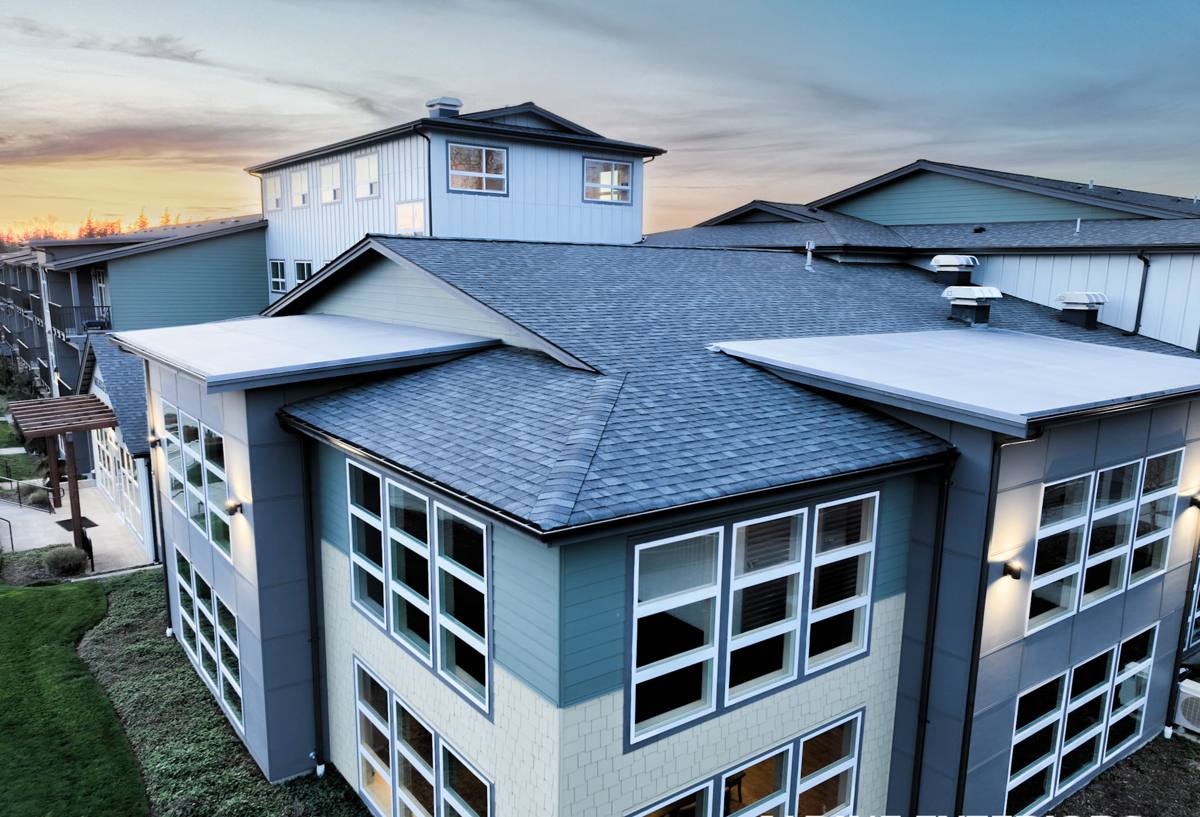
Common Roof Repair Needs in Columbia Homes
Roofs rarely fail all at once. Most repair calls trace back to one of a handful of recurring problem areas, and knowing which one you're dealing with changes what the right fix actually looks like.
Flashing and Valley Leaks
Flashing — the metal that seals transitions at valleys, chimneys, skylights, and where a roof meets a wall — is where most leaks in this region actually start, not in the open field of shingles. Wind-driven rain gets pushed into gaps and laps that would never see water under calm, straight-down rainfall. Corrosion from salt-tinged marine air can also work on lower-grade or aging flashing metal faster than homeowners expect, which is part of why a flashing failure sometimes shows up years after the rest of the roof still looks fine.
Moss and Debris Damage
Shaded and north-facing roof planes in Columbia hold moisture longer through the wet season, which is exactly the environment moss needs to take hold. Left alone, moss lifts shingle edges, holds water against the roof surface long after a storm has passed, and works its way into seams over time. Needle and leaf debris in valleys and gutters does something similar — it dams water that should be draining freely, and that standing water finds any weak point in the roofing underneath it.
Wind and Storm Damage
A hard windstorm can lift or crack shingles, especially on exposed slopes or roofs that were fastened with a shortcut nailing pattern to begin with. Sometimes the damage is obvious — missing shingles, visible cracking. Just as often it's subtle: a shingle that lifted, resealed poorly, and is now letting water track underneath it during the next storm without any visible sign from the ground.
Pipe Boots and Roof Penetrations
The rubber or plastic boots sealing vent pipes and other roof penetrations are usually the first component on a roof to fail — often years before the shingles around them are due for replacement. UV exposure and weather cycling dry out and crack the rubber collar, and a cracked boot is a direct, ongoing path for water into the attic.
What a Correct Roof Repair Actually Involves
A repair that actually solves the problem takes more than sealing over the spot where water is showing up inside the house. That spot is often not where the water is actually getting in.
Diagnose Before You Patch
Water travels. A stain on a ceiling can originate several feet away at a valley, a chimney, or a vent boot, tracking along a rafter or the underside of the deck before it shows up somewhere else entirely. A proper repair starts with tracing the leak to its actual source — from the attic side when possible, and from the roof surface itself — rather than guessing based on where the damage is visible indoors.
Matching Materials, Not Guessing
Repair shingles and flashing need to match the existing roofing in profile, weight, and fastening method, not just in general color. A mismatched patch can look close enough from the ground while performing differently under wind and rain than the surrounding roof, which sets up the next failure in the same spot.
Fixing the Cause, Not Just the Symptom
If moss caused the damage, a real repair addresses the moss and the moisture conditions that let it grow back, not just the shingle it damaged. If a ventilation problem is trapping moisture under the deck and accelerating rot or moss growth from underneath, patching the visible symptom without touching airflow just buys time before the same repair is needed again.
Repair or Replace? How to Tell the Difference
Not every roof problem calls for a full replacement, and not every roof problem should be treated as a simple patch either. The honest answer usually comes down to a few factors.
| Factor | Leans Toward Repair | Leans Toward Replacement |
|---|---|---|
| Roof age relative to material lifespan | Well within expected service life | At or past the end of its expected life already |
| Extent of damage | Isolated to one or two areas | Spread across multiple slopes or the whole roof |
| Repair history | First or infrequent repair | Same areas repaired repeatedly with recurring leaks |
| Deck and structural condition | Deck is solid underneath | Soft spots, rot, or sagging found at inspection |
An honest contractor will tell you when a repair is genuinely the right call rather than pushing a full replacement that isn't needed yet — and will also tell you plainly when patching a roof that's already at the end of its life is just delaying an expense rather than solving it.
What Roof Repair Costs Depend On
Repair pricing varies more than people expect, and the gap usually comes down to real differences in scope and access, not one contractor simply charging more for the same work.
| Factor | What It Affects |
|---|---|
| Roof pitch and access | Steeper or harder-to-reach roofs take longer and require more safety staging |
| Number of repair locations | Multiple separate problem areas add labor time beyond a single patch |
| Material matching | Discontinued or uncommon shingle profiles can be harder to source and match |
| Underlying cause | A repair that includes ventilation or moss remediation costs more than a surface patch, but lasts longer |
| Interior damage | Repairs that involve deck replacement or interior drywall/insulation add real scope |
A written estimate that spells out exactly what's being repaired, what materials are being used, and why is worth far more than a single flat number, and it's fair to ask any roofer to walk through that detail before you agree to the work.
How Our Roof Repair Process Works
- In-person inspection: We look at the roof surface and, when accessible, the attic side, to trace the actual source of the leak rather than guessing from a photo.
- Honest diagnosis: We tell you plainly whether this is a straightforward repair, a repair that needs to address an underlying cause like ventilation or moss, or a situation where the roof is closer to needing full replacement.
- Written estimate: You get a clear, itemized scope — what's being repaired, with what materials, and why — before any work starts.
- Repair work: Matched materials go in, fastened and flashed to the same standard as a full installation, not treated as a lesser job because it's small.
- Verification: Where possible, we confirm the fix from the attic side or with a water test rather than assuming a repair solved the problem just because it's out of sight.
- Cleanup and walkthrough: We review the completed repair with you and clear debris and old material before calling the job finished.
Why Hiring a Crew That Already Works in Columbia Matters
A crew that regularly repairs roofs in and around Columbia has already seen how moss builds up fastest on which slopes through a Bellingham wet season, which flashing details tend to fail first under wind-driven rain, and how salt-tinged air affects fastener and flashing corrosion over time. That familiarity shows up in small decisions during a repair — which areas get extra attention even when they're not the reported problem — that a crew unfamiliar with this specific climate might not think to check.
It also matters for accountability afterward. A repair warranty is only as good as the company standing behind it, and a contractor with an ongoing local presence is the one you can actually reach again if a question comes up a year or two later.
A Practical Checklist Before You Hire a Roof Repair Contractor
- Do they inspect in person, including the attic side when possible, rather than quoting sight unseen?
- Does the estimate name the specific repair location and cause, not just "roof repair" as a line item?
- Will they tell you honestly if repair isn't the right call and replacement makes more sense?
- Do they carry current WA contractor licensing, liability insurance, and workers' compensation?
- Can they point to recent, real repair work in or near Columbia or greater Bellingham?
- Is the repair itself covered by a workmanship warranty, separate from any material warranty?
Signs Your Columbia Roof Needs Repair Now
Catching a problem early is usually the difference between a modest repair and a much larger one once water has had time to spread.
- A ceiling or attic stain that appears or grows after a windy, wet storm
- Visible moss buildup or dark streaking on shaded or north-facing roof planes
- Cracked, curling, or missing shingles after a wind event
- A cracked or visibly deteriorated pipe boot around a roof vent
- Granules collecting heavily in gutters near one specific area of the roof
- Daylight visible through the roof deck from inside the attic
If you're seeing any of these signs, it's worth having the roof looked at before the next stretch of driving rain rather than waiting for the leak to get worse. If you'd like an honest, no-pressure look at your Columbia home's roof and a written repair estimate to compare against anything else you've received, we're glad to come take a look. Use the form below to request a free estimate.