 Bellingham Roofing
 Bellingham's Climate Is Hard on Siding — Columbia Homes Feel It First
Columbia sits close enough to Bellingham Bay that salt-laden air is a daily fact of life, not an occasional nuisance. Add Whatcom County's driving rain and a moss season that can stretch from fall through spring, and you have a climate that is genuinely tough on exterior building materials. Siding here isn't just a cosmetic layer — it's the primary barrier standing between your home's structure and months of sustained moisture exposure.
Homes in Columbia range from older bungalows and mid-century ranches to newer infill construction, and we see the same pattern across almost all of them: siding that was fine for the first decade starts failing hard once moisture finds a way in, and once it's in, the Pacific Northwest doesn't give it many chances to dry back out.
What Constant Moisture Does to the Wrong Siding
Wood-based and composite sidings that aren't engineered for this level of sustained wetness tend to show trouble in predictable ways: cupping and warping boards, paint and finish that fails years ahead of schedule, soft spots where water has been sitting behind the surface, and caulk joints that crack and open up gaps for water to track behind the cladding. On shaded, north-facing walls — common on lots with mature trees, which much of Columbia has — moss and algae growth can take hold within a season or two if the material and finish aren't resistant to it.
Salt Air's Slow Corrosion
Proximity to the bay adds a second stressor that inland Whatcom County homes don't deal with as much: airborne salt accelerates corrosion on exposed fasteners and can degrade lower-grade finishes faster than manufacturers' published timelines suggest. It's a slow process, which is exactly why it's easy to underestimate until you're looking at a wall that's failed years before it should have.
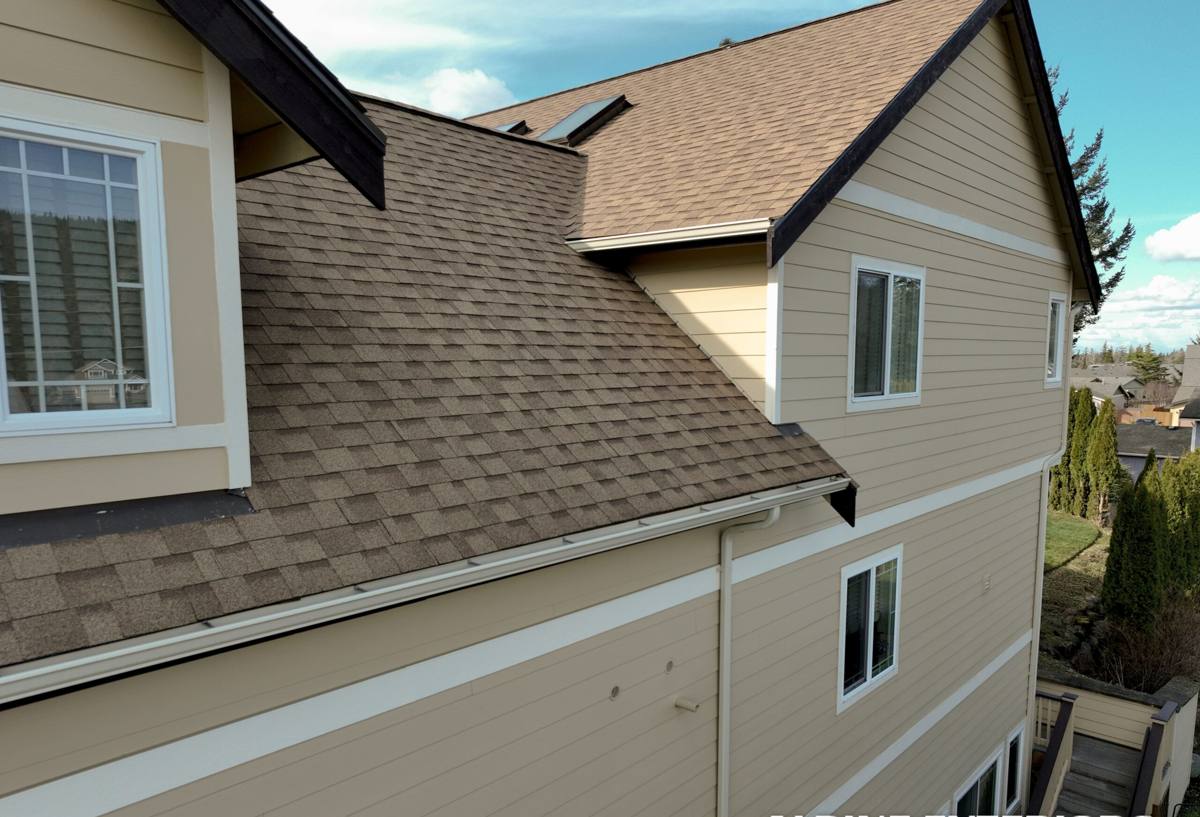
What a Correct Siding Replacement Actually Involves
Siding replacement done right is not a cosmetic swap. It's a chance to fix what's underneath before it gets covered up again for another 20-plus years, and in a climate like this, skipping that step is how homeowners end up paying for the same repair twice.
Sheathing and Moisture Barrier Come First
Once the old siding is off, the sheathing underneath gets inspected — not glanced at. Any rot, delamination, or soft wood gets identified and repaired before anything new goes up. A continuous weather-resistive barrier is installed (or replaced if it's compromised), with proper overlap and sealing at every seam, because that barrier is what actually keeps bulk water out of the wall assembly if it ever gets past the siding itself.
Flashing and Fastening to Spec
Every window, door, and penetration needs flashing detailed correctly — this is where the majority of hidden water intrusion problems actually start, not in the field of the siding itself. From there, installation has to follow the manufacturer's fastening pattern, clearances, and joint treatment exactly. Fiber cement siding installed with the wrong nail pattern, insufficient clearance from grade or roofing, or unsealed butt joints will underperform no matter how good the product is on paper.
Why We Install Only James Hardie Fiber Cement Siding
We made the decision to standardize on James Hardie fiber cement and stop installing other siding categories, and that decision is rooted directly in what this region's climate does to a home's exterior over time.
- Non-combustible material — fiber cement doesn't feed a fire the way wood-based products can, which matters for both safety and, increasingly, insurance considerations.
- ColorPlus factory finish — baked-on, not field-applied, which means far more consistent resistance to fading and moisture intrusion at the finish layer than a job-site paint job can offer.
- HZ5 product engineering — Hardie's HZ5 line is specifically formulated for cold, wet climate zones like ours, addressing moisture and freeze-thaw behavior rather than being a one-size-fits-all product.
- A strong, transferable warranty — backed by a manufacturer with decades of fiber cement manufacturing behind it, not a shorter-cycle product warranty.
We don't install vinyl, LP SmartSide, Cemplank, Allura, primed spruce, or cedar, and we're upfront about why. Each of those products has legitimate strengths — cedar's appearance, vinyl's low upfront cost, engineered wood's workability — but each also carries a moisture, maintenance, or longevity trade-off that we've found doesn't hold up well under this specific combination of salt air, sustained rain, and moss pressure. That's our professional standard, not a judgment on anyone who's chosen differently.
How Hardie Compares to Other Siding Materials
| Material | Moisture & Moss Resistance | Maintenance Needs | Fire Rating | Typical Lifespan |
|---|---|---|---|---|
| James Hardie Fiber Cement | Engineered for wet climates (HZ5) | Low — factory finish holds up well | Non-combustible | 30+ years |
| Vinyl | Won't rot, but can trap moisture behind it | Low, but prone to cracking/fading | Combustible | 20–30 years |
| LP SmartSide (engineered wood) | Vulnerable at cut edges and seams if not sealed perfectly | Moderate — finish upkeep matters | Combustible | 20–30 years |
| Cedar | Attractive but absorbs moisture, prone to moss without upkeep | High — regular refinishing required | Combustible | 15–25 years with upkeep |
The pattern that matters most for Columbia homes specifically is moisture and moss resistance combined with low ongoing maintenance — a climate like this punishes any siding that needs a homeowner to stay on top of refinishing or sealing schedules to perform as promised.
Our Siding Replacement Process for Columbia Homes
- Assessment — we walk the home, evaluate the existing siding's condition, and check for signs of moisture damage at trim, corners, and penetrations.
- Product and color selection — choosing the right Hardie profile and ColorPlus color for the home's style and the neighborhood's character.
- Tear-off and inspection — full removal of old siding, with sheathing and framing inspected and repaired as needed before anything new goes up.
- Weather barrier and flashing — installed or renewed with correct overlap, sealing, and detailing at every window, door, and penetration.
- Installation to manufacturer spec — correct fastening, clearances, and joint treatment, not shortcuts that show up as problems in five years.
- Cleanup and final walkthrough — site cleared, and we walk the finished job with you before calling it done.
What Affects the Cost of Your Siding Replacement
| Factor | Why It Matters |
|---|---|
| Home size and wall complexity | More square footage and more corners, gables, and dormers mean more material and labor |
| Condition of existing sheathing | Hidden rot found during tear-off adds repair scope before new siding can go on |
| Siding profile and trim scope | Lap siding, shingle-style panels, and trim/accessory details vary in material and labor cost |
| Site access | Tight lots, mature landscaping, or multi-story sections can add setup and labor time |
| Removal complexity | Some existing siding (multiple layers, certain wood products) takes longer to strip than others |
We won't know your real numbers until we've looked at the home, but these are the factors that actually move the price — not guesswork.
Why Hiring a Crew That Already Works in Columbia Matters
A crew that regularly works Bellingham and the surrounding Whatcom County neighborhoods knows what this specific climate does to homes over time — which wall orientations take the worst of the moss growth, how salt air factors into fastener and finish choices, and what correct flashing and clearance details actually hold up here versus in a drier region. That local pattern recognition shows up in the details: where extra sealing gets prioritized, how ventilation gaps are handled, and what gets flagged during the initial assessment instead of being discovered as a callback.
It also means straightforward local logistics — familiarity with permitting expectations in the City of Bellingham, quicker response if a question comes up after the job is done, and a crew that isn't learning this climate on your home.
Keeping Your New Siding Looking Right
- Rinse off moss, algae, or mildew buildup on shaded walls once or twice a year before it gets established
- Keep gutters and downspouts clear so water isn't sheeting down siding it wasn't meant to handle
- Trim back vegetation and tree limbs to keep airflow and sunlight reaching shaded wall sections
- Inspect caulking around windows, doors, and penetrations annually and re-seal if it's cracking
- Watch for any staining or soft spots near grade level, which can signal a drainage issue worth addressing early
A correctly installed James Hardie system needs very little of this compared to other materials, but a quick annual check still goes a long way in a climate that never really lets your siding rest.
If your Columbia home's siding is showing its age — or you just want an honest read on its condition — we're happy to take a look. Fill out the form below for a free, no-pressure estimate.