 Bellingham Roofing
 Cordata's Climate Challenge for Siding
Cordata sits in north Bellingham, close enough to the water that prevailing weather regularly carries salt-laden air onto exterior walls, especially those facing west and northwest. Layer on Whatcom County's long wet season — months of driving rain that wind pushes sideways under eaves and around corners — and you get a climate that is genuinely hard on exterior materials. Add the shade from mature trees common in established neighborhoods here, and you get long stretches where walls stay damp and low light lets moss and algae take hold and spread.
None of that is unusual for this part of Washington. But it does mean siding in Cordata isn't just a cosmetic choice. It has to shed water reliably, resist organic growth without constant scrubbing, and hold up to slow salt and moisture exposure year after year without cupping, cracking, or rotting from the bottom up.
What Cordata Homes Actually Need From Their Siding
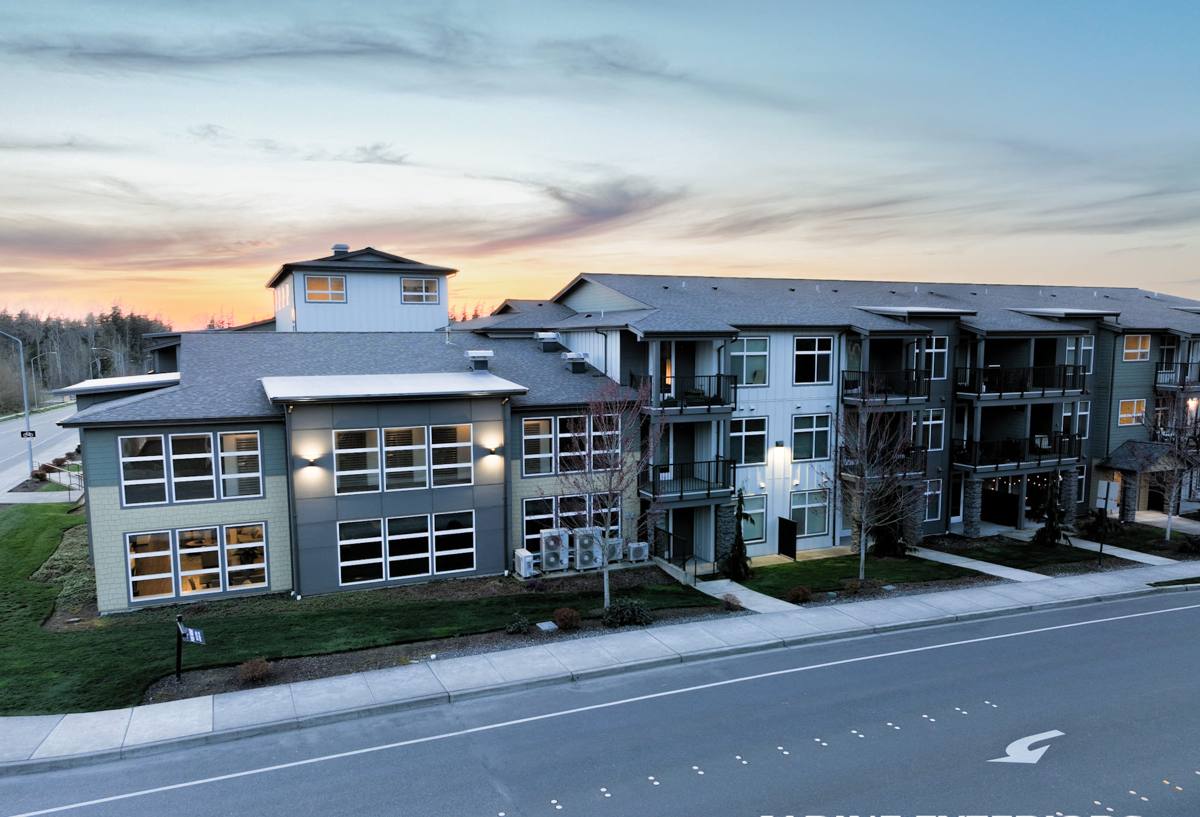
Walk through Cordata and you'll see a mix of housing stock — older ranch and split-level homes from decades past, along with newer construction closer to the business park and arterial roads. Many of the older homes were sided with wood, older vinyl, or early-generation composite products that were never engineered for this specific combination of salt exposure, sustained rain, and shaded, moss-prone conditions. When that siding starts to fail, it usually fails in the same predictable ways: swelling at the bottom courses, paint that won't hold, and moss that keeps coming back no matter how many times it gets pressure-washed off.
A correct siding installation in this neighborhood has to address four things at once:
- Moisture management behind the siding, not just at the surface
- A finish that resists moss and algae adhesion rather than just tolerating it
- Material stability so panels don't swell, cup, or delaminate in sustained damp conditions
- Long-term color and finish retention without a repainting cycle every few years
Why We Only Install James Hardie Fiber Cement Here
We install one siding system, and we install it everywhere in Whatcom County for the same reason: James Hardie fiber cement is engineered specifically for climates like this one. Hardie's HZ5 product line is formulated for regions with sustained moisture and wind-driven rain — the fiber cement core doesn't absorb and swell the way wood-based products can, and it holds its shape and fastener grip through repeated wet-dry cycles.
The ColorPlus finish matters just as much as the substrate. It's a baked-on, factory-applied, multi-coat finish, not a field-applied paint job. That finish sheds moss and algae far better than bare or site-painted surfaces, and it holds color for years longer than a standard paint cycle — which matters in a neighborhood where shaded walls stay damp long enough to feed organic growth. Fiber cement is also non-combustible, which is a genuine bonus during the smoke and dry-spell stretches Whatcom County sees in late summer, even though wildfire risk isn't the primary reason we chose it here.
We get asked why we don't install vinyl, cedar, or LP SmartSide, and it's a fair question. Vinyl can warp and its seams give water a path behind the cladding over time. Cedar and other wood sidings look great initially but demand an ongoing refinishing commitment that most homeowners underestimate, and they're the most vulnerable to rot in a climate this wet. LP SmartSide uses an engineered wood-strand core that performs well when installation is precise, but it's more sensitive to moisture at cut edges and job-site handling than fiber cement. We standardized on Hardie because it gives us the most consistent, lowest-maintenance result across the widest range of homes we see in this climate, backed by a strong transferable warranty.
What a Correct Installation Involves in This Climate
Fiber cement is only as good as the installation behind it. In a high-rain, salt-air environment, the details most homeowners never see are the ones that determine whether siding lasts fifteen years or forty.
Water management comes first
Every correct installation starts with a weather-resistive barrier installed shingle-style so water is always directed outward and down, never trapped behind the cladding. Flashing goes in at every window, door, roofline intersection, and penetration — these are the spots where most siding failures actually start, long before the panels themselves show any wear.
Clearances and fasteners
Hardie specifies minimum clearances from grade, roof lines, and decks so panels never sit in standing water or trapped moisture. Fasteners have to match the climate zone and be corrosion-resistant, which matters more here than in drier inland areas because of the salt content in the air. Field-cut edges get sealed or back-primed rather than left exposed, and joints are caulked with a quality sealant instead of relying on a tight fit alone.
Our Installation Process
Every project follows the same sequence, whether it's a full re-side or a partial replacement after storm or moisture damage.
- On-site assessment of the existing siding, sheathing, and any signs of moisture intrusion or rot
- Removal of old siding and inspection of the sheathing underneath, with repair or replacement of any damaged sections before anything new goes on
- Installation of the weather-resistive barrier and flashing at all windows, doors, and penetrations
- Installation of James Hardie panels and trim to manufacturer spec, with correct clearances and fastener patterns
- Detail work — corner trim, caulking, and touch-up so every seam and edge is sealed
- Final walkthrough with the homeowner and job-site cleanup
Signs Your Cordata Home May Be Due for New Siding
- Moss or algae staining that returns within months of being cleaned off
- Boards that are cupping, warping, or visibly separating at the seams
- Paint that's chalking, peeling, or won't hold anymore no matter how often it's redone
- Soft spots or discoloration near the bottom courses or below windows, which usually points to moisture already inside the wall
- Noticeably higher heating bills, which can mean the siding and the barrier behind it are no longer doing their job
- Siding that's original to a home built more than two decades ago, particularly wood-based products
Comparing Siding Options for a Wet Bellingham Climate
Homeowners often come to us already comparing materials. Here's an honest look at how the common options perform under Whatcom County conditions.
| Material | Moisture Resistance | Moss/Algae Resistance | Maintenance | Typical Lifespan Here |
|---|---|---|---|---|
| Cedar/wood | Low — absorbs moisture, prone to rot | Low without frequent treatment | High — regular refinishing needed | 10-20 years before major rot issues |
| Vinyl | Moderate — seams can let water behind panels | Moderate | Low, but can't be repainted if it fades | 20-30 years, weather-dependent |
| LP SmartSide | Moderate — sensitive at cut edges and job-site handling | Moderate | Moderate — depends on installation precision | 20-30 years with correct install |
| James Hardie fiber cement | High — stable core, doesn't swell | High with ColorPlus finish | Low | 30-50 years with correct install |
Why Hiring a Crew That Already Works in Cordata Matters
Siding installation isn't a one-size-fits-all trade, and a crew that already works this specific neighborhood brings advantages a generalist contractor from farther away won't have. They know which wall orientations in this area take the worst of the wind-driven rain and salt air, and they plan flashing and clearances accordingly. They know how to sequence tear-off and cover-up around Whatcom County's wet season so a home isn't left exposed to open weather for days at a time. And they've already worked through the local permitting process enough times that it doesn't become a delay on your project.
There's also a practical supply-chain benefit: a crew that installs Hardie exclusively keeps the right panel profiles, trim, and ColorPlus color matches on hand or readily available, rather than special-ordering for every job.
Questions to Ask Before You Hire a Siding Contractor
- Are they licensed and insured in Washington, and can they show proof without hesitation?
- Are they factory-certified or trained specifically on James Hardie installation, not just siding in general?
- Will they give you a written scope of work, including flashing and moisture-barrier details, not just a price?
- What does the manufacturer's warranty actually cover, and does it require a certified installer to stay valid?
- How do they handle old siding disposal and job-site cleanup?
- Can they explain, in plain terms, why they'd flash and clear your home the way they're proposing?
If your Cordata home's siding is showing its age, or you're planning ahead for a replacement, we're happy to take a look and walk you through what we'd recommend and why. There's no pressure and no obligation — just a straightforward assessment from a crew that works this climate every day. Fill out the form below to get a free estimate.