 Bellingham Roofing
 Composite Decking Built for Cordata's Climate
Cordata sits in north Bellingham, close enough to the water and the marine air patterns of Whatcom County that decks here take a specific kind of beating. It's not one big storm that wrecks a deck in this part of Washington — it's the slow, steady combination of salt-tinged air, months of driving rain, and a moss season that seems to start earlier every year. A deck built without that in mind will look tired within a few seasons: green film on the boards, soft spots where water sat too long, fasteners that streak and stain. Composite decking, installed correctly for this specific environment, is one of the more reliable answers to that problem.
We install composite decking across Bellingham and the surrounding Whatcom County communities, and Cordata's mix of established homes and newer builds gives us a good cross-section of what actually works here versus what looks fine on the showroom sample and fails outdoors.
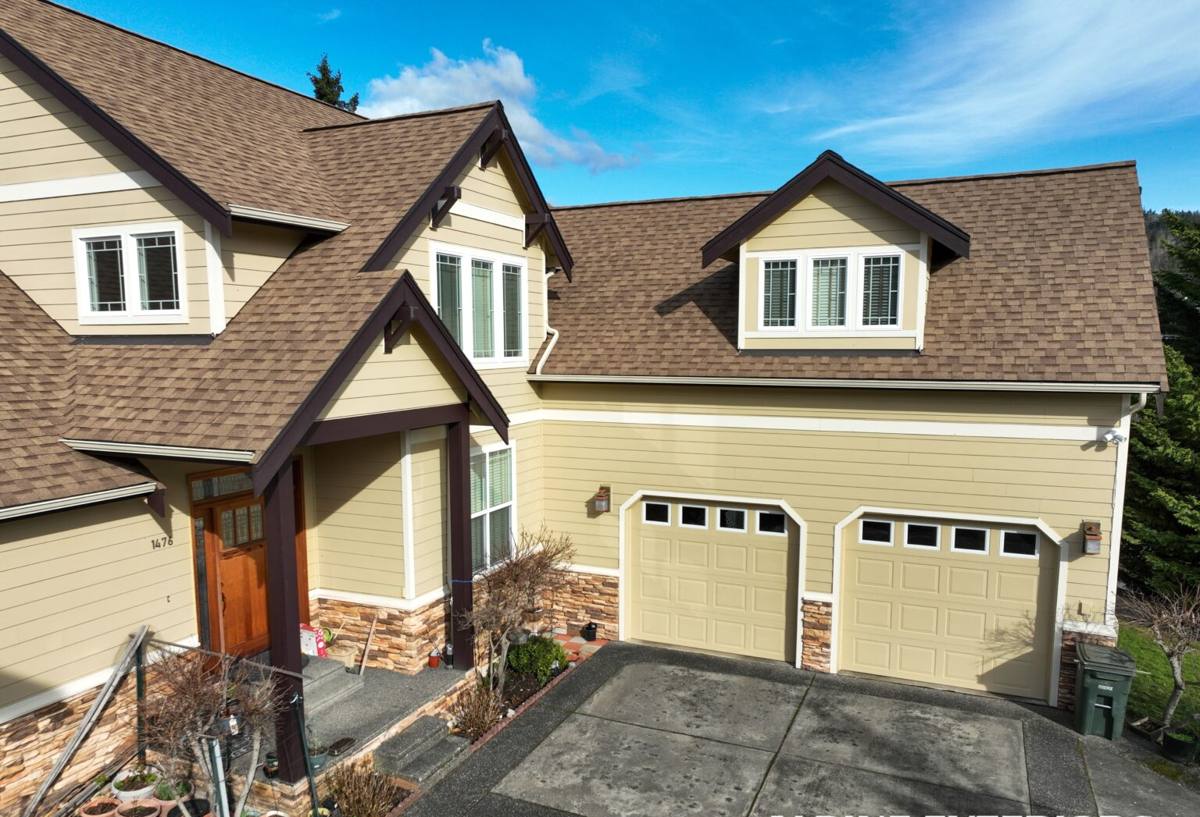
What Cordata's Weather Actually Does to a Deck
Understanding the failure points is the first step to avoiding them. In this part of Washington, the issues aren't dramatic — they're cumulative.
Salt Air and Metal Fasteners
You don't have to live on the waterfront to feel the effects of salt-laden air moving in off the Sound. Over time it accelerates corrosion on exposed hardware, screw heads, and any metal flashing that isn't rated for coastal exposure. Corroded fasteners are one of the most common reasons a deck that looks structurally fine develops loose boards or rust streaking.
Driving Rain and Standing Moisture
Whatcom County doesn't get flash floods, it gets months of steady, wind-driven rain. That means water finds its way into gaps, under boards, and into ledger connections that weren't flashed properly the first time. Wood decking absorbs that moisture and swells, cracks, and eventually rots from the inside. Composite boards don't absorb water the way wood does, but the substructure underneath — and the way the boards are spaced and fastened — still has to be built to shed water, not trap it.
Moss, Algae, and Extended Shade
A long, wet moss season is practically a given here, especially on decks with tree cover or a north-facing exposure that doesn't get much direct sun. Moss and algae aren't just cosmetic — they hold moisture against the deck surface, and on the wrong material that turns into a slip hazard and an accelerated wear pattern. Some composite boards resist this far better than others, which is a factor worth discussing before you pick a product, not after.
Why Composite Makes Sense for This Neighborhood
Composite decking isn't automatically the right call for every home, but for Cordata's conditions it solves several problems at once:
- It doesn't absorb water the way wood does, which limits swelling, cracking, and rot in a climate that stays wet for much of the year
- Modern capped composite boards resist mold and algae growth far better than untreated wood
- It doesn't need annual staining or sealing — a real advantage when your painting and re-sealing window is squeezed between rainy stretches
- Color and texture hold up longer under UV and moisture cycling than most people expect from a "plastic" product
- Low-maintenance boards mean fewer weekends spent power-washing moss off a deck instead of using it
It isn't maintenance-free — no exterior product truly is in this climate — but it shifts the maintenance burden from constant to occasional.
What a Correct Installation Involves
Composite decking fails early almost exclusively because of installation mistakes, not material defects. The board itself is usually fine; the substructure, spacing, and fastening underneath it is where problems start.
Substructure and Ledger Work
The frame underneath composite decking still needs to be built to shed water. That means proper joist spacing for the specific board being installed (composite often requires tighter spacing than wood framing rules of thumb), joist tape or flashing to protect the framing lumber, and a ledger board connection that's properly flashed against the house — this is the single most common source of hidden rot on any deck, composite or wood.
Gapping and Airflow
Composite boards expand and contract with temperature more than most homeowners expect. Correct gapping between boards and at butt joints isn't cosmetic — it's what allows water to drain through instead of pooling on the surface, and what keeps boards from buckling later. Airflow underneath the deck matters too, especially on lower decks close to grade, where trapped moisture speeds up moss growth on the underside and around fasteners.
Fastening Systems
Hidden fastener clip systems, used correctly, avoid the face-screwing that leads to water intrusion points and the corrosion streaking that's common near salt air. The clips and screws themselves need to be rated for the specific board manufacturer and, ideally, for coastal or marine-adjacent exposure given where Cordata sits.
Stairs, Railings, and Transitions
Stair stringers, railing posts, and any point where the deck meets the house or a patio are where water intrusion problems concentrate. These transitions need the same attention to flashing and drainage as the main deck field — it's common to see a deck surface that's in great shape while the stair structure underneath is quietly failing.
Comparing Decking Materials for This Climate
| Material | Moisture Behavior | Moss/Algae Resistance | Maintenance | Typical Lifespan Here |
|---|---|---|---|---|
| Pressure-treated wood | Absorbs water, prone to swelling and rot at fasteners | Low without regular treatment | Annual staining/sealing recommended | 10-15 years with upkeep |
| Cedar | Naturally rot-resistant but still absorbs moisture over time | Moderate | Regular sealing to maintain appearance and resistance | 15-20 years with upkeep |
| Capped composite | Does not absorb water into the board core | High on quality capped boards | Periodic cleaning, no staining/sealing | 25-30+ years, manufacturer-dependent |
| Uncapped composite (older generation) | Some moisture absorption at cut edges | Lower than capped products | More frequent cleaning | 15-20 years |
We generally steer homeowners toward capped composite for Cordata's conditions specifically because of the moisture and moss exposure — it's a matter of matching the product to the environment, not a blanket recommendation for every home in every climate.
Cost Factors Worth Understanding Upfront
Composite decking costs more upfront than pressure-treated wood, and homeowners deserve a straight answer on why, and what actually moves the price:
- Board tier: entry-level composite costs less than premium capped lines with longer warranties and better fade/stain resistance
- Substructure condition: if existing framing needs repair or replacement to meet composite spacing and drainage requirements, that adds cost but isn't optional
- Deck size and complexity: multi-level decks, angled framing, and built-in features add labor time beyond simple square footage
- Railing system: composite or metal railings to match the deck typically cost more than basic wood rail but last considerably longer in this climate
- Fastening system: hidden-fastener systems cost more in materials and labor than face-screwing but produce a cleaner, longer-lasting result
Over a 20-25 year window, the reduced maintenance and replacement costs of composite often close much of the initial price gap with wood — but that math only holds if the installation was done correctly in the first place.
Our Process for Cordata Deck Projects
We keep the process straightforward because most deck problems come from skipped steps, not complicated ones.
- On-site assessment: we look at the existing structure (if there is one), grade and drainage around the deck, sun/shade exposure, and any signs of past moisture damage
- Product selection: we walk through board options suited to the specific exposure of your lot — a shaded, moss-prone deck gets different recommendations than one in full sun
- Substructure evaluation and repair: framing, ledger flashing, and joist spacing are corrected or reinforced to meet the new decking's requirements before a single composite board goes down
- Installation: proper gapping, hidden fastening where appropriate, and attention to stairs, railings, and transition points
- Final walkthrough: we go over care basics for the specific board installed, since cleaning recommendations vary slightly by manufacturer
Simple Checklist Before You Hire Anyone for This Job
- Ask what they're doing about ledger board flashing — if they don't have a clear answer, that's a red flag
- Confirm the fastening system and whether it's rated for coastal/marine air exposure
- Ask about joist spacing for the specific composite product, not a generic wood-framing standard
- Get the manufacturer warranty terms in writing, including what voids it
- Ask how they handle drainage and airflow underneath low decks close to grade
- Make sure gapping and expansion allowances are part of the written scope, not left to judgment on install day
Why Local Experience Matters for This Job
A crew that only occasionally works in this part of Washington can install a deck that looks correct and still gets the details wrong for our specific conditions — spacing that doesn't account for our humidity swings, fastener choices that weren't picked with salt air in mind, or drainage that doesn't anticipate a genuinely long, wet moss season. Working regularly in Bellingham and the surrounding Whatcom County neighborhoods, including Cordata, means we're not guessing at how a given board or fastening system holds up here — we've seen it through a few winters.
If you're planning a new deck or replacing one that's showing its age, we're happy to take a look and walk you through what makes sense for your specific property. Reach out for a free, no-pressure estimate using the form below.