 Bellingham Roofing
 Building Decks That Actually Hold Up in Cordata
Cordata sits far enough from the water to feel a little sheltered, but Bellingham's weather doesn't respect neighborhood boundaries. Homes here still deal with the same driving rain off the Sound, the same long gray stretches where nothing dries out properly, and the same moss that colonizes any horizontal wood surface that isn't actively fighting it. A deck built the way it would be built in a drier climate starts failing here within a few seasons — not catastrophically, just steadily, in ways that cost more to fix later than to prevent up front.
A custom deck for a Cordata home needs to be designed around three things: how water moves off it, how much shade and moisture the site holds onto, and how the structure underneath is protected from a decade of wet-dry cycling. Get those right and the deck boards you choose are almost a secondary decision. Get them wrong and even premium decking will look tired in a few years.
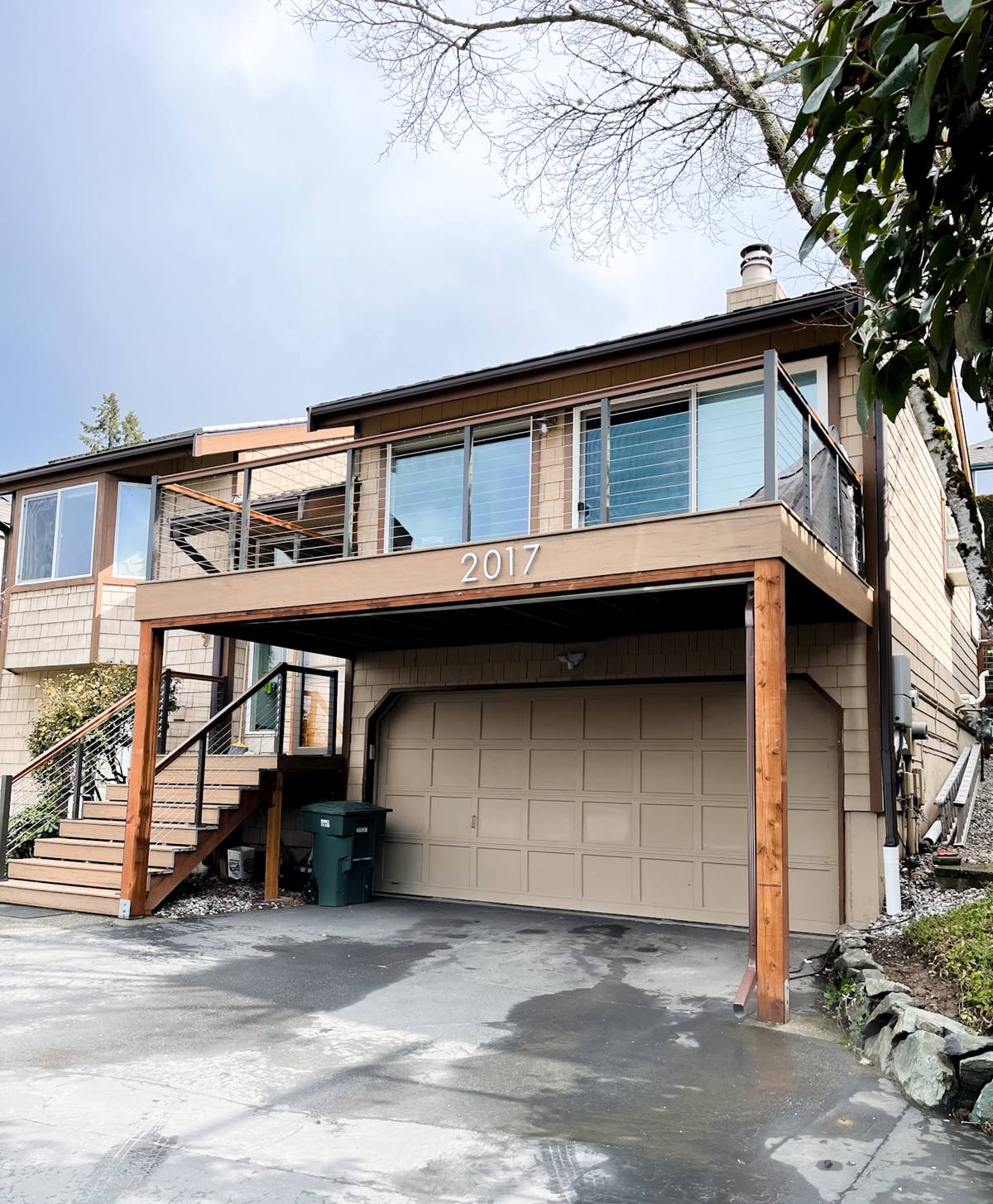
What Cordata's Setting Means for a Deck
Cordata is a mix of newer subdivisions and mature tree cover, and both create their own deck challenges. Lots with taller fir and cedar overhead keep decks shaded and damp longer after a storm passes — that's exactly the environment moss and green algae film thrive in. Open, newer-build lots get more sun exposure but also more direct wind-driven rain against the house, which puts extra pressure on the ledger connection and any steps or landings tight against the siding.
We also pay attention to drainage on the ground below the deck. Whatcom County clay-heavy soils don't absorb water quickly, and a deck built low to grade over compacted, poorly draining soil traps moisture against footings and framing longer than it should. Simple grading and gravel work at the footing stage prevents a lot of rot problems that show up five or six years down the road.
Salt Air's Slower, Quieter Damage
Cordata isn't waterfront, but Bellingham's marine air still carries salt further inland than people expect, and it accelerates corrosion on anything metal — fasteners, joist hangers, railing hardware. It's a slow process, which is exactly why it gets overlooked. The fix isn't complicated: use fasteners and connectors actually rated for coastal exposure from day one, rather than standard hardware that starts rusting from the inside of a board out.
Choosing the Right Decking Material
There's no single "best" decking material — there's the right material for how a specific deck will be used, how much upkeep the owner wants to do, and what the site's shade and moisture conditions demand. Here's how the common options compare for a Cordata setting specifically:
| Material | How it handles our wet climate | Maintenance | Typical lifespan |
|---|---|---|---|
| Pressure-treated fir/hem | Absorbs moisture readily; needs a real finish schedule to resist moss and cupping | High — annual cleaning, refinish every 2-3 years | 10-15 years with upkeep |
| Cedar | Naturally rot-resistant, ages gracefully, but greys and can host moss without cleaning | Moderate — periodic cleaning and oil/stain | 15-20 years with upkeep |
| Composite (capped) | Doesn't absorb water or rot; shaded/damp areas still need scrubbing to stop surface algae film | Low — occasional wash | 25-30+ years |
| PVC | Fully impervious to moisture; best resistance to moss staining of any option | Lowest — soap and water | 25-30+ years |
For heavily shaded Cordata lots, we lean homeowners toward capped composite or PVC unless they specifically want a wood deck. It's not that wood "fails" — it's that a shaded, damp lot demands a maintenance routine most owners underestimate when they choose it. Wood is a great choice for owners who want that look and are honestly willing to keep up with it.
What a Correctly Built Deck Involves
Footings and Framing
Footings need to be sized and set to local frost depth and bearing requirements, not just "deep enough to look right." We use joist tape or an equivalent membrane on top of every joist to stop water from sitting in the fastener holes, which is one of the single biggest contributors to hidden joist rot in this climate. Framing lumber gets treated connectors and stainless or coated fasteners throughout, not just at the visible surface.
The Ledger Connection
Where a deck attaches to the house is the single most important — and most commonly botched — detail on any deck. It needs proper flashing that sheds water away from the house sheathing, not caulk doing a flashing's job. A bad ledger detail is how decks end up causing rot damage to the house itself, not just the deck.
Drainage Under the Deck
For any deck more than a couple feet off the ground, we grade and often add gravel or a drainage path underneath so water doesn't pool against footings. On lower decks, under-deck drainage systems can keep the space below usable and dry.
Railings and Stairs
Railings and stair details have to meet current building code for height, baluster spacing, and load — this isn't optional, and it's one of the first things a building inspector checks. Beyond code, we build stair stringers and railing posts with the same corrosion-resistant hardware as the rest of the structure, since stairs take the most foot traffic and weather exposure on the whole deck.
Our Process for a Cordata Deck Project
- On-site consultation — we look at your specific lot: sun/shade pattern, grade, existing drainage, and how you actually want to use the space.
- Design and material selection — we walk through material trade-offs honestly based on your maintenance appetite and budget, not just what's popular.
- Permitting — most custom decks in Whatcom County require a permit; we handle that process and build to the approved plan and inspection points.
- Site prep and footings — grading, footing layout, and inspection sign-off before framing starts.
- Framing with protective detailing — joist tape, proper ledger flashing, corrosion-resistant hardware throughout.
- Decking, railing, and stairs — installed to manufacturer spec (critical for composite/PVC warranties) and current code.
- Final walkthrough — we go over care and cleaning specific to the material you chose before we call it done.
Living With a Deck Through Bellingham's Moss Season
Moss season isn't a one-time event here — it's most of the fall through spring. A well-built deck won't stop moss spores from landing on it, but design choices make a real difference in how fast it takes hold: gaps between boards sized for proper drainage, avoiding low spots where standing water collects, and choosing materials that don't give algae as much texture to grip.
- Sweep debris and needles off the deck regularly — trapped organic matter is what feeds moss and rot alike
- Rinse or lightly scrub shaded areas a few times a year, even on low-maintenance materials
- Keep gutters and downspouts near the deck clear so runoff isn't dumping directly onto it
- Reseal or re-stain wood decking on schedule — don't wait until it's visibly gray and worn
- Check fastener heads and railing hardware yearly for early rust, especially on older decks
- Trim back overhanging branches where practical to cut down shade and debris load
Signs an Existing Deck Needs Attention
If you're in Cordata and weighing a repair versus a full rebuild, a few warning signs usually settle the question:
- Soft, spongy spots underfoot — usually rotten joists or decking, not a cosmetic issue
- Rust streaks running down from fasteners or hardware
- A ledger board area that stays damp longer than the rest of the deck after rain
- Railings that flex or feel loose at the posts
- Persistent moss or black staining that comes back within weeks of cleaning
Any one of these is worth a real inspection rather than a quick patch — the underlying cause is usually a structural or drainage issue, and surface repairs won't fix it.
Why Local Deck-Building Experience Matters
Anyone can frame a deck on a dry, sunny day. The difference shows up years later, in whether the ledger flashing was done right, whether the right hardware went in below the decking where nobody sees it, and whether the material choice matched the site's actual sun and shade pattern instead of just the homeowner's first Pinterest search. A crew that's built decks across Bellingham and Whatcom County has already made — and corrected — the mistakes that a wet, shaded, salt-tinged climate exposes. That experience shows up as a deck that still looks and performs well a decade later, not one that needs rework in year three.
If you're planning a new deck or replacing one that's past its prime, we're happy to walk your Cordata property, talk through material options honestly, and put together a straightforward plan. Reach out for a free, no-pressure estimate using the form below.