 Bellingham Roofing
 Why Edgemoor Decks Face a Tougher Climate Test
Edgemoor sits close to the water on Bellingham's western edge, and that location cuts both ways. The same setting that makes the neighborhood desirable — mature tree cover, sloped lots, proximity to Puget Sound — also creates conditions that are genuinely harder on an outdoor deck than what you'd deal with a few miles inland. Salt-laden air off the water, driving rain that comes in sideways during winter storms, and a moss season that can run eight months or longer all put real stress on the structure, the fasteners, and the walking surface. A deck built without those specifics in mind will show problems years before it should.
Salt Air and Metal Fasteners
Airborne salt accelerates corrosion on anything metal — nails, screws, joist hangers, bolts. On a deck close to the water, standard construction-grade fasteners can start rusting and staining the wood around them well before the decking itself wears out. The fix isn't complicated, but it does mean spending more up front on the right hardware grade rather than whatever is cheapest at the yard.
Driving Rain and Ledger Connections
Whatcom County's winter weather doesn't just rain straight down — wind-driven rain gets pushed sideways and upward under flashing, railing caps, and ledger boards if those details weren't sealed correctly the first time. The ledger board, where the deck attaches to the house, is the single most common failure point on decks in this climate. Water finds its way behind poorly flashed ledgers and rots the rim joist from the inside, often invisibly, for years.
Long Moss Season and Surface Traction
Shade from mature trees plus consistent moisture is exactly what moss wants. On a deck, that means slick boards for a good chunk of the year, plus moss holding moisture against the decking surface longer than open sun would allow. Material choice, board spacing, and surface texture all affect how much of a moss problem a deck ends up with.
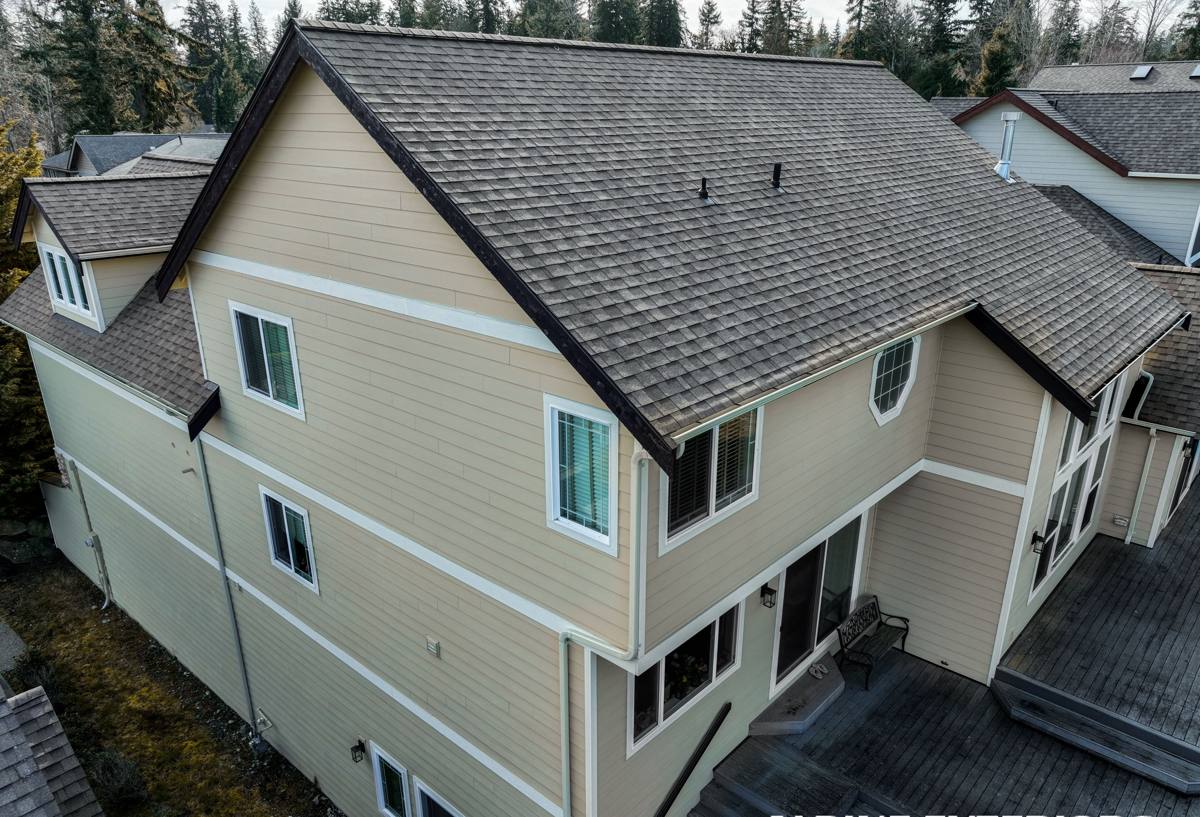
What a Correctly Built Deck for This Neighborhood Requires
Substructure and Footings
Sloped lots, which are common in Edgemoor, change how footings and support posts need to be engineered. Frost depth, soil drainage, and the grade of the yard all factor into footing size and placement. A deck built on a slope with undersized or poorly placed footings can develop movement over time that shows up as squeaking, uneven boards, or a railing that's no longer plumb.
Ledger Attachment and Flashing
A correctly built ledger connection uses proper structural fasteners (not just nails), a code-compliant flashing detail that directs water away from the house, and a water-resistant membrane behind the flashing itself. This is the detail we spend the most time on, because it's the one homeowners never see once the deck is finished — and the one that causes the most expensive repairs if it's done wrong.
Fastener and Hardware Grade
For anything within a few miles of the water, we default to stainless steel or heavy hot-dip galvanized fasteners and connectors rather than standard coated screws. It costs more per box, but it's a fraction of the cost of tearing into a deck a few years later to replace corroded hardware.
Choosing the Right Decking Material for Edgemoor's Conditions
There's no single "best" decking material — there's a best material for a specific yard, budget, and maintenance appetite. In a shaded, damp, salt-air setting, some trade-offs matter more than they would on a sunny, inland lot.
| Material | Moss & Mildew Resistance | Maintenance | Typical Lifespan |
|---|---|---|---|
| Pressure-treated pine | Fair — needs regular cleaning and sealing | Annual wash, re-seal every 2-3 years | 15-20 years |
| Cedar | Good natural resistance, but surface still greens in heavy shade | Periodic cleaning, re-oiling for color retention | 20-25 years |
| Composite/PVC decking | Very good — non-porous surface sheds moisture and resists mold growth | Occasional rinse, no sealing or staining | 25-30+ years |
Composite tends to perform best on heavily shaded Edgemoor lots simply because it doesn't feed mold and moss the way wood fibers do, and it won't cup or splinter as it takes on moisture cycle after cycle. That said, plenty of homeowners want the look and feel of real wood, and cedar with a proper maintenance routine can hold up well too. We'll give you the honest maintenance expectations for whatever you choose rather than steering you toward whatever's easiest for us to install.
Our Deck Building Process
- Site assessment — we look at slope, drainage, sun exposure, tree cover, and the existing structure the deck will attach to before recommending anything.
- Design and material selection — layout, railing style, and decking material chosen around how the space will actually be used and how much upkeep you want to take on.
- Permitting — we handle the permit application and coordinate any required inspections with the city.
- Footings and framing — footings sized for the soil and slope, ledger flashed and fastened correctly, framing set level and square.
- Decking, railing, and finish work — boards, railings, and any stairs installed with corrosion-resistant hardware throughout.
- Final walkthrough — we go over care and maintenance specific to the material you chose before we consider the job done.
Permits, Setbacks, and Building on a Sloped Lot
Most new decks and many deck replacements in Bellingham require a building permit, and the exact requirements depend on the deck's height, size, and proximity to property lines. Sloped and waterfront-adjacent lots, which describe a fair number of Edgemoor properties, can also involve additional review around drainage or critical areas. We don't guess on this — we pull the actual requirements for your specific lot before work starts, so there are no surprises with the city later. If your project is anywhere near a slope or the water, it's worth having that conversation with a contractor early rather than after a design is already picked.
Maintenance That Actually Fights Moss and Rot
A well-built deck still needs some seasonal attention in this climate — the difference is that a correctly built one needs a lot less of it, and problems get caught early instead of hiding inside the structure. Here's what we recommend regardless of material:
- Sweep debris and fallen leaves off the deck regularly during fall — trapped organic material is what feeds moss and mildew.
- Rinse or wash the surface at least once a year, more often in heavily shaded areas, to knock back moss growth before it takes hold.
- Check the ledger board area and any flashing once a year for signs of staining, soft wood, or gaps.
- Inspect visible fasteners and hardware for rust streaks, which usually mean the wrong grade was used or a coating has failed.
- Keep gutters and downspouts near the deck clear so roof runoff isn't dumping extra water onto or behind the structure.
- Trim back overhanging branches where practical to cut down on shade and debris without stripping the yard's tree cover.
Common Deck Problems We See in Edgemoor
Most of the repair calls we get in this neighborhood trace back to a handful of recurring issues: rot at the ledger board from a flashing detail that was never done correctly, corroded fasteners that stain the decking and eventually lose their grip, and slick, moss-covered boards on decks with heavy tree cover and no drainage gaps between boards. All three are preventable with the right build details from the start, and all three are more expensive to fix after the fact than to get right the first time.
Why a Crew That Already Works in Edgemoor Matters
Building a deck correctly on a sloped, shaded, salt-air-adjacent lot isn't the same job as building one on a flat, sunny inland lot, even though the finished product might look similar from the street. A crew that's already worked in this part of Bellingham knows what the soil and drainage tend to look like on these slopes, knows which hardware grade actually holds up here, and isn't learning those lessons on your project for the first time. That local experience shows up in the details you won't think to ask about — the flashing behind the ledger, the footing depth on a slope, the fastener spec — long before it shows up as a problem you can see.
If you're planning a new deck or replacing one that's showing its age, we're happy to come take a look and walk the property with you. There's no cost and no pressure — just a straight assessment of what your specific lot needs and what it would take to build it right. Use the form below to request a free estimate.