 Bellingham Roofing
 Siding Repair in Cordata: A Different Kind of Wear Pattern
Cordata sits on the north side of Bellingham, close enough to Bellingham Bay to catch salt-laden air off the water and far enough inland to still get the heavy tree cover that shades a lot of Whatcom County neighborhoods. That combination creates a specific kind of siding wear. Homes here don't usually fail from one dramatic event — they fail slowly, from siding that stays damp longer than it should, in spots the sun rarely reaches. A siding repair in Cordata is rarely just "patch the hole." It's almost always "find out why this spot got wet in the first place, then fix that."
Whatcom County's climate is mild by national standards, but mild and gentle are not the same thing. Long stretches of driving rain, short winter days, and shaded lots with slow-drying siding are a tougher combination for exterior materials than a lot of homeowners expect until they see the damage up close.
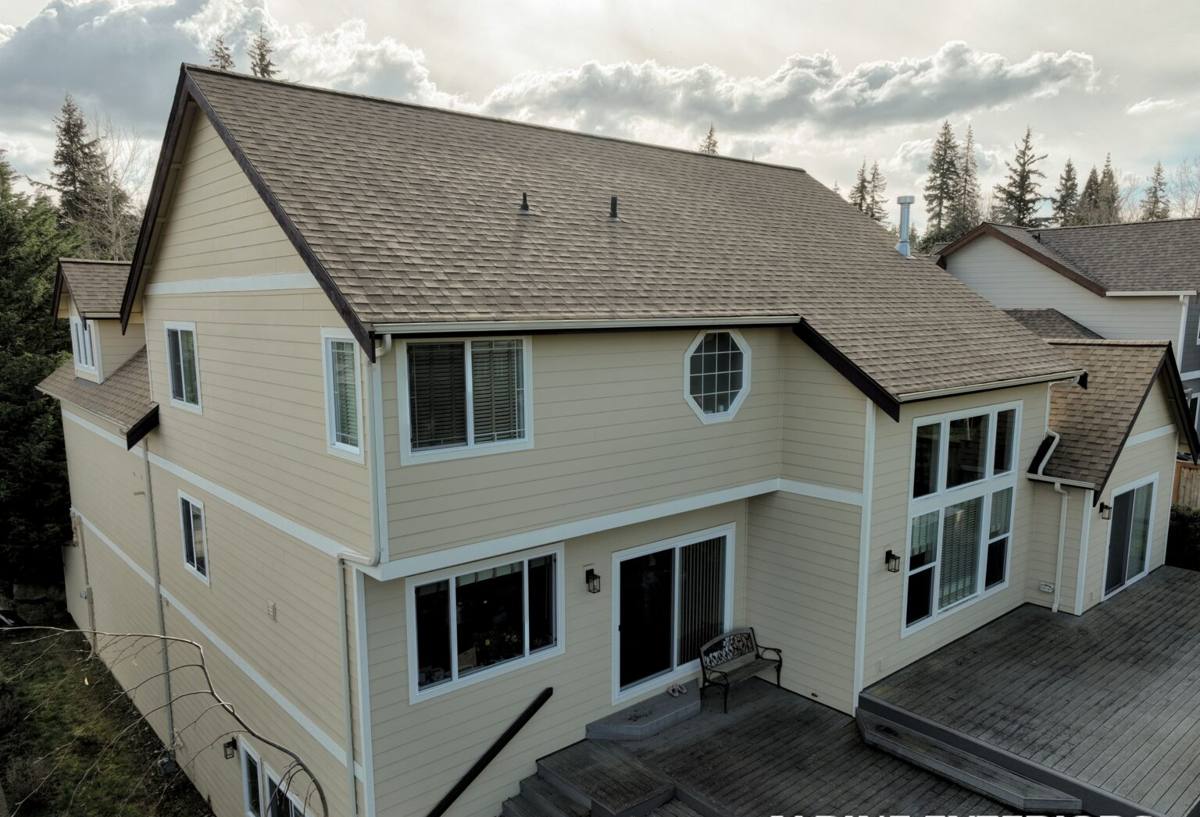
What's Actually Behind Most Cordata Siding Calls
Salt Air and Slow Corrosion
Proximity to the bay means airborne salt settles on siding, trim, and fasteners over time. It's not as aggressive as a true oceanfront property, but it accelerates the breakdown of paint films, corrodes exposed fasteners faster than inland homes see, and speeds up the general weathering of anything not built to handle a marine-influenced climate.
Driving Rain and Wind-Driven Moisture
Pacific storm systems don't just drop rain straight down — wind pushes it sideways into wall assemblies, especially on north and west-facing elevations. Siding that isn't lapped, flashed, and caulked correctly at every seam gives that wind-driven rain a path behind the surface, where it does damage nobody sees until the siding itself starts to fail.
Moss, Algae, and Extended Shade
Cordata's mature trees are part of what makes the neighborhood pleasant to live in, but they also mean a lot of north-facing walls and shaded siding runs that simply don't dry out between storms during the fall and winter. Whatcom County's moss season runs long, and siding that stays damp for weeks at a stretch is siding that's more likely to hold moisture against the substrate, stain, and eventually soften or delaminate depending on the material.
Signs a Repair Is Overdue
Most siding problems give warning signs well before they become structural. Homeowners in Cordata should watch for:
- Soft or spongy spots when you press on the siding, especially near the bottom edge of walls or below windows
- Persistent black or green staining that comes back quickly after cleaning, particularly on shaded elevations
- Visible cracking, buckling, or panels that have separated slightly from the wall
- Caulking at joints and trim that's cracked, shrunk, or pulled away
- Paint that's peeling or bubbling in a localized area rather than uniformly across the wall
- Rust streaks below fasteners or trim pieces
- Interior signs — a musty smell, a discolored patch of drywall, or a slightly warm/damp exterior wall — that point to trouble behind the siding rather than on it
What a Correct Siding Repair Actually Involves
Diagnosis Before Demolition
The single biggest difference between a repair that lasts and one that fails again in two years is whether anyone bothered to find the actual water path. Cutting out damaged siding and nailing up a new piece over the same flawed flashing or the same gap in the weather barrier just buys time. A correct repair traces the moisture back to its source — a failed kick-out flashing, a window that was never properly flashed, a butt joint with no house wrap behind it, a hose bib penetration that was never sealed — and fixes that first.
Matching Material and Profile
Patch repairs need to match the existing siding's exposure, profile, and thickness closely enough that the repaired section doesn't stand out or create a new water trap. On older homes in Cordata this sometimes means the original material is no longer manufactured, which shifts the conversation toward a broader replacement of the affected wall section rather than a mismatched patch.
Flashing and Water Management, Not Just Cosmetics
Any competent repair addresses the water-resistive barrier and flashing details at the repair site — not just the visible siding. That includes proper head flashing over openings, correctly lapped house wrap, and drainage space where the assembly calls for it. Skipping this step is why so many "repairs" don't actually solve the underlying problem.
Fastening and Sealant Standards
Given the salt air exposure in this part of Bellingham, fastener choice matters more here than it would further inland. Corrosion-resistant fasteners and sealants rated for the actual exposure conditions are non-negotiable — using whatever's on hand is how you end up back at the same wall in three years.
Repair or Replace? How to Think About It
Not every damaged section needs a full re-side, and not every "small" repair is actually small once the wall is opened up. The honest answer depends on a handful of factors:
| Factor | Leans Toward Repair | Leans Toward Replacement |
|---|---|---|
| Extent of damage | Isolated to one or two panels/sections | Recurring across multiple walls or elevations |
| Underlying cause | One identifiable, fixable source (flashing, caulk failure) | Systemic issue — no weather barrier, widespread rot |
| Material match | Current siding still available or closely matchable | Discontinued profile, visible patch mismatch likely |
| Age of existing siding | Siding is otherwise sound and mid-lifespan | Siding is near or past its expected service life |
| Substrate condition | Sheathing and framing are dry and sound | Sheathing shows rot or sustained moisture damage |
When we open a wall for a repair and find the substrate compromised, we'll tell you plainly — patching over rotten sheathing isn't a repair, it's a delay. Sometimes the honest recommendation is a larger scope than what was called in.
How We Handle Cordata Siding Repair Calls
1. On-Site Inspection
We look at the damaged area and the surrounding wall assembly, not just the spot you noticed. Water travels, so the visible damage and the actual entry point are often a foot or more apart.
2. Straight Answer on Scope
You'll get a clear explanation of what's causing the problem, what a proper fix requires, and an honest read on whether this is a targeted repair or something that's grown into a replacement conversation.
3. Correct Repair Execution
Damaged material comes out, the water-resistive barrier and flashing get corrected, and new material goes in fastened and sealed to hold up against Whatcom County's rain and salt-air exposure — not just to look right on move-out day.
4. Cleanup and Walkthrough
We walk the finished repair with you, explain what was fixed and why, and flag anything else on the exterior worth keeping an eye on.
Why We Repair and Rebuild With James Hardie
Our company installs James Hardie fiber cement exclusively — we don't install vinyl, LP SmartSide, cedar, primed spruce, or other fiber cement brands. That standard applies to repair work too. When we're patching or extending existing Hardie siding, matching into the existing HZ5-engineered product line and ColorPlus factory finish keeps the repair consistent in both performance and appearance. Hardie's fiber cement doesn't absorb moisture the way wood-based siding does, it's non-combustible, and its factory-applied finish holds color and resists the kind of localized fading that makes patch repairs on painted wood siding so visually obvious.
If your current siding isn't Hardie and keeps generating repair calls, that's a conversation worth having honestly: what's driving the recurring damage, and whether continuing to patch the existing material is actually the most cost-effective path versus transitioning the affected sections — or eventually the whole home — to a material built for this climate.
Why It Matters That We Already Work Cordata
A crew that regularly works this specific area of Bellingham has already seen how Cordata's tree cover, lot orientation, and proximity to the bay play out on real houses — which elevations tend to hold moss the longest, which framing eras in this part of town are more prone to inadequate original flashing, and what a repair here actually needs to hold up through a full Whatcom County winter. That's not something you get from a general contractor working the region for the first time. It shows up in fewer surprises once the wall is open and a repair that's sized correctly the first time.
After the Repair: Keeping It From Happening Again
A good repair only stays good if the maintenance basics are kept up. A short seasonal routine goes a long way in this climate:
- Rinse moss and algae off shaded siding sections before it builds up into a stubborn stain
- Keep gutters clear so overflow isn't running down the siding face
- Trim back branches and shrubs that keep siding shaded and slow to dry
- Re-caulk joints and trim as soon as gaps or cracking appear, not after they've been open for a season
- Walk the exterior once a year and press-test any area that previously had damage
If you're seeing staining, softness, or recurring damage on your Cordata home's siding, we're happy to take a look and give you a straight read on what's going on and what it'll take to fix it right. Reach out for a free, no-pressure estimate using the form below.