 Bellingham Roofing
 Roofing in York's Coastal Microclimate
York sits close enough to Bellingham Bay that homes here deal with a slightly different mix of weather stress than roofs further inland in Whatcom County. Salt-laden air off the water accelerates corrosion on exposed metal fasteners and flashing. Driving rain off Puget Sound doesn't just fall straight down — wind-driven storms push water sideways and upward under shingle edges that would stay dry in a calmer climate. And the long, wet moss season that runs from fall through spring gives organic growth months to take hold on north-facing slopes and shaded roof sections under mature trees.
None of that means a York roof needs anything exotic. It means the ordinary parts of a roofing job — flashing details, fastener choice, ventilation, underlayment coverage — matter more here than they would in a dry climate, and cutting corners on any of them shows up faster.
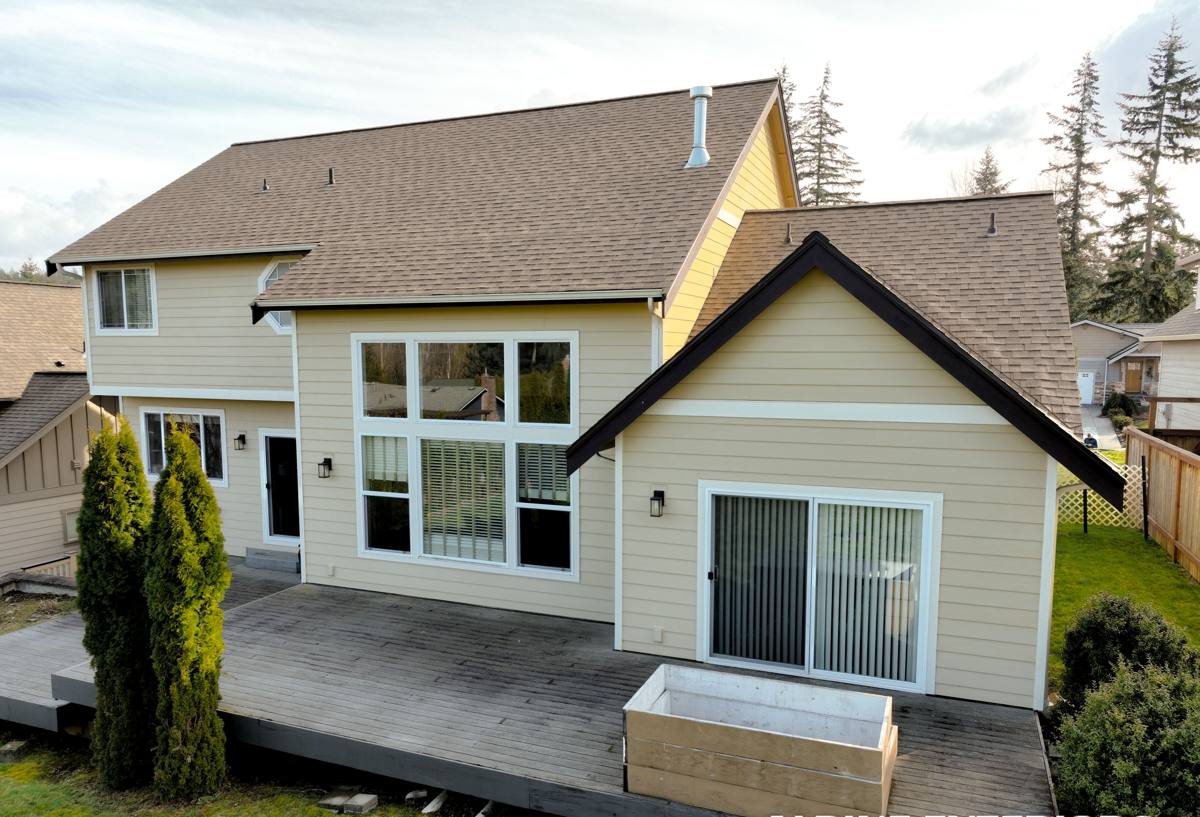
Signs a York Home Needs a New Roof, Not Another Patch
Bellingham's wet season makes it easy to keep patching a roof that's actually past its useful life. A few honest signals that patching has stopped being the smart move:
- Granule loss heavy enough that gutters fill with grit after every rain
- Shingles that are cupping, curling, or cracking, especially on south and west-facing slopes
- Soft spots or spongy decking felt underfoot in the attic or on a ladder inspection
- Daylight visible through the roof deck from inside the attic
- Moss mats thick enough to hold standing moisture against the shingle surface
- Repeated leaks around the same valley, chimney, or vent boot despite prior repairs
- A roof approaching or past 20-25 years on asphalt composition, or showing widespread wear regardless of age
If more than one or two of these apply, the cost of continued patching starts to outweigh the cost of doing the job right once.
What a Correct New Roof Installation Actually Involves
Tear-Off and Deck Inspection
We remove the existing roofing down to the deck rather than layering over it. Layering hides problems and voids most manufacturer warranties outright. With the deck exposed, we can actually see what the old roof was hiding — soft or delaminated sheathing, rot around old penetrations, or framing that's been quietly absorbing moisture for years. Any compromised decking gets replaced before anything new goes down; installing a new roof over bad decking just guarantees an early second failure.
Underlayment and Ice/Water Barrier
Given how much wind-driven rain this area sees, underlayment coverage matters as much as the shingle itself. We run self-adhered ice and water barrier at eaves, valleys, and around every penetration — the spots where wind-driven rain is most likely to find a way under the primary roofing — with synthetic underlayment across the field.
Flashing
Flashing is where most roof leaks actually start, not in the field of the shingles. Step flashing at wall intersections, counter-flashing at chimneys, and properly lapped valley flashing all need to be installed in the correct sequence with the underlayment and shingles, not just caulked over the top. Caulk is a maintenance item, not a waterproofing strategy.
Ventilation
A roof deck that can't breathe stays damp longer after every storm, and a damp deck is what moss, moisture rot, and premature shingle failure all have in common. We check intake at the soffits and exhaust at the ridge or roof vents and correct any imbalance as part of the installation, not as an afterthought.
Fastening
In a salt-air environment, fastener quality is not a place to save money. We use corrosion-resistant nails and flashing hardware rated for coastal exposure so the metal components don't become the roof's weak point years before the shingles wear out.
Choosing Materials for Bellingham's Climate
Most York homes are well served by a quality architectural asphalt composition shingle or, for homeowners wanting a longer-term investment, standing seam metal. Each has real trade-offs worth understanding rather than guessing at.
| Material | Typical Lifespan | Moss & Moisture Behavior | Maintenance |
|---|---|---|---|
| Architectural asphalt shingle | 25-30 years | Needs periodic moss removal on shaded slopes; algae-resistant granules help | Low; occasional debris and moss clearing |
| Standing seam metal | 40-50+ years | Sheds moisture fast; smooth surface resists moss buildup | Very low; check fastener and sealant points periodically |
| Cedar shake | 20-30 years with upkeep | Absorbs moisture; requires active moss and moisture management | High; treatments and inspections needed regularly |
We generally steer homeowners away from wood shake in this specific microclimate — not because it's a bad product, but because the maintenance burden of keeping a moisture-absorbent material dry through a Bellingham wet season is a real, ongoing cost that a lot of homeowners underestimate going in. That's a trade-off decision, and we'll walk through it honestly rather than push a product because it's easier to install.
Our Installation Process
- On-site inspection and honest assessment of whether repair or replacement makes sense
- Written estimate covering materials, labor, disposal, and any decking allowance
- Material selection walkthrough, including color and manufacturer options
- Scheduling around Whatcom County's weather windows to avoid installing over an open deck in an active storm system
- Tear-off, deck inspection and repair, underlayment, flashing, and shingle or panel installation
- Site cleanup, including magnetic sweep for stray fasteners
- Final walkthrough and warranty paperwork
Moss Season: Prevention Built Into the Job
Moss doesn't just sit on top of a roof — established growth holds water against the shingle surface, works into granule layers, and can lift shingle edges over time. A new installation is the best opportunity to get ahead of this for years: proper ventilation reduces the damp deck conditions moss favors, and depending on the roof's exposure to shade and tree cover, zinc or copper strip installation near the ridge can help suppress regrowth on future moss cycles. We'll flag whether your specific roof's tree cover and orientation make that worth including.
What Drives the Cost of a New Roof
| Factor | Why It Matters |
|---|---|
| Roof size and pitch | More surface area and steeper slopes increase labor and material needs |
| Number of penetrations and valleys | Each chimney, vent, and valley needs individual flashing work |
| Decking condition | Rotten or soft sheathing found at tear-off adds repair cost |
| Material choice | Asphalt, metal, and shake carry different material and labor costs |
| Access and site conditions | Tree cover, tight lot lines, and multi-story sections affect staging and labor time |
| Tear-off layers | Removing multiple old roofing layers adds disposal and labor cost |
We won't quote a number without seeing the roof, but a straightforward asphalt shingle replacement on an average single-family home typically lands in the range most Whatcom County homeowners expect for the category; metal and shake run higher due to material and labor differences. A written, itemized estimate is the only reliable way to know your actual number.
Why Hiring a Crew That Already Works York Matters
A contractor who's done roofs in this specific part of Bellingham already knows which slopes in the neighborhood tend to hold moss the longest, how prevailing storm direction off the bay tends to drive wind and rain into certain roof orientations, and what typical decking and framing look like in homes of this area's common age and construction. That familiarity shortens the guesswork on your job — fewer surprises at tear-off, fewer callbacks, and a crew that isn't learning the local climate at your expense.
It also matters for the boring-but-important logistics: knowing local permitting expectations, being realistic about scheduling around Bellingham's wetter months, and having a track record in the neighborhood that a homeowner can actually check.
Before You Hire: A Practical Checklist
- Get a written estimate that itemizes materials, labor, and disposal — not a single lump number
- Confirm the contractor is licensed and insured in Washington State
- Ask specifically how they handle flashing at valleys, chimneys, and walls, not just shingle brand
- Ask what underlayment and ice/water barrier coverage is included, not just assumed
- Confirm ventilation will be inspected and corrected as part of the job, not skipped
- Ask for the manufacturer warranty terms in writing, and whether tear-off (vs. overlay) is required to keep them valid
- Ask how they handle unexpected decking damage found during tear-off, and how that's priced
Ready for an Honest Look at Your Roof
If your York home is showing signs of wear, or you'd just like a straight answer on whether repair or replacement makes more sense right now, we're glad to take a look. Fill out the form below for a free, no-pressure estimate — we'll tell you what we actually see, not what's easiest to sell.