 Bellingham Roofing
 Why Decks in Barkley Wear Out Faster Than Homeowners Expect
Barkley is one of Bellingham's newer planned neighborhoods, and a lot of the decks built during its early development years are now old enough to be showing real structural wear rather than just cosmetic weathering. A deck that looked fine from the yard for a decade can hide soft framing, corroded fasteners, and a ledger connection that's been slowly failing the whole time. In Whatcom County's marine climate, that clock runs faster than most homeowners assume.
The issue isn't that Barkley gets unusually harsh weather compared to the rest of Bellingham. It's that the combination of moisture sources here — damp Pacific air, long stretches of low winter sun, and moss that colonizes any shaded or north-facing surface — adds up year after year. A deck built to minimum code with standard lumber and basic flashing details will often need full replacement well before the 25-30 year mark that better-built decks can reach.
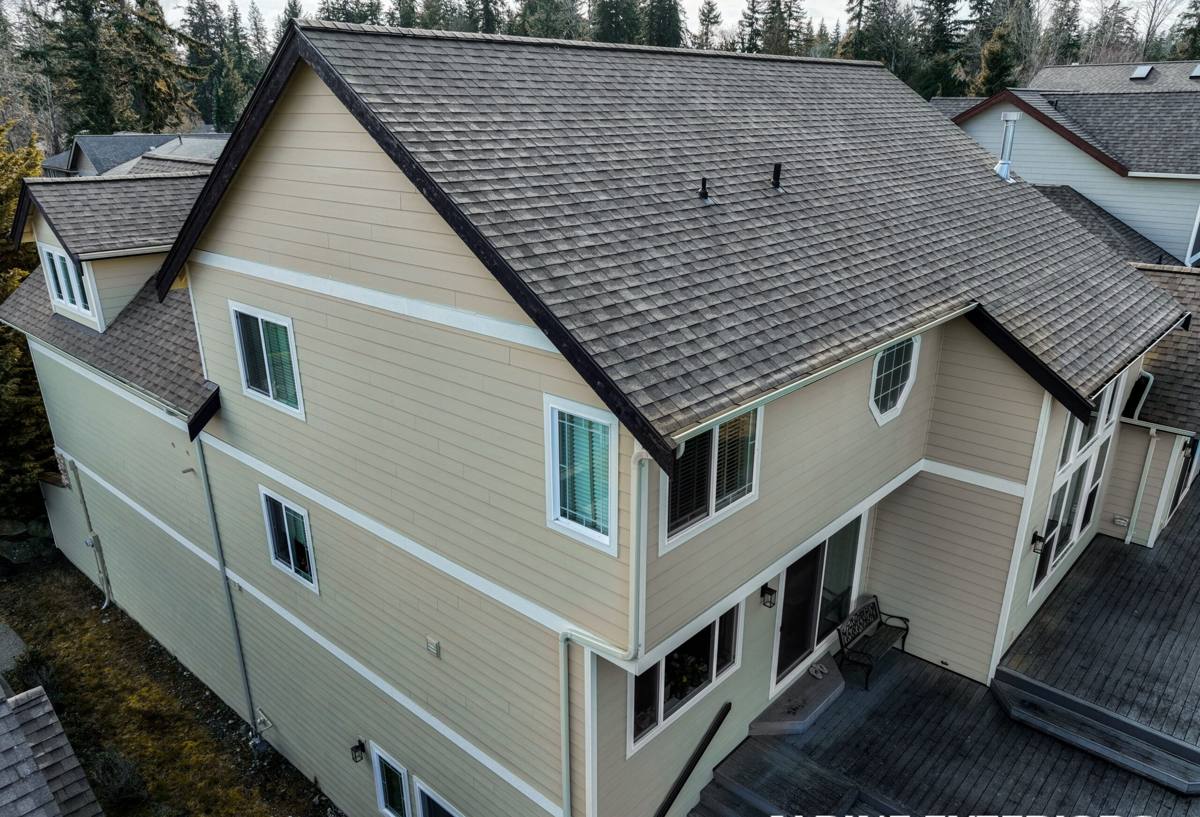
What Bellingham's Climate Actually Does to a Deck
Salt Air and Metal Fasteners
Bellingham sits close enough to the water that salt-laden air reaches inland neighborhoods, including Barkley, especially during winter storms off the Sound. Salt air accelerates corrosion in any fastener, bracket, or ledger bolt that isn't rated for it. Once a nail or screw starts to corrode, it loses grip strength long before it visibly rusts through, which is part of why decks can fail structurally while still looking presentable.
Driving Rain and Water Intrusion
Rain here doesn't just fall — wind-driven rain gets pushed sideways into ledger boards, stair stringers, and any gap where decking meets the house. Over years, that intrusion rots framing from the inside out, usually starting at the ledger-to-house connection, which is the single most common point of structural deck failure in this region.
Moss and the Long Wet Season
Whatcom County's moss season runs long — often eight or nine months of conditions damp enough for moss and algae to establish on decking, railings, and stair treads. Beyond the cosmetic issue, moss holds moisture against wood and traps it under composite boards that aren't installed with enough airflow, which shortens the service life of both material types if the deck wasn't built with drainage and ventilation in mind.
Signs a Barkley Deck Needs Replacement, Not Just Repair
Not every tired-looking deck needs a full tear-off. But there are signs that point past repair and into replacement territory, and it's worth knowing them before spending money patching a structure that's past the point of patching.
- Soft or spongy spots in the decking, especially near the house or at stair landings
- Visible gaps or rust streaks at the ledger board where it meets the siding
- Railings that flex or wiggle more than a firm push should allow
- Persistent moss growth that returns within weeks of cleaning
- Fasteners that are rusted, backing out, or leaving dark stains in the wood
- A deck more than 20-25 years old that has never had major structural work
- Any noticeable sag between the house and the outer beam
If more than one or two of these show up, repair usually ends up costing more over time than a properly built replacement, because the underlying framing and drainage details are the real problem, not the surface boards.
Choosing Decking Materials for a Barkley Home
There's no single "best" decking material — the right choice depends on how much upkeep you're willing to do, your budget, and how the deck sits relative to sun, shade, and drainage. Here's how the common options actually perform in a climate like ours.
| Material | Moisture Behavior Here | Maintenance | Typical Lifespan |
|---|---|---|---|
| Pressure-treated fir/pine | Absorbs water at cut ends and fastener holes; needs sealing | Annual cleaning, re-sealing every 1-2 years | 10-15 years |
| Cedar | Naturally moisture-resistant, but softens and grays without upkeep | Regular cleaning, periodic oil or stain | 15-20 years |
| Composite decking | Doesn't rot, but can trap moisture underneath without proper gapping/airflow | Occasional washing, no sealing | 25-30+ years |
| PVC/capped composite | Fully sheds water, resists mold growth on the surface | Minimal — periodic rinse | 25-30+ years |
We don't push composite or PVC on every job. Solid wood decks, built and finished correctly, are a perfectly honest choice for homeowners who don't mind the upkeep and prefer the look and feel. The trade-off is real: wood needs more attention in a wet climate, and skipping that maintenance is what shortens its life, not a flaw in the material itself.
What a Correct Deck Replacement Actually Involves
The Ledger Connection
Since the ledger-to-house joint is where most rot starts, we treat it as the most important detail on the job, not an afterthought. That means proper flashing that directs water away from the house rim joist, a gap or flashing tape that keeps moisture from wicking into the framing, and structural fasteners rated for exterior, corrosion-prone conditions — a real concern given the salt air Bellingham sees off the water.
Framing and Footings
Joists and beams get sized for the actual load and span, not just whatever was there before. Footings are checked or replaced to current frost and bearing requirements, since older Barkley decks were sometimes built on undersized or shallow footings that were acceptable decades ago but wouldn't pass inspection today.
Drainage and Airflow
Whatever decking material goes on top, the space underneath needs to drain and breathe. That means correct board spacing, joist tape or joist protection on the framing, and grading or gravel underneath that moves water away rather than letting it pool under the deck — a detail that matters more here than in drier climates because of how long the ground stays saturated.
Stairs and Railings
Stair stringers and railing posts take a disproportionate amount of wear because they're more exposed to driving rain and get less airflow than open decking. We build these to the same structural standard as the deck itself, not as an add-on detail.
Our Process, Start to Finish
- Free on-site assessment — We look at the existing structure, check the ledger and framing where accessible, and talk through what's actually driving the need for replacement.
- Honest scope and estimate — You get a clear breakdown of what's structural, what's material choice, and what the real cost drivers are — no vague allowances.
- Permitting — We handle the permit application and coordinate any required inspections so you're not stuck navigating Whatcom County or City of Bellingham requirements alone.
- Demo and structural rebuild — Old decking, framing, and any compromised footings come out; new framing, flashing, and connections go in to current code.
- Decking, railing, and finish work — Your chosen material is installed with proper spacing, fastening, and finish details.
- Final walkthrough — We go over the finished deck with you before calling the job done.
Permits and Local Code Considerations
Deck replacement in Bellingham and unincorporated Whatcom County generally requires a permit once you're rebuilding structural components like framing, footings, or the ledger connection — not just replacing surface boards on an otherwise sound structure. Requirements can vary depending on deck height, attachment to the house, and whether the footprint is changing. We pull the correct permits and schedule inspections as part of the job rather than leaving that step to the homeowner, which also protects you if you ever sell the home and need to show the work was done to code.
Why a Crew That Already Works Barkley Makes a Difference
A lot of deck problems in this area trace back to construction details that made sense somewhere drier but don't hold up under Bellingham's rain and salt air. A crew that works Barkley regularly already knows which ledger flashing details actually keep water out here, which fastener grades hold up against the corrosion this air causes, and how much drainage and airflow a deck needs to survive our moss season instead of just surviving one dry summer.
That familiarity also shows up in smaller ways — knowing typical lot grading and drainage patterns in the neighborhood, having a realistic sense of permit timelines with the local jurisdiction, and being able to spot the difference between a deck that needs a full rebuild and one that just needs its ledger and a few joists addressed. It saves homeowners from paying for more (or less) work than the deck actually needs.
If your Barkley deck is showing soft spots, rust stains, or persistent moss no matter how often you clean it, it's worth getting a straight answer on whether repair still makes sense or replacement is the better investment. We offer free, no-pressure estimates — fill out the form below and we'll take a look.