 Bellingham Roofing
 Edgemoor's Climate Asks More of a Deck Than Most Neighborhoods
Edgemoor sits close to Bellingham Bay, under mature tree canopy on lots that slope toward the water. That combination is beautiful to live with and hard on outdoor structures. Salt-laden air off the bay accelerates corrosion on anything metal. Driving rain off the water finds its way into every gap, seam, and fastener hole a builder didn't seal properly. And the shade from all those evergreens means a long moss season — moss and algae can hold moisture against a deck surface for weeks at a time, even between storms.
None of that makes composite decking a bad choice for this part of Bellingham. It actually makes it a strong one, if it's built and detailed correctly for the site. The problems homeowners run into with composite decks in Edgemoor almost never come from the decking material itself — they come from substructures, fasteners, and drainage details that were installed the same way you'd install them in a dry, sunny yard three miles inland. Whatcom County's marine climate doesn't forgive that kind of shortcut.
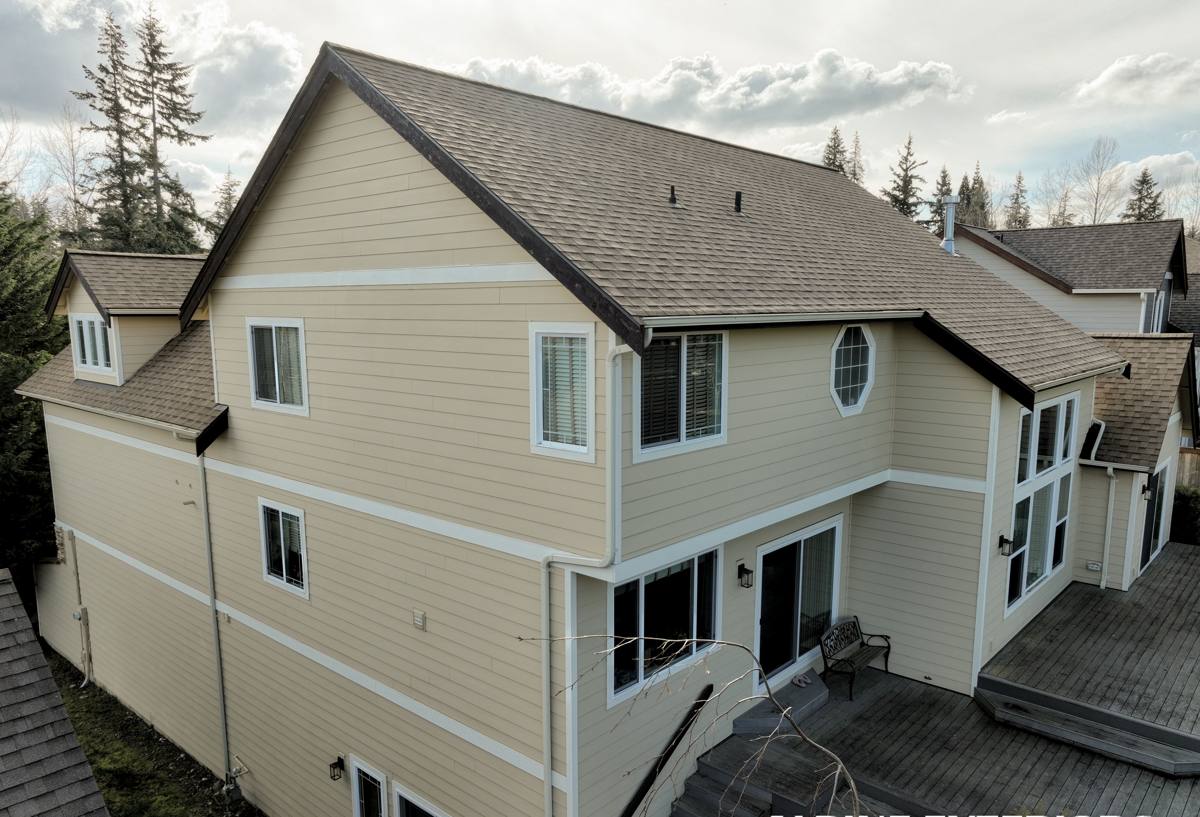
What Goes Wrong on Decks Built Without This Climate in Mind
Corrosion at the Fasteners and Framing Hardware
Salt air oxidizes standard galvanized fasteners and joist hangers faster than most homeowners expect, especially on lots with direct sightlines to the bay. Once hardware starts rusting, it stains the decking above it, weakens connections, and eventually needs to be replaced — which means pulling boards. This is a substructure problem, not a decking problem, but it shows up as ugly streaks and soft spots on the surface.
Trapped Moisture Under Shade Cover
A deck tucked under fir or cedar canopy dries out slower after rain than one in full sun. If the joists aren't protected and the underside isn't ventilated, that moisture sits. Wood-framed substructures rot from the inside long before anything looks wrong on top. Composite boards themselves don't rot, but they're only as good as what's holding them up.
Moss and Algae on the Walking Surface
Even quality composite decking will host moss and green algae film in a shaded, damp spot if the board's cap layer and surface texture weren't chosen with that in mind, or if drainage under the deck is poor and keeps humidity high at surface level year-round.
What a Correct Composite Deck Build Involves Here
A deck that's going to hold up in Edgemoor's specific conditions needs a handful of details done right, in this order:
- Stainless or coated marine-grade fasteners throughout — not just at the ledger board, but at every hanger, hidden clip, and structural connection exposed to salt air.
- Joist tape or a flashing membrane over every top edge of the framing, so water that gets past the decking never sits directly on exposed wood.
- A ledger board flashed and sealed at the house connection — this is the single most common source of hidden rot on any deck in a wet climate, composite or not.
- Adequate under-deck ventilation and slope, so air can move and water drains away instead of pooling in the shade under the structure.
- Board spacing and fastening set for our temperature swings — composite expands and contracts less than wood, but it still moves, and gaps set wrong in July won't be right in January.
- Footings sized and set for the site, which on a sloped, wooded Edgemoor lot often means more excavation and engineering judgment than a flat backyard elsewhere in Bellingham.
Skip any one of these and the deck can still look fine for a season or two. The failures in this climate are slow — that's what makes them expensive when they finally show up.
Choosing the Right Composite Board for a Shaded, Bay-Adjacent Lot
Not all composite decking behaves the same way in shade and salt air, and the right pick depends on how much direct sun a given Edgemoor deck actually gets and how close it sits to the water.
Capped Composite
Most modern composite decking is capped — a wood-plastic composite core wrapped in a protective polymer shell. The cap layer is what resists staining, fading, and moisture absorption. For shaded lots where moss and algae are a real concern, a board with a textured, tightly capped surface sheds grime and cleans up more easily than an older-style uncapped composite, which can absorb moisture at the surface and give organic growth something to hold onto.
PVC Decking
Fully cellular PVC decking contains no wood fiber at all, so it has effectively zero organic material for moss or mildew to feed on and no wood core to hold moisture. It costs more than capped composite but is worth discussing for decks under heavy year-round shade, or right at the waterline, where conditions are toughest.
Color and Grain Selection
Darker boards hide the fine green film that can develop in shade between cleanings; very light boards show it faster but also show dirt less in bright sun. On a wooded Edgemoor lot with filtered light most of the day, mid-tone or driftwood-toned boards tend to be the practical middle ground — this is worth walking through in person on your actual site before ordering material.
Composite vs. Wood vs. PVC — What Actually Changes in This Climate
| Factor | Wood (cedar/pressure-treated) | Capped Composite | PVC Decking |
|---|---|---|---|
| Moss/algae resistance in shade | Low — absorbs moisture, needs regular treatment | Good with a tight cap layer | Best — no organic material to feed growth |
| Salt air / fastener corrosion risk | Depends entirely on hardware spec | Depends entirely on hardware spec | Depends entirely on hardware spec |
| Annual maintenance | Cleaning, sealing, occasional board replacement | Periodic washing | Periodic washing, least intensive |
| Upfront material cost | Lowest | Mid-range | Highest |
| Typical lifespan when built correctly | 15–20 years with upkeep | 25–30+ years | 25–30+ years |
Fastener and hardware corrosion risk is the same across all three surface materials — it's a substructure decision, not a decking material decision, which is why it belongs to whoever is building your frame, not the board manufacturer.
Our Process for an Edgemoor Composite Deck
- Site walk and assessment. We look at slope, tree cover, existing structure condition, and how close the deck sits to salt air exposure before recommending a board and hardware spec.
- Design and material selection. Board brand, color, and railing system chosen for your specific light and exposure conditions, with a straight estimate covering the full scope.
- Permitting. We handle the permit process with the City of Bellingham or Whatcom County depending on your parcel, so the structure is built to code and documented correctly.
- Demolition and framing (or reframe) with corrosion-resistant hardware and full joist protection.
- Decking installation with proper spacing, hidden or approved fastening, and clean edge and stair detailing.
- Final walkthrough so you know exactly what maintenance the deck needs and what's covered under the manufacturer's warranty.
Maintenance in a Neighborhood Like This
Composite decking is lower-maintenance than wood, not maintenance-free — that distinction matters more in Edgemoor's shaded, damp microclimate than it would on an open, sunny lot. A periodic wash with a soft-bristle brush and a composite-safe cleaner keeps moss spores and algae film from getting established. Keeping nearby branches trimmed back so more light and airflow reach the deck surface makes a real difference in how often that cleaning is needed. Gutters and downspouts near the deck should be checked each fall so runoff isn't dumping extra water onto the structure during our wettest months.
Permits and Site Realities in Bellingham and Whatcom County
Most new or rebuilt decks require a permit, and elevated decks or those attached to the house typically need an inspection at the framing stage before decking goes down. Sloped, wooded lots like many in Edgemoor can also mean dealing with root systems, drainage easements, or setback questions that a flatter lot elsewhere in Bellingham wouldn't raise. Sorting this out before framing starts avoids delays and rework later.
Why It Matters That We Already Work This Neighborhood
A crew that's built decks throughout Bellingham's bay-adjacent, tree-covered neighborhoods already knows which fastener grade holds up here, how far under a deck you need airflow to keep moss from taking over, and how the City and County permitting process actually runs for a sloped lot. That's not knowledge you get from a spec sheet — it's what keeps an Edgemoor deck from needing hardware repairs or board replacement years ahead of schedule.
Before you hire anyone for composite decking work here, it's worth asking a few direct questions:
- What fastener and hardware grade do you use, and is it rated for coastal/salt-air exposure?
- How do you flash and seal the ledger board where the deck meets the house?
- What under-deck ventilation and drainage do you build in on shaded lots?
- Which composite or PVC brands do you install, and what's the warranty structure?
- Do you pull the required permits, or is that left to the homeowner?
If you're planning a new deck or replacing an aging one in Edgemoor, we're happy to walk the site, talk through board and hardware options for your specific exposure, and put together a straightforward, no-pressure estimate. Use the form below to get started.