 Bellingham Roofing
 Edgemoor's Setting Puts Extra Demands on a Roof
Edgemoor sits along the bluffs and wooded shoreline of Bellingham Bay, and that setting is exactly what makes it one of the more demanding neighborhoods in Whatcom County for a roof to hold up in. Homes here sit close enough to the water to pick up salt-laden air off the bay, while mature tree cover — fir, cedar, madrone — keeps large sections of many roofs shaded for most of the day. Add in Bellingham's long wet season and driving rain that comes in sideways off the water during winter storms, and you have a combination that wears down roofing faster than it would a few miles inland.
None of this means a roof in Edgemoor needs to be exotic or over-built. It means the material, the underlayment, the flashing details, and the ventilation all need to be chosen and installed with this specific mix of moisture, shade, and salt exposure in mind — not treated as a generic Pacific Northwest install.
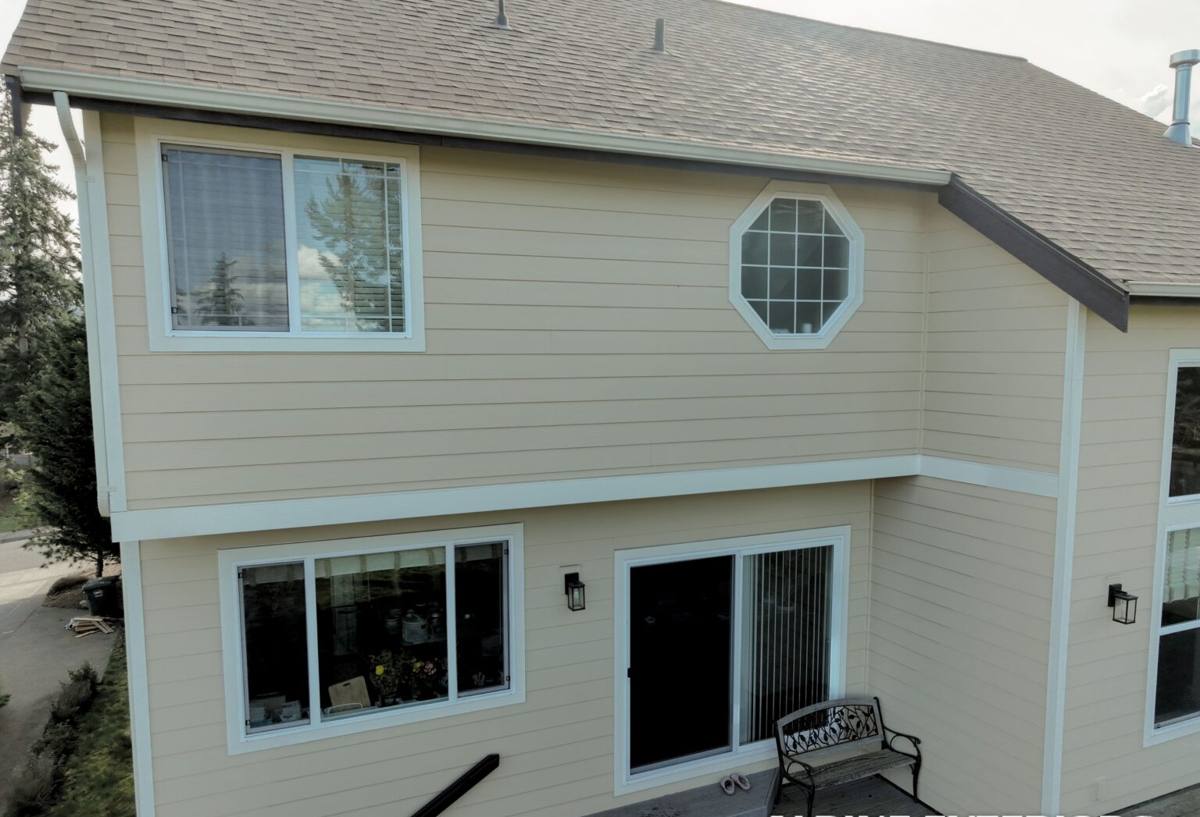
How Salt Air, Rain, and Moss Actually Damage a Roof
Salt Air
Airborne salt from Bellingham Bay accelerates corrosion on exposed metal — flashing, fasteners, gutter hardware, and any exposed metal roofing panels. Over years, untreated or lower-grade metal components can pit and weaken well before the roofing material above them has worn out, which is why fastener and flashing quality matters more here than in a landlocked neighborhood.
Driving Rain
Wind-driven rain off the bay doesn't just fall straight down — it gets pushed sideways and upward under eaves, around chimneys, and into valleys. A roof that would shed water fine in calm conditions can still leak in Edgemoor if the underlayment, flashing laps, and valley details weren't installed to handle rain moving at an angle.
Moss and Shade
The same tree canopy that gives Edgemoor its character also keeps roof surfaces damp and shaded for long stretches, which is close to ideal growing conditions for moss and algae. Moss doesn't just look bad — it holds moisture against the roofing material, lifts shingle edges, and works its way under laps and around fasteners over time, shortening the life of whatever is underneath it.
Signs Your Edgemoor Home Needs Replacement, Not Just Repair
Not every issue means a full tear-off. But in a climate this wet, waiting too long on the wrong problem turns a manageable repair into deck damage, insulation damage, or interior water intrusion. Here's what tends to signal that replacement is the more honest recommendation:
- Granule loss heavy enough that you can see bare or shiny patches on asphalt shingles, especially on south- and west-facing slopes
- Shingles that are cupping, curling, or cracking across multiple areas rather than one isolated spot
- Moss growth thick enough that it's lifting shingle edges or has been scraped/pressure-washed in the past and came right back
- Soft or spongy decking discovered during any inspection or repair, which points to moisture already in the sheathing
- Repeated leaks in different spots each winter rather than one recurring leak point
- A roof approaching or past the upper end of its material's expected service life, especially if it was installed with builder-grade materials
If your roof shows one or two of these, a targeted repair may still be the right call. If several apply at once, replacement is usually the more cost-effective path — patching a roof that's failing broadly just delays the same expense while risking damage underneath.
Choosing the Right Material for an Edgemoor Roof
There's no single "best" roofing material for Bellingham — the right choice depends on your home's exposure, your tree cover, your roof pitch, and how much long-term maintenance you're willing to take on. Here's how the common options compare for a shaded, coastal-influenced property like most in Edgemoor:
| Material | Moss/Moisture Resistance | Salt Air Durability | Typical Lifespan | Maintenance Load |
|---|---|---|---|---|
| Architectural Asphalt Shingle | Good, especially with algae-resistant granules | Good — non-metal, minimal corrosion risk | 25–30 years | Low to moderate |
| Standing Seam Metal | Very good — sheds moss more effectively than shingles | Requires marine-grade coatings/fasteners near the bay | 40–60 years | Low, but coating matters |
| Cedar Shake | Poor in heavy shade without diligent upkeep | Moderate — but moisture retention is the bigger concern | 20–30 years with upkeep | High |
| Synthetic/Composite Shake or Slate | Good — doesn't absorb moisture like wood | Good | 40–50 years | Low |
Cedar shake has real curb appeal and suits some of Edgemoor's older, character-driven homes, but our professional standard is to be upfront with clients about the trade-off: in a heavily shaded, moisture-heavy setting, wood roofing needs more frequent cleaning and treatment to avoid moss and rot, and that maintenance burden is ongoing, not one-time. For homeowners who want the look without the upkeep, synthetic shake products have closed much of that gap in recent years. For most Edgemoor replacements, we see architectural asphalt and standing seam metal as the two options that best balance appearance, durability, and realistic maintenance.
What a Correct Roof Replacement Actually Involves
A roof replacement is only as good as what happens under the new material, and this is where corners get cut on lower-bid jobs. A correct replacement in a climate like Bellingham's includes:
Full Tear-Off and Deck Inspection
Layering new material over old is never appropriate here — it traps moisture and hides deck problems. A full tear-off lets us actually see the sheathing and catch soft spots, rot, or old leak damage before it's covered up again.
Deck Repair Where Needed
Any damaged or delaminated sheathing gets replaced, not roofed over. This is one of the most common places corners get cut, and it's also the repair that costs the most to fix later if it's skipped now.
Ice-and-Water Shield in Vulnerable Areas
Eaves, valleys, and areas around chimneys and skylights get self-adhering waterproof membrane, not just felt or synthetic underlayment. Given how often wind-driven rain pushes water up and under roof edges here, this layer is doing real work, not just meeting code minimums.
Quality Synthetic Underlayment Across the Field
The rest of the roof gets a synthetic underlayment rated for the material and pitch, providing a second line of defense if wind or ice ever gets past the primary roofing surface.
Corrosion-Resistant Flashing and Fasteners
Given Edgemoor's proximity to the bay, we use flashing and fastener grades chosen with salt air in mind, particularly around chimneys, valleys, and any roof-to-wall transitions — the spots most prone to slow leaks if the metal underneath starts to degrade.
Balanced Ventilation
Proper intake and exhaust ventilation keeps moisture from condensing in the attic, which matters even more under heavy tree cover where the roof surface stays cool and damp longer than a sun-exposed roof would.
Our Replacement Process, Step by Step
- On-site inspection and estimate — we assess your current roof, decking condition (where visible), pitch, tree exposure, and any specific problem areas you've noticed, and provide a written estimate.
- Material selection — we walk through the options in the table above based on your home's exposure and your priorities on appearance, budget, and long-term upkeep.
- Permitting — we handle the City of Bellingham or Whatcom County permit process as required for your property.
- Tear-off and disposal — old roofing is removed and hauled off, with the deck inspected as it's exposed.
- Deck repair — any compromised sheathing is replaced before anything new goes down.
- Underlayment and flashing installation — ice-and-water shield, synthetic underlayment, and new flashing go in per the details above.
- Roofing material installation — installed to manufacturer specifications, with attention to nailing patterns and exposure since improper installation is a leading cause of premature failure regardless of material quality.
- Ventilation check and adjustment — intake and exhaust venting confirmed or upgraded to match the new roofing system.
- Final walkthrough and cleanup — site cleaned, debris and old material removed, and a walkthrough so you know exactly what was done and what to expect going forward.
Cost Factors for an Edgemoor Roof Replacement
Every roof is priced individually, but the same handful of factors drive most of the variation in cost from one Edgemoor home to the next:
| Factor | Why It Matters Here |
|---|---|
| Roof size and number of planes | More cuts, valleys, and hips mean more labor and material waste |
| Pitch and access | Steeper roofs and homes on bluff lots with limited access take longer and require more safety setup |
| Existing deck condition | Rot or soft sheathing found during tear-off adds repair cost that can't be known until the old roof is off |
| Material choice | Asphalt, metal, and synthetic products span a wide cost range, as shown in the comparison above |
| Number of penetrations | Chimneys, skylights, and vent stacks each need proper flashing, adding labor |
| Tree removal or trimming needs | Overhanging limbs sometimes need to be cleared for safe work and to reduce future moss/debris buildup |
Rather than quote a broad range that doesn't mean much until we've seen the actual roof, we'll give you a real number after the on-site inspection — but the factors above are the ones that move the price most.
Living With a New Roof: Moss and Salt-Air Maintenance
A correctly installed roof still benefits from a small amount of ongoing attention in a climate like this — it's the difference between hitting the full expected lifespan of your material and losing years to preventable moss and moisture damage. We recommend:
- Keeping gutters and valleys clear of needles and debris, which is where moss most often gets started
- Trimming back branches that keep sections of the roof in constant shade, where it's practical to do so
- Having moss treated or gently removed before it's thick enough to be lifting shingle edges — a light annual treatment is far cheaper than a moss-related repair
- Scheduling a roof check after major windstorms, since driving rain and wind off the bay are what tend to expose weak flashing or loose material first
- Watching for granule buildup in gutters, which signals asphalt shingles are wearing faster than expected
Why It Matters to Hire a Crew That Already Works in Edgemoor
Roofing crews that mostly work drier, inland, or sun-exposed neighborhoods don't always calibrate for what Edgemoor throws at a roof. A crew that already works this part of Bellingham knows to size ventilation for shaded, tree-heavy lots, to spec flashing and fasteners with salt air in mind, and to treat moss as an ongoing maintenance conversation rather than a one-time scrape. That local familiarity shows up in fewer callbacks and a roof that performs the way it's supposed to for its full expected lifespan, not just for the first dry summer.
It also matters for practical reasons — bluff-lot access, narrow driveways, and mature landscaping around some Edgemoor properties take experience to work around safely without damage to the yard or plantings.
Get a Straight Answer on Your Roof
If your roof is showing its age, has a stubborn moss problem, or you're just not sure whether repair or replacement makes sense, we're happy to take a look and give you a straightforward assessment — no pressure, no inflated estimate to scare you into a bigger job than you need. Use the form below to request a free estimate for your Edgemoor property.